
Squatting is a fundamental human movement pattern used in daily life and fitness routines alike. Whether you're lifting weights, gardening, or simply sitting down and standing up, squats engage major muscle groups and challenge joint stability. But if you’ve noticed a popping sound in your knee every time you descend into a squat, it’s natural to wonder: Is this normal? Could it be damaging my joints? Should I stop exercising altogether?
The truth is, knee popping—also known as crepitus—is extremely common and often harmless. However, not all pops are created equal. Some are benign byproducts of joint mechanics; others may signal underlying issues that require attention. Understanding the difference can help you make informed decisions about your training, recovery, and long-term joint health.
What Causes Knee Popping During Squats?
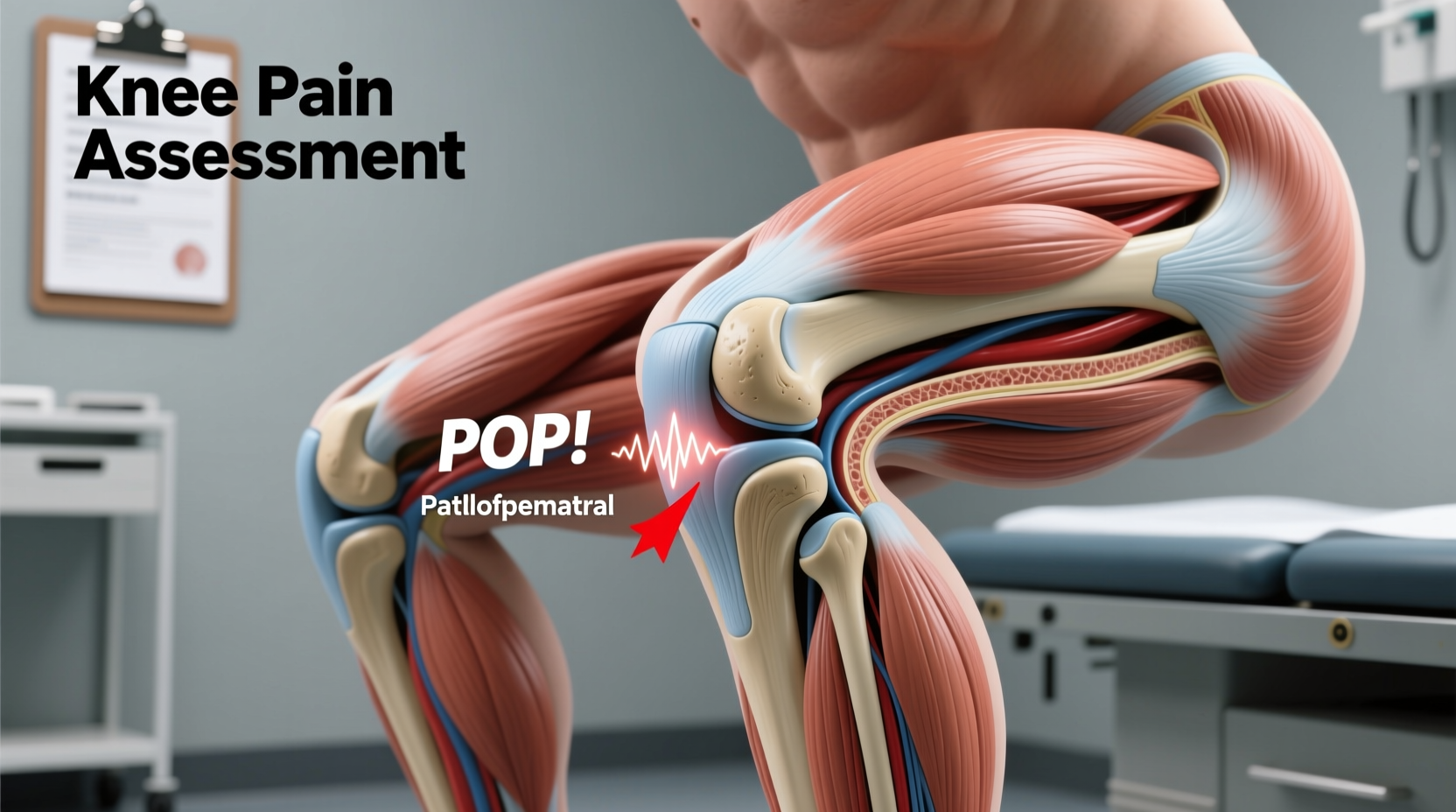
Knee crepitus refers to any audible or palpable snapping, cracking, or popping sensation around the knee joint. These sounds can occur with or without pain, and their origin varies depending on biomechanics, tissue condition, and joint dynamics.
One of the most common explanations is **cavitation**—the formation and collapse of gas bubbles within the synovial fluid that lubricates your joints. When you bend your knee during a squat, changes in pressure inside the joint capsule can cause nitrogen and other gases dissolved in the fluid to form small bubbles. As these bubbles burst, they create a popping sound. This process is entirely painless and typically occurs only once per session until the joint resets.
Another frequent cause is **tendon or ligament movement** over bony structures. The iliotibial (IT) band, patellar tendon, or hamstring tendons may shift slightly as the knee flexes and extends, creating a snap or pop as they glide across prominences like the femoral condyle or tibial tuberosity. This is especially noticeable in individuals with tight soft tissues or muscular imbalances.
In some cases, mechanical irregularities such as **cartilage wear**, **meniscus tears**, or **patellofemoral tracking issues** can produce repetitive popping accompanied by discomfort. For example, a piece of frayed meniscal tissue might catch between the femur and tibia during deep flexion, causing both noise and a catching sensation.
When Should You Be Concerned About Knee Popping?
While occasional pain-free popping is generally benign, certain red flags suggest the need for further evaluation. These symptoms indicate possible structural damage or progressive degeneration and should not be ignored:
- Pain during or after squatting
- Swelling or warmth around the joint
- Feeling of instability or “giving way”
- Locking or inability to fully straighten the knee
- Repetitive popping at the same point in motion
- Recent injury followed by new-onset crepitus
If you experience any combination of these, particularly pain localized under or around the kneecap (anterior knee pain), it could point to conditions such as chondromalacia patellae, meniscal pathology, or early osteoarthritis.
“Joint sounds without symptoms are usually nothing more than mechanical noise. But when pain, swelling, or dysfunction accompanies the pop, it’s time to look deeper.” — Dr. Alicia Nguyen, Sports Medicine Physician
Do’s and Don’ts: Managing Knee Pops Safely
| Do’s | Don’ts |
|---|---|
| Do strengthen your quadriceps and glutes. Balanced strength supports proper patellar tracking and reduces stress on the joint. | Don’t ignore persistent pain. Pushing through discomfort can worsen underlying injuries. |
| Do improve ankle and hip mobility. Restricted motion upstream or downstream forces compensatory movements at the knee. | Don’t eliminate squats prematurely. Removing functional movements can lead to weakness and deconditioning. |
| Do use controlled tempo in squats. Slow eccentrics help build control and reduce impingement risks. | Don’t rely solely on passive treatments. Ice and rest help acutely, but long-term solutions require active rehab. |
| Do assess your footwear and surface. Poor support or uneven ground increases shear forces on the knee. | Don’t assume surgery is needed. Most non-traumatic knee issues respond well to conservative care. |
Step-by-Step Guide to Evaluating and Responding to Knee Popping
Follow this practical sequence to determine whether your knee pop warrants concern—and how to adjust your routine accordingly.
- Assess for pain and function. Perform five bodyweight squats slowly. Note whether the pop happens with pain, stiffness, or a catching sensation. Record your observations.
- Check range of motion. Can you squat deeply without restriction? Limited depth may indicate tightness in the hips, ankles, or quads contributing to abnormal knee mechanics.
- Test single-leg stability. Try a slow air squat on one leg. Wobbling, knee valgus (inward collapse), or immediate popping suggests neuromuscular control deficits.
- Modify your squat temporarily. Reduce depth, load, or speed. Switch to goblet squats or box squats to maintain movement while decreasing strain.
- Begin targeted strengthening. Focus on glute medius (side-lying leg lifts), VMO (terminal knee extensions), and core stability (planks, bird-dogs).
- Reassess weekly. Gradually reintroduce deeper or loaded squats if symptoms improve. Stop progression if pain returns.
- Consult a professional if unresolved. A physical therapist can perform a gait analysis, assess tracking, and prescribe corrective exercises tailored to your biomechanics.
Real Example: From Painful Pops to Pain-Free Strength
Consider Mark, a 34-year-old software engineer who started a home workout program six weeks ago. He began doing bodyweight squats and push-ups daily, gradually adding dumbbells. After three weeks, he noticed a sharp pop in his right knee during each descent, followed by a dull ache behind the kneecap.
Initially, Mark stopped all squatting, fearing he’d damaged his knee. But after consulting a physical therapist, he learned that his ankle dorsiflexion was limited due to prolonged sitting and poor footwear. This restriction forced his knee to move excessively forward during squats, increasing pressure under the patella and irritating the fat pad below.
His treatment plan included calf stretches, banded ankle mobilizations, and quad-dominant strength work with reduced depth. Within four weeks, the popping decreased significantly, and by week eight, he could perform full-depth goblet squats without pain. The key wasn’t stopping exercise—it was modifying it intelligently.
Can You Still Exercise With a Popping Knee?
The short answer: Yes, in most cases. Avoiding all activity due to joint noise leads to muscle atrophy, reduced circulation, and stiffer joints—ironically worsening the very problem you’re trying to prevent.
Instead of quitting, focus on intelligent exercise selection. Replace high-shear movements like deep back squats with alternatives such as:
- Box squats – Control depth and promote hip hinge mechanics
- Goblet squats – Encourage upright posture and better alignment
- Split squats or lunges – Reduce compressive load while building unilateral strength
- Leg press (with caution) – Allows loading with less balance demand, but avoid excessive knee flexion if painful
Cardio options like cycling, swimming, or elliptical training also maintain fitness without aggravating knee mechanics. The goal is to stay active while addressing root causes rather than reacting fearfully to symptoms.
Frequently Asked Questions
Is knee popping a sign of arthritis?
Not necessarily. While joint degeneration in osteoarthritis can produce grinding sensations (crepitus), many young, healthy individuals experience painless popping without cartilage damage. Arthritis is more likely if popping is accompanied by morning stiffness, swelling, and progressive loss of motion.
Should I crack my knee intentionally to relieve the pop?
No. Repeatedly manipulating your knee to recreate the pop offers no therapeutic benefit and may irritate surrounding tissues. Joint cavitation is temporary and self-limiting; forcing it provides fleeting relief at best.
Can physical therapy fix knee popping?
Yes, especially when caused by muscular imbalances, poor movement patterns, or joint hypomobility. A skilled therapist can identify faulty mechanics, prescribe corrective exercises, and use manual techniques to restore smooth joint motion.
Action Plan Checklist: Responding to Knee Pops
Use this checklist to take proactive steps toward healthier knees:
- ✅ Determine if the pop is painful or painless
- ✅ Evaluate your squat form via video or professional assessment
- ✅ Test ankle mobility and hip strength
- ✅ Incorporate glute and quad activation drills before workouts
- ✅ Modify squat depth or type temporarily if needed
- ✅ Add low-impact conditioning to maintain aerobic fitness
- ✅ Schedule a PT evaluation if symptoms persist beyond 2–3 weeks
“Movement is medicine for the joints. Synovial fluid circulates best under load, and cartilage thrives on compression and release cycles. Stopping exercise out of fear does more harm than good.” — Dr. Lena Patel, Orthopedic Rehabilitation Specialist
Conclusion: Stay Active, Stay Informed
Hearing your knee pop during a squat doesn’t automatically mean something is wrong. Millions of people experience similar noises without ever developing problems. What matters most is context: Is there pain? Swelling? Loss of function? Without these warning signs, continuing to exercise—with attention to form and progression—is not only safe but beneficial.
If discomfort arises, don’t panic—pause, assess, and adapt. Use the tools outlined here to troubleshoot potential causes, modify your training intelligently, and seek expert input when necessary. Your knees are built for movement, not avoidance. By listening closely to what your body tells you—not just the sounds, but the sensations—you can maintain strength, mobility, and confidence for years to come.




 浙公网安备
33010002000092号
浙公网安备
33010002000092号 浙B2-20120091-4
Comments
No comments yet. Why don't you start the discussion?