
Kombucha is beloved for its tangy, effervescent character—but when that tang crosses into sharp, sour vinegar territory, something in the fermentation process has likely gone off track. While a mildly vinegary note is natural and even desirable, an overpowering acidic bite can make your brew unpalatable. The good news: this issue is both common and fixable. Understanding the science behind kombucha fermentation allows you to regain control over flavor, acidity, and timing. Whether you're a beginner or an experienced brewer, learning how to diagnose and correct over-acidification ensures consistently balanced, refreshing kombucha.
Understanding the Science of Kombucha Fermentation
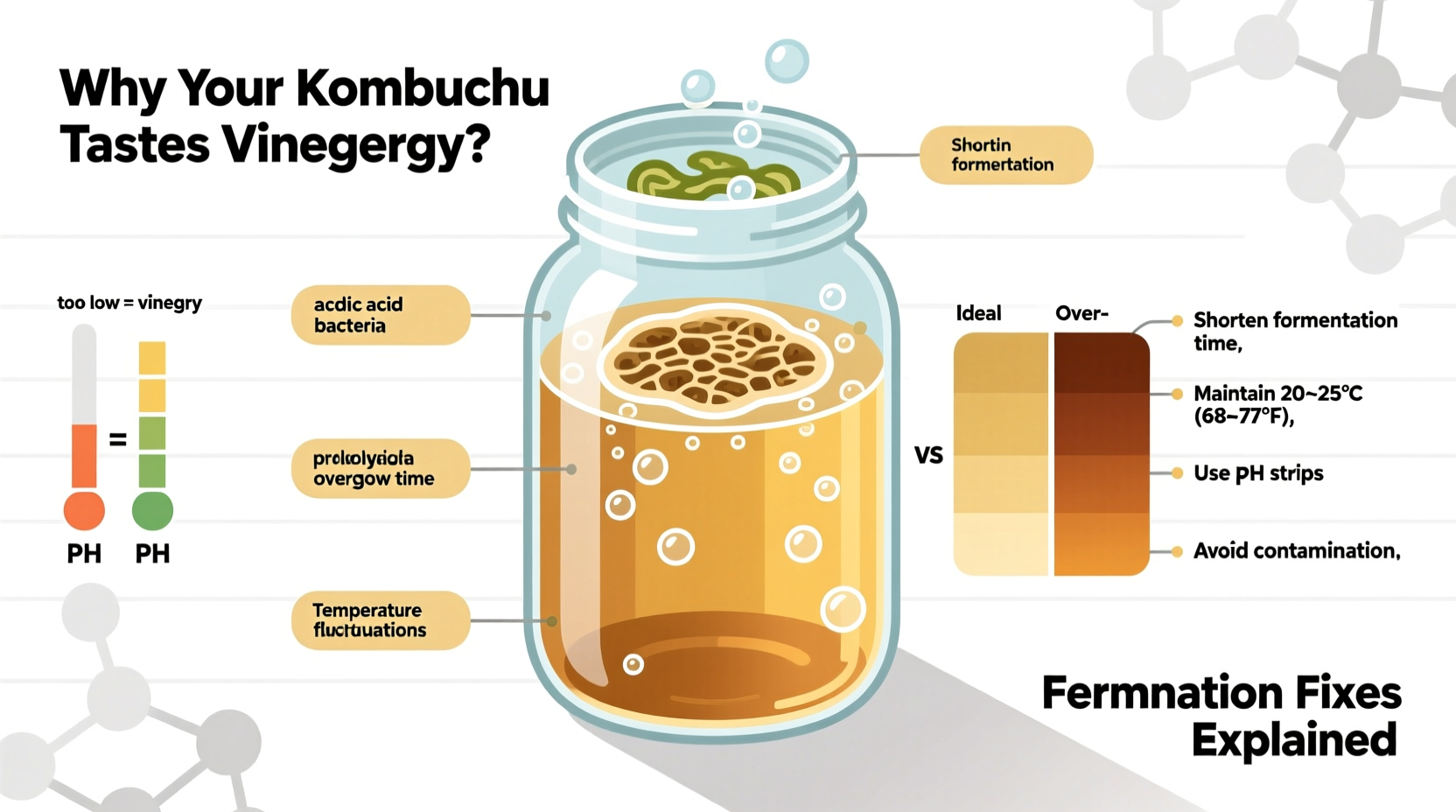
Kombucha is produced through a symbiotic culture of bacteria and yeast (SCOBY) fermenting sweetened tea. During this process, yeast consume sugar and produce alcohol, which acetic acid bacteria then convert into acetic acid—the primary compound responsible for the vinegar-like taste. This transformation is essential, but imbalance leads to excessive acidity.
The key players in flavor development are:
- Acetobacter species: Convert ethanol into acetic acid; thrive in aerobic conditions.
- Yeast strains: Break down sucrose into glucose and fructose, producing ethanol and CO₂.
- pH levels: A healthy kombucha batch typically reaches pH 2.5–3.5. Below 2.5, it becomes sharply sour.
Fermentation duration, temperature, sugar concentration, and SCOBY health all influence how quickly acids accumulate. When any of these factors skew too far, the result is often a brew that tastes more like apple cider vinegar than a refreshing fermented tea.
Common Causes of Overly Vinegary Kombucha
Several interrelated factors can push kombucha past pleasant tartness into harsh acidity. Identifying the root cause is the first step toward correction.
1. Extended Fermentation Time
The most frequent culprit is simply leaving the brew too long. Primary fermentation typically lasts 7–14 days. Beyond two weeks, acetic acid production accelerates as available sugar diminishes, forcing bacteria to intensify acid output.
2. High Ambient Temperatures
Kombucha ferments best between 68°F and 78°F (20°C–26°C). Above this range, microbial activity increases dramatically. At 80°F+, fermentation may complete in half the time, increasing the risk of over-acidification if not monitored closely.
3. Excessive Starter Tea or Mature SCOBY
Using too much starter liquid (especially from a previous overly acidic batch) lowers the initial pH too quickly, giving acid-producing bacteria a head start. Similarly, a thick, mature SCOBY with high bacterial density can accelerate acid development.
4. Low Sugar Concentration
While reducing sugar seems like a way to make kombucha healthier, starting with less than ¾ cup of sugar per gallon deprives yeast of fuel. This forces bacteria to rely on existing acids and creates a prematurely sour environment.
5. Poor Airflow or Contamination Risk
Although kombucha needs oxygen for acetic acid production, poor airflow can create uneven fermentation zones. Paradoxically, restricted airflow might encourage certain acid-dominant strains to dominate, especially if mold or wild contaminants subtly shift microbial balance.
“Many home brewers don’t realize how sensitive kombucha is to temperature fluctuations. Just a few degrees can cut fermentation time in half.” — Dr. Lena Torres, Microbiologist & Fermentation Scientist
Step-by-Step Guide to Fix and Prevent Vinegary Kombucha
Correcting vinegary kombucha isn’t just about fixing one batch—it’s about refining your entire brewing rhythm. Follow this timeline-based approach to regain control.
- Day 1: Brew Sweet Tea Base
Create a standard solution: 1 gallon of water, ¾ cup white sugar, 4–6g of black or green tea. Boil, steep, cool completely. This ratio provides enough sugar for balanced fermentation. - Day 1 (after cooling): Begin Fermentation
Pour cooled tea into a clean glass jar. Add 1–2 cups of starter tea (ideally from a balanced, not overly sour batch). Introduce your SCOBY gently. Cover with breathable cloth secured by a rubber band. - Days 2–6: Monitor Daily
Check temperature daily. Ideal range: 72°F–76°F. Taste test starting on day 5 using a sanitized straw. Look for developing sweetness, mild tartness, and fading sweetness. - Days 7–10: Critical Decision Window
Taste again. If tartness dominates and sweetness is nearly gone, it’s time to bottle—even if it feels early. Delaying risks further acid buildup. Target bottling at pH 3.0–3.5. - Bottling: Halt Acid Production
Remove SCOBY and 1–2 cups of liquid for starter tea. Transfer remaining kombucha to bottles. Refrigerate immediately or proceed to flavoring and secondary fermentation for carbonation. - If Already Too Sour: Repurpose Strategatively
Mix 1 part over-fermented kombucha with 2 parts fresh sweet tea or juice to rebalance. Use as a salad dressing base, marinade, or detox tonic where strong acidity is beneficial.
Do’s and Don’ts: Fermentation Best Practices Table
| Do’s | Don’ts |
|---|---|
| Use ¾ cup sugar per gallon of water | Reduce sugar below ½ cup per gallon |
| Maintain consistent temperature (72°F–76°F) | Place near heat sources or drafty windows |
| Use 1–2 cups starter tea per gallon | Add more than 2 cups of starter liquid |
| Taste test starting on day 5 | Wait until day 14 without checking |
| Store finished kombucha in the refrigerator promptly | Leave bottled kombucha at room temperature indefinitely |
Real Example: Recovering a Vinegar-Like Batch
Sophia, a home brewer in Portland, noticed her last three batches tasted increasingly sharp. Despite following the same recipe, each one became undrinkable after 12 days. After reviewing her setup, she realized her kitchen had warmed to 80°F due to summer sun through a south-facing window. She also discovered she’d been using 3 cups of starter tea—leftover from a previous over-fermented batch—to “jumpstart” fermentation.
Adjusting her process, Sophia moved the jar to a cooler basement shelf (74°F), reduced starter tea to 1.5 cups, and began tasting on day 6. Her next batch reached ideal balance on day 9—tangy but rounded, with lingering sweetness. By identifying environmental and procedural flaws, she transformed inconsistent results into reliable, drinkable kombucha.
Checklist: How to Avoid Vinegary Kombucha
- ✅ Use precise sugar measurements: ¾ cup per gallon
- ✅ Maintain fermentation temperature between 72°F and 76°F
- ✅ Use only 1–2 cups of starter tea per batch
- ✅ Begin taste testing on day 5 or 6
- ✅ Bottle when slight sweetness remains (pH 3.0–3.5)
- ✅ Store finished kombucha in the refrigerator to halt fermentation
- ✅ Rotate or thin thick SCOBYs every few batches
- ✅ Label bottles with brew date to avoid accidental over-fermentation
FAQ: Addressing Common Concerns
Can I still drink kombucha that tastes like vinegar?
Yes, it’s safe to consume. Overly acidic kombucha is still antimicrobial and rich in organic acids. However, it may be too harsh for direct drinking. Dilute with water, mix into smoothies, or use in culinary applications like dressings or deglazing pans.
Does refrigeration stop the souring process completely?
Refrigeration drastically slows fermentation but doesn’t stop it entirely. Acidity will continue to rise very slowly over months. For longest shelf life and stable flavor, consume refrigerated kombucha within 1–2 months.
Can I reuse a SCOBY from a vinegary batch?
Absolutely. The SCOBY itself isn’t “bad,” but if repeatedly used with imbalanced conditions, it may develop a higher ratio of acid-producing bacteria. To reset, brew a few balanced batches using proper ratios and temperature. The SCOBY will adapt over time.
Conclusion: Master Your Brew Through Awareness and Adjustment
Vinegary kombucha isn't a failure—it's feedback. Each batch teaches you more about your environment, your SCOBY, and the delicate dance of fermentation. By understanding the causes of excess acidity and applying targeted corrections, you transform unpredictable results into consistent, enjoyable brews. Temperature control, precise ingredient ratios, and attentive tasting are the pillars of balanced kombucha. Don’t fear the sour; learn from it. With practice, you’ll develop an instinct for the perfect moment to bottle—when acidity and sweetness meet in harmony.




 浙公网安备
33010002000092号
浙公网安备
33010002000092号 浙B2-20120091-4
Comments
No comments yet. Why don't you start the discussion?