
It’s a familiar frustration: your laptop runs smoothly for months, then suddenly—after a Windows or macOS update—it feels sluggish, unresponsive, and overloaded. You didn’t install new software, yet everything from startup to web browsing takes longer. Updates are meant to improve security and performance, so why does the opposite happen?
The truth is, system updates often introduce background processes, compatibility issues, or resource-heavy features that weren’t present before. While these changes aim to enhance functionality, they can inadvertently strain older hardware or clash with existing configurations. The good news? Most post-update slowdowns are temporary and fixable.
Understanding the root causes—and knowing exactly what steps to take—can help you reclaim your laptop’s original speed without needing a replacement.
Why Laptop Performance Drops After System Updates
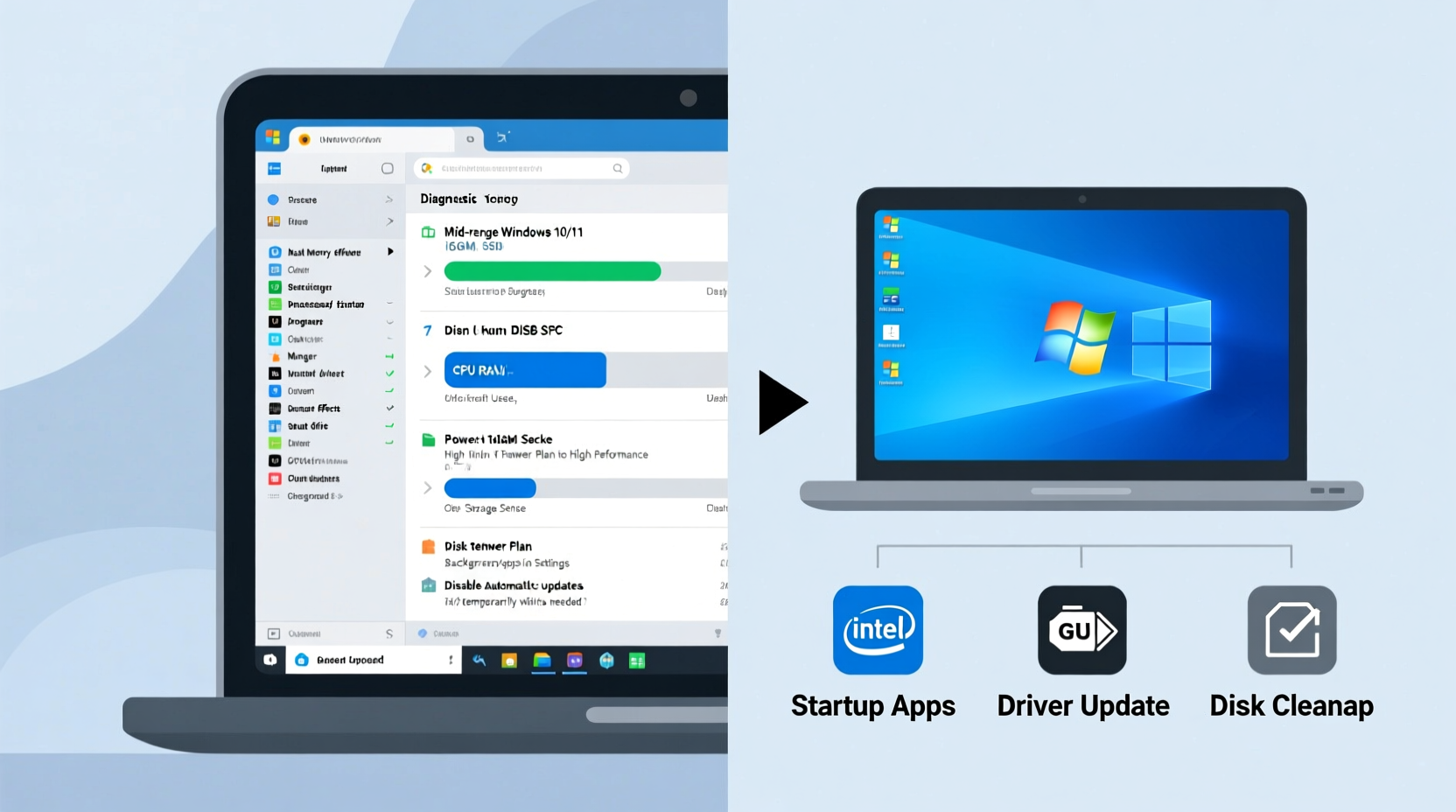
System updates don’t just patch security holes—they reconfigure how your operating system interacts with hardware, drivers, and installed applications. Sometimes, this leads to unintended consequences.
- New background services: Updates may activate telemetry tools, indexing systems, or cloud sync processes that consume CPU and disk resources.
- Driver incompatibility: Updated OS components might conflict with older or outdated drivers, especially for graphics, network, or chipset devices.
- Bloatware installation: Some updates silently add trial software or promotional apps that run at startup.
- Increased system requirements: Newer versions of operating systems demand more RAM and processing power, which older laptops struggle to deliver.
- Indexing and caching resets: After an update, the system often rebuilds search indexes and caches, causing high disk usage temporarily.
According to Microsoft, “Windows Feature Updates can trigger a period of optimization as the system adapts to new components.” This adjustment phase typically lasts 24–72 hours—but if your laptop remains slow beyond that window, intervention is needed.
“Post-update slowdowns are rarely permanent. In most cases, performance loss stems from misconfigured services or inefficient resource allocation—not hardware failure.” — Dr. Alan Reyes, Senior Systems Engineer at TechFlow Labs
Immediate Fixes to Restore Laptop Speed
If your laptop has become noticeably slower right after an update, try these targeted solutions in order. Many users report significant improvements within minutes.
1. Restart Your Laptop (Properly)
Sounds simple, but many users only use sleep mode or quick restarts. A full shutdown clears temporary files and stops rogue processes. Hold the power button until the machine powers off completely, wait 30 seconds, then turn it back on.
2. Check for Ongoing Background Activity
After an update, your system may still be finalizing installations or optimizing files. Open Task Manager (Ctrl+Shift+Esc) and look under the “Processes” tab.
Wait 1–2 hours if heavy activity persists. If it continues beyond that, further action is required.
3. Disable Unnecessary Startup Programs
Updates often re-enable apps to launch at startup—even those you previously disabled. To manage them:
- Press Ctrl+Shift+Esc to open Task Manager.
- Go to the “Startup” tab.
- Right-click any non-essential program (e.g., Spotify, Adobe Updater, OneDrive) and select “Disable.”
Focusing on high-impact items (those labeled “High” in the “Startup impact” column) usually yields the best results.
Advanced Optimization Techniques
When basic troubleshooting doesn’t resolve the lag, deeper system tuning is necessary. These methods address hidden inefficiencies introduced during updates.
Update or Roll Back Drivers
Outdated or mismatched drivers are one of the top culprits behind post-update slowdowns.
To update drivers:
- Press Win + X and select Device Manager.
- Expand categories like Display adapters, Network adapters, and System devices.
- Right-click each device and choose “Update driver,” then “Search automatically for updated driver software.”
If problems began immediately after a driver update, consider rolling back:
- In Device Manager, right-click the device > Properties > Driver tab > Roll Back Driver (if available).
Adjust Visual Effects for Best Performance
Fancy animations and transparency effects consume GPU and CPU cycles. On older machines, disabling them can make a noticeable difference.
Navigate to:
- Settings > System > About > Advanced system settings
- Under Performance, click “Settings”
- Select “Adjust for best performance” or manually disable effects like animations and shadows
Clear Temporary Files and Reset Disk Caching
Updates generate gigabytes of temporary data. Use Disk Cleanup to remove them:
- Type “Disk Cleanup” in the Start menu.
- Select your main drive (usually C:).
- Check boxes for “Temporary files,” “Previous Windows installation(s),” and “Update cleanup.”
- Click “OK” and confirm deletion.
Do’s and Don’ts After a Major Update
| Do | Don't |
|---|---|
| Allow 24–72 hours for system optimization post-update | Immediately uninstall the update out of frustration |
| Run a full virus scan—some malware exploits update windows | Ignore repeated crashes or blue screens |
| Backup important data before making major changes | Disable Windows Update permanently |
| Use built-in tools like Performance Monitor or Resource Monitor to diagnose bottlenecks | Install third-party “PC optimizer” software—many are scams |
| Check manufacturer’s website for BIOS/firmware updates compatible with the new OS version | Overclock hardware unless experienced |
Step-by-Step Recovery Plan for Severely Sluggish Laptops
If your laptop remains slow after trying basic fixes, follow this structured recovery process:
- Day 1 – Diagnose & Isolate
- Boot into Safe Mode (hold Shift while clicking Restart > Troubleshoot > Advanced Options > Startup Settings > Enable Safe Mode).
- If performance improves in Safe Mode, the issue is software-related (likely startup apps or services).
- Day 1 – Clean Up Resources
- Run Disk Cleanup and clear browser caches.
- Uninstall unused programs via Settings > Apps > Installed apps.
- Day 2 – Repair System Files
- Open Command Prompt as Administrator (search “cmd,” right-click > Run as administrator).
- Run:
sfc /scannow— this checks for corrupted system files. - After completion, run:
Dism /Online /Cleanup-Image /RestoreHealth - Restart when done.
- Day 3 – Consider a Repair Install
- Download the official Media Creation Tool from Microsoft.
- Run the installer and choose “Upgrade this PC now.”
- This reinstalls Windows while preserving your files and most apps.
- Day 4+ – Evaluate Hardware Limits
- If slowness persists even after a clean repair install, your hardware may no longer meet modern demands.
- Consider upgrading RAM (8GB minimum for Windows 11) or replacing an HDD with an SSD.
Real-World Example: Recovering a Stalled Work Laptop
Sarah, a freelance graphic designer, updated her 5-year-old Dell Inspiron to Windows 11 23H2. Within hours, Photoshop became unresponsive, and boot time jumped from 30 seconds to over 3 minutes.
She first checked Task Manager and found “Windows Search” using 95% disk continuously. After disabling unnecessary startup apps and running sfc /scannow, performance improved slightly—but not enough.
Next, she used Disk Cleanup to delete 18 GB of old update files. Then, she rolled back her Intel graphics driver through Device Manager. Finally, she adjusted visual effects for best performance.
Result: Boot time dropped to 45 seconds, and application responsiveness returned to pre-update levels—all without losing any data or reinstalling software.
FAQ: Common Questions About Post-Update Slowdowns
Can I undo a Windows update if it made my laptop slow?
Yes—but only within 10 days of installation. Go to Settings > Windows Update > Update history > Uninstall updates. Note: Security updates cannot be removed individually. For major feature updates, use “Go back” in the recovery options if still available.
Will resetting my PC fix update-related slowdowns?
A reset (Settings > System > Recovery > Reset PC) can help, but it should be a last resort. Choose “Keep my files” to remove apps and settings while preserving documents. However, you’ll need to reinstall software afterward.
Is it safe to delay system updates to avoid slowdowns?
You can delay updates temporarily (up to 35 days in Windows Pro), but doing so long-term exposes your system to security risks. Instead, schedule updates during low-usage periods and perform maintenance right after.
Final Checklist: Regain Speed After an Update
- Restart the laptop fully (not sleep/hibernate)
- Monitor Task Manager for high CPU/Disk usage
- Disable unnecessary startup programs
- Run Disk Cleanup including “Previous Windows installation(s)”
- Update or roll back problematic drivers
- Run SFC and DISM commands to repair system files
- Adjust performance settings for best speed
- Consider a repair install if issues persist
- Evaluate hardware upgrades (SSD, RAM) for aging systems
Conclusion: Take Control of Your Laptop’s Performance
Your laptop shouldn’t suffer because your operating system got smarter. While updates are essential for security and functionality, they don’t have to come at the cost of speed. By understanding the underlying causes—from bloated processes to driver mismatches—you gain the power to respond effectively.
Most slowdowns are reversible with the right approach. Whether it’s disabling a single startup app or performing a system file repair, the tools are already on your machine. Don’t accept sluggishness as inevitable. With careful diagnosis and targeted fixes, you can restore smooth performance—and extend your laptop’s useful life.




 浙公网安备
33010002000092号
浙公网安备
33010002000092号 浙B2-20120091-4
Comments
No comments yet. Why don't you start the discussion?