
There’s nothing more disappointing than unpacking your festive LED Christmas garland, draping it across the mantel or staircase, only to find it flickering—or worse, completely dead—just days later. While LED lights are marketed as energy-efficient and long-lasting, real-world performance often falls short, especially with seasonal decor that sees heavy use over a short period. The good news is that most failures aren’t random. They stem from predictable issues related to design, power supply, environmental exposure, and usage patterns. This guide dives deep into why your LED garland might fail prematurely and provides actionable solutions to diagnose, repair, and prevent future problems.
Understanding How LED Garland Lights Work
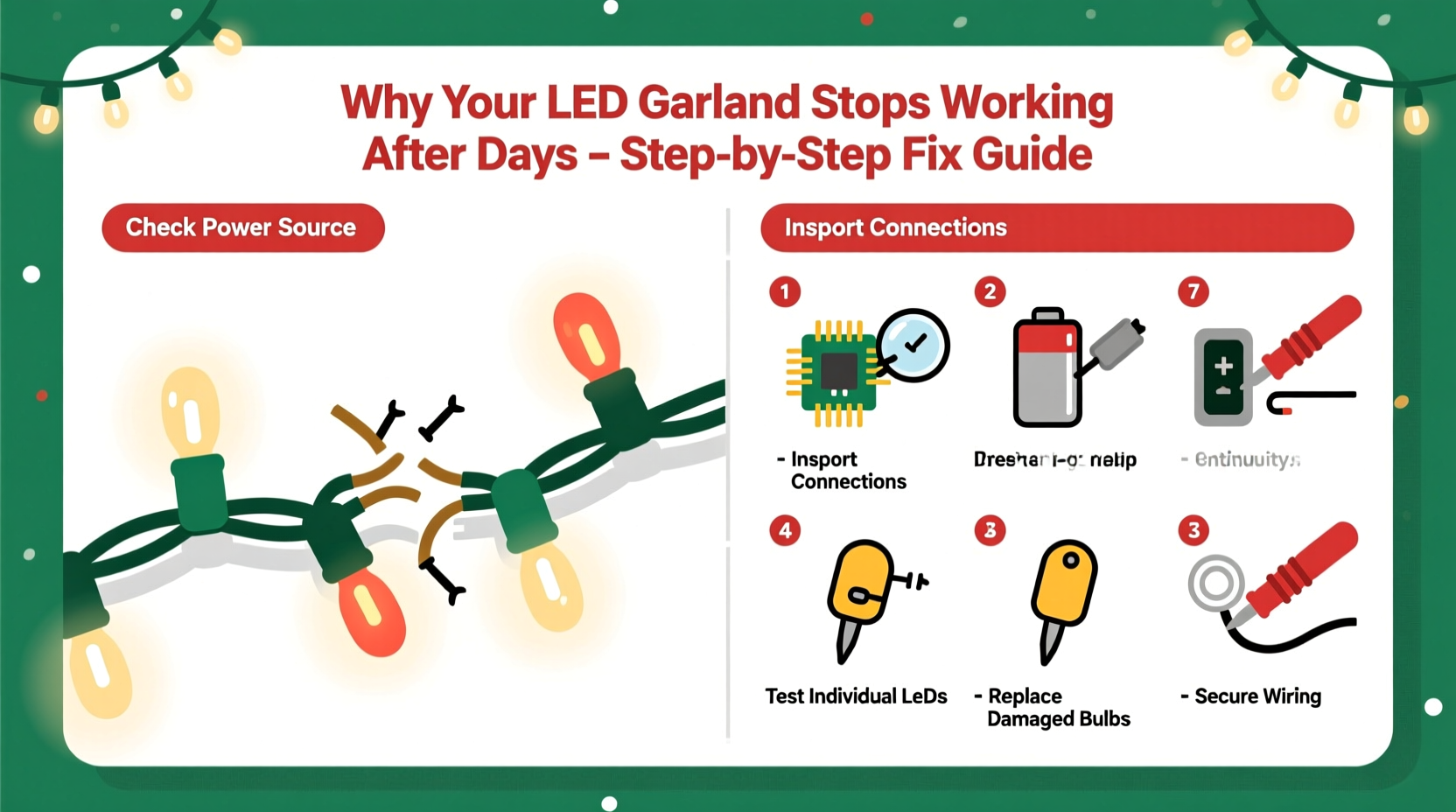
Before troubleshooting, it helps to understand the basic structure of an LED garland. Unlike traditional incandescent strings, LED lights operate on low voltage and are typically wired in one of two configurations: series or parallel (or a hybrid). In a series circuit, if one LED fails, it can break the entire circuit, causing the whole string to go dark. Parallel wiring isolates each bulb, so one failure doesn’t affect others—but many budget garlands use a mix that increases vulnerability.
Most plug-in LED garlands run on AC power converted to DC via a transformer in the plug or adapter. Battery-powered versions use internal circuits to regulate voltage from AA or C cells. Over time, heat buildup, moisture ingress, or voltage spikes can degrade solder joints, thin wires, or individual LEDs—especially in cheaper models.
“Many holiday LED products are built for cost efficiency, not durability. A 50,000-hour lifespan on paper means little when thermal stress and poor component quality cut actual life to weeks.” — Raj Patel, Electrical Engineer & Lighting Systems Consultant
Common Causes of Premature Failure
When your LED garland stops working after just a few days, the root cause usually lies in one of these areas:
- Overheating from prolonged use: Running lights 24/7 generates heat, especially if bundled tightly or placed near heat sources like radiators or fireplaces.
- Voltage overload or surge damage: Power surges during winter storms or from shared outlets can fry delicate LED drivers.
- Poor manufacturing quality: Thin wires, weak solder joints, and substandard encapsulation make lights vulnerable to vibration and temperature changes.
- Moisture exposure: Even indoor garlands can suffer if used in damp areas like porches or near humidifiers.
- Battery-related issues (for battery-powered models): Leaking batteries, corroded contacts, or mismatched charge levels can interrupt power flow.
- Physical damage during setup: Bending, stretching, or pinching the wire during installation can break internal connections.
Step-by-Step Troubleshooting Guide
Follow this logical sequence to identify and resolve the issue with your failing garland.
- Verify the power source
Plug the garland into a different outlet known to work. If it lights up, the original outlet may be faulty. For battery-powered units, replace all batteries with fresh ones of the same type and brand—never mix old and new. - Inspect the plug and cord
Look for visible damage: fraying, kinks, or melted sections near the plug. Gently bend the cord near the plug while powered—if the lights flicker, there’s likely a broken wire. - Check the fuse (if applicable)
Many plug-in LED strings have small fuses inside the plug. Use a screwdriver to open the fuse compartment (unplugged!) and examine the tiny glass tube. If the filament is broken, replace it with an identical-rated fuse (usually 3A). - Test individual sections
Some garlands are segmented. Unplug any connectors between sections and test each part separately. A single bad segment can disrupt the whole chain. - Look for dark or damaged LEDs
Examine bulbs closely. A blackened or cloudy LED often indicates burnout. While hard to replace individually, its failure in a series circuit can kill the entire string. - Examine the controller or switch
If your garland has a mode selector or dimmer, toggle through settings. A stuck switch or failed controller board can prevent activation even if the LEDs are functional. - Use a multimeter for advanced diagnosis
Set to continuity or DC voltage. Test input at the plug, then trace along the circuit. No voltage past a certain point suggests a break. Check output from the transformer—if missing, the driver is dead.
Tips for Extending LED Garland Lifespan
Prevention is more effective than repair. These practices help avoid repeat failures:
| Do | Avoid |
|---|---|
| Use a surge protector for plug-in models | Plugging into overloaded power strips |
| Store loosely coiled in a climate-controlled space | Squeezing into tight boxes that stress wires |
| Remove batteries during off-season storage | Leaving dead batteries inside the housing |
| Clean gently with a dry cloth before storing | Using water or cleaning sprays on electrical parts |
| Label and separate by type and length | Mixing different voltage or control systems |
Mini Case Study: The Living Room Mantle Mystery
Sarah in Minneapolis set up her new LED garland above the fireplace on December 1st. By December 4th, half the strand had gone dark. She tried replacing the fuse—no change. After reading online about voltage drop in long runs, she tested each segment and found the middle section was dead. Using a multimeter, she detected power going in but none coming out. Closer inspection revealed a tiny crack in the circuit board where the wires entered the connector. Likely cause: expansion and contraction from heat rising off the fireplace weakened the solder joint within days.
Solution: Sarah contacted the manufacturer, who sent a replacement segment under warranty. She relocated the garland further from the heat source and installed a timer to limit daily use. The garland lasted the full season without further issues.
Checklist: Restore Your LED Garland in 10 Minutes
Keep this quick-reference checklist handy during the holidays:
- ✅ Unplug the garland
- ✅ Try a different power outlet
- ✅ Replace all batteries (if applicable)
- ✅ Open fuse compartment and inspect/replace fuse
- ✅ Visually scan for burnt or loose LEDs
- ✅ Disconnect and test each segment
- ✅ Ensure controllers and switches are functioning
- ✅ Check for physical damage along the wire
- ✅ Reconnect securely and plug back in
- ✅ If still not working, consider professional repair or replacement
FAQ: Common Questions About Failing LED Garlands
Can I replace a single LED in my garland?
Technically yes, but it’s rarely practical. Most LEDs are surface-mounted and require soldering skills and precise tools. For non-technical users, replacing the entire segment or garland is more feasible. Some manufacturers sell repair kits with pre-soldered replacement bulbs.
Why do my lights work for a few hours and then turn off?
This is often due to a built-in thermal cutoff switch designed to prevent overheating. If the garland gets too hot—usually from being coiled tightly or placed near heat—it shuts off automatically. It may restart once cooled. To fix, ensure proper airflow and avoid clustering.
Are outdoor-rated LED garlands better for indoor use?
Yes. Outdoor-rated lights are built to withstand temperature swings, moisture, and UV exposure, making them more durable overall—even indoors. They typically feature thicker insulation, better seals, and higher-quality components. Investing in outdoor-rated garlands for indoor use can significantly extend lifespan.
Conclusion: Keep the Holidays Bright
An LED Christmas garland that dies days into the season isn’t just inconvenient—it breaks the magic of the holidays. But with a clear understanding of how these lights fail and a systematic approach to troubleshooting, most issues can be diagnosed and often fixed. More importantly, adopting smarter usage and storage habits can prevent repeat failures year after year.
Don’t settle for flimsy, short-lived decor. Choose quality over quantity, protect your investment with surge protection and timers, and handle your lights with care. A little attention goes a long way in keeping your home glowing throughout the season.




 浙公网安备
33010002000092号
浙公网安备
33010002000092号 浙B2-20120091-4
Comments
No comments yet. Why don't you start the discussion?