
As the holiday season approaches, few things are more frustrating than stringing up your carefully stored LED Christmas lights—only to find they flicker unpredictably. Unlike traditional incandescent bulbs, LED strands are energy-efficient and long-lasting, but their complex circuitry can make them sensitive to minor issues. A flickering light isn’t just annoying; it could signal an underlying electrical problem or a failing component that might shorten the lifespan of your display.
Understanding the root causes of random flickering in LED Christmas lights is essential for both safety and performance. Whether you're decorating indoors or outdoors, identifying and fixing the issue promptly ensures your holiday lighting remains bright, consistent, and safe throughout the season.
Common Causes of LED Christmas Light Flickering
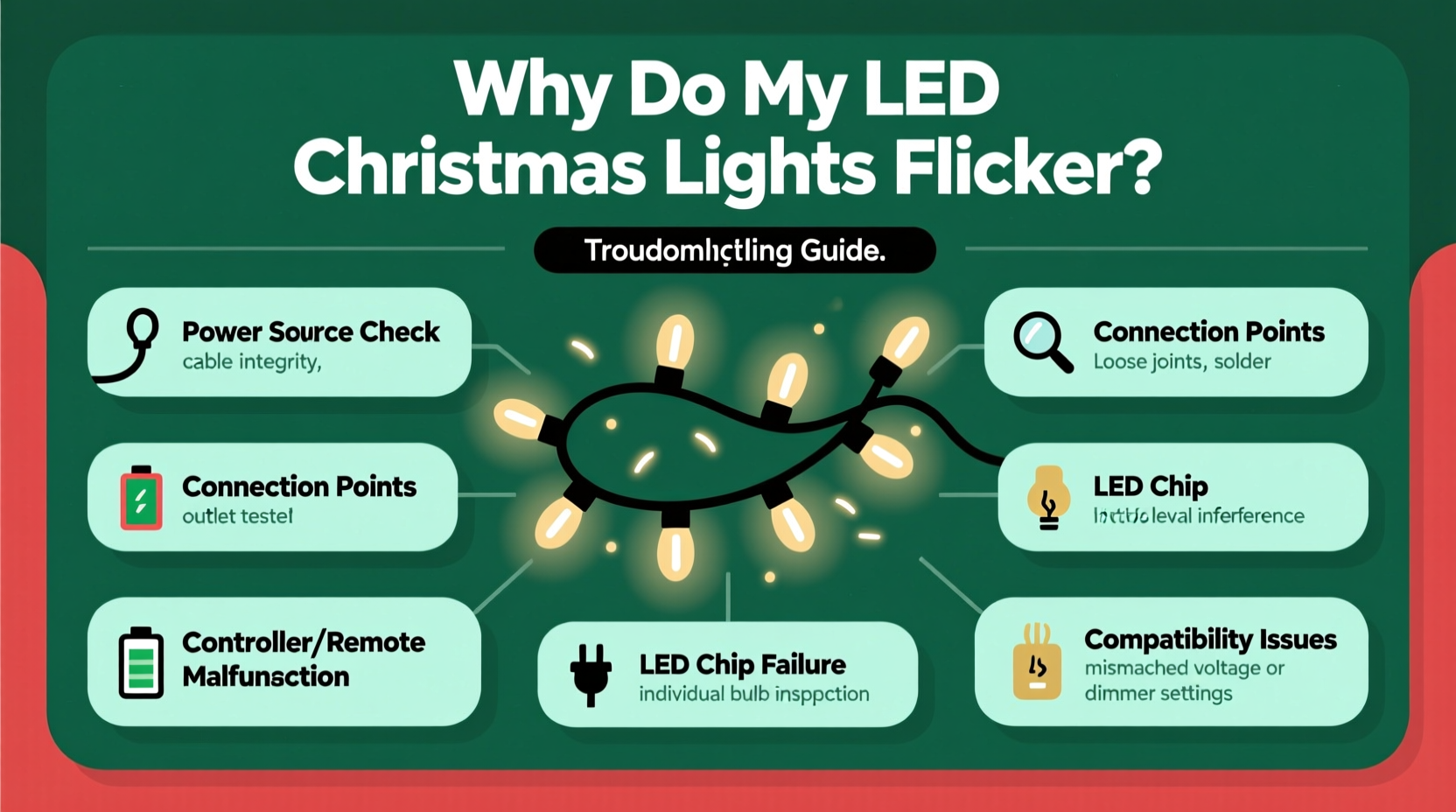
LED lights operate on low voltage and rely on precise electronic components like rectifiers, resistors, and drivers. Any disruption in this system can lead to flickering. The most frequent culprits include:
- Loose bulb connections: Even one poorly seated LED can interrupt the circuit, causing intermittent flickering across the entire strand.
- Faulty or damaged sockets: Corrosion, wear, or physical damage to the socket prevents proper contact with the bulb base.
- Power supply inconsistencies: Voltage fluctuations from overloaded circuits or incompatible dimmers can destabilize LED performance.
- Incompatible controllers or timers: Some digital timers or smart plugs send irregular signals that confuse LED drivers.
- Water ingress (for outdoor use): Moisture inside connectors or sockets creates short circuits or resistance changes.
- Aging or failing driver module: Many LED strings have built-in AC-to-DC converters. If this internal component degrades, flickering becomes common.
Unlike older incandescent sets, where a single dead bulb only darkened part of the strand, modern LED strings often use series-parallel configurations. This means a small fault can ripple through multiple sections, making diagnosis trickier.
Step-by-Step Troubleshooting Guide
Follow this systematic process to identify and resolve the cause of random flickering in your LED Christmas light strand.
- Unplug the strand completely. Safety first. Never attempt repairs while the lights are live.
- Inspect each bulb visually. Look for darkened, cracked, or discolored LEDs. Gently press each bulb into its socket to ensure a snug fit. Rotate slightly to reseat the connection.
- Check all connectors and junction boxes. Examine male and female ends for bent pins, corrosion, or debris. For outdoor strands, ensure rubber seals are intact and dry.
- Test with a different outlet. Plug the strand into a known-working circuit, preferably on a different wall or room. Avoid using extension cords during testing.
- Bypass timers and controllers. Plug directly into the wall to rule out interference from external devices.
- Try a different power source. If possible, test with a surge protector or a dedicated circuit not shared with large appliances.
- Divide and conquer. If you have multiple identical strands connected end-to-end, disconnect them one by one to isolate which segment causes the flicker.
- Use a multimeter (optional). Test continuity across suspect bulbs or measure output voltage at the plug to confirm stable ~5V DC (for most mini LED strings).
If the flickering stops after removing a particular section, focus your repair efforts there. Replace any visibly damaged bulbs or consider retiring older strands that show widespread wear.
Tips Box: Preventative Maintenance for Long-Lasting LED Lights
Do’s and Don’ts: Handling LED Christmas Light Issues
| Do | Don’t |
|---|---|
| Use LED-rated extension cords with adequate gauge (typically 16 AWG or lower) | Daisy-chain more than three strands unless labeled as connectable |
| Store lights in original packaging or ventilated containers | Wrap lights tightly around sharp edges or metal objects |
| Replace missing end caps on non-removable LED strings | Attempt to solder or modify factory-sealed LED circuits unless experienced |
| Clean connectors with isopropyl alcohol before connecting | Use household cleaners or water near electrical components |
| Check manufacturer warranties—some brands cover flickering within 2–3 seasons | Ignore persistent flickering—it may indicate fire risk due to overheating |
Mini Case Study: Solving Persistent Flickering on a Porch Display
Sarah from Portland had used the same set of 100-count warm-white LED lights on her front porch for five years. Last season, she noticed the entire strand would flicker erratically every few minutes, especially during rain. She replaced two bulbs that looked dimmer than others, but the problem persisted.
After reading about moisture-related failures, Sarah unplugged the lights and inspected the male plug connector. She found slight discoloration and a faint smell of burnt plastic. Using a cotton swab dipped in isopropyl alcohol, she cleaned both ends and let them dry overnight. When she reconnected them, the flickering stopped—but returned after a heavy drizzle.
The real culprit was a worn rubber seal on the female end. Water was seeping into the junction, creating intermittent conductivity. Sarah replaced the damaged connector with a waterproof replacement kit available online and added a silicone boot for extra protection. Since then, the lights have performed flawlessly—even through winter storms.
This case highlights how environmental exposure compounds over time, and how simple fixes can extend the life of quality LED strands.
Expert Insight: What Professionals Say About LED Reliability
“Most flickering in LED Christmas lights isn’t due to the LEDs themselves, but rather the supporting electronics—especially the driver circuit. These components are exposed to temperature swings, humidity, and power surges. A well-made strand should last 5+ seasons with minimal issues. Random flickering beyond year three often means the driver is failing.”
— James Rourke, Electrical Engineer & Holiday Lighting Consultant
Rourke also notes that cheaper LED strings often cut corners on capacitor quality and surge protection. “You get what you pay for,” he says. “Higher-end brands use better filtering and thermal management, which reduces flicker under load.”
When to Repair vs. Replace Your Strand
Not every flickering strand needs to be thrown away. However, knowing when to invest time in repairs versus replacing the whole set saves frustration later.
Consider repairing if:
- The strand is relatively new (under 3 years).
- You can pinpoint a single faulty bulb or loose connection.
- The lights are high-quality or custom-colored (hard to replace).
- The manufacturer offers replacement parts or warranty support.
Replace the strand if:
- Multiple sections flicker independently.
- There’s visible burn marks, melting, or strong odor.
- The set has been exposed to flooding or prolonged dampness.
- It exceeds the manufacturer’s maximum daisy-chain limit.
- Repairs become more costly or time-consuming than buying new.
Modern LED strings are surprisingly affordable. A $15 investment in a fresh, UL-listed strand often provides better brightness, uniformity, and reliability than struggling with a degraded older model.
FAQ: Common Questions About Flickering LED Christmas Lights
Can a bad outlet cause LED lights to flicker?
Yes. A loose receptacle, worn wiring, or a tripped GFCI outlet can cause inconsistent power delivery. Test your lights in another outlet to rule this out. If other devices also behave erratically on the same circuit, consult an electrician.
Why do my LED lights flicker only when I turn on other appliances?
This usually indicates circuit overload or voltage drop. Large appliances like refrigerators or space heaters draw significant current when starting up, momentarily reducing voltage available to other devices. Use a dedicated circuit for holiday lighting or stagger appliance usage.
Are flickering LED lights dangerous?
Occasional flickering due to a loose bulb is generally not hazardous. However, persistent or worsening flicker—especially with buzzing, heat, or burning smells—can indicate arcing, short circuits, or failing insulation. These conditions pose fire risks and should be addressed immediately.
Final Checklist: Fix Flickering Lights Like a Pro
- Unplug the strand and inspect all bulbs for looseness or damage.
- Clean connectors with isopropyl alcohol and allow to dry fully.
- Plug directly into a wall outlet—bypass timers, remotes, and smart switches.
- Test on a different circuit to rule out power supply issues.
- Disconnect daisy-chained segments to isolate the faulty section.
- Look for signs of moisture, corrosion, or melted plastic.
- Replace suspect bulbs with exact-match replacements (check voltage and base type).
- If unresolved, retire the strand and install a new, certified set.
Conclusion: Shine Bright Without the Flicker
Random flickering in LED Christmas light strands is a common but solvable issue. By understanding the technology behind these efficient lights—and applying methodical troubleshooting—you can restore reliable performance and enjoy a steady, festive glow. Most problems stem from simple causes: loose connections, environmental exposure, or incompatible accessories. Addressing them early prevents bigger hazards down the line.
With proper care, storage, and periodic inspection, your holiday lights can deliver years of brilliant displays. Don’t let flickering dim your cheer—take action now, and light up the season safely and beautifully.




 浙公网安备
33010002000092号
浙公网安备
33010002000092号 浙B2-20120091-4
Comments
No comments yet. Why don't you start the discussion?