
Sitting for prolonged periods has become an unavoidable part of modern life. Whether you're working at a desk, commuting, or binge-watching your favorite show, extended sitting often leads to one common complaint: lower back pain. Millions experience this dull, persistent ache that starts midday and lingers into the evening. While occasional discomfort might seem normal, chronic lower back pain after sitting is not something to ignore. It's usually a sign that your posture, seating setup, or daily movement habits are misaligned with your body’s biomechanical needs.
The lumbar spine—the lower portion of your back—is designed to support weight and allow movement. When seated, especially in poor posture, the natural curve of the lower back flattens, increasing pressure on spinal discs, ligaments, and surrounding muscles. Over time, this strain can lead to muscle fatigue, disc degeneration, and nerve irritation. The good news? Most cases of sitting-induced lower back pain are preventable and reversible with the right adjustments.
The Science Behind Sitting and Lower Back Pain
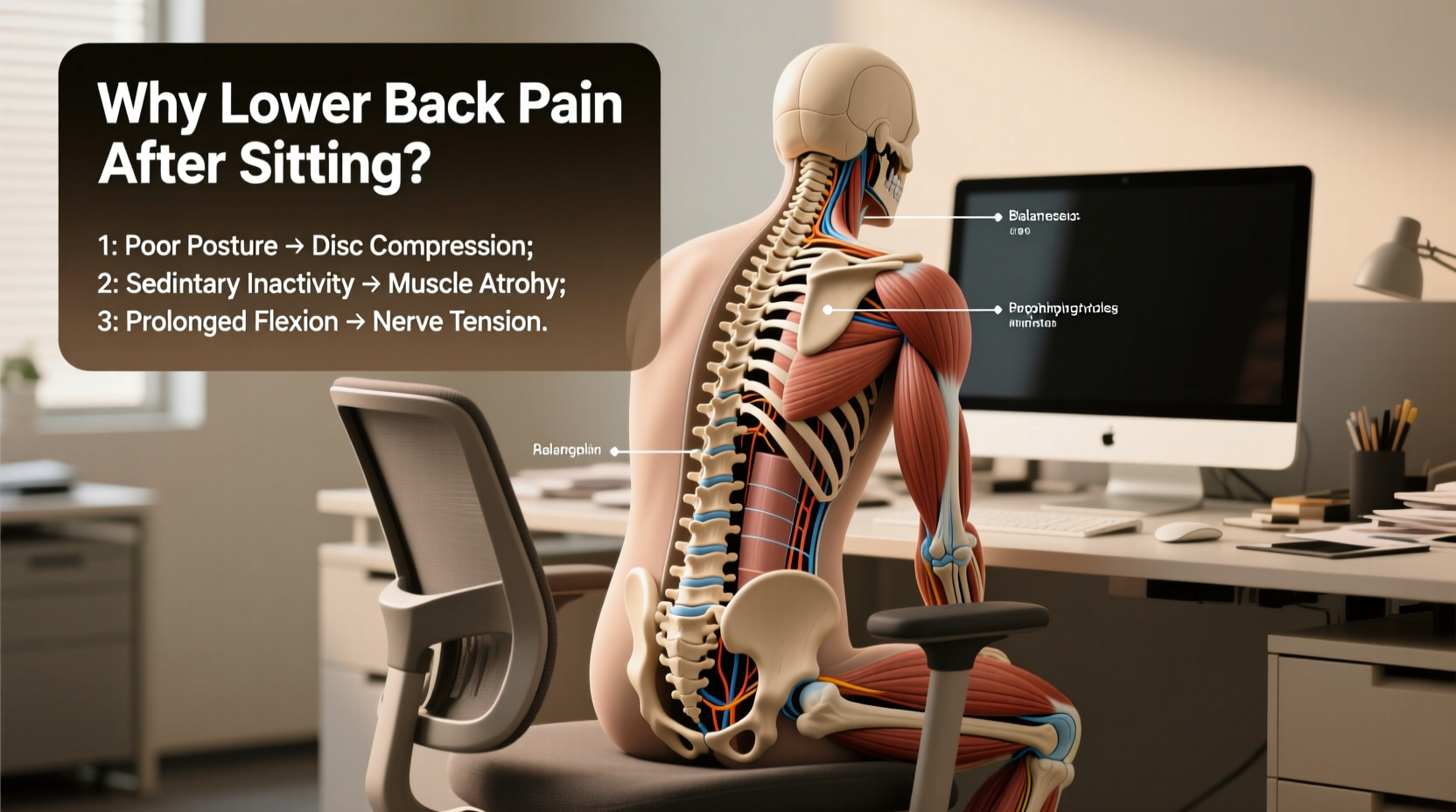
When you sit, the load on your lumbar spine increases by up to 40% compared to standing. This happens because sitting shifts your center of gravity and reduces engagement of core stabilizing muscles. Without active support from your abdominal and gluteal muscles, the lower back bears the brunt of maintaining posture.
A key contributor is the loss of the lumbar lordosis—the natural inward curve of the lower spine. Slouching or sinking into a chair flattens this curve, placing uneven pressure on intervertebral discs. Over hours, this compression can cause micro-tears in the disc walls, leading to inflammation and pain. Additionally, tight hip flexors from prolonged sitting pull the pelvis forward, creating anterior pelvic tilt, which further strains the lumbar region.
“Prolonged sitting is the new smoking when it comes to musculoskeletal health. The spine thrives on movement, not static postures.” — Dr. Lena Patel, Physical Medicine and Rehabilitation Specialist
Another overlooked factor is reduced blood flow. Sitting compresses blood vessels in the glutes and lower back, limiting oxygen delivery to muscles. This contributes to stiffness and delayed recovery from daily micro-strains.
Common Causes of Lower Back Pain After Sitting
- Poor Posture: Slumping, rounding the shoulders, or craning the neck forward disrupts spinal alignment.
- Inadequate Chair Support: Chairs without lumbar support fail to maintain the spine’s natural curve.
- Muscle Imbalances: Weak glutes and core muscles force the lower back to compensate during sitting and movement.
- Tight Hip Flexors: Prolonged sitting shortens hip flexor muscles, pulling the pelvis out of alignment.
- Disc Pressure Buildup: Intervertebral discs absorb fluid throughout the day; sitting limits this process, increasing stiffness.
- Workstation Ergonomics: Monitors too low, keyboards too far, or feet not flat on the floor increase strain.
Evidence-Based Fixes to Relieve and Prevent Lower Back Pain
Addressing lower back pain isn’t just about quick fixes—it requires a holistic approach combining ergonomics, movement, and strength training. Below are proven strategies to integrate into your daily routine.
1. Optimize Your Seating Setup
Your chair should support, not sabotage, your spine. Follow these ergonomic guidelines:
- Seat height should allow feet flat on the floor, knees at 90 degrees.
- Lumbar support should fit snugly into the small of your back.
- Seat depth should leave 2–4 inches between the back of your knees and the chair edge.
- Armrests should support elbows at 90 degrees without raising shoulders.
If your chair lacks built-in lumbar support, use a rolled towel or a small cushion. Avoid soft, sunken sofas for work—they promote slouching.
2. Incorporate Micro-Movements Throughout the Day
Movement is medicine for the spine. Instead of waiting for pain to build, introduce frequent micro-breaks:
- Stand up and walk for 1–2 minutes every 30–60 minutes.
- Perform seated pelvic tilts: rock your pelvis forward and backward slowly to re-engage core muscles.
- Do shoulder blade squeezes to counteract forward hunching.
- Shift weight side to side while seated to prevent stiffness.
3. Strengthen Core and Glute Muscles
A strong core doesn’t mean six-pack abs—it means deep stabilizing muscles like the transverse abdominis and multifidus. These muscles act as a natural corset for your spine. Include these exercises 3–4 times per week:
- Dead Bug: Lie on your back, arms and legs in the air. Slowly extend opposite arm and leg while keeping your lower back pressed to the floor.
- Bird-Dog: On hands and knees, extend one arm and the opposite leg while maintaining a neutral spine.
- Glute Bridges: Lie on your back, knees bent. Lift hips while squeezing glutes at the top.
4. Stretch Tight Muscles Daily
Tight hip flexors and hamstrings contribute significantly to lower back strain. Dedicate 10 minutes daily to stretching:
- Psoas Stretch: In a lunge position, tuck your pelvis under and gently push hips forward. Hold for 30 seconds per side.
- Seated Forward Bend: Sit with legs straight, reach toward toes (keep back straight). Stretches hamstrings and lower back.
- Knee-to-Chest Stretch: Lie on your back, pull one knee toward chest. Repeat on both sides.
Step-by-Step Guide: A 7-Day Plan to Reduce Sitting-Related Back Pain
This actionable plan helps reset your body’s response to sitting within a week.
- Day 1: Assess your workspace. Adjust chair height, monitor level (top at eye level), and keyboard position.
- Day 2: Set hourly reminders to stand and perform 5 pelvic tilts and 10 glute bridges.
- Day 3: Add two 5-minute stretching sessions—morning and evening—with focus on hip flexors and hamstrings.
- Day 4: Replace one hour of sitting with walking meetings or phone calls on foot.
- Day 5: Practice diaphragmatic breathing for 3 minutes to engage deep core muscles.
- Day 6: Do a full 15-minute mobility routine including cat-cow, child’s pose, and spinal twists.
- Day 7: Reflect on pain levels and adjust habits. Identify which changes made the biggest difference.
By the end of the week, most people report improved comfort, better posture awareness, and reduced stiffness.
Do’s and Don’ts: Quick Reference Table
| Do’s | Don’ts |
|---|---|
| Use a lumbar roll or supportive cushion | Slouch or sit on soft, unsupported surfaces |
| Keep feet flat on the floor or a footrest | Cross legs or tuck feet under the chair |
| Take movement breaks every 30–60 minutes | Work through pain or stiffness |
| Strengthen core and glute muscles regularly | Rely solely on painkillers without addressing root causes |
| Stretch hip flexors and hamstrings daily | Ignore persistent pain lasting more than 2 weeks |
Real-Life Example: Sarah’s Transformation
Sarah, a 34-year-old software developer, experienced daily lower back pain after transitioning to remote work. Her home office was a dining chair and a laptop on a stack of books. Within three months, she developed a constant ache that worsened by afternoon.
She consulted a physical therapist who identified weak glutes, tight hip flexors, and poor workstation setup. Following a structured plan—adjusting her chair, using a standing desk converter, and doing daily glute bridges and psoas stretches—Sarah noticed improvement within two weeks. By week six, her pain had reduced by 80%, and she no longer needed pain relievers.
“I didn’t realize how much my chair was hurting me,” Sarah said. “Small changes made a huge difference. Now I move every hour, and my back feels stronger than it has in years.”
Frequently Asked Questions
Is lower back pain after sitting always serious?
Not necessarily. Occasional discomfort due to poor posture or fatigue is common and usually resolves with movement and adjustments. However, persistent pain lasting more than two weeks, radiating pain down the leg, numbness, or weakness could indicate a herniated disc or sciatica and should be evaluated by a healthcare provider.
Can standing desks eliminate lower back pain?
Standing desks help reduce sitting time but aren’t a cure-all. Standing for too long without proper support can also strain the lower back and legs. The best approach is alternating between sitting and standing every 30–60 minutes and maintaining good posture in both positions.
What’s the best sleeping position for lower back pain caused by sitting?
Sleeping on your back with a pillow under your knees or on your side with a pillow between your knees helps maintain spinal alignment. Avoid stomach sleeping, as it hyperextends the lower back and strains the lumbar spine.
Conclusion: Take Control of Your Back Health
Lower back pain after sitting isn’t an inevitable part of modern life—it’s a signal from your body that something needs to change. From adjusting your chair to integrating simple stretches and strength exercises, the solutions are practical and sustainable. The spine is built for movement, not stillness. By breaking up long sitting sessions, strengthening supporting muscles, and aligning your workspace with your body’s needs, you can reverse the damage and build resilience.
Start today. Make one adjustment to your posture, set a timer for movement, or do five minutes of stretching. Small actions compound into lasting relief. Your back doesn’t need perfection—just consistent care.




 浙公网安备
33010002000092号
浙公网安备
33010002000092号 浙B2-20120091-4
Comments
No comments yet. Why don't you start the discussion?