
Lower back pain after prolonged standing is a common complaint affecting millions of people—office workers, retail staff, healthcare providers, and even parents on their feet all day. While occasional discomfort may seem normal, persistent or worsening pain signals that something in your posture, muscle function, or spinal mechanics needs attention. Understanding the root causes and knowing how to respond can transform chronic soreness into sustainable relief.
The lumbar spine bears significant load during upright posture. When you stand, your lower back supports much of your upper body weight while maintaining balance over your pelvis and legs. If biomechanics are off—even slightly—this region becomes vulnerable to strain, inflammation, and fatigue. The good news: most causes are manageable with targeted changes in movement, posture, and lifestyle habits.
Common Causes of Lower Back Pain After Standing
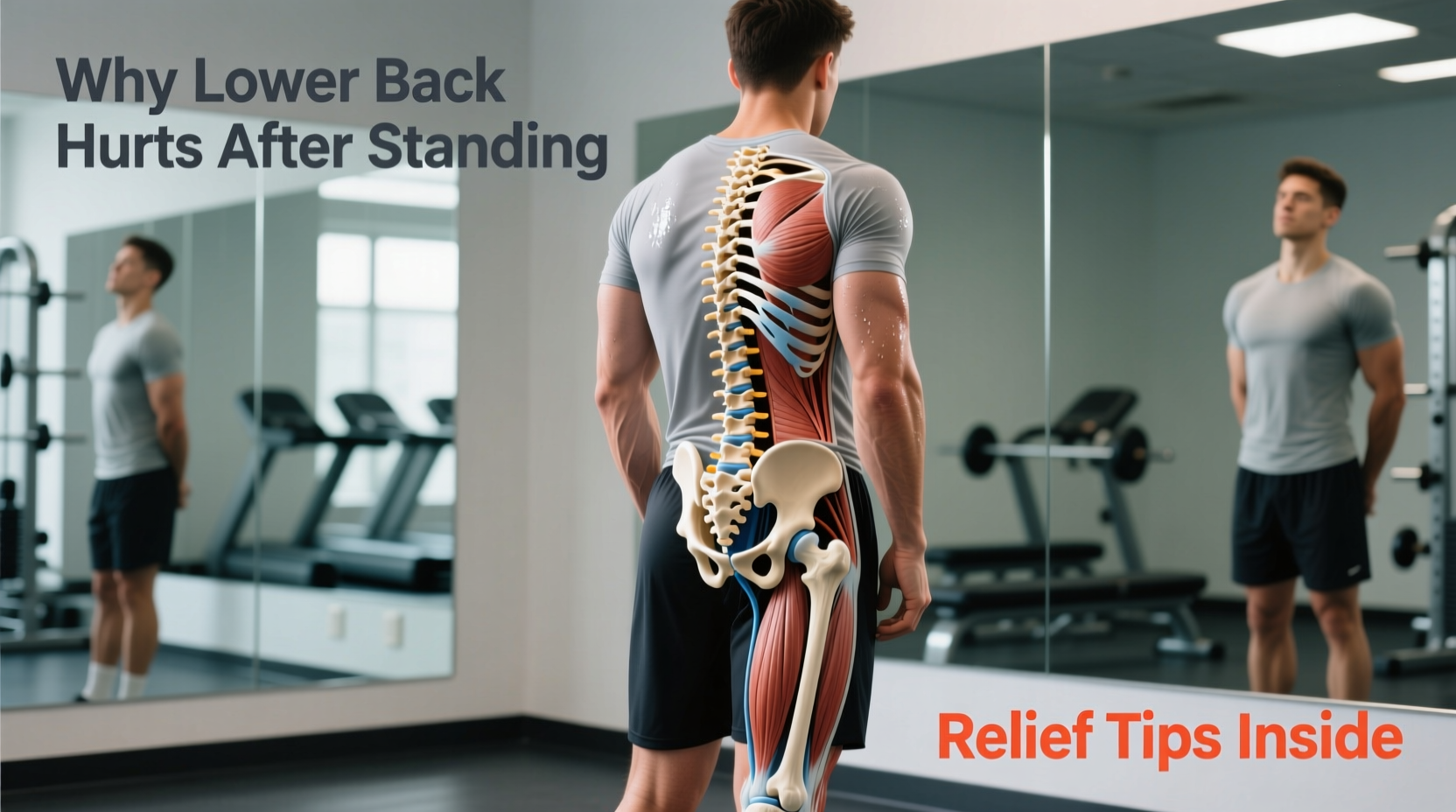
Pain doesn’t appear without reason. Identifying the underlying mechanism is essential for effective treatment. Here are the most frequent contributors:
- Poor Posture: Slouching, anterior pelvic tilt (arching the back excessively), or locked knees shift pressure onto the lumbar discs and facet joints.
- Muscle Imbalance: Weak glutes and core muscles force the lower back to compensate, leading to overuse and strain.
- Disc Degeneration: As we age, spinal discs lose hydration and height, reducing shock absorption and increasing stress on nerves and ligaments.
- Facet Joint Irritation: These small stabilizing joints at the back of the spine can become inflamed from repetitive extension (arching) during standing.
- Spinal Stenosis: Narrowing of the spinal canal can compress nerves, causing pain that worsens with standing and walking but improves when sitting.
- Leg Length Discrepancy or Flat Feet: Structural imbalances alter gait and pelvic alignment, transferring uneven forces up the kinetic chain to the lower back.
“Prolonged standing without adequate support or movement leads to cumulative microtrauma in the lumbar spine. It’s not just about time—it’s about how the body manages load.” — Dr. Alan Reyes, Physical Medicine & Rehabilitation Specialist
How Standing Duration Impacts Spinal Health
Research shows that standing for more than 90 minutes continuously increases intradiscal pressure in the lumbar spine by up to 40% compared to sitting. However, this doesn’t mean sitting is better—it's about balance. The real issue lies in static postures, whether sitting or standing.
A 2023 study published in *Ergonomics* found that workers who stood more than four hours per day had a 32% higher risk of developing chronic low back pain within two years compared to those who alternated between sitting and standing every 30 minutes.
| Standing Duration | Effect on Lower Back | Recommended Action |
|---|---|---|
| 0–30 minutes | Minimal stress; natural weight distribution | No intervention needed |
| 30–90 minutes | Mild muscle fatigue begins; increased disc pressure | Take short walk or stretch break |
| 90+ minutes continuous | Significant muscular fatigue, joint compression, reduced blood flow | Change posture or sit briefly |
| 4+ hours daily | High risk of chronic strain and degenerative changes | Implement sit-stand rotation and ergonomic adjustments |
Effective Relief Strategies You Can Apply Today
Immediate relief often comes from simple interventions that reduce mechanical stress and restore mobility. Try these evidence-based techniques:
1. Microbreaks and Movement Snacks
Every 20–30 minutes, step away from your position. Perform five air squats, march in place, or do gentle torso rotations. These “movement snacks” reset muscle tone and stimulate synovial fluid production in spinal joints.
2. Pelvic Tilts Against a Wall
Stand with your back against a wall, feet six inches forward. Press your lower back flat into the wall by tightening your abdominal muscles and tilting your pelvis upward. Hold for 5 seconds, repeat 10 times. This re-educates proper spinal alignment.
3. Use Supportive Footwear or Anti-Fatigue Mats
Worn-out shoes or hard flooring amplify vibration and impact. Cushioned orthotics or rubber mats absorb shock and reduce compensatory arching in the lower back.
4. Apply Heat After Prolonged Standing
Heat relaxes tight paraspinal muscles and improves blood flow. Use a heating pad on low for 15–20 minutes after extended periods on your feet.
Step-by-Step Guide to Prevent Recurring Pain
Long-term prevention requires consistent effort. Follow this six-step protocol to build resilience in your lower back:
- Assess Your Daily Standing Load: Track how many hours you spend standing. Use a wearable or app to log duration and note when pain starts.
- Optimize Your Workspace: If using a standing desk, ensure the monitor is at eye level and elbows bent at 90 degrees. Keep frequently used items within arm’s reach.
Incorporate Core Strengthening Exercises: Focus on transverse abdominis and glute activation. Examples:
- Dead bugs – 3 sets of 10 reps
- Glute bridges – 3 sets of 15 reps
- Plank holds – 3 rounds of 30 seconds
- Stretch Tight Muscles Daily: Hip flexors, hamstrings, and lower back tendons often contribute to poor posture. Spend 10 minutes each evening stretching:
- Lunge stretch for hip flexors (hold 30 sec per side)
- Seated forward fold for hamstrings (hold 45 sec)
- Knee-to-chest stretch lying down (3 reps per leg)
- Practice Weight Shifting: While standing, gently shift weight from heel to toe and side to side. This dynamic stance prevents static loading.
- Schedule Movement Transitions: Set reminders to change positions every 25–30 minutes. Even 30 seconds of walking resets neuromuscular patterns.
Real-Life Example: Maria’s Recovery Journey
Maria, a 42-year-old nurse, experienced sharp lower back pain after 10-hour shifts on hospital floors. Initially, she dismissed it as “part of the job.” Over six months, the pain intensified, radiating into her right buttock. An MRI revealed mild disc bulging at L4-L5, exacerbated by prolonged standing and weak core stability.
Her physical therapist prescribed a routine including pelvic tilts, daily planks, and scheduled seated breaks during shifts. She also began wearing supportive shoes with metatarsal padding and started doing five-minute mobility routines before and after work.
Within eight weeks, Maria reported a 70% reduction in pain. By three months, she was pain-free during shifts. Her story highlights that even high-demand jobs can coexist with spinal health through smart habits.
Checklist: Daily Habits to Protect Your Lower Back
Print or save this checklist to stay consistent:
- ✅ Wear supportive footwear with arch support
- ✅ Take a 2-minute movement break every 30 minutes
- ✅ Perform 5 pelvic tilts upon waking and before bed
- ✅ Do 10 minutes of stretching after work
- ✅ Use an anti-fatigue mat if standing in one spot
- ✅ Maintain a neutral spine—avoid overarching or slouching
- ✅ Strengthen core muscles 3x per week
- ✅ Hydrate well—discs need water to stay resilient
Frequently Asked Questions
Can standing too long cause permanent damage?
While occasional standing won’t cause lasting harm, chronic overuse without recovery can accelerate disc degeneration and lead to structural changes over time. Early intervention prevents progression.
Is it better to sit or stand when my back hurts?
Neither extreme is ideal. Prolonged sitting increases disc pressure differently than standing. The best approach is to alternate positions frequently and maintain movement throughout the day.
When should I see a doctor for standing-related back pain?
Seek medical evaluation if pain persists beyond two weeks despite self-care, radiates down the leg, causes numbness or weakness, or disrupts sleep. These could indicate nerve involvement or other conditions needing diagnosis.
Expert Insight: The Role of Core Stability
One of the most overlooked factors in standing-related back pain is core engagement. Many people believe strong abs mean visible six-packs, but true core strength involves deep stabilizers like the transversus abdominis and multifidus muscles.
“The core acts like a natural corset for the spine. Without proper activation, every minute spent standing places undue stress on passive structures—ligaments, discs, and joints.” — Dr. Lena Torres, Orthopedic Physiotherapist
Learning to engage these muscles during daily activities builds endurance and protects the spine. A simple test: lie on your back, knees bent. Place fingers just inside the front hip bones. Gently draw your navel toward your spine without holding your breath. You should feel a subtle tightening under your fingertips. Practice this daily until it becomes automatic.
Conclusion: Take Control of Your Spinal Health
Lower back pain after standing isn't inevitable—it's a signal from your body asking for better support, movement, and care. Whether you're on your feet for work, parenting, or daily life, small, consistent actions make a profound difference. From adjusting your posture to building core strength and taking strategic breaks, each choice adds up to lasting relief.
You don’t need drastic changes to see results. Start with one habit—like setting a timer for movement breaks or doing pelvic tilts each morning—and build from there. Your spine will thank you with greater comfort, mobility, and resilience for years to come.




 浙公网安备
33010002000092号
浙公网安备
33010002000092号 浙B2-20120091-4
Comments
No comments yet. Why don't you start the discussion?