
Walking uphill is often seen as a healthy way to boost cardiovascular fitness and build leg strength. Yet for many, this seemingly simple activity triggers a sharp or dull ache in the lower back. Unlike flat terrain, inclines place greater demand on posture, core stability, and hip mechanics. When these systems are compromised, the lumbar spine absorbs excessive strain—leading to discomfort or chronic pain. Understanding the biomechanics behind this issue is the first step toward long-term relief.
The root causes of lower back pain during uphill walking are rarely isolated. They typically stem from a combination of muscular imbalances, poor movement patterns, and postural inefficiencies. The good news: with targeted corrections, most people can walk uphill comfortably within weeks. This article breaks down the physiological reasons behind the pain and provides actionable, evidence-based solutions to correct it permanently.
Understanding the Biomechanics of Uphill Walking
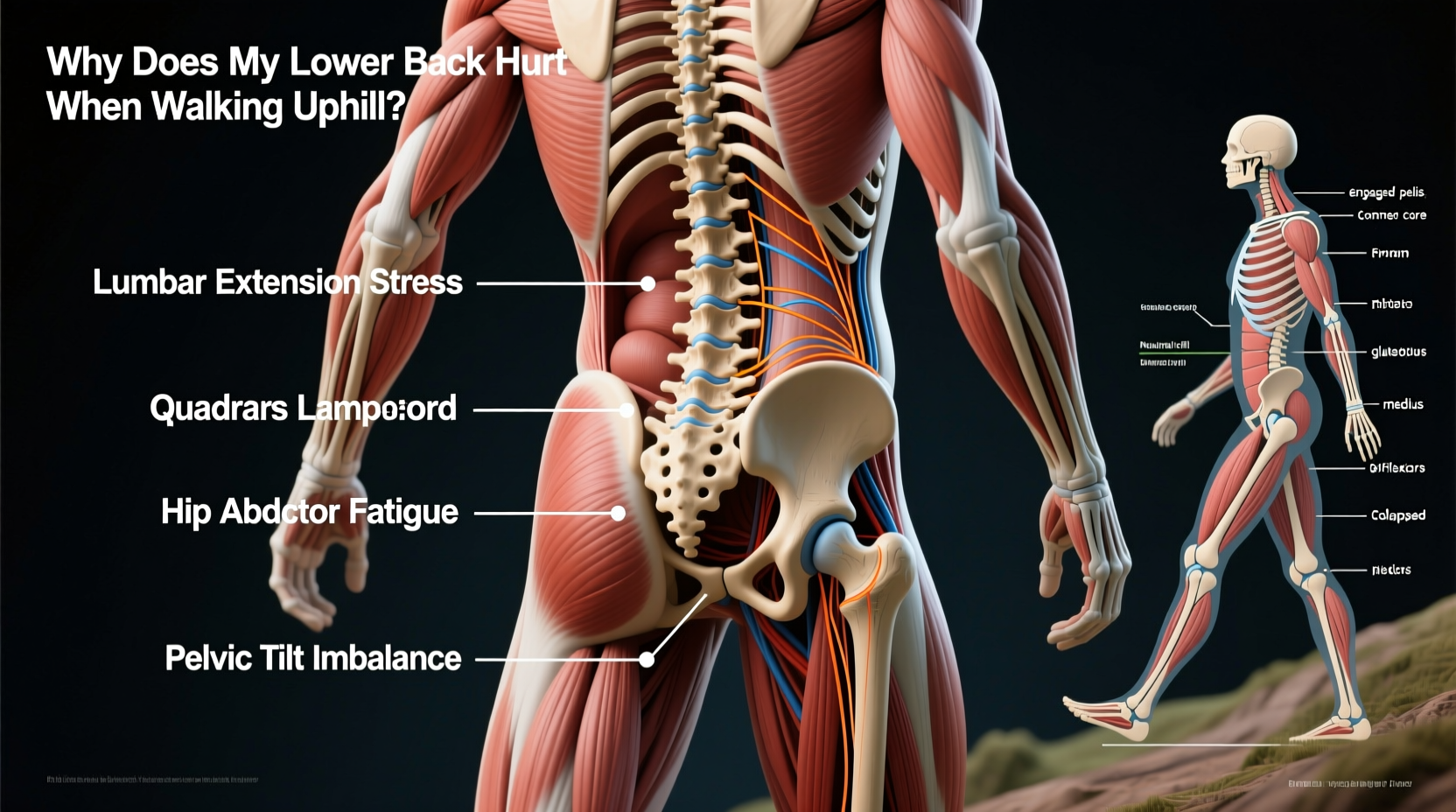
When you walk uphill, your body shifts forward slightly to maintain balance against gravity. This changes the alignment of your pelvis, spine, and hips. To propel yourself upward, your hip flexors, glutes, and quadriceps work harder. Simultaneously, your lower back muscles (erector spinae) engage more to stabilize the spine. If any part of this kinetic chain is weak or overactive, compensation occurs—often at the expense of the lumbar region.
A 2021 study published in the Journal of Biomechanics found that walking on a 10% incline increases lumbar extension by up to 27% compared to level ground. This extended spinal position compresses the facet joints and can irritate surrounding nerves if sustained without adequate support. Additionally, uphill gait shortens stride length and increases pelvic tilt, further stressing the lower back if core engagement is insufficient.
Another critical factor is forward lean. While some forward inclination is natural, excessive leaning from the waist (rather than the ankles) transfers load directly to the lumbar vertebrae. Over time, this repetitive stress leads to muscle fatigue, inflammation, and pain.
Common Causes of Lower Back Pain During Incline Walking
Several interrelated factors contribute to lower back discomfort when walking uphill. Identifying which apply to you is essential for effective correction.
1. Weak Core and Gluteal Muscles
The core—including the transverse abdominis, obliques, and multifidus—acts as a natural corset for the spine. When underdeveloped, the lower back muscles overcompensate during physical effort. Similarly, weak glutes fail to generate proper hip extension, forcing the lumbar spine to assist in propulsion.
2. Tight Hip Flexors and Hamstrings
Sedentary lifestyles lead to chronically tight hip flexors (especially the iliopsoas). These muscles pull the pelvis into an anterior tilt, increasing the curve in the lower back (lordosis). Tight hamstrings restrict pelvic motion, compounding the issue during uphill strides.
3. Poor Posture and Gait Mechanics
Slouching, hiking one shoulder, or overstriding disrupts spinal alignment. On an incline, these flaws magnify. Many people unconsciously arch their back or hike their pelvis to gain height, placing undue pressure on lumbar discs.
4. Excess Body Weight or Carrying Load
Additional weight—whether from body mass or a backpack—increases shear forces on the spine. Without proper core control, this load concentrates in the lower back during uphill exertion.
5. Underlying Spinal Conditions
Conditions like degenerative disc disease, spinal stenosis, or spondylolisthesis may remain asymptomatic on flat ground but flare during incline walking due to increased spinal loading and extension.
“Uphill walking demands more from the posterior chain. If the glutes aren’t firing, the lumbar spine pays the price.” — Dr. Lena Torres, Physical Therapist and Movement Specialist
Corrective Strategies to Eliminate Pain
Resolving lower back pain while walking uphill requires a multi-pronged approach: correcting movement patterns, strengthening key muscle groups, and improving flexibility. Below is a comprehensive plan based on clinical best practices.
Step-by-Step Guide to Pain-Free Uphill Walking
- Assess Your Posture: Stand sideways in front of a mirror. Your ear, shoulder, hip, and ankle should align vertically. If your lower back arches excessively or your pelvis tilts forward, begin corrective exercises immediately.
- Improve Hip Flexor Flexibility: Perform daily stretches such as the kneeling hip flexor stretch and seated pigeon pose. Hold each for 45 seconds per side, twice daily.
- Activate and Strengthen Glutes: Incorporate bridges, clamshells, and banded lateral walks into your routine. Aim for 3 sets of 15 reps, 4 times per week.
- Build Core Stability: Practice planks, dead bugs, and bird-dogs. Start with 20-second holds and progress gradually. Avoid sit-ups, which increase spinal compression.
- Retrain Your Gait: Walk on a treadmill at a moderate incline (5–8%) while focusing on keeping your torso upright, engaging your core, and pushing through your heels.
- Gradually Increase Incline Exposure: Begin with short uphill walks (5 minutes) at a low grade. Add time and steepness only when pain-free.
Do’s and Don’ts: A Quick Reference Table
| Do’s | Don’ts |
|---|---|
| Maintain a slight forward lean from the ankles | Lean forward from the waist |
| Engage your core before starting the climb | Hold your breath or brace your chest |
| Take shorter, controlled steps | Overstride or rush uphill |
| Wear supportive footwear with good heel cushioning | Use worn-out or flat shoes |
| Warm up with dynamic stretches (leg swings, torso twists) | Start climbing cold |
Real-World Example: Recovering From Chronic Hill Pain
Mark, a 42-year-old software developer, began experiencing lower back pain after taking up hiking to improve his fitness. Initially, he could manage gentle trails, but after six weeks, even moderate inclines caused sharp pain just below his belt line. He consulted a physical therapist who identified two primary issues: severely tight hip flexors from prolonged sitting and near-zero glute activation.
His treatment plan included daily stretching, neuromuscular re-education exercises to “wake up” his glutes, and gait retraining. For four weeks, he avoided hills entirely, focusing on form and strength. He then reintroduced inclines at 3% on a treadmill, progressing slowly. Within eight weeks, Mark returned to hiking without pain—and reported improved posture and energy throughout the day.
His case underscores a crucial point: pain during uphill walking is often a symptom of lifestyle-related dysfunction, not a structural flaw. With consistent correction, full recovery is achievable.
Essential Exercises for Prevention and Recovery
The following exercises target the root causes of lower back strain during incline walking. Perform them 3–4 times per week for optimal results.
- Dead Bug: Lie on your back, arms extended toward the ceiling, knees bent at 90 degrees. Slowly extend one arm overhead while straightening the opposite leg, keeping your lower back pressed to the floor. Return and alternate. (3 sets of 12 reps)
- Glute Bridge: Lie on your back, feet flat, knees bent. Lift your hips until your body forms a straight line from shoulders to knees. Squeeze glutes at the top. (3 sets of 15)
- Kneeling Hip Flexor Stretch: In a lunge position, tuck your pelvis and shift forward until you feel a stretch in the front of your hip. Keep your torso upright. (Hold 45 seconds per side)
- Bird-Dog: On hands and knees, extend one arm and the opposite leg simultaneously. Keep your spine neutral. (3 sets of 10 per side)
- Standing Pelvic Tilts: Place hands on hips, gently rock your pelvis forward and backward. Learn to flatten your lower back by tucking the pelvis. (2 sets of 15)
“Most patients I see with uphill back pain have never been taught how to use their glutes properly. Once they do, the pain vanishes.” — Dr. Aaron Kim, Orthopedic Rehabilitation Specialist
Frequently Asked Questions
Can wearing a back brace help when walking uphill?
While a back brace may offer temporary support, it should not be relied upon long-term. Braces can weaken core muscles by reducing natural stabilization efforts. Use only during acute flare-ups and focus on building intrinsic strength instead.
Is it better to walk faster or slower uphill?
Slower, controlled pacing is almost always better. Rushing increases impact and reduces time to maintain proper form. A steady rhythm allows you to focus on posture, breathing, and muscle engagement—key to preventing strain.
Should I stop walking uphill if my back hurts?
Yes, if pain is sharp or persistent. Continuing through pain can reinforce faulty movement patterns and lead to injury. Instead, regress to flat walking, address weaknesses, and return to inclines gradually once symptoms resolve.
Checklist: Action Plan for Pain-Free Incline Walking
- ✅ Assess posture in a mirror or with professional guidance
- ✅ Perform hip flexor and hamstring stretches daily
- ✅ Strengthen glutes with bridges and clamshells 3x/week
- ✅ Build core stability with planks and dead bugs
- ✅ Practice proper uphill gait on a treadmill or gentle slope
- ✅ Wear supportive, well-cushioned footwear
- ✅ Warm up before every walk with dynamic movements
- ✅ Gradually increase incline intensity—never rush progression
- ✅ Listen to your body: stop if pain exceeds mild discomfort
- ✅ Consult a physical therapist if pain persists beyond 2–3 weeks
Conclusion: Take Control of Your Mobility
Lower back pain when walking uphill isn't inevitable—it's a signal that your body needs attention. Whether the cause is weak glutes, tight hips, or flawed mechanics, each issue is correctable with deliberate practice. The strategies outlined here go beyond temporary relief; they build lasting resilience in your movement system.
Start today. Dedicate 15 minutes daily to targeted stretches and strength exercises. Relearn how to walk with alignment and control. Your back doesn’t have to suffer every time the path rises. With consistency, you’ll not only eliminate pain but also enhance your overall physical confidence and endurance.




 浙公网安备
33010002000092号
浙公网安备
33010002000092号 浙B2-20120091-4
Comments
No comments yet. Why don't you start the discussion?