
Sitting is an unavoidable part of modern life. Whether you're at a desk, in a car, or on the couch, prolonged sitting has become the norm for many. But if you've noticed a nagging ache in your lower back each time you sit down, you're not alone. Millions of people experience lower back discomfort due to poor sitting habits, weak core muscles, or underlying postural imbalances. The good news? Most cases are preventable and reversible with simple adjustments. Understanding the root causes and applying practical solutions can make a significant difference—without requiring surgery or expensive treatments.
Common Causes of Lower Back Pain While Sitting
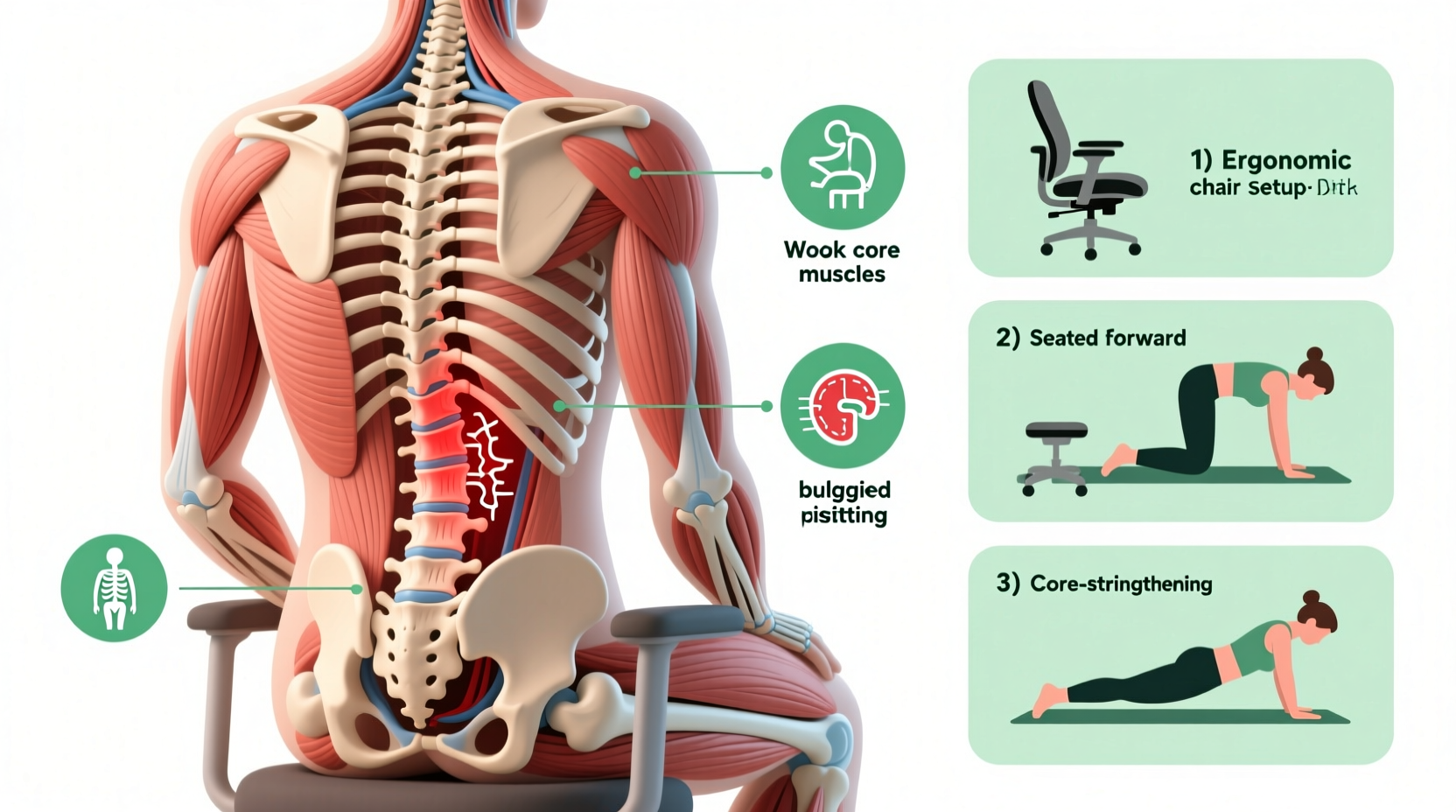
Lower back pain during sitting often stems from mechanical stress rather than serious medical conditions. The lumbar spine—the lower portion of your back—is designed to support weight and allow movement, but it's vulnerable when placed under sustained pressure or misalignment.
- Poor Posture: Slouching or rounding the lower back flattens the natural curve (lordosis), increasing disc pressure.
- Weak Core Muscles: Inadequate abdominal and glute strength fails to support the spine properly.
- Inadequate Chair Support: Chairs without lumbar support force the spine into unnatural positions.
- Prolonged Static Positioning: Remaining seated for long periods reduces blood flow and stiffens spinal joints.
- Tight Hip Flexors: Sitting shortens hip flexor muscles, pulling the pelvis forward and straining the lower back.
- Herniated or Degenerated Discs: In some cases, structural issues like disc bulges worsen when seated due to increased spinal load.
A study published in the journal *Spine* found that sitting increases pressure on lumbar discs by up to 40% compared to standing. When combined with poor posture, this elevated load accelerates wear and contributes to chronic pain.
How Sitting Affects Your Spine: A Closer Look
The human spine has natural curves that distribute weight efficiently. When you sit, especially in a slouched position, these curves diminish. The pelvis tilts backward (posterior pelvic tilt), which flattens the lower back’s inward curve. This shift transfers stress from supportive muscles to passive structures like ligaments and discs.
Over time, this imbalance leads to muscle fatigue, joint stiffness, and inflammation. The multifidus and erector spinae—small stabilizing muscles along the spine—become underactive, while larger muscles like the quadratus lumborum overcompensate, leading to spasms and soreness.
Additionally, prolonged sitting compresses the intervertebral discs. These gel-like cushions rely on movement to absorb nutrients through osmosis. Without regular motion, they begin to dehydrate and lose resilience—a process that can accelerate disc degeneration.
“Sitting is more dangerous than smoking, in terms of mortality rates. It’s associated with higher risks of heart disease, diabetes, cancer, and musculoskeletal disorders.” — Dr. James Levine, Director of the Mayo Clinic-Arizona Obesity Solutions Center
Easy Fixes to Relieve and Prevent Lower Back Pain
You don’t need drastic changes to see improvement. Small, consistent adjustments can significantly reduce or eliminate lower back pain caused by sitting.
1. Optimize Your Seating Setup
Your chair plays a critical role in spinal health. Follow these ergonomic guidelines:
- Seat height should allow feet flat on the floor, knees at 90 degrees.
- Select a chair with adjustable lumbar support positioned at the small of your back.
- Use a slightly reclined seatback (100–110 degrees) to reduce disc pressure.
- Keep hips slightly higher than knees using a footrest if needed.
2. Strengthen Core and Glute Muscles
A strong core acts as a natural brace for your spine. Focus on exercises that activate deep stabilizers:
- Dead Bug: Lie on your back, arms extended toward ceiling, knees bent at 90 degrees. Slowly extend opposite arm and leg while keeping your lower back pressed to the floor. Do 3 sets of 10 reps.
- Bird-Dog: On hands and knees, extend one arm and the opposite leg while maintaining a neutral spine. Hold for 5 seconds. Repeat 8 times per side.
- Glute Bridges: Lie on your back, knees bent, feet flat. Lift hips by squeezing glutes. Hold for 3 seconds. Perform 3 sets of 12.
3. Stretch Tight Muscles Daily
Tight hip flexors and hamstrings contribute directly to lower back strain. Incorporate these stretches:
- Psoas Stretch: In a lunge position, tuck pelvis slightly and lean forward until you feel a stretch in the front of the hip. Hold 30 seconds per side.
- Seated Forward Bend: Sit with legs straight, hinge at hips to reach toward toes. Keep back straight; don’t round. Hold 30–60 seconds.
- Knee-to-Chest Stretch: Lie on your back, pull one knee toward chest. Hold 20–30 seconds. Repeat with both knees.
Do’s and Don’ts of Sitting with Lower Back Pain
| Do’s | Don’ts |
|---|---|
| Maintain a neutral spine with supported lower back | Slouch or round your back for extended periods |
| Take standing or walking breaks every 30–60 minutes | Sit continuously for more than 90 minutes |
| Use a lumbar roll or cushion for added support | Lean on soft couches or armrests without back support |
| Engage core lightly while sitting to stabilize spine | Crane neck forward or look down at devices |
| Adjust workstation so screen is at eye level | Cross legs, which rotates pelvis and strains back |
Real-Life Example: Sarah’s Desk Job Transformation
Sarah, a 34-year-old graphic designer, began experiencing sharp lower back pain after transitioning to full-time remote work. She worked 8–10 hours daily in a dining chair with no back support. Within three months, the pain became constant, radiating into her hips.
After consulting a physical therapist, she made several key changes:
- Invested in an ergonomic office chair with adjustable lumbar support.
- Set a smartwatch reminder to stand and stretch every 45 minutes.
- Started doing 10 minutes of core and hip flexor exercises each morning.
- Placed her laptop on a riser to avoid looking down.
Within six weeks, her pain decreased by 80%. By three months, she was pain-free during work hours. Her case illustrates how simple, consistent interventions can reverse even persistent sitting-related back pain.
Step-by-Step Guide to Pain-Free Sitting
Follow this daily routine to protect your lower back and build long-term resilience:
- Morning (5 min): Perform glute bridges (2x15 reps) and knee-to-chest stretch (30 sec per side).
- Before Sitting: Adjust chair height, add lumbar support, align monitor at eye level.
- Every 45 Minutes: Stand up, walk 20 steps, perform 5 air squats or a forward fold.
- Lunch Break: Take a 10-minute walk outdoors to decompress the spine.
- Evening (10 min): Complete bird-dog (3x8 reps), psoas stretch (30 sec/side), and child’s pose (1 min).
- Weekly: Practice yoga or Pilates to improve flexibility and core endurance.
“The best posture is the next posture. Movement is medicine for the spine.” — Dr. Stuart McGill, Spine Biomechanics Expert, University of Waterloo
Frequently Asked Questions
Can sitting too much cause permanent back damage?
While occasional sitting won’t cause lasting harm, chronic poor posture and inactivity can lead to disc degeneration, muscle imbalances, and joint stiffness over time. However, most damage is reversible with proper intervention. Early action prevents progression to more serious conditions.
Is it better to sit on a hard or soft surface?
A moderately firm seat is ideal. Too soft (like plush sofas) allows the pelvis to sink and the spine to collapse. Too hard creates pressure points. Look for chairs with contoured, breathable padding that supports without sinking.
Should I use a standing desk?
Standing desks can help reduce sitting time, but standing all day isn’t the solution either. Alternate between sitting and standing every 30–60 minutes. Use an anti-fatigue mat and maintain proper posture when standing—avoid locking knees or leaning on one leg.
Conclusion: Take Control of Your Back Health Today
Lower back pain when sitting is not something you have to accept as normal. It’s a signal from your body that your posture, habits, or environment need adjustment. With awareness and small, sustainable changes, you can restore comfort and prevent future flare-ups. Start today by assessing your chair, setting movement reminders, and adding two stretches to your routine. Your spine will thank you—not just tomorrow, but years down the line.




 浙公网安备
33010002000092号
浙公网安备
33010002000092号 浙B2-20120091-4
Comments
No comments yet. Why don't you start the discussion?