
Seeing sparks inside your microwave can be alarming. One moment you're reheating leftovers, and the next, flashes of light resemble a mini lightning storm in your kitchen. While occasional sparking might seem minor, it’s a warning sign that should never be ignored. Microwaves are designed for convenience and safety, but certain conditions can turn them into fire hazards. Understanding why sparking occurs—and whether it's safe to continue using the appliance—is essential for protecting your home and family.
Sparking is not normal operation. It typically results from electromagnetic energy concentrating in unintended ways, often due to metal objects, damaged components, or food debris. Left unaddressed, repeated sparking can damage the interior lining, compromise the magnetron (the component that generates microwaves), or even cause a fire. This article explores the science behind microwave sparking, identifies common causes, and provides clear guidance on when it’s safe to keep using your microwave—and when it’s time to stop and seek repair or replacement.
What Causes a Microwave to Spark?
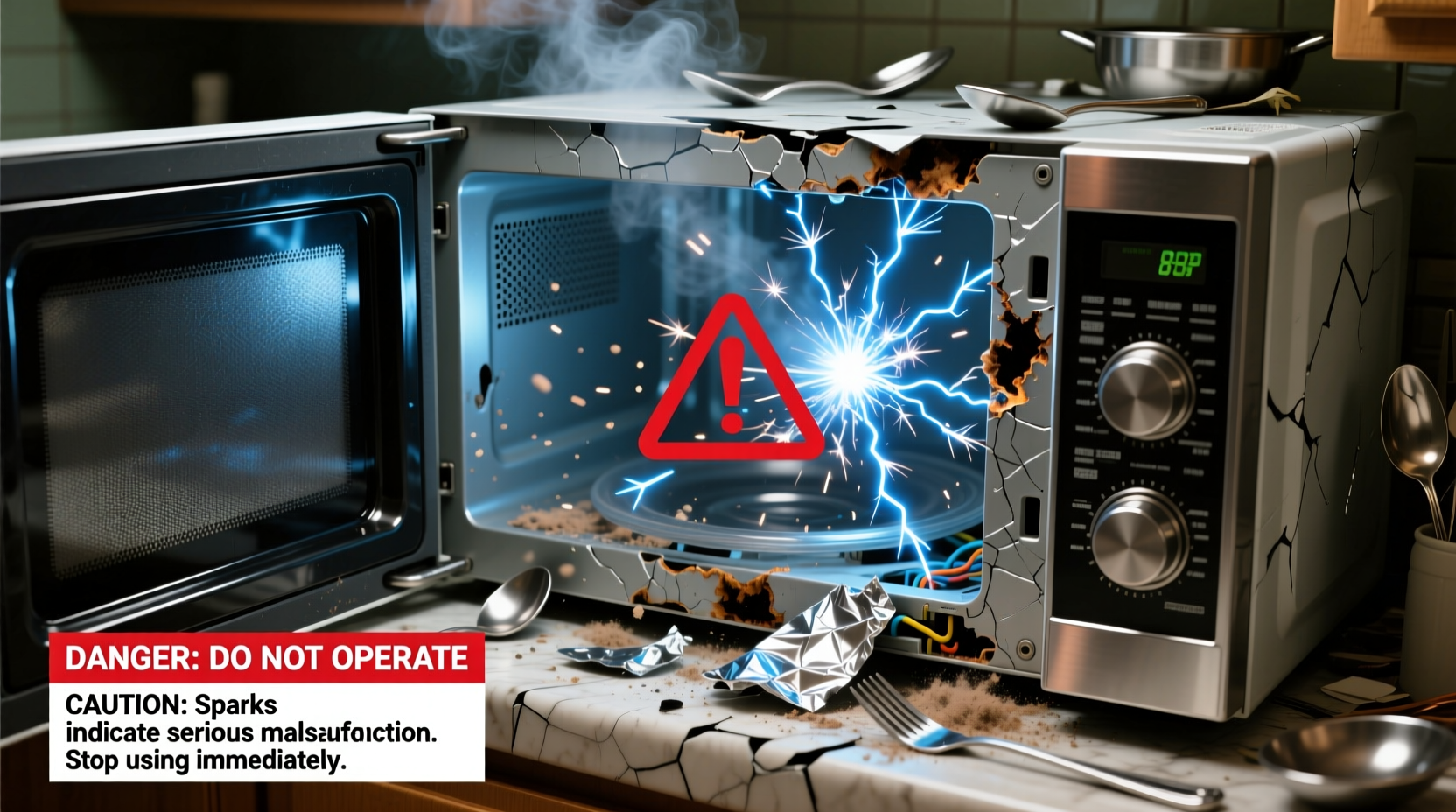
Microwave ovens heat food by emitting non-ionizing radiation at a frequency of around 2.45 GHz. These waves excite water molecules in food, generating heat through friction. However, when microwaves encounter conductive materials—especially metals—they induce electrical currents. If the metal has sharp edges or points, these currents can arc across gaps, creating visible sparks.
The most frequent causes of sparking include:
- Metal objects: Forks, spoons, aluminum foil, twist ties, or containers with metallic trim.
- Worn or damaged waveguide cover: A mica or plastic panel that protects the opening where microwaves enter the cavity can degrade over time.
- Food splatter buildup: Burnt-on grease or food particles can carbonize and become conductive, especially if heated repeatedly.
- Damaged interior coating: Chipped enamel or scratches in the cavity walls expose underlying metal, which can arc under microwave energy.
- Manufacturing defects: Rare, but possible—faulty shielding or misaligned components may create hotspots.
While metal is the most commonly blamed culprit, many users don’t realize that some ceramics, glazes, or decorative plates also contain trace metals that react under microwave energy. Even a gold-rimmed coffee cup can trigger sparking after just a few seconds of heating.
Is It Safe to Use a Sparking Microwave?
The short answer: No, not if sparking continues after removing obvious metal objects. Occasional, brief sparking from a forgotten spoon may not immediately ruin the appliance, but persistent arcing indicates a deeper issue that compromises both performance and safety.
Repeated sparking can erode the interior wall, burn holes in the waveguide cover, or damage the magnetron—the heart of the microwave. Once the magnetron fails, the unit cannot generate heat. More critically, sustained arcing increases the risk of fire, especially if flammable debris is present.
The U.S. Fire Administration reports that cooking equipment, including microwaves, accounts for nearly half of all reported home fires. While most originate from stovetops, malfunctioning microwaves contribute to this statistic, particularly when used despite visible faults.
“Any persistent sparking in a microwave should be treated as a serious malfunction. Continuing to operate it risks permanent damage and potential fire.” — Dr. Alan Reyes, Appliance Safety Engineer, National Institute of Home Technology
If your microwave sparks only once—say, because you accidentally left a fork inside—it’s likely safe to resume use after removing the object and inspecting the cavity. But if sparking recurs without explanation, discontinue use immediately.
Step-by-Step Guide: What to Do When Your Microwave Sparks
If you notice sparking, follow this sequence to assess the situation and minimize risk:
- Stop the microwave immediately. Press cancel or open the door to halt operation.
- Unplug the unit. Do not rely solely on turning it off—disconnect power completely.
- Inspect the interior. Look for metal objects, burnt food, or visible damage to the walls or ceiling.
- Clean the cavity thoroughly. Use warm, soapy water and a soft cloth to remove grease and debris. Avoid abrasive scrubbers.
- Check the waveguide cover. Located on the side or top interior wall, this thin panel (often white or translucent) should be intact and free of burns or holes.
- Test with a microwave-safe item. After cleaning, place a glass of water inside and run for one minute. Watch closely for any signs of arcing.
- Evaluate the results. If no sparks appear, the issue may have been temporary. If sparking returns, do not use the microwave again until repaired or replaced.
This process helps isolate whether the cause was user error or an internal fault. Never skip the unplugging step—even residual current can pose risks during inspection.
Do’s and Don’ts of Microwave Use to Prevent Sparking
Prevention is the best defense against microwave hazards. The following table outlines key practices to adopt and avoid:
| Do’s | Don’ts |
|---|---|
| Use containers labeled \"microwave-safe\" | Put metal utensils, foil, or pans inside |
| Cover food with a paper towel or microwave-safe lid | Heat food in takeout containers with metal handles |
| Clean spills promptly after they cool | Ignore chipped paint or scratched interior surfaces |
| Inspect the waveguide cover every few months | Use abrasive cleaners or steel wool on the cavity |
| Replace damaged parts promptly | Continue using a sparking microwave “just once more” |
Adhering to these guidelines significantly reduces the likelihood of sparking and extends the life of your appliance. Remember: microwave-safe doesn’t always mean “safe under all conditions.” For example, some plastics may warp or leach chemicals when overheated, even if they don’t spark.
Real Example: A Kitchen Near Disaster
Sarah, a busy teacher from Portland, noticed her microwave sparking one morning while reheating coffee in a ceramic mug. She assumed it was a fluke and continued using it for days, dismissing the flashes as “weird reflections.” After a week, the sparking worsened, accompanied by a burning smell. One evening, while defrosting chicken, the microwave emitted thick smoke and shut down mid-cycle.
She called an appliance technician, who discovered that the mug had a hidden metallic glaze. Repeated exposure had burned a hole in the waveguide cover and charred the cavity wall. The magnetron was still functional but operating inefficiently. The technician replaced the cover and cleaned carbon deposits, restoring limited function—but warned that long-term reliability was compromised.
Sarah now keeps a dedicated microwave-safe mug and inspects her microwave monthly. Her experience underscores how easily small oversights can escalate into costly repairs or safety threats.
Can You Repair a Sparking Microwave?
In some cases, yes—particularly if the issue stems from a dirty cavity or a damaged waveguide cover. These panels are inexpensive (typically $10–$25) and often user-replaceable. Manufacturers like Samsung, LG, and GE provide part numbers and installation guides online.
However, repairs involving the magnetron, high-voltage diode, or control board require professional service. These components carry lethal voltages even when unplugged, due to stored charge in capacitors. Attempting DIY fixes without proper training can result in severe injury.
Consider repair only if:
- The microwave is relatively new (under 5 years).
- The cost of repair is less than half the price of a new unit.
- The problem is isolated to replaceable parts like the waveguide or turntable motor.
For older models or extensive internal damage, replacement is usually the safer and more economical choice.
Frequently Asked Questions
Can a microwave with a small spark still be used safely?
If the spark occurred once due to a known cause—like a piece of foil—and hasn't recurred after cleaning and inspection, it may be safe. But if sparking happens repeatedly without explanation, the microwave should not be used until repaired or replaced.
How do I know if the waveguide cover is damaged?
Look for brown or black burn marks, holes, or warping on the white or translucent panel inside the microwave (usually on the right wall or ceiling). If the surface is compromised, microwaves can reflect improperly, leading to arcing and further damage.
Is it dangerous to breathe smoke from a sparking microwave?
Yes. Smoke from burning plastic, food residue, or electrical components can release toxic fumes. Ventilate the area immediately, leave the room if necessary, and do not resume use until the unit has been inspected and cleared.
Conclusion: Prioritize Safety Over Convenience
A sparking microwave is more than a nuisance—it’s a signal that something is wrong. Whether caused by user error or internal failure, ignoring the issue risks fire, appliance breakdown, or exposure to hazardous materials. By understanding the causes, responding promptly, and following safe usage practices, you can prevent minor incidents from becoming major emergencies.
Your kitchen should be a place of comfort, not danger. Take action today: inspect your microwave, clean it thoroughly, and eliminate any questionable containers. If sparking persists, unplug it and consult a professional. Your vigilance today could prevent a crisis tomorrow.




 浙公网安备
33010002000092号
浙公网安备
33010002000092号 浙B2-20120091-4
Comments
No comments yet. Why don't you start the discussion?