
A sudden flash of light inside your microwave can be alarming—especially when you're just reheating leftovers. Sparks in a microwave aren't normal, and they signal something is wrong. While this issue might seem minor at first, ignoring it can lead to permanent damage, costly repairs, or even a fire hazard. The good news: most sparking problems have simple explanations and equally straightforward fixes. Understanding why your microwave sparks—and knowing what to do right away—can save time, money, and potentially your kitchen.
Microwaves use electromagnetic waves to heat food by agitating water molecules. These waves are contained within the metal cavity of the appliance. When something disrupts that environment—like metal objects, damaged surfaces, or food debris—energy can arc, creating visible sparks. The key is identifying the root cause quickly and safely before resuming use.
Common Causes of Microwave Sparking
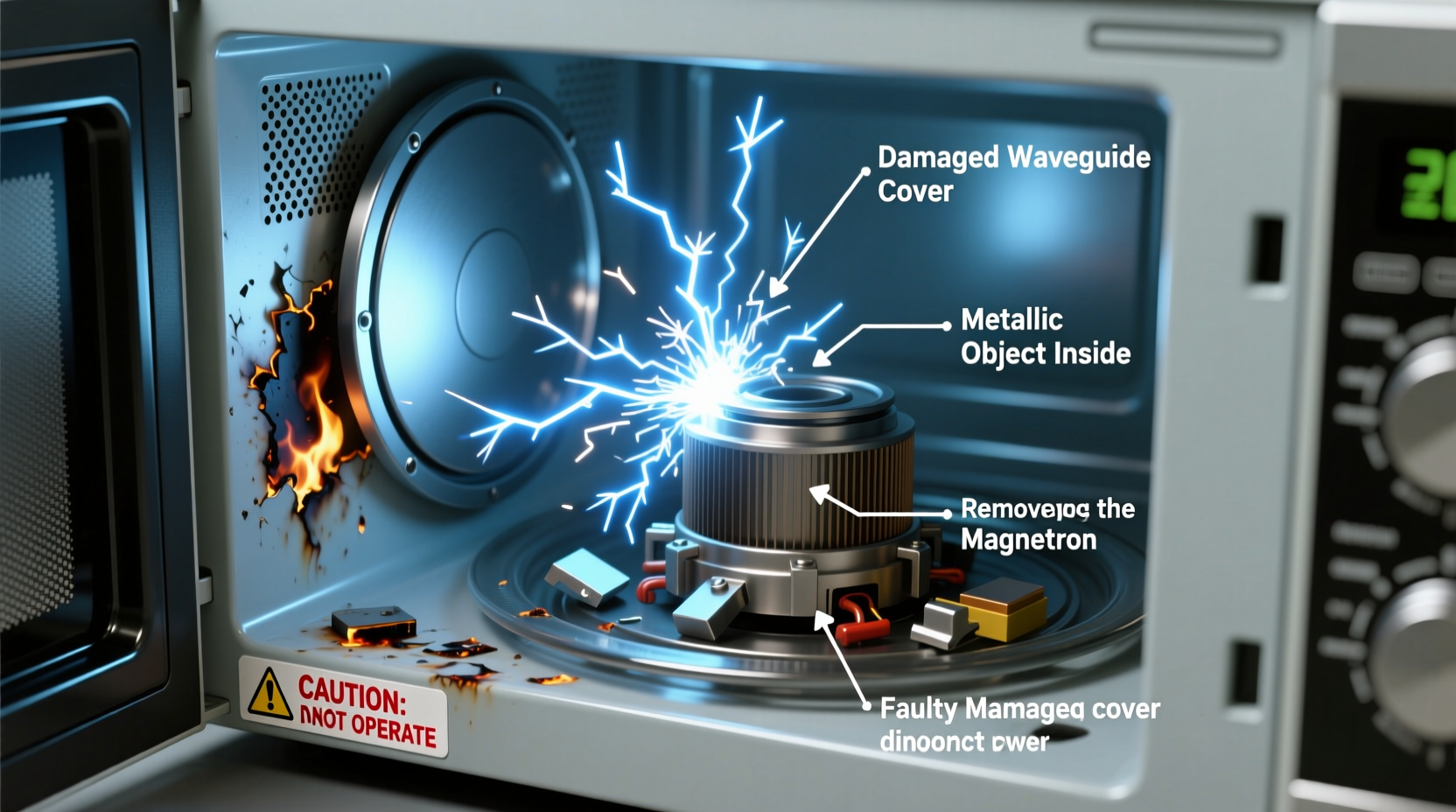
Sparking doesn’t happen randomly. It’s always tied to a physical or mechanical issue inside the microwave. Knowing the most frequent culprits helps you diagnose the problem faster and apply the correct solution.
- Metal objects: Even small traces of foil, metallic trim on dishes, or utensils left inside can cause arcing.
- Damaged waveguide cover: This mica or plastic panel protects the opening where microwaves enter the cavity. If burned or coated in grease, it can overheat and spark.
- Food splatter buildup: Grease, sauces, or carbonized residue act as conductors and may ignite under intense energy.
- Chipped enamel coating: Over time, the interior paint can wear off, exposing metal underneath. Exposed metal reflects waves unevenly, leading to arcing.
- Faulty stirrer fan (in some models): If the fan that distributes microwaves isn’t working, energy concentrates in one area, increasing spark risk.
Immediate Steps to Stop Sparking
If your microwave starts sparking, reacting quickly prevents further damage. Follow this timeline to shut down the hazard and assess next steps.
- Stop the microwave immediately. Press “Cancel” or open the door to cut power. Do not wait for the cycle to finish.
- Unplug the unit. Disconnect it from the outlet to eliminate electrical risk during inspection.
- Let it cool down. Wait 10–15 minutes before opening or touching internal parts.
- Inspect the interior visually. Look for obvious issues: metal objects, burnt spots, charring, or damaged surfaces.
- Remove any foreign items. Take out containers, turntables, or racks that shouldn’t be there.
- Clean thoroughly. Wipe down walls, ceiling, and floor of the cavity with a damp cloth and mild detergent.
After completing these steps, plug the microwave back in and test it with a microwave-safe cup of water for 30 seconds. If no sparks appear, the issue was likely temporary debris or misuse. If sparking continues, proceed to deeper diagnostics.
How to Identify and Replace a Damaged Waveguide Cover
The waveguide cover is a thin, rectangular panel typically located on the right side wall or top inner wall of the microwave. It’s made of mica or a heat-resistant composite and allows microwaves to pass through while shielding the magnetron (the component that generates the waves).
When this cover becomes coated in grease or burned due to food splatter, it can no longer insulate properly. Microwaves interact with the carbonized layer, causing electrical arcing and visible sparks. In many cases, replacing the waveguide cover resolves the issue completely.
Signs of a Faulty Waveguide Cover:
- Burn marks or holes on the panel
- Dark brown or black discoloration
- Peeling or warping of material
- Sparks originating from the wall near the panel
Replacing the Waveguide Cover – Step-by-Step
- Unplug the microwave and remove the glass tray and roller ring.
- Locate the waveguide cover—usually secured with one or two screws.
- Remove the screws and gently pull the panel out.
- Clean the area behind it with a soft, damp cloth. Avoid abrasive cleaners.
- Install the new cover (available online using your model number) and reattach the screws.
- Reassemble the turntable and test with water.
Replacement kits cost between $10 and $25 and take less than 15 minutes to install. Always refer to your user manual for exact location and part specifications.
“Over 60% of microwave sparking incidents we see in service calls are due to degraded waveguide covers. It’s a cheap fix that prevents expensive replacements.” — David Lin, Appliance Repair Technician with 18 years of experience
Do’s and Don’ts: Preventing Future Sparking
Prevention is far safer and more economical than repair. Follow these guidelines to maintain a safe, spark-free microwave operation.
| Do’s | Don’ts |
|---|---|
| Use only microwave-safe containers (glass, ceramic, labeled plastics) | Put metal utensils, foil, or dishes with metallic trim inside |
| Cover food with a microwave-safe lid or paper towel to reduce splatter | Heat food without covering—especially saucy or oily dishes |
| Clean spills and splatters promptly after each use | Use harsh scrubbers or steel wool on interior surfaces |
| Inspect the waveguide cover every few months | Run the microwave empty or with nothing to absorb energy |
| Check for chipped enamel or rust on cavity walls | Ignore recurring sparks or burning smells |
Real-World Example: A Kitchen Near Disaster
Sarah from Portland reheated lasagna in a decorative ceramic dish with gold edging. Within 30 seconds, she noticed blue flashes inside the microwave. She opened the door and saw sparks near the top wall. Alarmed, she unplugged the unit.
After researching online, she realized the gold trim acted as an antenna, reflecting microwaves and causing arcing. Upon closer inspection, the waveguide cover was scorched. She ordered a replacement part ($12.99) and installed it herself. Since then, she uses only plain glass containers and cleans her microwave weekly. “I had no idea such a small detail could be dangerous,” she said. “Now I check every dish before putting it in.”
This case highlights how everyday choices—like using a beautiful but unsafe dish—can trigger hazardous conditions. Awareness and vigilance make all the difference.
When to Call a Professional
While many sparking issues stem from user error or minor wear, some require expert attention. Don’t attempt DIY repairs if you suspect deeper electrical or structural faults.
Seek professional help if:
- Sparking persists after cleaning and replacing the waveguide cover
- You notice a burning smell or smoke
- The microwave hums abnormally or won’t start
- There’s visible damage to the magnetron, wiring, or control board
- The interior enamel is extensively chipped or rusted
Attempting to repair high-voltage components like the magnetron or capacitor is extremely dangerous. These parts store lethal electrical charges even when unplugged. Only licensed technicians should handle them.
FAQ: Common Questions About Microwave Sparking
Is a sparking microwave dangerous?
Yes. Persistent sparking can damage internal components, create fire hazards, or compromise the microwave’s shielding. Immediate shutdown and inspection are essential.
Can I still use my microwave if it sparked once?
Only if the cause was clearly a one-time mistake—like leaving a spoon inside—and no damage remains. If sparks occurred without obvious cause or recur, stop using it until repaired.
How much does it cost to fix a sparking microwave?
Simple fixes like replacing the waveguide cover cost under $25. Full repairs involving the magnetron or circuit board range from $100 to $250. In many cases, especially with units over 5–7 years old, replacement is more economical.
Final Checklist: What to Do When Your Microwave Sparks
- 🛑 Stop the microwave immediately
- 🔌 Unplug the unit
- 👀 Inspect for metal objects or food debris
- 🧽 Clean the interior thoroughly
- 🔍 Check the waveguide cover for burns or damage
- 🛠 Replace the waveguide cover if necessary
- 🧪 Test with a cup of water (never run empty)
- 📞 Call a technician if problems persist
Conclusion: Act Fast, Stay Safe
Seeing your microwave spark is unsettling, but panic won’t help. What matters is acting swiftly and wisely. Most sparking issues come from avoidable causes—metal objects, dirty interiors, or worn components—that you can address immediately. By understanding how microwaves work and respecting their limitations, you protect both your appliance and your home.
Don’t ignore warning signs. A single spark might be a fluke, but repeated arcing is a red flag. Whether it’s swapping out a $13 waveguide cover or switching to safer cookware, the steps you take today can prevent bigger problems tomorrow. Stay vigilant, clean regularly, and never hesitate to unplug and investigate. Your microwave works hard for you—make sure it runs safely.




 浙公网安备
33010002000092号
浙公网安备
33010002000092号 浙B2-20120091-4
Comments
No comments yet. Why don't you start the discussion?