
A sudden flash inside your microwave can be alarming. One moment you're reheating leftovers, the next you see bright blue sparks dancing around the interior. While occasional sparking might seem minor, it’s a warning sign that shouldn’t be ignored. Microwaves spark due to a variety of reasons—some easily fixable, others serious enough to warrant immediate replacement. Understanding what causes these sparks and when they cross the line from nuisance to hazard is essential for safety and appliance longevity.
What Causes a Microwave to Spark?
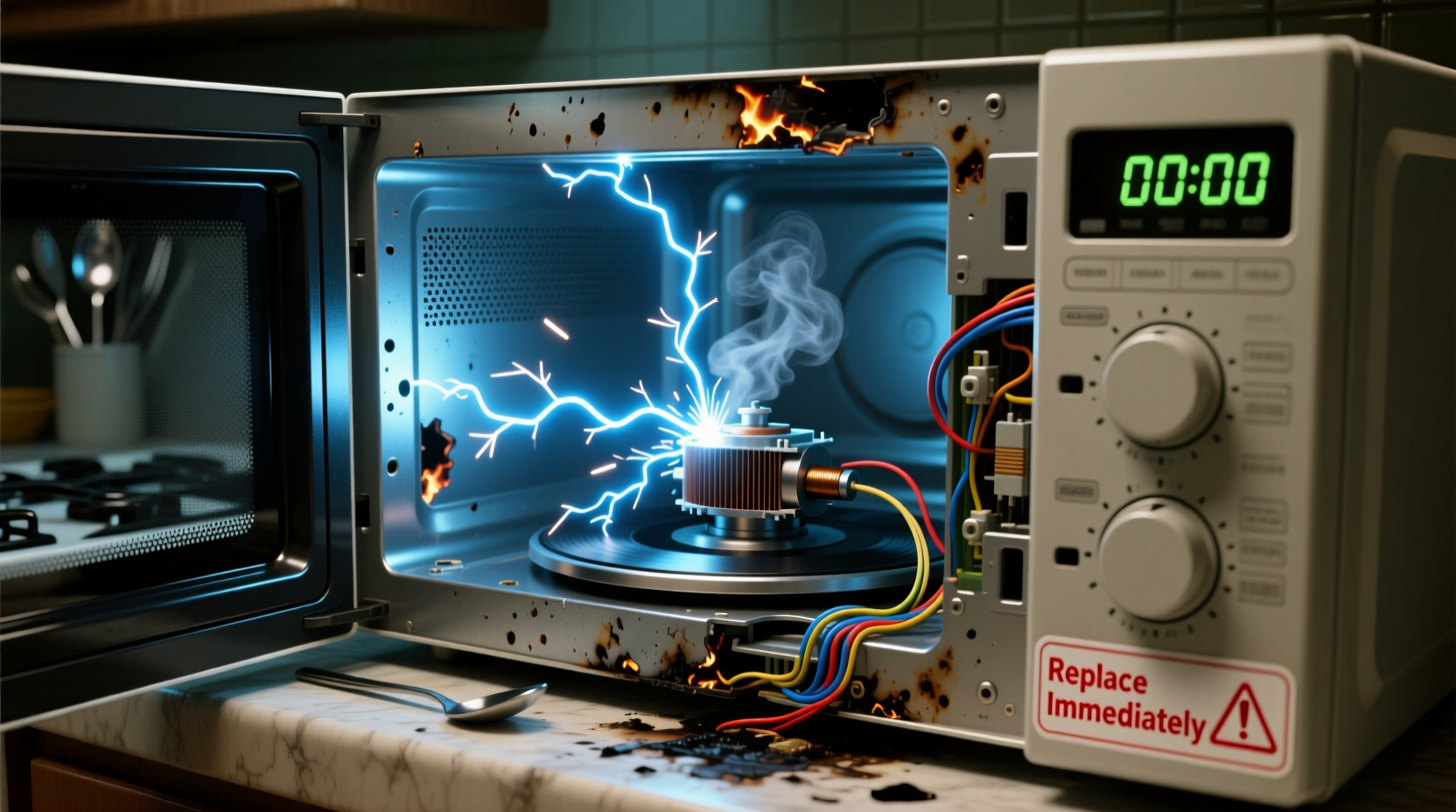
Microwave ovens generate electromagnetic waves that excite water molecules in food, producing heat. The magnetron emits these waves into the cooking chamber, where they bounce off metal walls and are absorbed by food. However, when something interferes with this process—especially conductive materials or damaged components—sparks can occur.
Sparking happens when electrical arcs form between two points, often due to concentrated energy jumping across gaps. In a microwave, this typically occurs when metal objects, compromised surfaces, or food debris create conditions for arcing.
Common Causes of Sparking
- Metal objects: Utensils, foil, twist ties, or containers with metallic trim can cause immediate sparking.
- Worn waveguide cover: A mica or plastic panel inside the cavity protects the waveguide (the channel that directs microwaves). If it’s burned, greasy, or cracked, it can overheat and spark.
- Food residue buildup: Splattered grease, sauces, or carbonized food particles can become conductive and ignite under microwave energy.
- Damaged interior coating: Chipped enamel or scratched paint exposes underlying metal, creating hotspots for arcing.
- Faulty stirrer fan (in some models): If the fan that distributes microwaves isn’t working, energy concentrates in one area, increasing spark risk.
When Is Sparking Dangerous?
Not all sparking is equally dangerous. A brief spark when accidentally heating a spoon may not cause lasting harm. But persistent or intense arcing poses real risks:
- Fire hazard: Sparks can ignite flammable residues or packaging materials.
- Appliance damage: Repeated arcing degrades internal components, especially the magnetron, which is costly to replace.
- Electrical failure: Severe sparking may lead to short circuits or blown fuses.
- Exposure to radiation: While modern microwaves are well-shielded, structural damage from fire or corrosion could compromise safety seals.
The danger escalates if sparking continues after removing obvious triggers like metal. This suggests internal wear or component failure—issues that can’t be safely ignored.
“Any consistent sparking beyond a split-second incident indicates a problem with the microwave’s integrity. It’s not just about appliance life—it’s a fire and safety issue.” — Dr. Alan Reyes, Appliance Safety Engineer at the National Home Electronics Institute
Step-by-Step Guide: What to Do When Your Microwave Sparks
If you notice sparking, act quickly but calmly. Follow this sequence to assess and respond appropriately:
- Stop the microwave immediately: Press “Stop” or open the door to cut power. Do not wait for the cycle to finish.
- Unplug the unit: Disconnect from the outlet to prevent further electrical activity.
- Inspect for obvious causes: Look for metal objects, aluminum foil, or damaged dishes. Remove any foreign items.
- Clean the interior thoroughly: Use a damp cloth with mild soap to wipe down walls, ceiling, and floor of the cavity. Pay attention to corners and the waveguide cover (usually a rectangular panel on the side wall).
- Check the waveguide cover: If it’s discolored, warped, or has holes, it likely needs replacement. These covers are inexpensive and often user-replaceable.
- Test cautiously: Plug the microwave back in, place a microwave-safe cup of water inside, and run for 30 seconds. Watch closely for any recurrence of sparks.
- Evaluate results: If no sparking occurs, the issue was likely debris or a temporary fault. If sparks return, stop using the appliance.
When Cleaning Isn’t Enough
Cleaning resolves many cases, especially those caused by grease or food splatter. But if the waveguide cover is damaged or the cavity lining is peeling, cleaning won’t fix the root problem. These conditions allow microwave energy to concentrate on exposed metal, leading to repeated arcing.
Do’s and Don’ts of Microwave Maintenance
| Do’s | Don’ts |
|---|---|
| Use only microwave-safe containers (glass, ceramic, labeled plastics) | Put metal, foil, or containers with metallic accents in the microwave |
| Clean spills immediately after use | Allow food residue to bake onto surfaces |
| Replace a damaged waveguide cover promptly | Attempt to repair high-voltage components yourself |
| Ventilate the area around the microwave for proper airflow | Block vents on the sides, back, or top of the unit |
| Inspect the door seal regularly for cracks or warping | Operate the microwave if the door doesn’t close securely |
Mini Case Study: The Cost of Ignoring a Sparking Microwave
Sarah, a busy mother of two in Denver, first noticed her microwave sparking when reheating soup. She dismissed it as a one-time glitch. Over the next few weeks, the sparks became more frequent, especially when heating fatty foods. She cleaned the interior but didn’t inspect the waveguide cover. One evening, while defrosting chicken, thick smoke began pouring from the unit. She unplugged it just in time—the waveguide had burned through, and flames were starting to creep into the insulation behind the panel.
An appliance technician later explained that years of steam and grease had degraded the mica cover, allowing moisture to seep into the waveguide. The repeated arcing eventually caused thermal runaway. Sarah avoided a house fire by sheer luck. Her microwave, five years old, had no warranty, and repair costs nearly matched a new model. She replaced it immediately—and now checks her appliances monthly.
This case highlights how small warning signs, when ignored, can escalate into emergencies. Regular inspection and timely response are critical.
When to Replace Your Microwave Immediately
Some situations demand immediate discontinuation of use and replacement. Do not attempt to repair or continue operating your microwave if you observe any of the following:
- Persistent sparking after cleaning and removing metal: Indicates internal damage.
- Burning smell or visible smoke: Signifies electrical or insulation failure.
- Chipped or peeling interior coating: Exposes metal substrate, creating arcing zones.
- Cracked or warped door seal: Compromises radiation containment.
- Unit trips circuit breaker repeatedly: Suggests serious electrical fault.
- Age over 7–10 years: Older units lack modern safety features and are more prone to failure.
Even if sparking stops temporarily, underlying damage may remain. The U.S. Consumer Product Safety Commission estimates that nearly 5,000 home fires annually are linked to microwave ovens, many due to neglected maintenance or outdated units.
Replacement Checklist: Ensuring a Safe Upgrade
If you’ve decided to replace your microwave, follow this checklist to make a smart, safe choice:
- Measure the available space (width, height, depth) to ensure the new model fits.
- Choose between countertop, over-the-range, or built-in based on kitchen layout.
- Look for models with stainless steel cavities—they resist chipping better than painted interiors.
- Verify safety certifications (UL, ETL) and automatic shut-off features.
- Consider inverter technology for more even heating and reduced stress on components.
- Read reviews for reliability and customer service reputation.
- Dispose of the old unit properly—many retailers offer recycling with purchase.
Frequently Asked Questions
Can I still use my microwave if it sparked once?
A single, isolated spark—especially when metal was present—may not be cause for alarm. However, if it happens again after removing the trigger, stop using the microwave. One spark can indicate the start of a larger issue, particularly if internal components are weakening.
Is a sparking microwave a fire hazard?
Yes. Sparking can ignite food debris, paper towels, or packaging. In extreme cases, it can damage wiring or insulation, leading to electrical fires. The CPSC warns that microwaves involved in fires often show prior signs like noise, smoke, or intermittent sparking.
How long should a microwave last before replacement?
Most microwaves last 7 to 10 years with regular use. After this point, efficiency declines, parts become harder to source, and safety systems may degrade. If your unit is older than a decade and shows any malfunction—even minor—replacement is strongly advised.
Conclusion: Prioritize Safety Over Convenience
A sparking microwave isn’t just inconvenient—it’s a potential danger. While some causes are simple to fix, others signal irreversible damage that compromises both performance and safety. Ignoring repeated sparking puts your home and family at risk. By understanding the root causes, acting swiftly when issues arise, and knowing when to retire an aging appliance, you protect more than just your kitchen.
Your microwave works hard every day. Return the favor by treating warning signs seriously. If sparking persists after basic troubleshooting, don’t hesitate—replace it immediately. Modern models are more energy-efficient, safer, and often more affordable than repairing an aging unit. Stay vigilant, stay safe, and never underestimate the importance of a properly functioning appliance.




 浙公网安备
33010002000092号
浙公网安备
33010002000092号 浙B2-20120091-4
Comments
No comments yet. Why don't you start the discussion?