
Microwave sparking—also known as arcing—is a startling phenomenon that can send a jolt of concern through even the most experienced home cook. One moment you're reheating leftovers, and the next, bright flashes illuminate the interior like miniature lightning storms. While occasional sparking might seem harmless, repeated incidents can damage your appliance or, in extreme cases, pose a fire risk. Understanding why this happens—and how to stop it—is essential for both safety and longevity of your microwave.
Sparking occurs when electromagnetic energy from the microwave’s magnetron is disrupted by conductive materials or uneven food compositions. Rather than being absorbed evenly, the energy concentrates at certain points, ionizing the air and creating visible sparks. The good news? Most causes are preventable with simple changes in habits, containers, and food preparation.
What Causes Microwave Sparking?
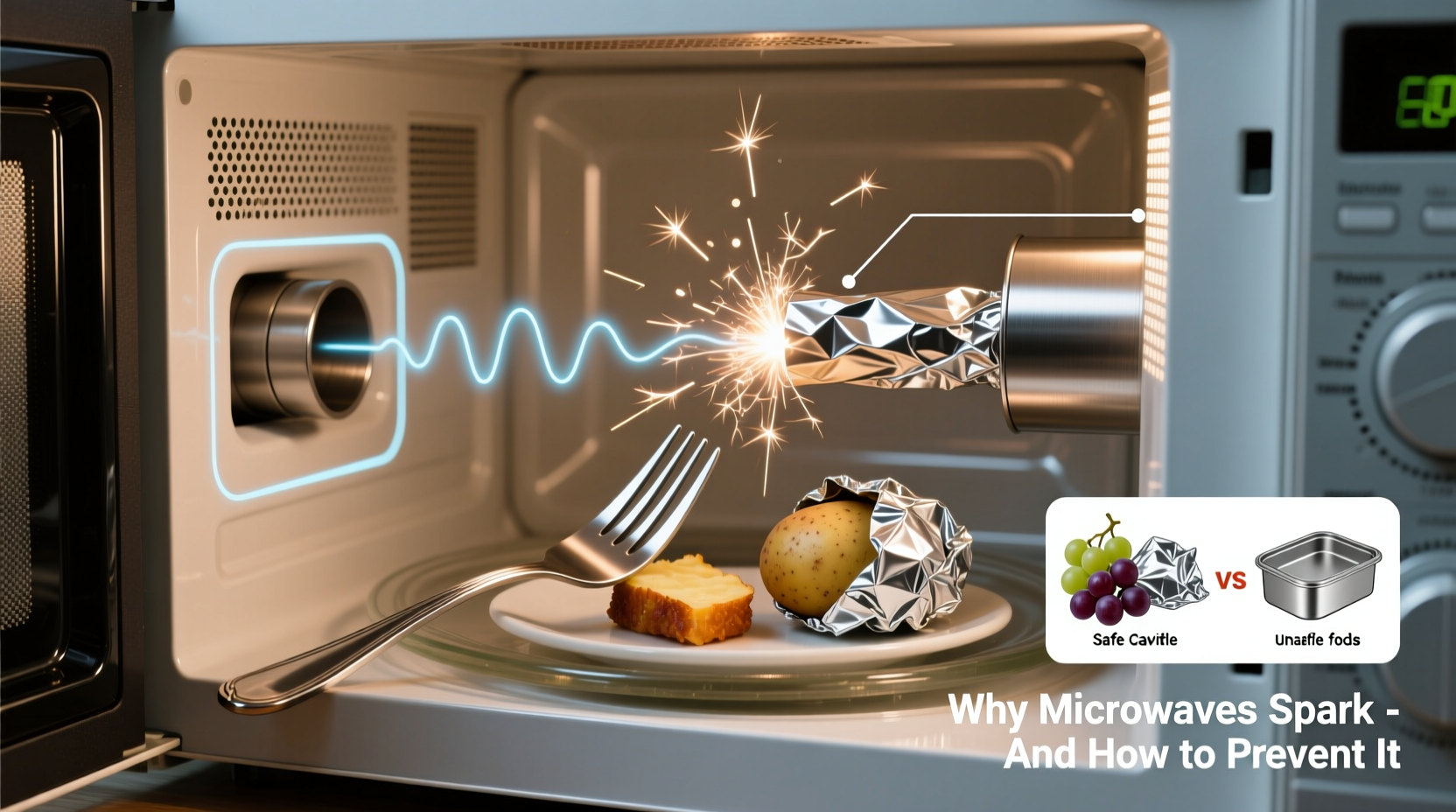
At its core, a microwave oven uses electromagnetic waves (typically 2.45 GHz) to agitate water molecules in food, generating heat through friction. However, when these waves encounter materials that reflect or concentrate energy instead of absorbing it, arcing can occur. This isn’t random—it follows predictable physical principles.
The primary culprits behind sparking fall into three categories: metallic objects, certain food structures, and damaged internal components. Let’s examine each in detail.
Metal Objects and Foil Traces
Metal reflects microwaves rather than absorbing them. When metal is present—such as aluminum foil, twist ties with wire, or dishes with metallic trim—the reflected waves can create concentrated electric fields between sharp edges or points. These fields become strong enough to ionize air molecules, resulting in sparks.
Even small amounts of metal can cause problems. For example, some takeout containers have thin metallic linings for crispness retention. Others may feature gold or silver accents on ceramic mugs or plates. These decorative elements often contain real metal and should never go in a microwave.
Foods with High Mineral Content or Dense Structures
Not all sparking involves metal. Some foods naturally contain high concentrations of minerals like iron, magnesium, and selenium. These minerals act as conductors under microwave radiation. Grapes, carrots, and hot dogs are common examples.
A well-documented case involves halved grapes. When two grape halves remain connected by a thin strip of skin, they form what scientists call a \"resonant cavity.\" The size and composition allow microwaves to become trapped and amplified between the pieces, leading to plasma formation and visible sparks—or even fire in extreme cases.
Similarly, processed meats like hot dogs have uneven salt and mineral distribution. These dense spots absorb more energy, heat rapidly, and can arc if the concentration is high enough.
“Foods with localized conductive regions can behave like tiny antennas inside the microwave, focusing energy until breakdown occurs.” — Dr. Aaron Slepkov, Physics Professor, Trent University
Worn or Damaged Interior Coating
The interior walls of your microwave are coated with a special enamel designed to reflect microwaves safely back into the cavity. Over time, scratches, chipping, or burned-on food residue can compromise this coating. Exposed metal underneath becomes a hotspot for arcing.
If you notice frequent sparking—even with microwave-safe containers and no metal present—inspect the inner walls closely. Look for flaking paint, rust spots, or areas where food has carbonized into a conductive layer.
How to Prevent Microwave Sparking
Prevention starts with awareness and consistent practices. By identifying risks before they escalate, you can protect both your appliance and your kitchen environment.
Use Only Microwave-Safe Containers
This cannot be overstated: not all plastics, ceramics, or glasses are created equal. Look for the official microwave-safe symbol—a series of wavy lines—on packaging or dishware. Avoid containers labeled “not for microwave use,” including many styrofoam trays and plastic tubs from yogurt or margarine.
Glass and ceramic containers without metallic finishes are generally safest. When in doubt, perform a quick test: place the empty container in the microwave alongside a cup of water. Run it on high for one minute. If the container stays cool while the water heats, it’s likely microwave-safe. If the container gets hot, it’s absorbing too much energy and could contribute to instability.
Avoid Metal in Any Form
Remove twist ties, staples, and foil seals before microwaving. Don’t assume because something is small or partially covered that it’s safe. A single staple in a bag of popcorn can generate enough field distortion to spark repeatedly.
Also beware of so-called “microwave crisping sleeves” used in packaged meals. These often contain a thin metalized film designed to brown food. They’re engineered to be safe—but only if used exactly as directed. Never reuse them, and never place them in the microwave empty.
Cut Food Strategically
When preparing foods prone to sparking, alter their shape to disrupt potential resonance. For grapes, slice them fully apart rather than leaving them half-connected. For carrots or green beans, cut them into uniform lengths to promote even heating.
Hot dogs benefit from scoring—making shallow lengthwise cuts—to release steam and reduce pressure buildup. More importantly, slicing them crosswise helps distribute mineral-rich zones and prevents concentrated arcing.
Do’s and Don’ts: Microwave Safety Table
| Do’s | Don’ts |
|---|---|
| ✔ Use glass, ceramic, or labeled microwave-safe plastic | ✘ Use metal pans, foil, or containers with metallic trim |
| ✔ Cover food with a microwave-safe lid or paper towel | ✘ Microwave sealed containers or eggs in shells |
| ✔ Stir or rotate food during heating | ✘ Run microwave empty (can damage magnetron) |
| ✔ Clean spills promptly to avoid carbon buildup | ✘ Ignore chipped enamel or exposed metal inside cavity |
| ✔ Check packaging instructions carefully | ✘ Reuse microwave browning trays or susceptors |
Step-by-Step Guide to Troubleshooting Sparking
If your microwave sparks, follow this sequence to diagnose and resolve the issue safely:
- Stop the microwave immediately. Do not open the door until the sparking stops. Opening it mid-cycle can expose you to residual energy.
- Unplug the unit. This eliminates electrical risk during inspection.
- Remove all contents. Check for hidden metal: foil fragments, utensils, or packaging residues.
- Inspect the interior walls. Look for peeling coating, rust, or burnt food deposits. Gently clean with mild detergent and a non-abrasive sponge.
- Test with water only. Place a microwave-safe cup of water inside and run for 1 minute. If sparking persists, the unit likely has internal damage.
- Consult a technician or replace the unit. Internal components like the waveguide cover or magnetron should not be repaired at home.
Regular maintenance can prevent future issues. Wipe down the interior weekly, especially after cooking greasy or sugary foods. Buildup can carbonize over time, becoming conductive and increasing spark risk.
Real Example: The Case of the Exploding Grape
In 2019, a viral video showed a grape catching fire in a microwave. At first dismissed as a hoax, physicists later confirmed the phenomenon was real and rooted in electromagnetic resonance. Two researchers from Trent University published a study demonstrating that when two grape hemispheres are placed close together—with only a thin bridge of skin connecting them—they act as a dipole antenna tuned to microwave frequencies.
The result? Intense energy concentration at the contact point, generating temperatures high enough to produce plasma. Home cooks replicating this experiment reported smoke, flames, and permanent scorch marks inside their microwaves.
This case underscores a broader truth: everyday foods can interact with microwaves in unexpected ways. Awareness of food structure and preparation methods is just as important as avoiding metal.
Microwave Maintenance Checklist
- ✅ Inspect containers for metallic finishes before use
- ✅ Remove all packaging materials containing foil or wire
- ✅ Cut dense or mineral-rich foods into smaller, separated pieces
- ✅ Clean interior monthly with vinegar-water solution (1:1 ratio)
- ✅ Replace waveguide cover if discolored or damaged (located on side wall)
- ✅ Replace microwave if sparking continues after cleaning and inspection
FAQ: Common Questions About Microwave Sparking
Can sparking damage my microwave permanently?
Yes. Repeated arcing can burn holes in the interior lining, degrade the waveguide cover, or overload the magnetron. These damages reduce efficiency and increase fire risk. If sparking recurs after removing obvious causes, replacement is recommended.
Is it ever safe to microwave metal?
Generally no—but there are exceptions. Smooth, thick metal like the walls of the microwave itself reflects waves safely. Some advanced convection microwaves allow specific metal racks designed to distribute heat evenly. Always follow manufacturer guidelines. Never introduce unapproved metal objects.
Why did my soup spark when there was no metal?
Dense clusters of minerals or salts in ingredients like broth, canned vegetables, or processed meats can create conductive zones. Overheating causes localized boiling and plasma formation. To prevent this, stir liquids before and during heating, and use lower power settings for longer durations.
Conclusion: Stay Safe and Extend Your Appliance’s Life
Microwave sparking is not something to ignore. While it may stem from simple mistakes—like forgetting to remove a foil lid or cutting a grape wrong—the consequences can range from minor damage to serious hazards. The key lies in understanding the science behind the sparks and applying practical precautions every time you use the appliance.
By choosing appropriate containers, preparing food wisely, and maintaining your microwave regularly, you can eliminate most risks. Remember: your microwave is a powerful tool, but it operates best within specific boundaries. Respect those limits, and it will serve you reliably for years.




 浙公网安备
33010002000092号
浙公网安备
33010002000092号 浙B2-20120091-4
Comments
No comments yet. Why don't you start the discussion?