
Seeing sparks inside your microwave while reheating last night’s dinner can be alarming. It’s not just a sign of something going wrong—it’s a potential safety hazard. Many people assume their microwave is faulty, but in most cases, the issue lies in everyday habits and small oversights during food preparation or container selection. Understanding why sparking occurs—and what you’re doing to unintentionally trigger it—is essential for both appliance longevity and kitchen safety.
Microwave ovens use electromagnetic waves to agitate water molecules in food, generating heat. However, when metal objects, damaged components, or certain types of containers interfere with this process, electrical arcs (sparks) can form. These aren’t normal and should never be ignored. Below, we break down the science behind microwave sparking, identify the top causes related to leftover handling, and provide actionable steps to prevent future incidents.
How Microwaves Work and Why Sparks Happen
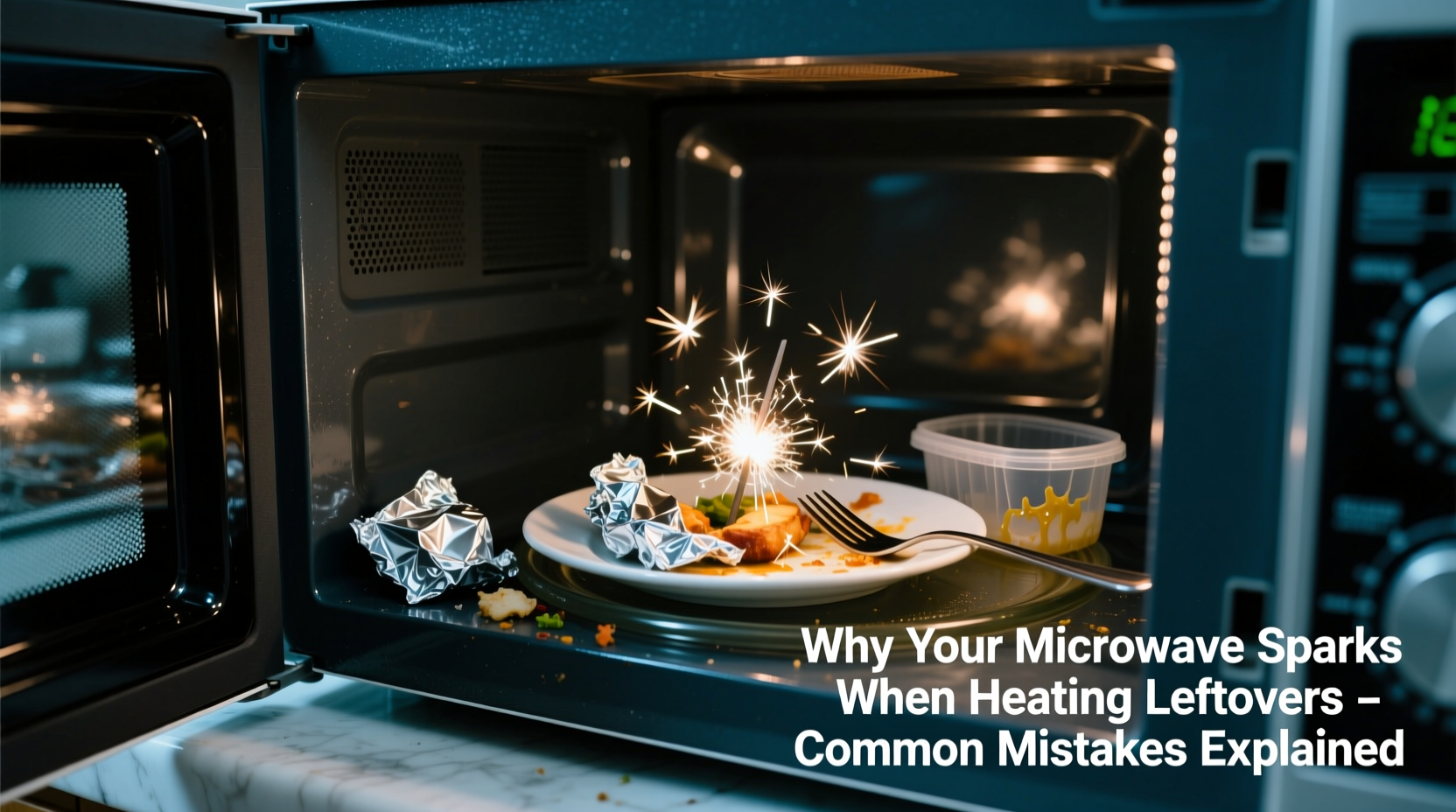
Microwaves operate by emitting non-ionizing radiation at a frequency of around 2.45 GHz. This energy excites water, fat, and sugar molecules in food, producing heat through friction. The interior of the microwave is designed to reflect these waves efficiently, concentrating energy on the food. But when conductive materials like metal are introduced, they disrupt the field distribution.
Sparking—also known as arcing—occurs when microwaves induce electric currents in metallic objects. If the voltage becomes high enough at sharp edges or points (like crumpled foil or gold-trimmed ceramics), it ionizes the surrounding air, creating visible sparks. While brief flashes may seem harmless, repeated arcing can damage the magnetron (the component that generates microwaves), compromise the waveguide cover, or even start a fire.
“Microwave arcing is often preventable. Most cases stem from user error rather than equipment failure.” — Dr. Linda Chen, Appliance Safety Researcher, National Home Electronics Lab
Common Mistakes That Cause Sparking When Reheating Leftovers
The convenience of microwaving leftovers makes it easy to overlook details. Yet, minor missteps in packaging, storage, or dish selection can lead directly to dangerous sparking. Here are the most frequent errors:
1. Using Metal-Trimmed or Metallic-Decorated Dishes
Some ceramic or glass plates feature decorative gold or silver rims. These metallic finishes are highly conductive and react violently under microwave energy. Even if the dish appears safe, any glint of metal increases the risk of arcing.
2. Leaving Utensils or Foil in Containers
It’s surprisingly common to accidentally leave a fork, spoon, or twist-tie in a takeout container. Aluminum foil used to cover dishes—even partially—can create concentrated charge points, especially if wrinkled. Small metal staples found on tea bags or seasoning packets also pose a hidden danger.
3. Reheating Food in Takeout Containers
Many takeout boxes, especially Chinese food containers, have a thin metal strip along the seam or handle. These are designed for oven or broiler use, not microwaves. Even if the box looks paper-based, that metallic edge can ignite sparks instantly.
4. Using Damaged Microwave Interiors
If the enamel coating inside your microwave is chipped or worn—especially near the walls or ceiling—the underlying metal can become exposed. Microwaves interact with this exposed surface, leading to localized arcing. This often happens over time due to steam corrosion or improper cleaning with abrasive pads.
5. Overheating Dry or Dense Foods
Foods low in moisture—like bread, crackers, or roasted vegetables—can overheat rapidly. When they dry out completely, carbonization begins, forming conductive charred spots. These act like mini-electrodes, promoting arcing. Similarly, dense foods like potatoes or thick meatloaf may develop hotspots where energy concentrates, increasing spark risk.
Do’s and Don’ts: Safe Leftover Reheating Practices
| Do’s | Don’ts |
|---|---|
| Use microwave-safe glass, ceramic, or labeled plastic containers | Use metal cookware or dishes with metallic paint |
| Cover food with a microwave-safe lid or paper towel | Cover with aluminum foil |
| Stir food midway to distribute heat evenly | Leave food unattended for long periods |
| Inspect containers for hidden metal (e.g., staples, foil seals) | Reheat food in takeout boxes without checking materials |
| Keep the interior clean and free of debris | Use steel wool or harsh scrubbers on the microwave walls |
Step-by-Step Guide to Prevent Microwave Sparking
Follow this sequence every time you reheat leftovers to minimize risks and extend your microwave’s lifespan:
- Remove food from original packaging: Transfer leftovers to a microwave-safe dish, even if the container claims to be “microwave-friendly.” Inspect closely for foil linings or metal components.
- Check for foreign objects: Look for forgotten utensils, twist-ties, or seasoning pouches. Remove tea bags, which often contain metal staples.
- Choose the right cover: Use a microwave-safe plate, vented lid, or damp paper towel to trap steam and prevent splatters—never foil.
- Set appropriate power and time: Use medium power (50–70%) for longer durations instead of max power for short bursts. This reduces hotspot formation and prevents overheating.
- Pause and stir: Stop halfway through heating, stir thoroughly, and rotate the dish to ensure even energy distribution.
- Inspect the microwave interior monthly: Look for chipped paint, burn marks, or residue buildup. Clean gently with warm soapy water and a soft sponge.
- Test after repairs or concerns: If you suspect damage, run the microwave empty with a glass of water inside. If sparking occurs without food, stop use immediately and consult a technician.
Real-Life Example: A Close Call with Leftover Lasagna
Sarah, a busy teacher from Portland, regularly reheats her homemade lasagna in the same ceramic dish. One evening, she noticed bright blue sparks shooting from the corner of the pan. Alarmed, she shut off the microwave and discovered that the dish’s gold trim—previously unnoticed—had begun to flake, exposing conductive material. She had used the dish dozens of times without issue, but increased heating cycles had degraded the finish enough to cause arcing.
After replacing the dish and switching to a plain glass casserole, Sarah no longer experienced problems. She now checks all her cookware under bright light before use and keeps a dedicated set of microwave-safe containers in an easily accessible cabinet.
“Just because a dish survived ten microwaving sessions doesn’t mean it’s safe. Degradation over time can turn a ‘safe’ item into a hazard.” — Carlos Mendez, Consumer Appliance Technician
Troubleshooting Persistent Sparking Issues
If you’ve eliminated common user errors and sparking continues, the problem may lie within the appliance itself. Consider these internal issues:
- Damaged Waveguide Cover: This is a mica or plastic panel on the inside wall that protects the waveguide (the channel directing microwaves into the cavity). If it’s stained with grease or has burn marks, it can absorb energy and arc. It’s replaceable and inexpensive—most models cost under $20.
- Faulty Stirrer Fan (in some models): Some microwaves use a rotating fan to distribute waves evenly. If broken, energy concentrates in one area, increasing spark risk.
- Magnetron Failure: Rare, but possible. A failing magnetron may emit erratic energy patterns. If accompanied by loud humming or burning smells, professional service is required.
FAQ: Common Questions About Microwave Sparking
Is it safe to continue using a microwave after it sparks?
Only if the sparking was caused by a removable factor—like metal or food debris—and stops immediately when the object is removed. If sparks occur repeatedly or without explanation, discontinue use and have the unit inspected.
Can a scratched microwave interior cause sparks?
Yes. Scratches that penetrate the protective enamel coating can expose the underlying metal cavity. This creates a site for electrical arcing. Minor surface scratches are usually fine, but deep gouges or bubbling require attention.
Are all plastic containers unsafe in the microwave?
No—but only use those labeled “microwave-safe.” Others may warp, leach chemicals, or contain additives that react poorly to heat. Avoid old, cracked, or cloudy plastic containers, as they degrade over time.
Essential Checklist for Safe Leftover Reheating
- ✅ Remove food from takeout containers
- ✅ Check for hidden metal (foil, staples, utensils)
- ✅ Use only microwave-safe dishes (glass, ceramic, labeled plastics)
- ✅ Avoid dishes with metallic paint or trim
- ✅ Cover with paper towel, wax paper, or microwave-safe lid
- ✅ Stir food halfway through heating
- ✅ Clean interior monthly with mild detergent
- ✅ Inspect waveguide cover for damage or grime
- ✅ Replace damaged or chipped cookware immediately
- ✅ Stop use and unplug if sparking persists after removing contents
Conclusion: Protect Your Kitchen and Health
Sparkling microwaves aren’t just inconvenient—they’re warnings. Most incidents stem from simple, correctable behaviors tied to how we handle leftovers. By choosing the right containers, staying vigilant about metal, and maintaining your appliance, you can eliminate the risk of arcing and protect both your health and your investment.
Your microwave is a powerful tool, but it demands respect and proper care. Start today by auditing your current reheating routine. Replace questionable dishes, clean the interior, and establish a checklist. Small changes now can prevent fires, costly repairs, or injuries later.




 浙公网安备
33010002000092号
浙公网安备
33010002000092号 浙B2-20120091-4
Comments
No comments yet. Why don't you start the discussion?