
Stepping out of a hot shower only to find your bathroom mirror completely obscured by fog is a daily frustration for millions. The sudden condensation doesn’t just disrupt your routine—it signals an ongoing battle with humidity, temperature, and airflow. But fogging isn’t inevitable. Understanding the science behind it reveals practical, lasting solutions that go beyond wiping with a towel or using makeshift hacks. This guide breaks down exactly why mirrors fog up instantly and delivers actionable strategies to prevent it—permanently.
The Science Behind Mirror Fogging
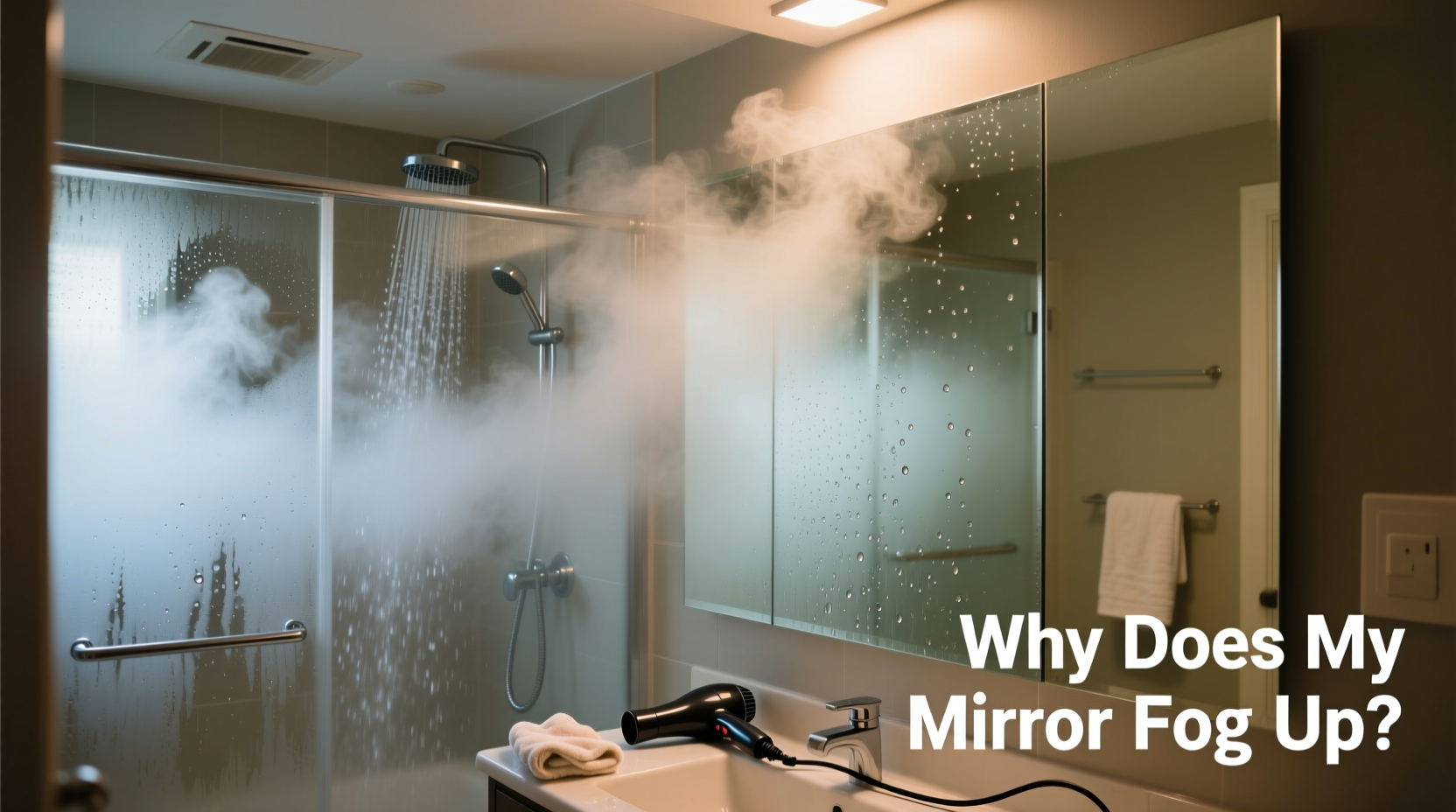
Mirror fog occurs when warm, moisture-laden air comes into contact with a cooler surface—typically the glass of your bathroom mirror. When you run a hot shower, water evaporates rapidly, increasing the relative humidity in the room. This humid air rises and spreads, eventually meeting the cooler mirror surface. Since glass conducts heat poorly and often remains at ambient room temperature (or lower), it acts as a condensation point.
When the warm air hits the cold glass, its capacity to hold moisture drops. The excess water vapor condenses into tiny droplets on the mirror’s surface, scattering light and creating that familiar foggy appearance. It's not the mirror itself that's flawed—it's a natural physical reaction governed by dew point, thermal conductivity, and air saturation.
“Condensation on mirrors is a classic example of thermodynamics in everyday life. Warm air meets cool surfaces, and physics takes over.” — Dr. Alan Reeves, Environmental Physicist, University of Manchester
The speed and severity of fogging depend on several factors: the temperature difference between air and mirror, the level of humidity generated, the size and insulation of the bathroom, and whether any ventilation is present. In tightly sealed modern bathrooms with high-efficiency showers, fog can appear within seconds.
Why Some Mirrors Fog Faster Than Others
Not all mirrors behave the same way. Several design and environmental variables determine how quickly and severely a mirror will fog:
- Mirror placement: Mirrors directly facing the shower or bath are exposed to more direct steam.
- Surface temperature: A poorly insulated wall or a mirror mounted on an exterior wall cools faster, increasing condensation risk.
- Frame material: Metal-framed mirrors conduct cold more efficiently than plastic or wood, potentially worsening fogging at the edges.
- Anti-fog coatings: Some modern mirrors come with hydrophilic or heated coatings that reduce fog formation.
Even minor differences in installation—like whether the mirror is recessed into the wall or protrudes slightly—can influence airflow patterns and condensation behavior.
Effective Methods to Stop Mirror Fogging
Preventing fog isn’t about eliminating showers—it’s about managing temperature, moisture, and airflow. Here are the most effective, scientifically supported approaches:
1. Improve Bathroom Ventilation
The single most impactful step is installing or upgrading an exhaust fan. A properly sized fan removes humid air at the source, reducing overall humidity levels before they reach dew point. Run the fan during and for at least 20 minutes after your shower.
For optimal performance, ensure the fan vents outdoors—not into an attic or ceiling cavity—and clean it regularly to maintain airflow efficiency.
2. Use a Heated Mirror or Anti-Fog Kit
Heated mirrors contain embedded wires or conductive layers that gently warm the glass surface, keeping it above the dew point. These units either plug into an outlet or hardwire into the bathroom circuit. Many come with built-in sensors and timers for convenience.
Alternatively, retrofit anti-fog kits can be applied to existing mirrors. These thin heating pads adhere to the back of the mirror and function similarly, preventing condensation from forming.
3. Apply DIY Anti-Fog Treatments
Household items can create temporary hydrophobic or hydrophilic barriers:
- Shaving cream: Rub a small amount on the mirror and buff dry. Leaves a residue that prevents droplet formation.
- Soapy water: Mix a drop of dish soap with water, apply with a cloth, then wipe clean. Forms a thin film that discourages fogging.
- Vinegar solution: Wipe with a 1:1 vinegar-water mix to clean and slightly alter surface tension.
These are short-term fixes but useful for renters or those avoiding permanent modifications.
4. Pre-Warm the Bathroom
If possible, preheat the bathroom before showering. Turning on the heater or running hot water in the sink raises the ambient temperature, minimizing the contrast between air and mirror. This reduces the likelihood of condensation.
5. Install a Window or Increase Airflow
Natural ventilation helps. If your bathroom has a window, open it slightly during and after showers. Even a few inches can significantly reduce humidity buildup, especially when combined with a fan.
Step-by-Step Guide to a Fog-Free Mirror
Follow this timeline to systematically eliminate mirror fogging:
- Week 1: Assess Your Current Setup
Observe when and how quickly fog forms. Note fan usage, mirror location, and shower duration. Identify weak points. - Week 2: Optimize Ventilation
Ensure your exhaust fan runs during and after showers. Clean the cover and duct if necessary. Test effectiveness by holding tissue near the grill—if it doesn’t stick, airflow is weak. - Week 3: Try a Temporary Anti-Fog Treatment
Use shaving cream or soapy water nightly. Monitor results. This builds awareness and offers immediate relief. - Week 4: Invest in a Long-Term Solution
Install a heated mirror, retrofit anti-fog pad, or upgrade your exhaust system based on budget and needs. - Ongoing: Maintain Consistency
Run fans, keep vents clear, and reapply DIY treatments weekly if needed. Track improvements in visibility and comfort.
Do’s and Don’ts of Mirror Fog Prevention
| Do | Don’t |
|---|---|
| Run the exhaust fan during and after showers | Assume the fan works without testing it |
| Wipe mirrors with anti-fog solutions regularly | Use abrasive cleaners that strip protective coatings |
| Consider a heated mirror for permanent results | Ignore signs of poor ventilation like peeling paint or mold |
| Keep the bathroom door open post-shower (when safe) | Block airflow with towels or shower curtains touching the mirror |
| Clean exhaust ducts annually | Install a fan that doesn’t vent outside |
Real Example: How One Household Solved Chronic Fogging
The Thompson family in Portland, Oregon, struggled with constant mirror fog in their 1970s-era bathroom. Despite wiping daily, the mirror would fog within seconds of turning on the shower. They initially tried opening the window, but winter temperatures made this impractical. They also experimented with shaving cream, which helped temporarily but required nightly reapplication.
After consulting a home energy auditor, they discovered their exhaust fan was undersized and venting into the attic—contributing to moisture damage. They replaced it with a 110 CFM inline fan that vented directly outside and added a timer switch. They also installed a heated demister pad behind the existing mirror, powered by the same circuit.
Within a week, fogging ceased entirely. Humidity readings dropped from 92% to 58% within 20 minutes of showering. The long-term investment paid off not just in convenience, but in reduced mold risk and improved air quality.
“Heated mirrors aren’t luxury items—they’re moisture control tools. In humid climates, they’re part of healthy bathroom design.” — Lena Patel, Indoor Air Quality Consultant
FAQ
Can I install a heated mirror myself?
Yes, many plug-in models are designed for DIY installation. Hardwired versions should be connected by a licensed electrician to meet local codes. Always turn off power before working near bathroom electrical fixtures.
How long do anti-fog coatings last?
Factory-applied hydrophobic coatings typically last 1–3 years with regular cleaning. DIY treatments like shaving cream may need reapplication after each shower. Heated systems last 10+ years with proper maintenance.
Will a bigger exhaust fan always solve the problem?
Not necessarily. Oversized fans can create negative pressure, pulling air from unintended sources (like furnaces or chimneys). Match fan capacity (measured in CFM) to your bathroom size—generally 1 CFM per square foot of floor space, minimum 50 CFM for small bathrooms.
Checklist: Eliminate Mirror Fog for Good
Use this checklist to implement a complete fog-prevention strategy:
- ☐ Test exhaust fan performance (tissue test)
- ☐ Clean fan cover and ductwork
- ☐ Confirm fan vents outdoors
- ☐ Time fan to run 20+ minutes post-shower
- ☐ Apply temporary anti-fog treatment (e.g., shaving cream)
- ☐ Measure bathroom size for proper CFM fan rating
- ☐ Research heated mirror or demister pad options
- ☐ Consult electrician for hardwired installations
- ☐ Open window or door during/after shower (if possible)
- ☐ Monitor humidity levels with a hygrometer
Conclusion: Take Control of Your Bathroom Environment
Mirror fog isn’t just an annoyance—it’s a visible symptom of unmanaged humidity. Left unchecked, that moisture can lead to mold growth, peeling paint, warped cabinetry, and deteriorating grout. By addressing the root causes—temperature differential, poor ventilation, and lack of surface treatment—you’re not just clearing a mirror, you’re improving indoor air quality and extending the life of your bathroom.
The solutions range from immediate DIY tricks to long-term upgrades, all grounded in simple physics. Whether you choose to install a heated mirror, optimize your exhaust system, or adopt consistent anti-fog habits, the goal is the same: a clear reflection every time.




 浙公网安备
33010002000092号
浙公网安备
33010002000092号 浙B2-20120091-4
Comments
No comments yet. Why don't you start the discussion?