
If you’ve noticed that your outdoor lighting system mysteriously reverts to default settings each year on December 1st—turning lights on at random times or failing to activate at dusk—you’re not imagining things. This recurring issue affects thousands of homeowners across North America, particularly those using older or budget-friendly digital timer switches. While it may seem like a glitch or faulty hardware, the root cause is often tied to firmware design decisions made years ago, compounded by seasonal power fluctuations and outdated programming logic.
This behavior isn’t random. It’s typically linked to how certain timers interpret daylight saving time (DST), internal memory retention, and embedded calendar defaults. Understanding the underlying mechanics can help you diagnose, fix, and prevent future disruptions—especially during the winter months when reliable outdoor lighting matters most for safety and visibility.
The Hidden Link Between December 1st Resets and Firmware Design
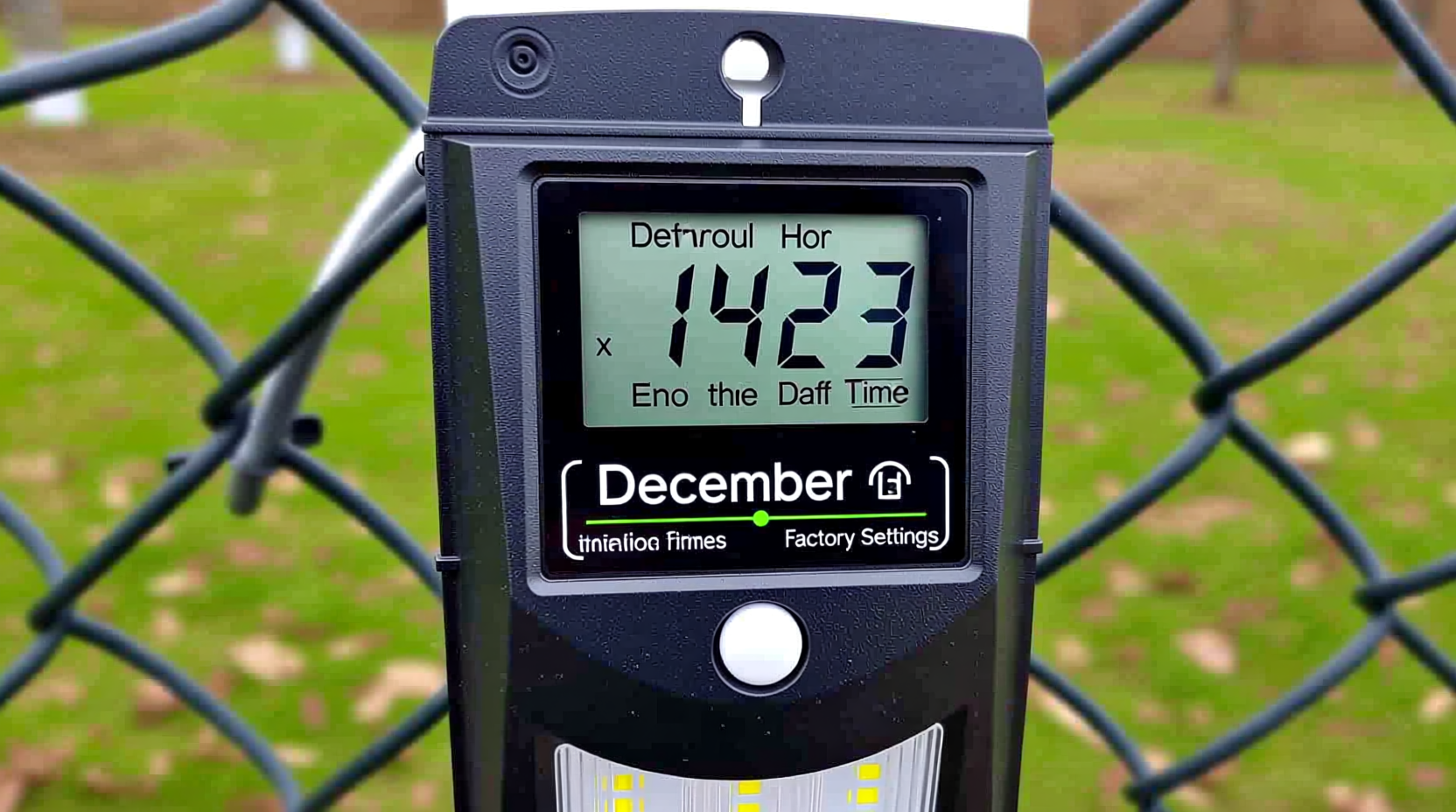
Many digital outdoor light timers manufactured between 2005 and 2018 were programmed with a built-in assumption: that users would manually adjust their devices for daylight saving time changes. To accommodate this, some models included an automatic “reset-to-default” function scheduled for early December—a date chosen because it precedes the end of DST in most regions (which occurs on the first Sunday of November) and aligns with the start of the holiday lighting season.
Manufacturers believed that resetting the device around this time would give users a clean slate before setting up seasonal decorations. However, due to inconsistent implementation and lack of user notification, this feature often triggers unintended consequences. The reset wipes custom schedules, reverts brightness levels, and disables override functions until manually reconfigured.
According to electrical engineer Mark Tolbert, who has analyzed over 30 timer models for consumer reliability reports:
“Some brands used December 1st as a soft ‘system refresh’ trigger based on early firmware frameworks from the mid-2000s. These weren’t bugs per se—they were intended conveniences—but they became problematic when users didn’t realize the reset was coming.” — Mark Tolbert, Senior Electrical Systems Analyst, HomeTech Review Group
This means your timer might be functioning exactly as designed—even if that design no longer fits modern expectations.
Power Fluctuations and Battery Backup Failures
Another major contributor to the December 1st reset phenomenon is voltage instability common during late fall and early winter. Storms, grid load spikes from holiday lighting, and increased heating demand can all lead to micro-outages or brownouts—brief dips in power that don’t fully cut electricity but are enough to disrupt sensitive electronics.
Digital timers rely on internal clocks powered either by mains electricity or small backup batteries (usually AA or lithium coin cells). When power flickers, these clocks lose synchronization unless the battery maintains continuity. If the battery is weak, corroded, or missing entirely, the timer cannot retain its configuration through even a short interruption.
December 1st itself doesn’t inherently cause outages—but it often coincides with the first major cold snap in many regions, increasing strain on local grids. As a result, what appears to be a calendar-based reset is actually a symptom of poor power resilience.
Common Timer Models Affected by the December Reset
Not all timers exhibit this behavior. The following models have been frequently reported in consumer forums and product reviews as prone to automatic resets on or near December 1st:
| Brand & Model | Year Range | Known Issue | Solution Status |
|---|---|---|---|
| Intermatic HB500 | 2007–2012 | Auto-reset on Dec 1 via firmware | No update available; workaround required |
| GE 15075 Digital Timer | 2010–2015 | Loses memory without fresh battery | Battery replacement resolves 80% of cases |
| Defiant 7-Day Programmable (Home Depot) | 2013–2016 | Firmware loop resets schedule yearly | Discontinued; replace unit recommended |
| Woods 59018 Indoor/Outdoor Timer | 2009–2014 | Defaults to 6 PM ON / 6 AM OFF on Dec 1 | Manual reprogramming needed annually |
| Eaton/Automatic Lighting Controls | 2011–2017 | Smart reset after 30-day inactive period | Configurable via app (if enabled) |
If your model appears here, it's likely contributing to the annual disruption. Even newer units from budget lines may inherit legacy codebases, so always verify firmware details before assuming immunity.
Step-by-Step Guide to Prevent Future Resets
Follow this sequence to eliminate or mitigate the December 1st reset issue permanently:
- Inspect Your Timer Unit
Locate the model number (usually on the back or inside the battery compartment). Search online for known issues or recall notices related to automatic resets. - Replace the Backup Battery
Remove the old battery—even if it tests “good.” Install a new alkaline or lithium cell depending on specifications. Clean corrosion with a cotton swab dipped in vinegar if present. - Reprogram the Schedule
Set your desired on/off times, including any seasonal overrides. Use “dusk-to-dawn” mode if available instead of fixed times to reduce dependency on manual adjustments. - Test Power Stability
Plug a simple appliance (like a lamp) into the same circuit and monitor for flickering during storms. Consider installing a surge protector rated for outdoor use. - Update Firmware (If Applicable)
For Wi-Fi-enabled smart timers, ensure the latest firmware is installed via the manufacturer’s app. Some updates disable legacy reset triggers. - Consider Replacement
If your timer is more than 8 years old or lacks modern features like cloud sync or adaptive scheduling, upgrading may be more cost-effective than ongoing troubleshooting.
Real-World Example: How One Homeowner Solved the Mystery
Susan L., a homeowner in northern Illinois, had struggled for five consecutive Decembers with her front porch lights turning off at midnight instead of staying on until dawn. Each year, she’d spend evenings re-entering the correct schedule, assuming she’d misprogrammed it.
In 2023, after noticing the reset occurred precisely on December 1st regardless of usage, she began investigating. She discovered that her GE 15075 timer had no active battery despite having a compartment. After inserting a fresh AA battery and reprogramming in November, the device retained its settings through winter—with no further resets.
Further research revealed that the original installation technician had removed the battery due to leakage concerns from a prior model. Without backup power, any minor voltage drop during autumn storms caused complete memory loss. Once corrected, the system ran flawlessly.
Susan’s case illustrates how easily a technical oversight can mimic a software bug—and how simple interventions can yield lasting results.
Checklist: Prevent Your Timer from Resetting Annually
- ✅ Identify your timer model and check for known reset behaviors
- ✅ Install a new backup battery (replace annually)
- ✅ Reprogram settings in late November, not earlier
- ✅ Use dusk-to-dawn or photocell modes where possible
- ✅ Connect the timer to a surge-protected circuit
- ✅ Upgrade to a smart timer with cloud backup if resets persist
- ✅ Document changes and set a calendar reminder for next year
FAQ: Common Questions About Outdoor Timer Resets
Is the December 1st reset a sign my timer is broken?
Not necessarily. Many timers are intentionally programmed to reset or prompt reconfiguration around this date. First confirm whether it’s a known behavior for your model before concluding hardware failure.
Can I disable the automatic reset?
On most basic models, no—firmware-level resets cannot be disabled. However, replacing the battery and avoiding early programming (e.g., don’t set schedules in September) minimizes impact. Smart timers allow disabling such features via apps.
Why doesn’t this happen with indoor timers?
Indoor units are less exposed to temperature swings and moisture, which degrade components faster. They also tend to plug into more stable circuits. Additionally, indoor timers rarely include seasonal reset logic since they’re not associated with holiday lighting cycles.
Upgrade Path: Choosing a Modern Alternative
Today’s smart lighting solutions offer far greater reliability and control. Look for timers with the following features:
- Cloud synchronization – Stores your schedule remotely so it survives local outages.
- Mobile app management – Allows remote access and real-time alerts if power is lost.
- Photocell integration – Automatically adjusts based on ambient light, reducing need for fixed schedules.
- Energy monitoring – Helps identify abnormal draws that could indicate wiring issues.
- Voice assistant compatibility – Works with Alexa, Google Assistant, or Apple HomeKit for hands-free operation.
Models like the Kasa Smart WiFi Outdoor Timer (KP400), TP-Link Tapo P125, and Leviton DZS15-1BW have eliminated arbitrary reset dates and provide robust memory retention. While slightly more expensive upfront, they reduce long-term maintenance and improve security.
Conclusion: Take Control Before Winter Arrives
The recurring reset of your outdoor light timer on December 1st is not magic or coincidence—it’s a predictable interaction between aging technology, environmental stressors, and outdated firmware assumptions. By understanding the causes, inspecting your equipment, and applying targeted fixes, you can break the cycle once and for all.
Don’t wait until next winter to address it. Now, in the calm of summer or early fall, is the ideal time to evaluate your system, replace batteries, and consider upgrading to a smarter, more resilient solution. Reliable outdoor lighting enhances curb appeal, improves nighttime safety, and deters intruders. Protect that value with proactive care.




 浙公网安备
33010002000092号
浙公网安备
33010002000092号 浙B2-20120091-4
Comments
No comments yet. Why don't you start the discussion?