
Parrots are among the most intelligent and socially complex birds in the animal kingdom. Their ability to mimic sounds—ranging from human speech to household noises—is both a marvel and, at times, a challenge for owners. One of the more disruptive behaviors some parrot owners face is their bird’s tendency to mimic alarms: smoke detectors, security systems, microwaves, or even car alarms. While this talent showcases their cognitive abilities, it can become a source of stress, noise complaints, or sleep disruption. Understanding why parrots do this—and whether it can be changed—is essential for maintaining a peaceful coexistence.
The Science Behind Parrot Mimicry
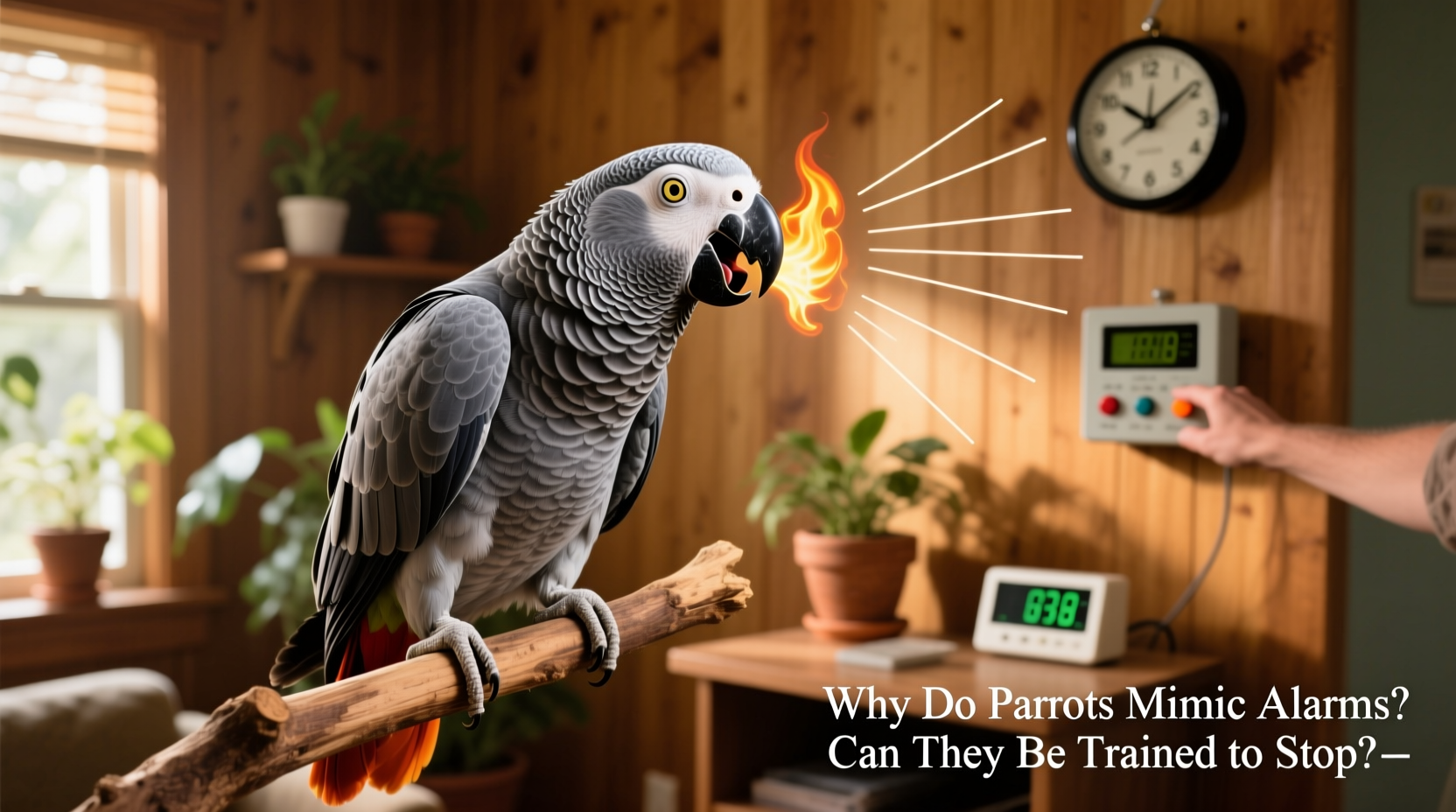
Parrots don’t mimic sounds out of randomness. Their vocal learning capabilities are rooted in evolutionary biology. In the wild, parrots use calls to maintain flock cohesion, identify individuals, and signal danger. When kept as pets, they transfer these social instincts to their human environment. A parrot doesn’t distinguish between “meaningful” and “meaningless” sounds—it learns what gets attention.
Mimicking alarms often begins accidentally. Perhaps your smoke alarm chirped due to a low battery, and your parrot repeated the sound. If anyone reacted—by rushing into the room, shouting, or even laughing—the bird received immediate reinforcement. From the parrot’s perspective, that sound produced a powerful response. Repeat this cycle a few times, and the behavior becomes ingrained.
“Parrots are social learners. They repeat sounds that yield results. An alarm call might start as imitation but persists because it works.” — Dr. Irene Pepperberg, Avian Cognition Researcher
Neurological studies show that parrots have specialized brain pathways for vocal learning, similar to humans. This allows them to imitate pitch, tone, and rhythm with astonishing accuracy. However, this same ability makes certain sounds difficult to unlearn without consistent intervention.
Why Alarms Are Particularly Appealing to Parrots
Not all household sounds trigger mimicry equally. Alarms possess several qualities that make them especially attractive to parrots:
- High Pitch and Volume: These sounds cut through background noise and naturally grab attention.
- Repetition: Many alarms beep in patterns, making them easier to memorize.
- Emotional Response: Humans typically react strongly to alarms, providing social reinforcement.
- Novelty: Unusual or infrequent sounds stand out in a bird’s auditory environment.
A parrot may also associate alarm-like sounds with excitement or urgency. If the real alarm has ever gone off during a dramatic moment—such as someone burning toast or a power surge—the emotional context strengthens the memory and increases the likelihood of repetition.
Can You Train a Parrot Not to Mimic Alarms?
Yes—but success depends on consistency, timing, and understanding avian psychology. You cannot reason with a parrot like a human, but you can shape its behavior using positive reinforcement and environmental management. The goal isn’t suppression, but redirection.
Training a parrot to stop mimicking alarms involves two key phases: extinguishing the unwanted behavior and replacing it with a more acceptable one. Immediate punishment or yelling will backfire, increasing anxiety and potentially worsening the behavior. Instead, focus on removing reinforcement and teaching alternative responses.
Step-by-Step Guide to Reducing Alarm Mimicry
- Identify the Trigger: Determine which specific alarm or sound your parrot copies. Is it a smoke detector chirp? A microwave beep? Record or replay the sound to confirm.
- Eliminate Reinforcement: The most critical step. When the parrot mimics the alarm, do not look, respond, or react in any way. Turn away, leave the room if necessary. No attention means no reward.
- Introduce an Alternative Sound: Teach your parrot a new, desirable sound—like saying “hello” or whistling a tune—using treats and praise. Practice daily in short sessions.
- Use Differential Reinforcement: Reward the bird only when it uses the desired sound. Ignore or redirect when it attempts the alarm.
- Modify the Environment: Replace chirping devices with silent ones (e.g., lithium-battery smoke detectors). Reduce exposure to external alarms by closing windows during peak hours.
- Incorporate Background Noise: Play soft music or nature sounds to reduce auditory boredom, which often drives mimicry.
- Consistency Across Household Members: Everyone must follow the same protocol. Mixed signals will confuse the bird and prolong training.
This process can take weeks or months, depending on how entrenched the behavior is. Patience and persistence are non-negotiable.
Do’s and Don’ts of Managing Alarm Mimicry
| Do’s | Don’ts |
|---|---|
| Stay calm and unresponsive when the bird mimics the alarm | Yell, laugh, or rush to the bird when it makes the sound |
| Use positive reinforcement for quiet or desirable vocalizations | Punish or scold the bird—it increases stress and vocalizations |
| Teach alternative sounds or words as replacements | Ignore the behavior completely without offering alternatives |
| Replace faulty or chirping devices in the home | Allow recurring alarm triggers (e.g., a low-battery detector) |
| Provide mental stimulation with toys and interaction | Leave the bird alone for long periods without enrichment |
Real-Life Example: Reducing Smoke Alarm Mimicry in a Congo African Grey
Sarah, a parrot owner in Portland, noticed her 7-year-old Congo African Grey, Kito, began mimicking the chirp of a dying smoke detector. At first, it was amusing. But after the battery was replaced, Kito continued the beeping—up to 50 times a day. The sound was so realistic that neighbors called the fire department twice.
Sarah consulted an avian behaviorist who recommended a structured plan. She installed a new 10-year sealed smoke detector to eliminate future chirps. Then, she began ignoring Kito completely when he made the beeping sound—even leaving the room. Simultaneously, she trained him to say “Good morning!” each day using sunflower seeds as rewards. Within three weeks, the beeping dropped by 70%. By week six, it had stopped entirely. Now, Kito greets her with a cheerful phrase instead of a false emergency.
Sarah’s success wasn’t due to a single tactic, but a combination of environmental control, behavioral extinction, and positive replacement.
When Mimicry Signals a Deeper Issue
While alarm mimicry is usually a learned behavior, it can sometimes reflect underlying stress or unmet needs. Parrots that are bored, anxious, or under-stimulated may vocalize excessively as a coping mechanism. Excessive screaming, feather plucking, or aggression alongside mimicry should prompt a veterinary or behavioral evaluation.
Consider the following signs that mimicry may be symptom of distress:
- Vocalizations occur mostly when the bird is alone
- The bird appears agitated or paces before making the sound
- There’s a sudden onset of mimicry after a change in routine or environment
- The bird self-mutilates or shows signs of chronic stress
If any of these apply, consult an avian veterinarian or certified bird behavior consultant. Addressing the root cause—such as loneliness or lack of foraging opportunities—is essential before behavioral training can succeed.
FAQ: Common Questions About Parrot Alarm Mimicry
Can all parrot species mimic alarms?
Most parrot species are capable of vocal mimicry, but proficiency varies. African Greys, Amazon parrots, and budgerigars are among the most skilled mimics. Cockatiels and conures can imitate sounds too, though often less clearly. Even if a bird doesn’t perfectly replicate an alarm, it may produce a similar high-pitched noise.
How long does it take to stop a parrot from mimicking alarms?
It depends on how long the behavior has been reinforced. A recently acquired habit may resolve in 2–4 weeks with consistent training. Long-standing behaviors, especially those reinforced over months or years, can take 2–6 months—or longer. Success hinges on eliminating all sources of attention for the unwanted sound.
Is it cruel to train a parrot not to mimic sounds?
No—not if done humanely. Parrots naturally adapt their vocalizations based on social feedback. Training doesn’t suppress their voice; it redirects it toward more appropriate expressions. A well-socialized parrot will still vocalize frequently, just in ways that are less disruptive to human households.
Final Checklist for Managing Alarm Mimicry
- ✔ Identify the exact sound being mimicked
- ✔ Eliminate or replace the source of the original sound (e.g., fix chirping devices)
- ✔ Commit to zero reaction when the bird mimics the alarm
- ✔ Train a replacement behavior using positive reinforcement
- ✔ Ensure all family members follow the same protocol
- ✔ Enrich the bird’s environment with toys, foraging, and social time
- ✔ Monitor progress and adjust strategy if needed
Conclusion: Turning Noise Into Opportunity
A parrot mimicking alarms isn’t broken—it’s communicating in the only way it knows how. What seems like a nuisance is actually a testament to the bird’s intelligence and desire to interact. With patience and the right approach, this behavior can be reshaped into something more harmonious.
Instead of viewing mimicry as a flaw, see it as an opportunity to deepen your bond. Training your parrot isn’t about control; it’s about communication. Every session builds trust, clarity, and mutual understanding. Start today by observing your bird’s triggers, staying consistent with responses, and rewarding the behaviors you want to see.




 浙公网安备
33010002000092号
浙公网安备
33010002000092号 浙B2-20120091-4
Comments
No comments yet. Why don't you start the discussion?