
Parrots are intelligent, social birds that communicate through vocalizations more than most pet owners expect. If you're greeted by a piercing scream every morning at dawn, you're not alone. This behavior is common among companion parrots, but it doesn't mean it's unmanageable. Understanding the root causes of morning screaming can help you respond appropriately—without reinforcing the noise or damaging your relationship with your bird.
The key lies in recognizing that screaming is not inherently bad behavior. It’s a natural expression of a wild animal living in a domestic environment. When we interpret the behavior correctly, we can shift from frustration to empathy—and from reaction to strategy.
The Biological Clock: Parrots and Circadian Rhythms
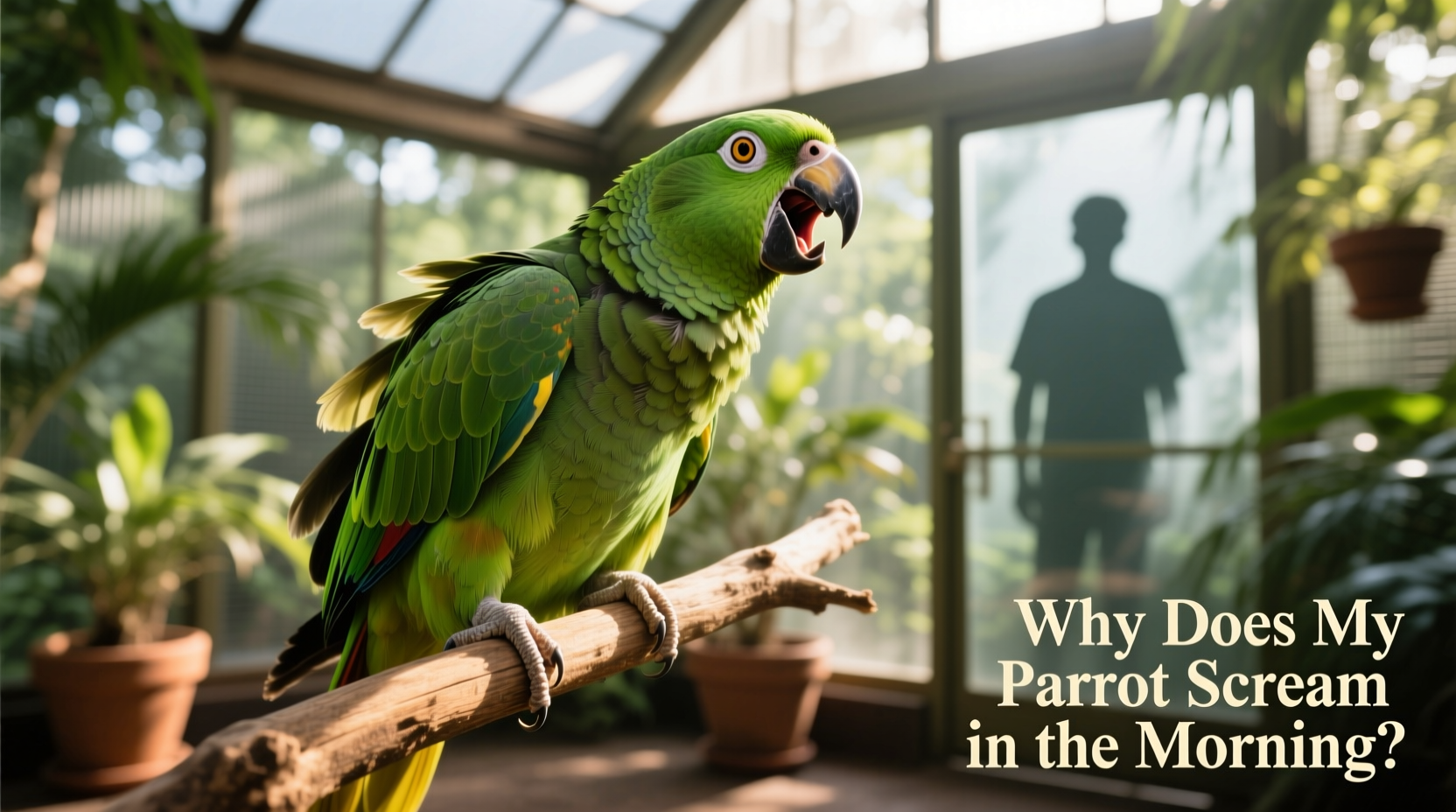
Parrots in the wild are diurnal creatures, meaning they are active during daylight hours and rest at night. Their internal clocks, or circadian rhythms, are tightly synchronized with sunrise and sunset. In tropical and subtropical regions—where most parrot species originate—the days begin abruptly with first light, triggering immediate flock activity.
At dawn, wild parrots engage in what’s known as the “dawn chorus.” They call out to locate flock members, reaffirm social bonds, and establish territory. These calls are loud, repetitive, and carry over long distances through dense forest canopies. Your pet parrot hasn’t lost this instinct. Even in a quiet suburban bedroom, its biology expects to connect with others at daybreak.
“Parrots are hardwired to vocalize at sunrise. It’s not defiance—it’s survival behavior refined over millions of years.” — Dr. Irene Pepperberg, Avian Cognition Researcher
In captivity, your parrot may perceive you as part of its flock. When it wakes up and doesn’t immediately see or hear you, it may scream to reestablish contact. This is especially true if your bird has bonded strongly with you or spends much of the day alone.
Social Needs and Separation Anxiety
Parrots are among the most socially complex animals kept as pets. In the wild, they live in tight-knit flocks where constant communication maintains group cohesion. A lone scream isn’t just noise—it might be a distress signal.
When your parrot wakes up and finds itself isolated, it may experience separation anxiety. The scream becomes a demand for attention: “Are you there? Where is everyone?” This is particularly pronounced in single-pet households where the bird is the center of emotional attention during waking hours but left alone at night.
Over time, if screaming consistently results in attention—even negative attention like yelling back—the behavior becomes reinforced. The bird learns: Scream = Human appears. This creates a feedback loop that intensifies the problem.
Environmental Triggers and Stimuli
Your home environment plays a significant role in morning screaming. Sounds, light changes, and household routines can all act as triggers. Consider the following:
- Natural light exposure: Sunlight hitting the cage signals “morning” even if it’s 5:30 AM.
- Household noises: Refrigerators kicking on, outdoor traffic, or barking dogs can startle a sleeping bird into vocalizing.
- Cage placement: A cage near a window or in a high-traffic area increases stimulation at dawn.
Additionally, if your parrot hears other birds—or even recorded bird sounds—on TV or audio devices, it may respond instinctively. Urban environments with pigeons, crows, or seagulls can also prompt territorial calling.
Common Morning Triggers and Solutions
| Trigger | Effect on Parrot | Mitigation Strategy |
|---|---|---|
| Sunrise light entering room | Signals start of day; prompts flock call | Use blackout curtains or cover cage partially |
| Hearing external bird calls | Triggers territorial or social response | Close windows or use white noise machine |
| Sudden household noise | Frightens bird; induces alarm scream | Minimize early mechanical sounds; insulate room |
| Owner’s delayed appearance | Perceived abandonment; prompts contact call | Establish predictable morning routine |
Step-by-Step Guide to Reducing Morning Screaming
Managing morning screaming requires consistency, patience, and an understanding of avian psychology. Here’s a practical timeline to implement over 2–4 weeks:
- Assess the current routine (Day 1–3): Note exactly when the screaming starts, how long it lasts, and what happens immediately after (e.g., you speak, enter the room, cover the cage). This helps identify reinforcement patterns.
- Adjust lighting (Day 4): Install blackout curtains or use a breathable cage cover to delay light exposure. Aim to align wake-up time with your desired schedule (e.g., 7:00 AM instead of 5:30 AM).
- Introduce a pre-dawn sound buffer (Day 5): Play soft instrumental music or nature sounds at low volume starting 30 minutes before natural light arrives. This provides gentle auditory transition.
- Modify your response (Ongoing): Do not respond immediately to screaming. Wait for a moment of quiet—even a second—before acknowledging your bird. Reward silence, not noise.
- Establish a morning ritual (Day 7 onward): Greet your parrot calmly at the same time daily. Offer a small treat or verbal praise only when it’s calm. Predictability reduces anxiety.
- Enrich evening and pre-sleep time (Daily): Provide foraging toys or food puzzles before bedtime. A mentally tired bird sleeps more soundly and is less likely to wake startled.
This process won’t eliminate vocalizations entirely—and shouldn’t. Healthy parrots vocalize. The goal is to shift the timing, duration, and intensity toward something livable for both bird and owner.
Real-Life Example: Managing a Blue-Fronted Amazon’s Dawn Routine
Sarah, a teacher from Portland, adopted a 7-year-old blue-fronted Amazon named Rio. Within weeks, she noticed Rio began screaming at 5:15 AM every day, often lasting 20–30 minutes. Her attempts to quiet him—telling him “no,” covering the cage quickly, or turning on lights—only made it worse.
After consulting an avian behaviorist, Sarah implemented a new routine:
- She installed blackout shades in the spare room where Rio’s cage was located.
- She began covering the cage with a half-cover (allowing airflow but blocking light) at night.
- She set a timer for soft classical music to play at 6:45 AM.
- She committed to not entering Rio’s room until he was quiet for at least five seconds.
Within three weeks, Rio’s screaming shifted to 6:45 AM and lasted under five minutes. By week six, he was chirping softly upon hearing the music, waiting calmly for Sarah’s arrival. The transformation wasn’t due to punishment, but to environmental management and consistent reinforcement of calm behavior.
Do’s and Don’ts of Responding to Morning Screaming
| Do | Don’t |
|---|---|
| Respond only when your parrot is quiet | Yell, clap, or make loud noises to stop screaming |
| Use a consistent morning greeting ritual | Let the bird out of the cage immediately after screaming |
| Provide mental stimulation before bedtime | Ignore the bird completely without context |
| Gradually adjust light exposure to delay wake time | Use aversive sprays or startling devices |
| Consult an avian vet if behavior changes suddenly | Assume the bird is “just being annoying” |
Frequently Asked Questions
Is morning screaming a sign of illness?
Occasional or patterned screaming at predictable times is typically behavioral. However, if your parrot suddenly begins screaming excessively, shows signs of lethargy, feather plucking, or appetite loss, consult an avian veterinarian. Pain or discomfort can manifest as increased vocalization.
Can I train my parrot to stop screaming completely?
No—and you shouldn’t try. Vocalization is a core part of parrot identity and well-being. The aim is not silence, but managing the timing, volume, and context of screams. A happy parrot will still call out, sing, or chatter loudly at times.
Will getting a second parrot stop the screaming?
Not necessarily. While some parrots do better with avian companions, others become more territorial or stressed. Introducing a second bird requires careful quarantine, gradual introduction, and lifelong commitment. It should never be done solely to solve a behavioral issue.
Checklist: How to Address Morning Screaming
- ✅ Observe and record screaming patterns for 3–5 days
- ✅ Adjust cage lighting using covers or curtains
- ✅ Minimize sudden dawn noises in the environment
- ✅ Avoid reinforcing screams with attention
- ✅ Reward calm behavior with treats or interaction
- ✅ Establish a consistent morning routine
- ✅ Provide evening enrichment to promote restful sleep
- ✅ Consult an avian behavior specialist if progress stalls
Conclusion: Turning Noise into Understanding
Your parrot’s morning scream isn’t a personal attack—it’s a call rooted in biology, emotion, and instinct. By shifting your perspective from annoyance to insight, you create space for a healthier, more harmonious relationship. With thoughtful adjustments to light, sound, and response patterns, you can guide your parrot toward quieter mornings without suppressing its natural voice.




 浙公网安备
33010002000092号
浙公网安备
33010002000092号 浙B2-20120091-4
Comments
No comments yet. Why don't you start the discussion?