
It’s a familiar scene in many homes: you walk through the house turning off lights your partner left burning in empty rooms. The frustration builds—not because of the electricity bill, but because it feels like a disregard for shared values or effort. Yet, before labeling the behavior as careless or lazy, it's worth exploring the deeper psychological roots. Leaving lights on isn’t always about forgetfulness; it can stem from ingrained habits, subconscious fears, childhood conditioning, or even mild anxiety. Understanding these patterns fosters empathy and opens the door to constructive dialogue rather than resentment.
The Psychology Behind Habitual Light Usage
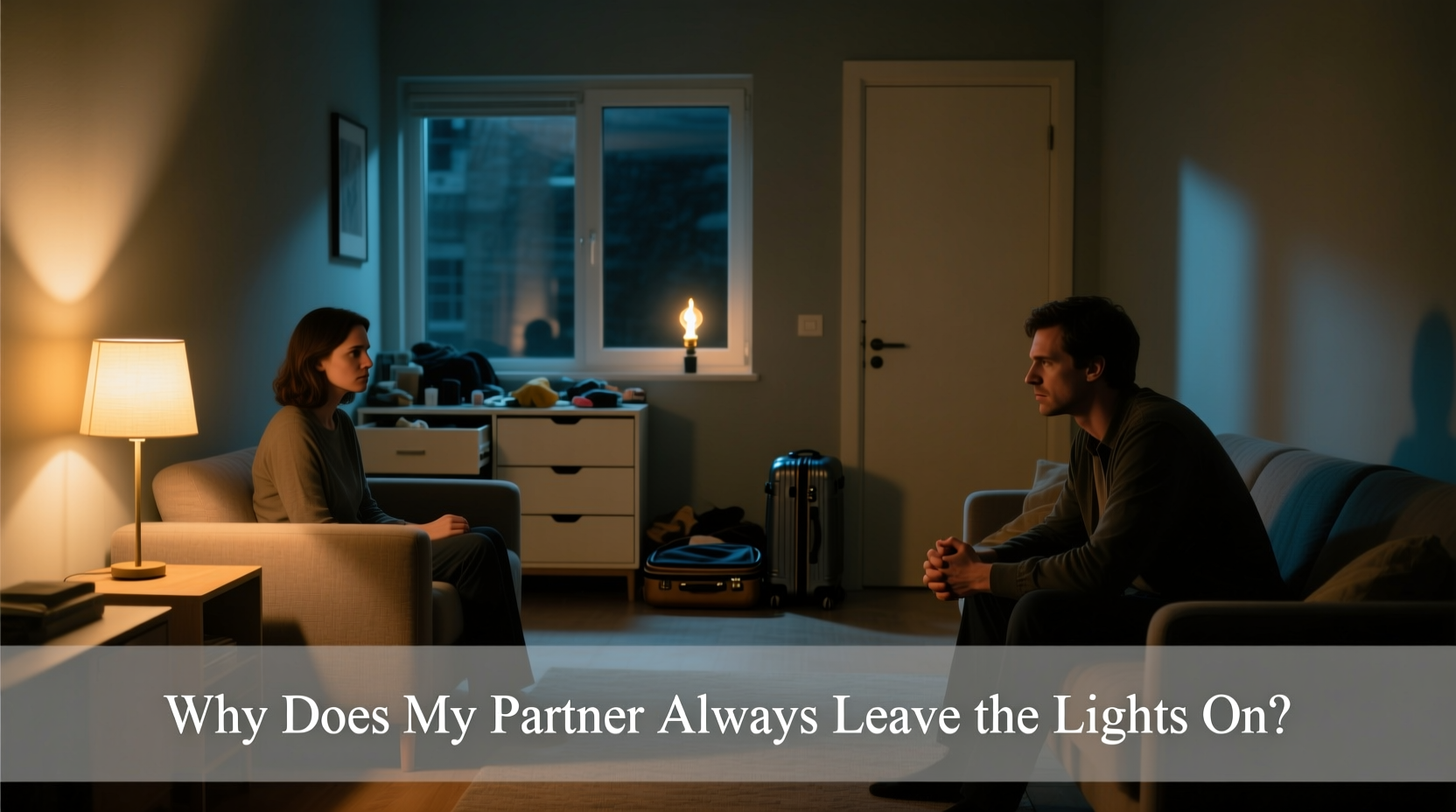
Habits are automatic behaviors shaped by repetition and context. When someone consistently leaves lights on, it’s rarely a conscious decision—it’s often an unconscious routine embedded over years. According to Dr. Wendy Wood, a behavioral psychologist at the University of Southern California, “Habits form when our brains shift control from deliberate action to automatic response based on environmental cues.” In this case, the cue might be entering a room, with the action being flipping the switch—and no corresponding trigger to turn it back off.
For some individuals, turning off a light requires a mental override of their default setting. If they were raised in a home where lights were always left on, that becomes the norm. The brain registers deviation—like switching off a light—as effortful, while leaving it on feels neutral. This normalization makes intervention feel unnatural, even if logically understood.
“Behavioral inertia is powerful. Once a pattern is established, especially during formative years, it persists unless actively disrupted.” — Dr. Alan Pierce, Cognitive Behavioral Therapist
Childhood Conditioning and Environmental Upbringing
Many adults replicate household behaviors learned in childhood. If your partner grew up in a home where conserving energy wasn’t prioritized—or where lights were kept on for safety or comfort—they likely absorbed that as standard practice. For example:
- A child afraid of the dark may have been allowed to sleep with a hallway light on, reinforcing the idea that light equals safety.
- In households with inconsistent heating, rooms might have been kept lit to retain residual warmth from bulbs (common with incandescent lighting).
- Families with irregular schedules—such as shift workers—may have maintained constant lighting to avoid disorientation.
These early experiences shape long-term perceptions of what feels “normal” or “safe.” A person who associates darkness with unease may subconsciously resist turning off lights, not out of neglect, but because doing so triggers low-level discomfort they aren’t even aware of.
Anxiety, OCD Tendencies, and the Need for Control
In some cases, leaving lights on correlates with underlying anxiety or obsessive-compulsive tendencies. While not necessarily indicative of a clinical disorder, certain behaviors serve as coping mechanisms. For instance:
- Fear of intruders: Keeping exterior or hallway lights on can provide a sense of security, especially in isolated homes or high-crime areas.
- Nighttime navigation: Individuals who wake frequently may leave bathroom or stairwell lights on to prevent tripping.
- Ritualistic patterns: Some people develop fixed routines—e.g., “The kitchen light stays on until morning”—because deviation causes subtle distress.
A 2021 study published in the Journal of Anxiety Disorders found that minor compulsive behaviors, including unnecessary light usage, were more prevalent among individuals with subclinical anxiety traits. These actions often go unnoticed by the individual but are observed by partners as quirks or frustrations.
It’s important to distinguish between preference and compulsion. If your partner resists turning off lights despite discussion, shows visible discomfort when asked, or ties the behavior to specific rules (“It has to stay on until sunrise”), there may be an emotional component beyond habit.
Practical Differences in Perception and Priorities
Not all reasons are psychological—some are pragmatic. Your partner may simply perceive the cost-benefit ratio differently. Consider:
| Mindset | Perspective on Lights | Common Justification |
|---|---|---|
| Energy-Conscious | Lights = wasted electricity | “We’re paying for something we don’t need.” |
| Convenience-Focused | Lights = readiness and ease | “It’s easier to see when I come back.” |
| Safety-Oriented | Lights = protection and visibility | “What if someone breaks in or I fall?” |
| Habit-Dominated | Lights = background condition | “I don’t even notice them.” |
These differing priorities aren’t inherently wrong—they reflect distinct value systems. One person prioritizes efficiency; another values preparedness. Conflict arises not from the act itself, but from unspoken expectations about shared responsibility.
Mini Case Study: Sarah and Mark’s Lighting Standoff
Sarah, a sustainability consultant, was frustrated that her husband Mark left every light on in their home—even when away for hours. She saw it as wasteful and irresponsible. After weeks of passive-aggressive note-leaving, they agreed to discuss it calmly.
During the conversation, Mark revealed he’d grown up in a rural area where power outages were common. His parents kept lights on constantly to test circuit stability. To him, a dark house felt unstable, even broken. He hadn’t connected this to his current behavior until prompted.
Together, they compromised: motion-sensor lights were installed in hallways and bathrooms, and smart bulbs programmed to turn off after 20 minutes of inactivity. Mark felt reassured by automated systems, while Sarah appreciated reduced energy use. The solution wasn’t about winning an argument—it was about understanding the root cause.
Step-by-Step Guide to Addressing the Behavior Constructively
Resolving recurring friction around light usage requires patience and structure. Follow these steps to transform conflict into collaboration:
- Observe without judgment. Track when and where lights are left on. Note patterns—only at night? Only in certain rooms?
- Initiate a neutral conversation. Use “I” statements: “I’ve noticed I feel stressed when lights are on in empty rooms. Can we talk about how we both see this?”
- Explore motivations. Ask open-ended questions: “When did you first start keeping lights on?” or “Does it bother you when lights are off?”
- Identify shared goals. Agree on outcomes: saving energy, enhancing safety, reducing tension.
- Test solutions together. Try timers, sensors, or designated “light zones.” Evaluate after two weeks.
- Revisit and adjust. Habits take time to shift. Schedule a follow-up chat to assess progress without blame.
Checklist: Creating a Balanced Lighting Agreement
Use this checklist to establish a fair, sustainable approach:
- ☐ Both partners share their feelings about light usage without interruption
- ☐ Identify which rooms or times are most problematic
- ☐ Discuss any fears or discomfort associated with darkness
- ☐ Research energy costs to ground the discussion in facts
- ☐ Install motion detectors or smart switches in high-traffic areas
- ☐ Set a trial period (e.g., 30 days) for new rules
- ☐ Review results objectively and adjust as needed
FAQ
Is leaving lights on a sign of disrespect?
Not necessarily. While it may feel dismissive, especially if energy conservation matters to you, the behavior is more often habitual than intentional. Assuming disrespect without inquiry can escalate conflict. Approach with curiosity instead of accusation.
Could this habit indicate a mental health issue?
In isolation, no. But if accompanied by other repetitive behaviors, excessive worry, or resistance to change despite clear reasoning, it may reflect underlying anxiety or OCD traits. If it causes significant distress or dysfunction, consider speaking with a therapist together.
How much does leaving lights on actually cost?
It depends on bulb type and duration. For example:
- Incandescent (60W): ~$0.75/month per bulb if left on 24/7
- LED (10W): ~$0.12/month under same conditions
Expert Insight: Bridging the Gap Through Communication
“When couples fight about small things like lights, they’re usually fighting about feeling heard or respected. The light switch is just the surface. What matters is whether both partners feel their needs are acknowledged.” — Dr. Lena Reyes, Couples Therapist and Author of *Everyday Intimacy*
This insight reframes the entire issue. The real concern isn’t kilowatt-hours—it’s validation. When one person repeatedly ignores a request, the other may internalize it as dismissal. The solution lies not in policing behavior, but in building mutual recognition.
Conclusion: From Annoyance to Understanding
The habit of leaving lights on is rarely about laziness or indifference. It’s a window into deeper psychological currents—upbringing, anxiety, subconscious routines, and differing values. By shifting from frustration to inquiry, couples can transform a petty annoyance into an opportunity for connection.
Instead of focusing solely on turning lights off, focus on turning toward each other. Listen to the story behind the switch. Implement tools that respect both practicality and emotion. And remember: lasting change comes not from control, but from collaboration.




 浙公网安备
33010002000092号
浙公网安备
33010002000092号 浙B2-20120091-4
Comments
No comments yet. Why don't you start the discussion?