
It starts with a simple text—something light, maybe even cheerful. You hit send and wait. Minutes pass. Hours go by. No reply. Your mind begins to spiral: Did I say something wrong? Are they upset with me? Do they not care? This experience is more common than you might think, and it often has less to do with the actual message and far more to do with underlying emotional patterns—especially anxiety and attachment styles.
Understanding why your partner avoids texting back requires stepping beyond surface-level assumptions. It’s not always about disinterest or poor communication habits. Instead, it can be deeply rooted in how individuals form emotional bonds, manage stress, and respond to perceived threats in relationships. By decoding the interplay between anxiety and attachment styles, you gain clarity—not just about your partner’s behavior, but also about your own reactions.
The Emotional Weight Behind a Delayed Text
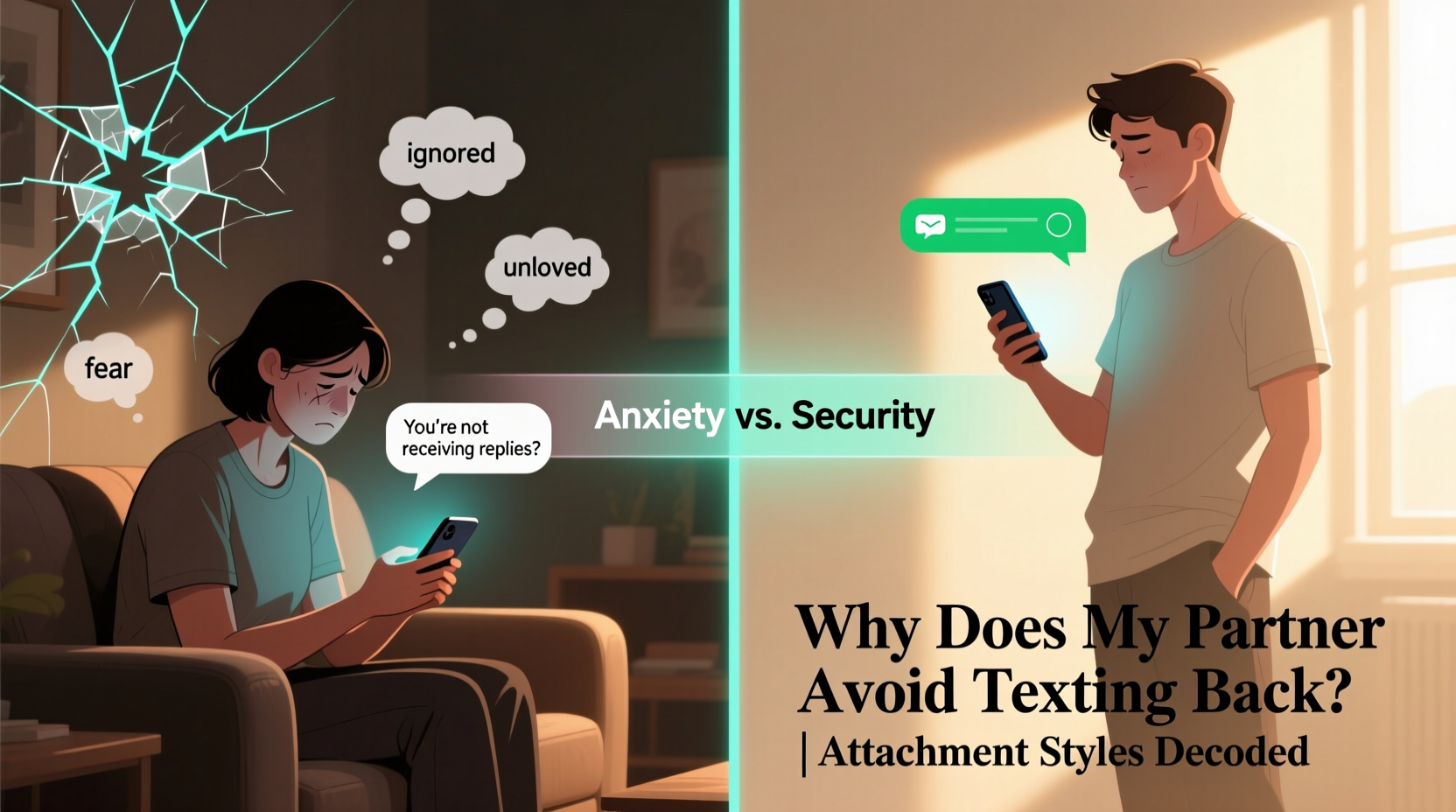
A text message may seem like a neutral act of communication, but for many people, it carries emotional significance. Responding (or not responding) becomes symbolic: a sign of availability, attention, love, or rejection. When one partner consistently delays replies—or avoids them altogether—it can trigger anxiety in the other, especially if that person equates responsiveness with emotional safety.
However, what looks like neglect from one perspective may be self-preservation from another. Some individuals feel overwhelmed by constant digital connection. Others fear saying the “wrong” thing and prefer silence over risk. Still others may be operating from an unconscious blueprint shaped by early life experiences—what psychologists call an attachment style.
Attachment Styles: The Blueprint of Relationship Behavior
Developed in the 1950s by psychologist John Bowlby and later expanded by researchers like Mary Ainsworth and Cindy Hazan, attachment theory explains how early relationships with caregivers shape our expectations and behaviors in adult romantic relationships. There are four primary attachment styles: secure, anxious-preoccupied, dismissive-avoidant, and fearful-avoidant (also known as disorganized).
Each of these influences how people handle intimacy, conflict, and communication—including texting.
| Attachment Style | Texting Behavior | Underlying Motivation |
|---|---|---|
| Secure | Responds consistently, comfortable with both connection and space | Feels safe expressing needs without fear of rejection or engulfment |
| Anxious-Preoccupied | Frequently checks phone, sends multiple messages, anxious when unanswered | Seeks reassurance; fears abandonment; equates responsiveness with love |
| Dismissive-Avoidant | Delays responses, minimizes contact, may ghost during stress | Prioritizes independence; feels suffocated by too much closeness |
| Fearful-Avoidant | Inconsistent—alternates between reaching out and withdrawing | Desires closeness but fears getting hurt; internal conflict drives erratic behavior |
If your partner avoids texting back, their pattern likely aligns with either dismissive-avoidant or fearful-avoidant tendencies. These individuals aren’t necessarily indifferent—they may deeply care—but their nervous system interprets constant contact as a threat to autonomy or emotional stability.
“People don’t avoid texts because they don’t care. Often, they avoid them because they care too much—and fear messing up the connection.” — Dr. Lisa Firestone, Clinical Psychologist and Attachment Expert
Anxiety Amplifies the Silence
When one partner has an anxious attachment style, silence doesn’t just feel inconvenient—it feels dangerous. The brain interprets lack of response as potential abandonment, triggering a cascade of stress hormones. This isn't irrational; it's neurological. The amygdala, responsible for threat detection, activates as if real danger is present—even though the only evidence is a blank screen.
This hyper-sensitivity can lead to behaviors that unintentionally push partners away: sending follow-up messages, expressing frustration, or demanding immediate replies. While these actions stem from a need for security, they can overwhelm someone with an avoidant style, reinforcing their desire to retreat.
The result is a negative feedback loop: one person pulls closer due to anxiety, while the other pulls away to regain emotional equilibrium. Over time, this dynamic erodes trust and creates resentment on both sides.
Breaking the Cycle: A Step-by-Step Guide
Improving communication around texting requires mutual awareness and small, intentional shifts. Here’s how to begin:
- Identify your own attachment pattern. Reflect on past relationships: Do you tend to seek constant reassurance? Do you panic when someone doesn’t reply? Or do you pride yourself on being “low-maintenance” to the point of emotional distance?
- Observe patterns without judgment. Track when your partner tends to respond (e.g., after work, in the evening). Look for consistency in timing rather than speed.
- Initiate a calm conversation about communication preferences. Use “I” statements: “I feel anxious when I don’t hear back, and I want to understand how we can both feel comfortable.”
- Negotiate reasonable expectations. Agree on general guidelines—like acknowledging receipt even if a full reply comes later—without creating rigid rules.
- Practice self-soothing techniques. When anxiety spikes, try grounding exercises: deep breathing, journaling, or shifting focus to another activity.
- Build non-digital connection. Strengthen bonding through quality time, shared activities, or verbal affirmations to reduce reliance on texts for validation.
Real Example: Maya and Jordan’s Communication Breakthrough
Maya, 29, found herself increasingly frustrated with her boyfriend Jordan, who would often go hours—or even a full day—without replying to her texts. She interpreted this as indifference, especially since she made an effort to respond quickly. Her anxiety led her to send messages like, “Are you mad at me?” or “Did you get my last text?”
Jordan, an introverted software developer, felt pressured by the expectation to respond immediately. He wasn’t ignoring her—he was often focused on complex tasks or needed downtime after social interactions. But each anxious message increased his sense of being monitored, making him withdraw further.
After a tense argument, they attended couples counseling. Through guided discussions, they learned about their attachment styles: Maya scored high on anxious attachment, while Jordan aligned with dismissive-avoidant traits. With this understanding, they created a new agreement: Jordan committed to sending a brief “Got your message—will reply later!” note when busy, and Maya agreed to limit follow-ups unless urgent.
Over time, the tension eased. Maya felt more secure knowing Jordan wasn’t shutting her out, and Jordan felt respected in his need for space. Their relationship didn’t change overnight, but the foundation for healthier communication was built.
Do’s and Don’ts of Navigating Text-Based Anxiety
| Do | Don’t |
|---|---|
| Communicate your needs calmly and clearly | Accuse your partner of ignoring you without context |
| Respect differing communication rhythms | Demand instant replies as a measure of commitment |
| Use texts for logistics and light check-ins, not heavy conversations | Have serious arguments over text |
| Check in with yourself before reacting | Assume silence means rejection or anger |
| Create shared norms together | Unilaterally set rules without discussion |
Building Secure Connection in a Digital Age
Modern relationships operate in a hybrid space—physically intimate yet digitally mediated. Texting has become a primary mode of emotional maintenance, but it lacks tone, facial cues, and immediacy, making it prone to misinterpretation. For couples navigating mismatched attachment styles, this medium can amplify existing tensions.
The goal isn’t to force everyone into the same communication mold. Instead, it’s about fostering mutual understanding and co-creating a system that honors both connection and autonomy.
- Recognize that different doesn’t mean defective. Your partner’s slower response rate isn’t a moral failing.
- Focus on overall relational behavior, not isolated incidents. Does your partner show care in other ways? Do they engage meaningfully when together?
- Work on developing a “secure base” offline. When real-world connection feels strong, digital gaps matter less.
- Be willing to adapt. Flexibility—not perfection—is the hallmark of a resilient relationship.
FAQ
Is it normal for my partner to take hours to reply?
Yes, it’s entirely normal—especially if they’re busy, introverted, or have an avoidant-leaning attachment style. What matters is consistency and intentionality over time, not speed. If they regularly acknowledge messages and engage meaningfully when available, delayed replies likely reflect capacity, not coldness.
How do I stop feeling anxious when my partner doesn’t text back?
Start by reframing the silence. Instead of assuming neglect, consider alternative explanations: workload, need for solitude, or communication preference. Practice mindfulness or distraction techniques when anxiety arises. Journaling your thoughts can also help separate facts from fears. Over time, building self-reassurance reduces dependency on external validation.
Can attachment styles change?
Yes, though not overnight. With self-awareness, therapy, and secure relationships, people can develop more secure attachment patterns. This process involves recognizing old triggers, challenging distorted beliefs (e.g., “If they loved me, they’d reply instantly”), and practicing new behaviors. Change is gradual, but possible.
Conclusion: From Anxiety to Understanding
The question “Why does my partner avoid texting back?” often masks a deeper yearning: Am I safe in this relationship? Am I valued? Loved? These are valid human needs. But when anxiety and unexamined attachment patterns collide, simple acts like texting become battlegrounds.
The path forward isn’t about changing your partner or suppressing your emotions. It’s about decoding the invisible scripts driving both of your behaviors. When you understand that avoidance isn’t always rejection—and that anxiety isn’t manipulation—you create space for empathy, dialogue, and growth.




 浙公网安备
33010002000092号
浙公网安备
33010002000092号 浙B2-20120091-4
Comments
No comments yet. Why don't you start the discussion?