
It’s a small action, but one that can spark disproportionate frustration: you walk into the kitchen, step around an open cabinet door, and wonder—again—for the hundredth time why your partner seems unable to close them after use. You’re not imagining things; this is a common household friction point. What feels like carelessness or disregard might actually stem from deeper cognitive, emotional, or behavioral patterns. The good news? This isn’t about winning an argument—it’s about understanding each other better and finding solutions that preserve both order and harmony.
Leaving cabinet doors open rarely comes from malice. Instead, it’s often the result of ingrained habits, differing priorities, or unconscious behaviors shaped over years. Addressing it effectively means moving beyond annoyance and toward empathy. With the right approach, what seems like a trivial issue can become an opportunity to strengthen communication and mutual respect in your relationship.
The Psychology Behind Leaving Cabinet Doors Open
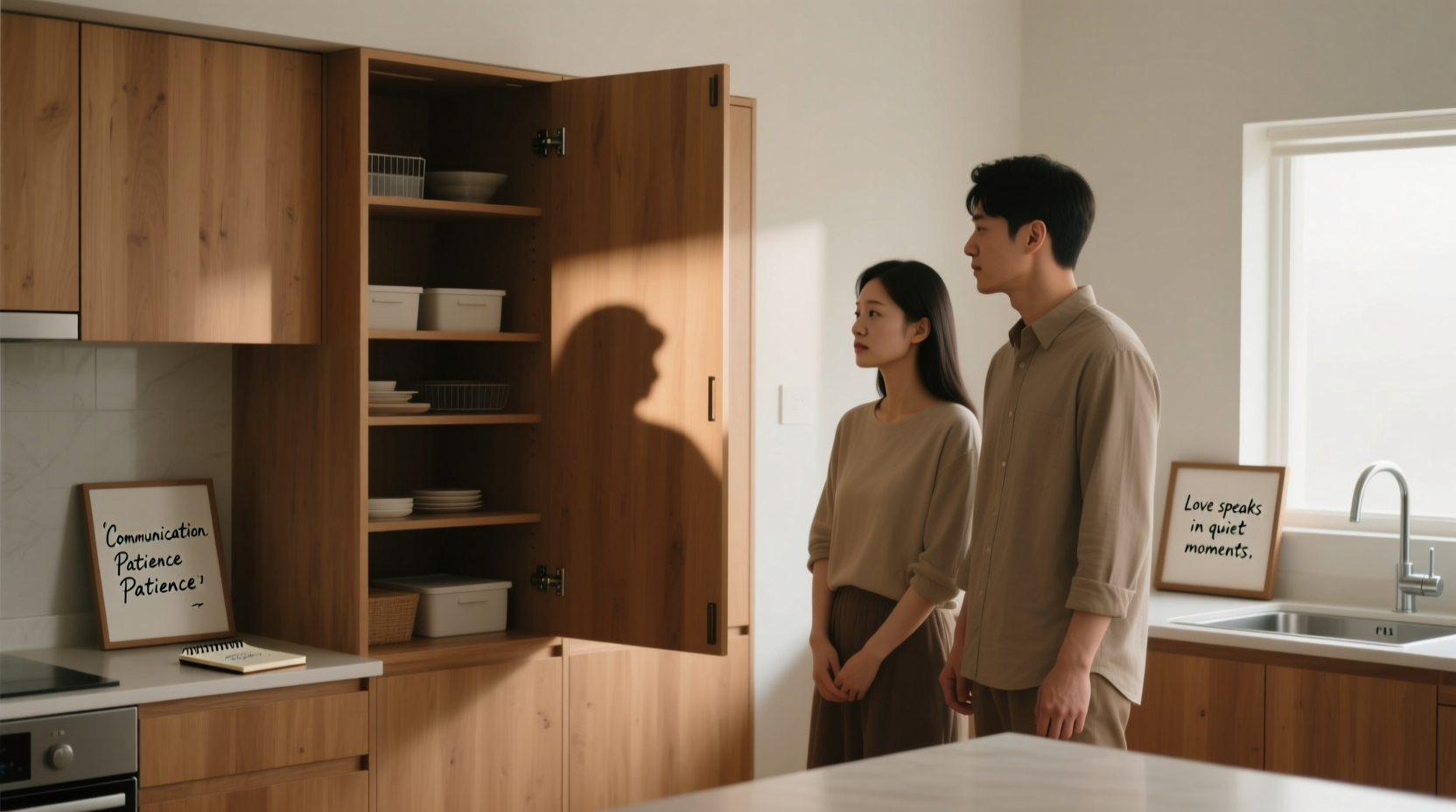
At first glance, leaving a cabinet open appears to be a simple oversight. But human behavior—even the smallest actions—is rarely random. Several psychological and neurological factors may explain why your partner consistently leaves doors ajar:
- Habit formation: Habits are automatic behaviors triggered by context. If someone grew up in a home where closing cabinets wasn’t enforced, they likely never developed the neural pathway linking “open cabinet” with “close after use.”
- Task-switching overload: When multitasking—grabbing a spice while stirring dinner or fetching water mid-conversation—the brain shifts focus rapidly. Closing the cabinet becomes a low-priority task that gets dropped.
- Differing attention to detail: Some people are naturally more attuned to environmental order. Others operate on a “task completion” model: once the spoon is retrieved, the mental checklist is marked done, regardless of the cabinet’s state.
- Sensory processing differences: Neurodivergent individuals (e.g., those with ADHD) may struggle with spatial awareness or working memory, making post-action tidying less automatic.
These aren’t excuses—they’re explanations. Recognizing that behavior stems from wiring, not willfulness, helps shift the conversation from blame to collaboration.
Common Relationship Triggers and Misinterpretations
What makes this seemingly minor act so emotionally charged? Often, it’s not the open cabinet—it’s what we project onto it.
For many, an open cabinet symbolizes larger concerns: lack of consideration, disrespect for shared space, or uneven distribution of household labor. These feelings are valid, but they can distort perception. One study published in the Journal of Social and Personal Relationships found that recurring household conflicts are frequently rooted in unmet expectations rather than the behaviors themselves.
“We don’t fight about dirty dishes—we fight about feeling unseen. The dishes are just the surface.” — Dr. Lena Torres, Couples Therapist & Author of *Everyday Friction*
In this light, the open cabinet becomes a proxy for broader emotional needs: appreciation, partnership, consistency. When these needs go unmet, small actions amplify into recurring arguments. The key is identifying the real issue beneath the surface.
Do’s and Don’ts When Discussing the Issue
| Do’s | Don’ts |
|---|---|
| Use “I feel” statements to express your experience | Say “You always leave things open” (accusatory) |
| Pick a neutral time to talk—not mid-frustration | Bring it up when either of you is stressed or distracted |
| Acknowledge their perspective and listening effort | Minimize their response (“It’s not that big a deal”) |
| Focus on shared goals: a calm, organized home | Compare them to others (“Even my dad remembers to close them!”) |
| Suggest collaborative solutions | Issue ultimatums or set rigid rules unilaterally |
A Step-by-Step Guide to Addressing the Behavior Calmly
Resolving this issue requires structure, timing, and emotional intelligence. Follow these steps to foster constructive dialogue:
- Observe without reacting. For one week, note when and how often cabinets are left open. Avoid commenting. This builds self-awareness and prevents reactive escalation.
- Choose the right moment. Bring it up during a relaxed, distraction-free time—after dinner, on a weekend morning. Never during or immediately after the incident.
- Frame it as a shared challenge. Use language like, “I’ve noticed we have different rhythms around putting things away. I’d love to find a way that works for both of us.”
- Invite their insight. Ask: “Do you even notice when cabinets are open?” or “Does closing them feel unnecessary in the moment?” Their answer may surprise you.
- Collaborate on solutions. Offer options: visual cues, gentle reminders, or even practical fixes like soft-close hinges.
- Agree on a trial period. Test one solution for two weeks. Reassess without judgment.
- Recognize progress, not perfection. If they close 70% of cabinets, acknowledge the effort. Positive reinforcement strengthens change.
Real-Life Example: A Couple’s Approach to Shared Space
Take Mark and Priya, married for eight years. Priya, detail-oriented and routine-driven, found her patience fraying every time she tripped over an open lower cabinet. She assumed Mark was being thoughtless. After a tense exchange, they decided to try a structured conversation using the steps above.
During their talk, Mark revealed he often didn’t notice the doors were open—he was focused on the next task. He also admitted that being reminded felt like criticism, which made him defensive. Priya shared that seeing clutter increased her anxiety and made her feel like she was managing everything alone.
Together, they implemented a few changes: installing soft-close hinges on frequently used cabinets, agreeing on a nightly 5-minute “reset” to tidy the kitchen, and using a neutral phrase—“Cabinet check!”—as a non-judgmental reminder. Over time, the frequency of open doors decreased, but more importantly, their communication improved. The cabinet became less of a battleground and more of a symbol of teamwork.
Practical Solutions and Environmental Adjustments
Sometimes, the best fix isn’t behavioral—it’s physical. Consider modifying the environment to reduce friction:
- Install soft-close hinges: These automatically shut cabinet doors after a gentle push, eliminating the need for full closure.
- Use door stops: Attach rubber bumpers or magnetic catches to prevent doors from swinging fully open unless intended.
- Reorganize storage: Place frequently used items in easy-access drawers or open shelving to reduce cabinet use altogether.
- Add visual cues: Place a small sticker or colored dot on the cabinet frame as a subconscious reminder to close it.
- Assign zones: Designate certain cabinets as “open-use” (e.g., coffee station) where leaving doors open is acceptable, reducing pressure elsewhere.
Environmental design reduces reliance on memory and willpower—two resources everyone has in limited supply.
Checklist: How to Address Open Cabinets Constructively
- ✅ Reflect on your own emotional reaction: Is this really about the cabinet?
- ✅ Track occurrences objectively for 3–5 days
- ✅ Schedule a calm, private conversation
- ✅ Use “I” statements to express your feelings
- ✅ Listen actively to your partner’s perspective
- ✅ Brainstorm solutions together
- ✅ Implement one practical change (e.g., soft-close hinges)
- ✅ Review progress after two weeks with openness, not judgment
When It’s More Than Just Cabinets: Recognizing Deeper Patterns
If repeated attempts to address the behavior lead to defensiveness, avoidance, or no change, consider whether this is part of a larger dynamic. Persistent disregard for shared responsibilities—especially when paired with dismissiveness during conversations—may signal deeper issues like emotional disengagement or imbalance in household labor.
In such cases, the cabinet is not the problem. The problem is a lack of equitable partnership or communication breakdown. While individual habits matter, systemic imbalances require more than quick fixes. Couples counseling or structured dialogue tools (like scheduled check-ins) can provide a safe space to explore these patterns.
“Small habits reflect larger relational rhythms. When one person consistently carries the mental load of order, resentment builds—even over spoons left in the sink.” — Dr. Alan Pierce, Family Systems Therapist
Frequently Asked Questions
Is it normal for partners to have different standards for tidiness?
Absolutely. Differences in upbringing, personality, and neurology mean people naturally vary in their comfort with mess and order. The goal isn’t uniformity—it’s mutual respect and compromise. Healthy relationships accommodate differences without demanding conformity.
What if my partner refuses to change or says I’m overreacting?
First, validate their perspective: maybe they truly don’t see it as disruptive. Then, clarify your needs without blaming: “It’s not about being ‘neat,’ it’s about safety and shared responsibility.” If they continue to dismiss your concerns, consider whether this reflects a broader pattern of invalidation. In such cases, third-party mediation (like couples therapy) can help bridge the gap.
Could this behavior indicate ADHD or another condition?
Possibly. Chronic forgetfulness, difficulty with follow-through, or frequent environmental disorganization can be signs of ADHD, especially if present across multiple areas of life. If this resonates, encourage open discussion about assessment—not as a label, but as a path to understanding and support. Accommodations like visual reminders or organizational tools benefit everyone.
Conclusion: Turning Annoyance Into Alignment
The open cabinet door is more than a domestic quirk—it’s a mirror reflecting how we navigate difference, communicate needs, and share space. By approaching it with curiosity instead of criticism, you transform a daily irritation into an opportunity for connection. Understanding why your partner leaves cabinets open isn’t about fixing them; it’s about building a relationship where both partners feel heard, respected, and willing to adapt.
Change doesn’t happen overnight. It grows from consistent, kind communication and shared commitment. Whether through better hardware, adjusted routines, or deeper conversations, the goal is harmony—not perfection. Start small. Speak gently. Listen deeply. And remember: the most resilient relationships aren’t those without friction, but those that know how to navigate it with care.




 浙公网安备
33010002000092号
浙公网安备
33010002000092号 浙B2-20120091-4
Comments
No comments yet. Why don't you start the discussion?