
Texting has become one of the most common ways romantic partners stay connected throughout the day. When messages go unanswered, it’s natural to feel confused, anxious, or even hurt. You might find yourself checking your phone repeatedly, wondering if something is wrong—either with your relationship or with you. But unanswered texts don’t always signal disinterest or emotional withdrawal. Often, they reflect deeper patterns in communication styles, lifestyle habits, or emotional needs.
Understanding why your partner doesn’t reply—and knowing how to address it constructively—can transform frustration into clarity. This article explores the most common reasons behind delayed or absent responses, backed by psychological insights and real-life examples, and provides actionable strategies to improve digital communication between you and your partner.
Common Reasons Your Partner Doesn’t Reply to Texts
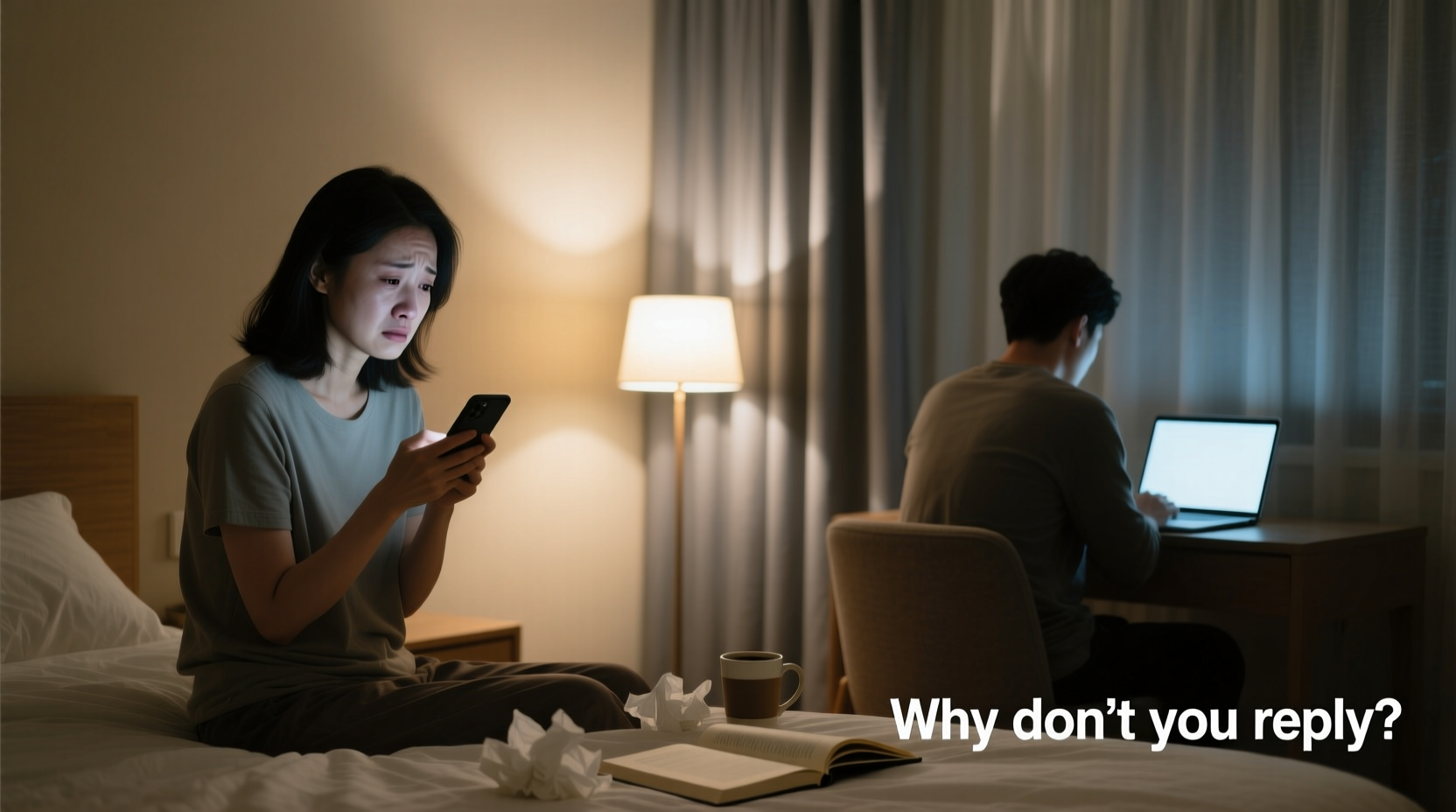
Before jumping to conclusions, it’s important to recognize that non-responsiveness isn't inherently personal. Many factors influence how someone engages with digital communication. Below are some of the most frequent underlying causes:
- Different communication styles: Some people are naturally more reactive; others process information internally and respond when ready.
- Work or life demands: High-pressure jobs, parenting responsibilities, or mental fatigue can make consistent texting difficult.
- Phone anxiety or notification overload: Constant pings lead some individuals to mute or avoid their phones altogether.
- Fear of conflict: If a message seems heavy or potentially argumentative, avoidance may be a self-protective mechanism.
- Emotional distance: In cases where emotional intimacy has declined, texting may feel like an obligation rather than a connection.
- Assumption of understanding: One partner may assume the other “knows how I feel” and therefore sees no need to respond immediately.
Communication Styles: The Hidden Factor in Texting Habits
One of the most overlooked aspects of mismatched texting behavior is differing communication styles. These differences often stem from personality traits, upbringing, or attachment patterns.
For example, someone with an anxious attachment style may expect quick replies as reassurance of love and presence. Meanwhile, a securely or avoidantly attached person may view texting as low-priority unless urgent. This mismatch leads to misunderstandings: one feels neglected, while the other feels pressured.
Psychologist Dr. John Gottman emphasizes that successful relationships aren’t defined by perfect communication, but by how couples navigate misalignment. He notes:
“Misattunements happen in every relationship. What matters is repair—how quickly partners reconnect after a moment of disconnection.” — Dr. John Gottman, Relationship Researcher
If your partner consistently delays responses, ask yourself: Is this part of a broader pattern of emotional unavailability? Or is it isolated to digital communication while in-person interactions remain warm and engaged?
Matching Communication Preferences: A Practical Table
| Your Style | Their Style | Potential Conflict | Solution |
|---|---|---|---|
| High-frequency texter (checks phone often) | Low-frequency responder (checks sporadically) | You feel ignored; they feel bombarded | Agree on response expectations for urgent vs. casual messages |
| Expresses affection via text | Shows care through actions, not words | You crave verbal affirmation; they show love differently | Discuss love languages and validate both forms of expression |
| Seeks immediate resolution to issues | Needs time to process before responding | Escalation due to perceived stonewalling | Use “I’ll get back to you” agreements to prevent pressure |
Mini Case Study: Sarah and Mark’s Texting Tension
Sarah, a project manager, texts Mark, a software developer, multiple times during the day to share updates, jokes, or check-ins. She notices he often replies hours later—or not at all. Over time, she begins to feel unimportant. She confronts him tearfully: “Do you even care about me?”
Mark is stunned. He loves Sarah deeply but explains that his job requires deep focus, making constant phone checks impossible. He also admits he sometimes avoids replying because her messages carry emotional weight, and he doesn’t want to respond poorly in haste.
After attending a couples’ workshop, they create a simple agreement: Sarah will label messages as “FYI,” “Chat Later,” or “Need to Talk.” Mark commits to responding within four hours to anything labeled “Need to Talk.” They also schedule a weekly 20-minute check-in call to discuss feelings outside of text. Within weeks, Sarah feels more secure, and Mark feels less pressured.
This case illustrates that solutions don’t require changing core personalities—but do require mutual adaptation and clarity.
Step-by-Step Guide to Fix Texting Communication
Improving digital communication with your partner doesn’t have to be complicated. Follow this six-step process to create sustainable change:
- Reflect on your own needs: Ask yourself why replies matter so much. Is it about validation, safety, or fear of abandonment? Journaling can help uncover deeper motivations.
- Choose a calm moment to talk: Don’t bring this up mid-argument or right after being ignored. Say, “I’ve been feeling a little disconnected lately. Can we talk about how we communicate over text?”
- Use “I” statements: Focus on your experience, not blame. For example: “I feel anxious when I don’t hear back, especially if I’ve shared something personal.”
- Ask for their perspective: Listen without interrupting. You might hear: “I get overwhelmed by notifications,” or “I worry I’ll say the wrong thing.”
- Create shared guidelines: Agree on what constitutes an urgent message, acceptable response windows, and preferred methods for sensitive topics (e.g., voice note, call, in-person).
- Test and adjust: Try your new system for two weeks. Revisit and refine based on what works and what doesn’t.
Checklist: Building Healthier Texting Habits Together
Use this checklist to evaluate and improve your texting dynamic:
- ☑ Both partners understand each other’s communication preferences
- ☑ Agreed upon definitions of “urgent” vs. “casual” messages
- ☑ Established realistic response time expectations (e.g., same day for non-urgent)
- ☑ Designated alternative channels for serious conversations (calls, face-to-face)
- ☑ No use of silent treatment or intentional ignoring as punishment
- ☑ Regular check-ins (monthly) to assess digital communication satisfaction
- ☑ Mutual respect for boundaries around work, downtime, and tech-free zones
When Silence Signals Deeper Issues
While occasional delays are normal, consistent non-response—especially when combined with emotional withdrawal, lack of effort, or broken promises—may point to larger relational problems.
Consider whether your partner:
- Rarely initiates contact
- Dismisses your concerns about communication
- Is emotionally distant in person as well
- Makes you feel guilty for expressing your needs
If these patterns persist, the issue may not be texting—it may be engagement. As licensed therapist Dr. Leanna Jorillo explains:
“When one partner repeatedly ignores the other’s bids for connection, it erodes trust over time. It’s not about the text—it’s about the message behind the silence.” — Dr. Leanna Jorillo, Couples Therapist
In such cases, professional counseling can provide a neutral space to explore underlying dynamics like resentment, mismatched priorities, or unresolved conflict.
FAQ: Common Questions About Unanswered Texts
Is it normal for my partner to take days to reply?
Occasionally, yes—especially if they’re busy or dislike texting. However, if this happens regularly and leaves you feeling dismissed, it’s worth discussing. Normal varies by couple; what matters is mutual comfort and respect.
Should I stop texting if my partner never replies?
Not necessarily—but consider adjusting your approach. Bombarding someone who dislikes texting may increase avoidance. Instead, reduce frequency, clarify intent, or switch to a medium they prefer. Also, reflect on whether you're seeking reassurance too often, which may signal personal insecurities needing attention.
Could lack of replies mean my partner is cheating?
It’s possible, but not probable based on this behavior alone. Cheating often involves secrecy, sudden changes in routine, or defensiveness—not just slow replies. Jumping to conclusions without evidence can damage trust unnecessarily. Focus first on open dialogue before suspecting infidelity.
Conclusion: Reconnect with Clarity and Compassion
Unanswered texts sting, but they don’t have to define your relationship. More often than not, the root cause isn’t indifference—it’s mismatched expectations, stress, or unspoken fears. By approaching the issue with empathy rather than accusation, you create space for honest conversation and meaningful change.
Healthy communication isn’t about constant contact. It’s about consistency, respect, and the willingness to adapt. Whether it’s setting clearer boundaries, learning each other’s rhythms, or simply agreeing to pause before reacting to silence, small shifts can lead to deeper connection.




 浙公网安备
33010002000092号
浙公网安备
33010002000092号 浙B2-20120091-4
Comments
No comments yet. Why don't you start the discussion?