
It’s a familiar scene: you're quietly hurt, wondering how your partner can sing every word of a 20-year-old pop hit from start to finish—but completely blank on your anniversary. It stings. It feels like a personal slight. But before jumping to conclusions about care or commitment, it’s worth understanding what’s really happening in the brain. Memory isn’t a single system; it’s a complex network shaped by emotion, repetition, context, and attention. The truth is, remembering song lyrics while forgetting an anniversary doesn’t mean your partner loves music more than you—it means their brain processes these memories differently.
The Science Behind Memory: Why Lyrics Stick and Dates Slip
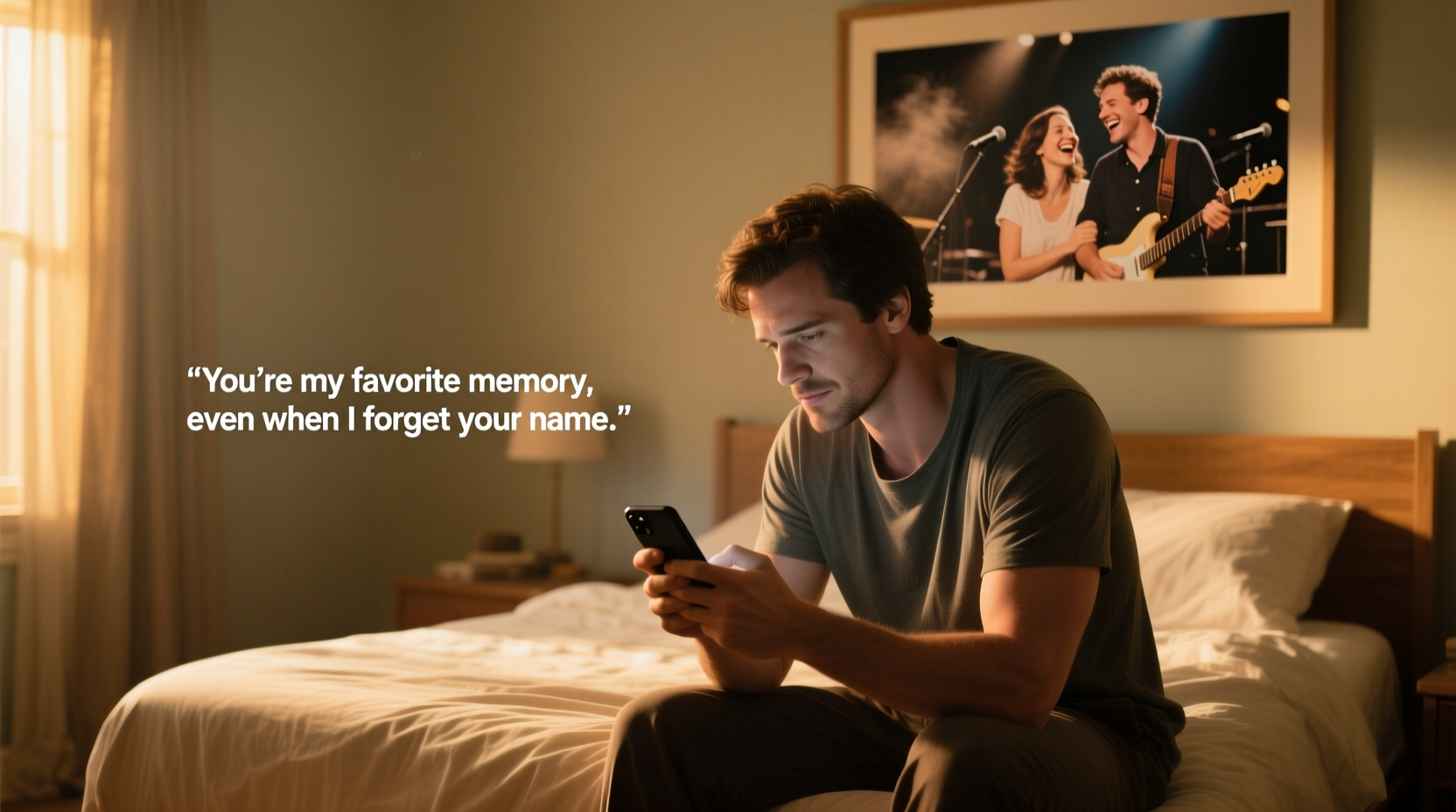
Human memory operates through multiple systems: episodic (personal experiences), semantic (facts and knowledge), and procedural (skills and habits). Song lyrics are stored primarily in semantic and procedural memory, supported by rhythm, melody, and repetition. Anniversaries, on the other hand, rely on episodic memory—our ability to recall specific events tied to time and place. This type of memory is fragile and highly dependent on emotional salience and rehearsal.
When we hear a song repeatedly—especially during emotionally charged periods like adolescence or first love—the brain forms strong neural pathways. The auditory cortex encodes the sound, the hippocampus links it to context, and the basal ganglia reinforce it through rhythmic patterns. Over time, singing along becomes automatic, almost muscle memory. In contrast, anniversaries are isolated events that occur once a year. Without consistent reinforcement or emotional anchoring, they’re vulnerable to being overwritten by newer, more frequent information.
“Memory is not a recording device but a reconstruction engine. We don’t store facts like files—we rebuild them each time we recall.” — Dr. Linda Jacobson, Cognitive Neuroscientist, University of Toronto
Emotional Salience vs. Routine Obligation
One of the most powerful drivers of memory is emotional significance. Events tied to intense feelings—joy, sorrow, excitement—are more likely to be encoded and retained. A song that played during a first kiss, a road trip with friends, or a difficult breakup carries emotional weight that strengthens its imprint.
Anniversaries, however, often fall into the category of socially expected milestones. While meaningful to one partner, they may not trigger the same emotional urgency in the other—especially if they’re perceived as routine or pressured. If past anniversaries were low-key or even stressful (e.g., forgotten gifts, awkward dinners), the brain may subconsciously downplay their importance.
This doesn’t mean your partner doesn’t care. It may simply reflect a mismatch in how each of you assigns emotional value to certain events. One person might see an anniversary as a cornerstone of relationship health; another might express love through daily actions rather than calendar dates.
Attention, Not Affection: What Memory Gaps Really Reveal
Forgetting an anniversary is rarely about lack of love. More often, it reflects cognitive load, attention distribution, and individual differences in executive function. Modern life bombards us with information—work deadlines, family obligations, digital notifications—all competing for mental space. For some people, especially those with ADHD or high-stress lifestyles, non-recurring dates are easily lost in the noise.
In contrast, song lyrics benefit from passive reinforcement. You don’t have to try to remember them; they replay in ads, playlists, and public spaces. Each exposure strengthens the memory without effort. Anniversaries require active recall—and that demands intention, organization, and sometimes external tools like calendars or reminders.
A partner who remembers lyrics effortlessly but forgets dates may simply have a brain wired for pattern recognition and auditory retention, not chronological tracking. This isn’t negligence—it’s neurodiversity.
Case Study: Maya and Daniel’s Anniversary Misstep
Maya was devastated when Daniel forgot their fifth anniversary. He didn’t mention it all day, didn’t plan anything, and seemed surprised when she brought it up at dinner. She questioned his commitment. But after a calm conversation, they uncovered a pattern: Daniel had never remembered a birthday or anniversary without a reminder. Yet he could identify songs from three seconds of intro and quote entire albums.
They realized Daniel wasn’t indifferent—he just processed time differently. With Maya’s help, he started using a shared digital calendar with recurring alerts. They also created a new tradition: exchanging voice notes every January 15th (their official date) reflecting on the year. The ritual gave the date emotional texture, making it easier to remember. Within a year, Daniel recalled the date even before the alert pinged.
Do’s and Don’ts: Navigating Memory Differences in Relationships
| Do | Don’t |
|---|---|
| Use shared tools like calendars, alarms, or apps to track important dates | Assume forgetfulness equals indifference |
| Talk openly about how each of you values and remembers milestones | Compare their memory to others (“Even my coworker remembers his wife’s birthday!”) |
| Create unique, sensory-rich traditions around anniversaries (e.g., a signature meal, playlist, or location) | Rely solely on verbal promises like “I’ll remember, I swear” |
| Express appreciation for the ways they *do* show love—even if it’s not date-focused | Punish or withdraw affection after a memory lapse |
| Reinforce the date with small cues weeks in advance (“Can’t wait for our trip next week—happy anniversary!”) | Make the date feel like a test of love |
Building Shared Memory: A Step-by-Step Approach
If recurring forgetfulness is causing tension, proactive strategies can bridge the gap. Here’s a practical timeline to strengthen memory and connection:
- Week 1: Initiate a Non-Confrontational Conversation
Choose a neutral moment to say, “I’ve noticed we remember things differently. Can we talk about how we both keep track of special dates?” Focus on collaboration, not blame. - Week 2: Audit Your Tools
Check if either of you uses a calendar app. Agree on one platform (Google Calendar, Apple Reminders, etc.) and set up mutual access. Ensure notifications are enabled. - Week 3: Create Emotional Anchors
Brainstorm a small, repeatable tradition—like lighting a candle, playing “your song,” or watching your first movie together. Sensory cues boost memory retention. - Month 2: Schedule Soft Reminders
Set alerts two weeks, one week, and one day before the anniversary. Include playful messages (“Get ready for cake and cuddles!”). - Month 3 and Beyond: Reflect and Reinforce
After each anniversary, briefly discuss what worked. Did the reminder help? Was the tradition meaningful? Adjust as needed.
Checklist: Strengthening Relationship Memory Together
- ✅ Identify which partner typically remembers dates (if any)
- ✅ Choose a shared digital calendar or reminder system
- ✅ Input all key dates: anniversaries, birthdays, vacations
- ✅ Set recurring annual reminders with escalating alerts
- ✅ Develop a unique anniversary ritual (e.g., handwritten note, favorite meal)
- ✅ Discuss expectations: Is celebrating the date essential, or is the gesture what matters?
- ✅ Review and update the system every six months
Frequently Asked Questions
Isn’t remembering an anniversary just basic respect?
Respect is shown in many forms. For some, punctuality and date-keeping are top expressions of care. For others, respect is demonstrated through listening, support, or physical touch. The issue often isn’t disrespect—it’s a mismatch in love languages. Open dialogue helps align expectations without judgment.
Could this be a sign of deeper relationship problems?
Occasional forgetfulness is normal. But if it’s part of a broader pattern—consistently ignoring your needs, dismissing emotions, or breaking promises—it may indicate emotional disengagement. Context matters. One forgotten date with remorse is different from repeated neglect with no effort to improve.
What if my partner refuses to use reminders or calendars?
Some people resist external tools due to pride (“I should remember on my own”) or discomfort with dependency. In such cases, frame it as teamwork: “Let’s make sure we both get to show love in the way that feels best.” If resistance persists, consider whether there are underlying issues like stress, depression, or avoidance.
Conclusion: Memory Isn’t the Measure of Love
Your partner remembering song lyrics but forgetting your anniversary isn’t a verdict on their feelings. It’s a window into how human memory works—and how relationships can thrive when we work with, not against, our natural tendencies. The brain prioritizes what it hears often, feels deeply, and practices regularly. Love doesn’t live in perfect recall—it lives in the choice to try again, to build systems, to listen, and to grow together.
Instead of asking, “Why can’t they remember?” ask, “How can we remember together?” That shift—from blame to partnership—is where real connection deepens. Because the most lasting memories aren’t the ones we’re born with—they’re the ones we create on purpose.




 浙公网安备
33010002000092号
浙公网安备
33010002000092号 浙B2-20120091-4
Comments
No comments yet. Why don't you start the discussion?