
Sleeping next to someone who snores can be more than just annoying—it can disrupt your rest, strain your relationship, and even signal underlying health concerns. If your partner’s snoring seems significantly worse when they’re lying on their back, you’re not imagining it. There’s solid anatomical and physiological reasoning behind this pattern, and more importantly, there are real solutions that go beyond gimmicks.
Snoring occurs when airflow through the mouth and nose is partially obstructed during sleep. The tissues in the throat vibrate as air squeezes past, creating the familiar rumbling or grunting sound. While occasional snoring is common, chronic or loud snoring—especially in the supine (back) position—can point to modifiable habits, structural issues, or even sleep apnea.
This article breaks down exactly why back sleeping amplifies snoring, explores evidence-based remedies, and offers a clear roadmap for couples seeking quieter, healthier nights.
The Anatomy of Back Sleeping and Snoring
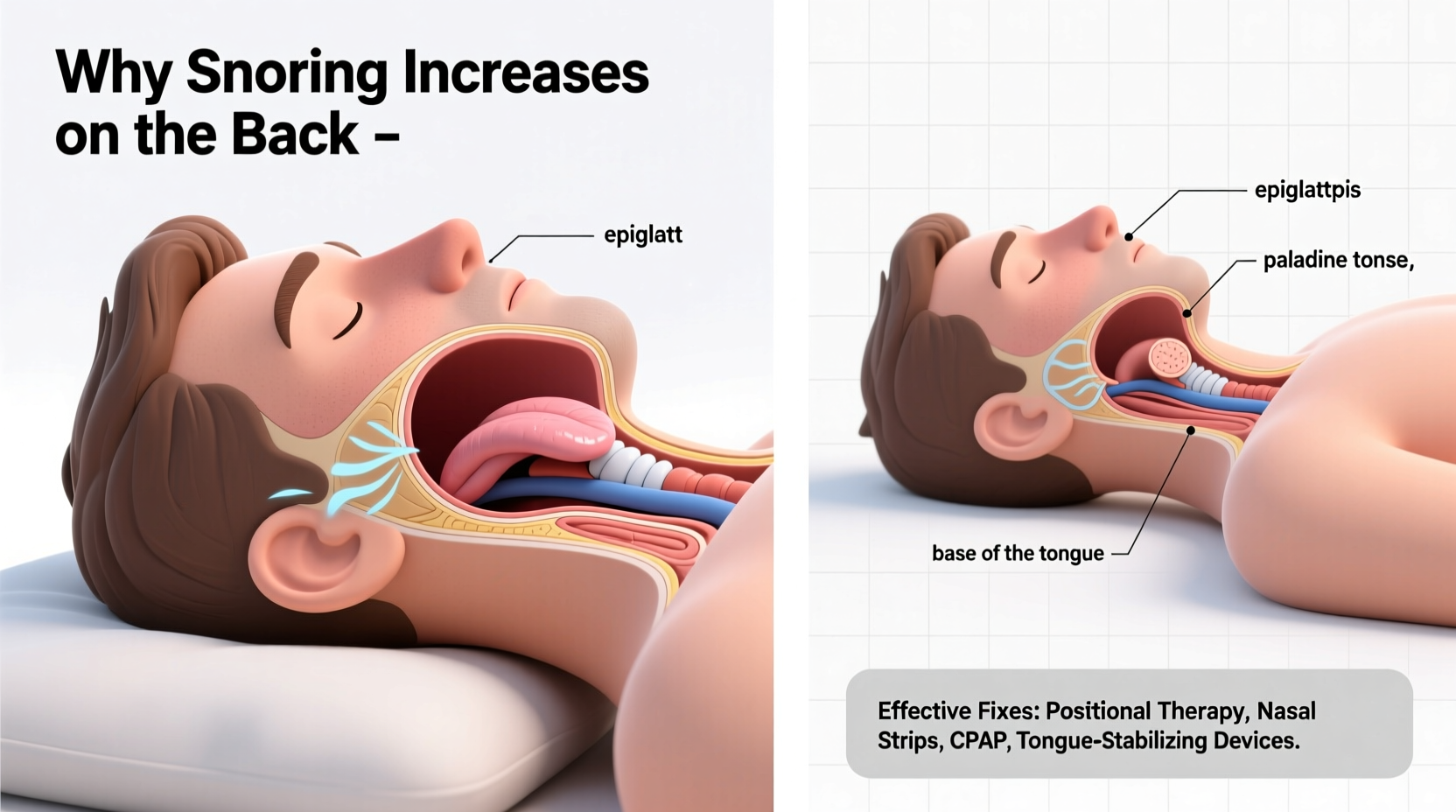
When a person lies flat on their back, gravity pulls the soft tissues of the throat—including the soft palate, uvula, and base of the tongue—downward into the airway. This narrowing increases resistance to airflow, making tissue vibration more likely and more intense.
In contrast, side sleeping helps keep the airway more open because the tongue and soft tissues are less likely to collapse backward. Studies consistently show that positional snoring—worse when on the back—is present in up to 50–70% of people who snore regularly.
“Positional therapy is one of the most underutilized yet effective first-line interventions for reducing snoring and mild sleep apnea.” — Dr. Laura Chen, Sleep Medicine Specialist
Another factor: the jaw. When lying on the back, especially with poor pillow support, the lower jaw can fall slightly open and backward, further constricting the airway. This is particularly common in individuals with a recessed chin or smaller jaw structure.
Proven Fixes That Actually Work
Not all anti-snoring products deliver results. Many rely on anecdotal claims or short-term placebo effects. Below are solutions supported by clinical research, patient outcomes, and expert consensus.
1. Positional Therapy: Train Side Sleeping
Encouraging your partner to avoid back sleeping is often the single most effective behavioral change. But how do you stop someone from rolling onto their back unconsciously?
- Pillow positioning: Use a body pillow or long bolster to create a physical barrier that makes rolling onto the back uncomfortable.
- Tennis ball technique: Sew a tennis ball into the back of a snug-fitting shirt. The discomfort prevents supine sleeping without fully waking the person.
- Wearable devices: Products like NightShift or Zzoma use gentle vibrations to alert the wearer when they roll onto their back.
2. Optimize Pillow and Mattress Setup
Your partner’s bedding plays a surprisingly large role in airway alignment. A pillow that’s too flat or too high can tilt the head in a way that narrows the throat.
Ideally, the pillow should keep the neck in a neutral position—aligned with the spine—whether side or back sleeping. Memory foam or contoured pillows designed for sleep apnea patients often provide better support.
Elevating the head by 30 to 45 degrees can also reduce snoring. This doesn’t mean stacking multiple pillows (which can misalign the neck), but rather using an adjustable bed base or a wedge pillow placed under the upper body.
3. Address Nasal Obstruction
If airflow through the nose is restricted, breathing shifts to the mouth, increasing the chance of snoring. Common causes include allergies, deviated septum, or chronic congestion.
Simple interventions include:
- Nasal strips (e.g., Breathe Right) – open nasal passages mechanically
- Nasal sprays (saline or steroid-based) – reduce inflammation
- Allergy control – dust mite covers, HEPA filters, regular cleaning
One study found that nasal strips reduced snoring intensity by up to 32% in participants with nasal congestion.
4. Lifestyle Adjustments That Make a Difference
Diet, alcohol, and weight are deeply connected to snoring severity. Even modest changes can yield noticeable improvements.
| Factor | Impact on Snoring | Action Step |
|---|---|---|
| Alcohol consumption | Relaxes throat muscles, increasing collapse risk | Avoid alcohol 3–4 hours before bed |
| Weight (especially neck fat) | Narrows airway; increases tissue vibration | Lose 5–10% body weight for measurable improvement |
| Smoking | Irritates airways, increases swelling and mucus | Quit smoking or reduce exposure |
| Sedatives/sleeping pills | Over-relax upper airway muscles | Consult doctor about alternatives |
5. Oral Appliances and Medical Devices
For persistent snoring—especially if sleep apnea is suspected—an oral appliance prescribed by a dentist trained in sleep medicine can be highly effective. These devices reposition the lower jaw and tongue forward, preventing airway collapse.
Unlike over-the-counter “snore guards,” custom-fitted mandibular advancement devices (MADs) are tailored to the individual’s bite and offer better comfort and efficacy. Success rates for reducing snoring exceed 70% in compliant users.
In cases of obstructive sleep apnea (OSA), continuous positive airway pressure (CPAP) therapy remains the gold standard. While CPAP machines don’t eliminate snoring per se, they prevent airway collapse entirely, stopping both snoring and dangerous breathing pauses.
Mini Case Study: The Johnsons’ Quiet Bedroom Transformation
Mark, 48, had been a lifelong back snorer. His wife, Sarah, was chronically sleep-deprived and had started sleeping in the guest room. After a home sleep test revealed mild obstructive sleep apnea, Mark began a multi-pronged approach:
- He switched to an adjustable bed, elevating his head by 35 degrees.
- Started using a contoured memory foam pillow and a body pillow to discourage back sleeping.
- Eliminated evening wine—one glass with dinner had become two or three.
- Began using a custom-fitted oral appliance after consultation with a sleep dentist.
Within six weeks, Sarah reported a 90% reduction in snoring. Mark felt more rested, and follow-up data showed his apnea-hypopnea index (AHI) dropped from 18 to 4. Their bedroom became a shared, peaceful space again.
Step-by-Step Guide to Reducing Back-Position Snoring
Follow this 30-day plan to systematically address snoring:
- Week 1: Assess and Monitor
- Record snoring patterns (use a voice recorder or app like SnoreLab).
- Note bedtime habits: alcohol, meals, medications.
- Check for symptoms of sleep apnea: gasping, daytime fatigue, morning headaches.
- Week 2: Optimize Sleep Environment
- Introduce a body pillow or positional aid.
- Replace old pillows with supportive, contoured ones.
- Consider a wedge pillow or adjustable base.
- Week 3: Implement Lifestyle Changes
- Eliminate alcohol within 4 hours of bedtime.
- Address allergies—change bedding, vacuum regularly, use air purifier.
- Begin light exercise if overweight (even walking 30 minutes daily helps).
- Week 4: Evaluate and Escalate if Needed
- Reassess snoring levels using recordings.
- If no improvement, consult a primary care doctor or sleep specialist.
- Discuss oral appliances or sleep study if apnea is suspected.
Checklist: What to Try Before Seeking Medical Help
- ✅ Use a body pillow or positional trainer
- ✅ Upgrade to a supportive, contoured pillow
- ✅ Elevate the head with a wedge or adjustable bed
- ✅ Eliminate alcohol and sedatives before bed
- ✅ Treat nasal congestion with strips or saline spray
- ✅ Reduce allergens in the bedroom
- ✅ Lose excess weight through diet and activity
- ✅ Record snoring to track progress
Frequently Asked Questions
Can snoring be a sign of something serious?
Yes. Chronic, loud snoring—especially when accompanied by gasping, choking, or daytime fatigue—may indicate obstructive sleep apnea (OSA). OSA is linked to increased risks of hypertension, heart disease, stroke, and diabetes. If these symptoms are present, a medical evaluation is essential.
Are over-the-counter snoring devices worth trying?
Some are. Nasal strips and dilators have moderate evidence for reducing snoring in people with nasal congestion. However, cheap boil-and-bite mouthpieces often fail due to poor fit and discomfort. Custom-fitted oral appliances from a qualified dentist are far more effective and safer for long-term use.
What if my partner refuses to change their habits?
This is common. Approach the conversation with empathy, focusing on shared benefits—better sleep for both of you, improved health, stronger relationship. Offer to participate together (e.g., “Let’s both try cutting out late-night snacks”). Sometimes, involving a doctor or sleep specialist adds authority and motivation.
Conclusion: A Quieter Night Is Within Reach
Your partner’s back-position snoring isn’t just an unavoidable nuisance—it’s a solvable problem rooted in anatomy, habit, and sometimes health. By understanding the mechanics of airway collapse and applying targeted, science-backed strategies, many couples see dramatic improvements in sleep quality.
Start with simple, non-invasive changes: adjust sleep position, optimize bedding, and clean up lifestyle habits. Track progress, stay consistent, and don’t hesitate to seek professional help if snoring persists or suggests a deeper issue like sleep apnea.
Quiet nights aren’t a luxury—they’re a foundation for health, intimacy, and well-being. Take the first step tonight. Your rest—and your relationship—will thank you.




 浙公网安备
33010002000092号
浙公网安备
33010002000092号 浙B2-20120091-4
Comments
No comments yet. Why don't you start the discussion?