
Snoring is a common sleep disturbance that affects millions of people worldwide—and often their partners even more. If you've noticed that your partner only snores when lying on their back, you're not imagining things. This positional pattern is both real and explainable. More importantly, it's often manageable with simple lifestyle adjustments and targeted interventions. Understanding the mechanics behind back-sleeping snoring can help you take meaningful steps toward quieter nights and better rest for both of you.
The Science Behind Back Sleeping and Snoring
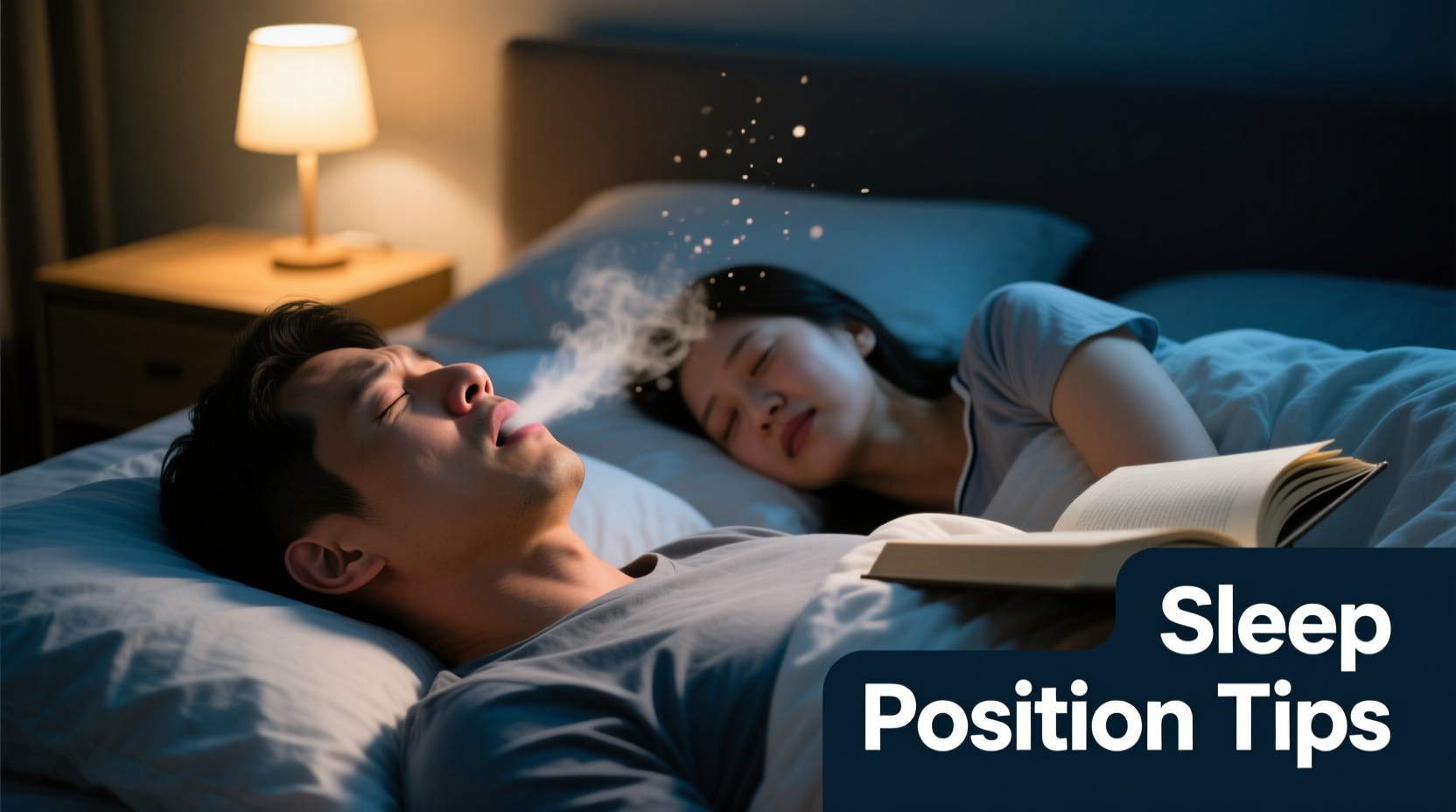
When a person lies flat on their back, gravity acts directly on the soft tissues in the throat and airway. The tongue, soft palate, and uvula naturally fall backward due to gravitational pull, narrowing the air passage. As airflow increases during breathing—especially during deep or irregular sleep—these relaxed tissues vibrate, producing the familiar sound of snoring.
This phenomenon is known as \"positional obstructive sleep apnea\" (POSA) when it’s linked to sleep-disordered breathing, but even in milder cases, it’s referred to as \"positional snoring.\" Research shows that up to 60% of snorers experience significantly worse symptoms when sleeping supine (on their back), compared to side or stomach positions.
“Gravity plays a major role in airway collapse during sleep. For many patients, simply changing sleep position can reduce or eliminate snoring altogether.” — Dr. Laura Chen, Sleep Medicine Specialist, Mayo Clinic
Back sleeping also reduces lung volume slightly and may increase upper airway resistance, compounding the issue. Individuals who are overweight, have larger neck circumferences, or have anatomical features like a recessed jaw or enlarged tonsils are especially prone to this type of snoring.
Why Doesn’t My Partner Snore in Other Positions?
When sleeping on the side or stomach, the tongue and soft tissues are less likely to collapse into the airway. Side sleeping, in particular, keeps the airway more open and stable throughout the night. This is why many habitual back snorers report little to no snoring when they manage to stay off their backs.
A small study published in the *Journal of Clinical Sleep Medicine* found that participants who used positional therapy devices reduced their snoring frequency by over 50%, simply by avoiding the supine position. This suggests that position alone can be a decisive factor—even without weight loss or medical intervention.
Key Factors That Make Back Sleeping Worse for Snoring
- Anatomical structure: A narrow airway, large tongue, or deviated septum increases vulnerability.
- Alcohol consumption: Depresses muscle tone, making tissues more likely to collapse.
- Nasal congestion: Forces mouth breathing, which amplifies snoring intensity.
- Age: Muscle tone in the throat decreases with age, increasing risk.
- Obesity: Excess fat around the neck compresses the airway, especially when lying flat.
Practical Tips to Reduce Back-Sleep Snoring
Changing sleep habits isn't always easy, but with consistent effort and the right tools, most couples see noticeable improvements within weeks. Below are actionable strategies backed by sleep science and clinical practice.
1. Encourage Side Sleeping
The most effective way to stop positional snoring is to avoid sleeping on the back entirely. But since people don’t consciously control their position all night, passive solutions work best.
- Tennis ball technique: Sew a tennis ball into the back of a snug-fitting shirt or use a specialized anti-snore shirt. The discomfort of lying on the ball encourages rolling to the side.
- Wedge pillows: Use a contoured foam pillow or body pillow to support side sleeping and prevent rolling backward.
- Positional alarms: Wearable devices like NightShift vibrate gently when detecting supine positioning, helping train new habits over time.
2. Optimize Bedroom Environment
Your partner’s sleep environment can either ease or exacerbate snoring. Consider these adjustments:
- Elevate the head of the bed by 4–6 inches using risers or an adjustable base. This slight incline helps keep airways open.
- Use a firmer pillow that supports neck alignment without pushing the head forward.
- Maintain bedroom humidity between 40–60% to prevent dry air from irritating nasal passages.
3. Address Lifestyle Triggers
Even minor changes in daily routines can have a significant impact on nighttime breathing.
- Avoid alcohol and sedatives at least 3–4 hours before bedtime.
- Establish a consistent sleep schedule to improve sleep depth and reduce irregular breathing patterns.
- Lose excess weight, particularly around the neck area, which directly impacts airway space.
- Treat allergies or chronic congestion with saline sprays, antihistamines, or nasal strips.
Step-by-Step Guide to Reducing Back-Sleep Snoring
Follow this 4-week plan to systematically address positional snoring:
- Week 1: Assess and Track
Create a snoring log. Note when snoring occurs, duration, position, and any contributing factors (e.g., alcohol, late meal). Use a voice-recording app or smartwatch with sleep tracking. - Week 2: Introduce Positional Training
Begin using a tennis ball shirt or wedge pillow. Set up the bed for elevation if needed. Focus on consistency, not perfection. - Week 3: Modify Lifestyle Habits
Eliminate evening alcohol, treat nasal congestion, and maintain a regular bedtime. Observe changes in snoring intensity. - Week 4: Evaluate and Adjust
Review the log. If snoring persists despite side sleeping, consider consulting a sleep specialist. Rule out sleep apnea with a home test if symptoms include gasping or daytime fatigue.
Do’s and Don’ts: What Actually Works
| Do | Don’t |
|---|---|
| Use a supportive pillow that keeps the neck aligned | Use overly thick pillows that tilt the head forward |
| Sleep with a body pillow to stabilize side position | Rely solely on willpower to avoid back sleeping |
| Stay hydrated during the day to thin mucus | Drink alcohol within 4 hours of bedtime |
| Treat nasal allergies promptly | Ignore signs of sleep apnea (gasping, choking, excessive daytime sleepiness) |
| Consider an adjustable bed frame | Assume snoring is “normal” and untreatable |
Mini Case Study: Sarah and Mark’s Success Story
Sarah had grown accustomed to wearing earplugs every night due to her husband Mark’s loud snoring. She noticed it only happened when he slept on his back—often starting shortly after he rolled onto it mid-sleep. Concerned about his health and her own sleep quality, she researched solutions and introduced the tennis ball method.
At first, Mark resisted, finding the ball uncomfortable. But after switching to a commercial anti-snore shirt with a built-in pocket, he adapted within two weeks. They also elevated the head of the bed and replaced his old pillow with a memory foam cervical model.
After three weeks, Sarah reported a 70% reduction in snoring episodes. Mark felt more rested and stopped waking with a dry throat. A follow-up sleep tracker showed he spent 85% of the night in non-supine positions. Their sleep quality improved dramatically—without medication or invasive treatments.
When to Seek Medical Advice
While positional snoring is often benign, it can sometimes be a sign of obstructive sleep apnea (OSA), a serious condition where breathing repeatedly stops and starts during sleep. OSA requires diagnosis and treatment, typically involving CPAP therapy or oral appliances.
Watch for these red flags:
- Loud snoring accompanied by gasping or choking sounds
- Excessive daytime sleepiness despite adequate sleep
- High blood pressure or morning headaches
- Observed pauses in breathing during sleep
“If your partner snores loudly only on their back but feels tired during the day, they should still be evaluated. Positional snoring can coexist with mild sleep apnea.” — Dr. Rajiv Patel, Pulmonologist & Sleep Disorder Expert
A home sleep apnea test (HSAT) can confirm whether breathing interruptions are occurring. Many insurance plans now cover these tests, and results can guide next steps—from lifestyle changes to prescription devices.
FAQ: Common Questions About Positional Snoring
Can losing weight stop back-sleep snoring?
Yes. Weight loss, especially around the neck, reduces pressure on the airway. Even a 5–10% reduction in body weight can significantly decrease snoring severity in overweight individuals.
Are there special pillows that help?
Absolutely. Contoured cervical pillows, side-sleeping body pillows, and adjustable wedges can all promote better alignment and discourage back sleeping. Look for models designed specifically for snoring or sleep apnea support.
Is it possible to train yourself to stop sleeping on your back?
Yes, through a process called positional therapy. Devices like vibrating alarms or wearable trainers provide feedback when you roll onto your back, helping retrain sleep posture over time. Consistency is key—most people adapt within 4–6 weeks.
Conclusion: Take Action for Quieter, Healthier Sleep
Snoring when sleeping on the back is not just a nuisance—it’s a mechanical response to gravity and anatomy that can often be corrected. By understanding the causes and applying practical, evidence-based strategies, you and your partner can reclaim peaceful nights and improved well-being.
Start with simple changes: adjust sleep position, optimize the bedroom environment, and eliminate lifestyle triggers. Track progress, remain patient, and don’t hesitate to seek professional guidance if symptoms persist. Better sleep isn’t a luxury—it’s a foundation for health, connection, and daily vitality.




 浙公网安备
33010002000092号
浙公网安备
33010002000092号 浙B2-20120091-4
Comments
No comments yet. Why don't you start the discussion?