
Birds are among the most visually attuned pets, relying heavily on their sight for navigation, communication, and survival. When holiday seasons arrive and homes fill with twinkling Christmas lights, many bird owners notice unusual reactions—from sudden flapping and vocalizations to complete withdrawal. These behaviors aren’t just quirks; they’re signals. Understanding why your pet bird reacts to blinking Christmas lights is essential not only for peace of mind but also for ensuring their well-being during festive periods.
The rapid flashes, shifting colors, and unpredictable patterns of blinking lights can be deeply unsettling to birds. Unlike humans, who interpret these lights as decorative and joyful, birds may perceive them as threats or environmental instability. This article explores the science behind avian vision, explains behavioral responses, evaluates potential harm, and provides practical strategies to maintain a safe and calm environment for your bird during the holidays.
The Science of Avian Vision: Why Birds See Lights Differently
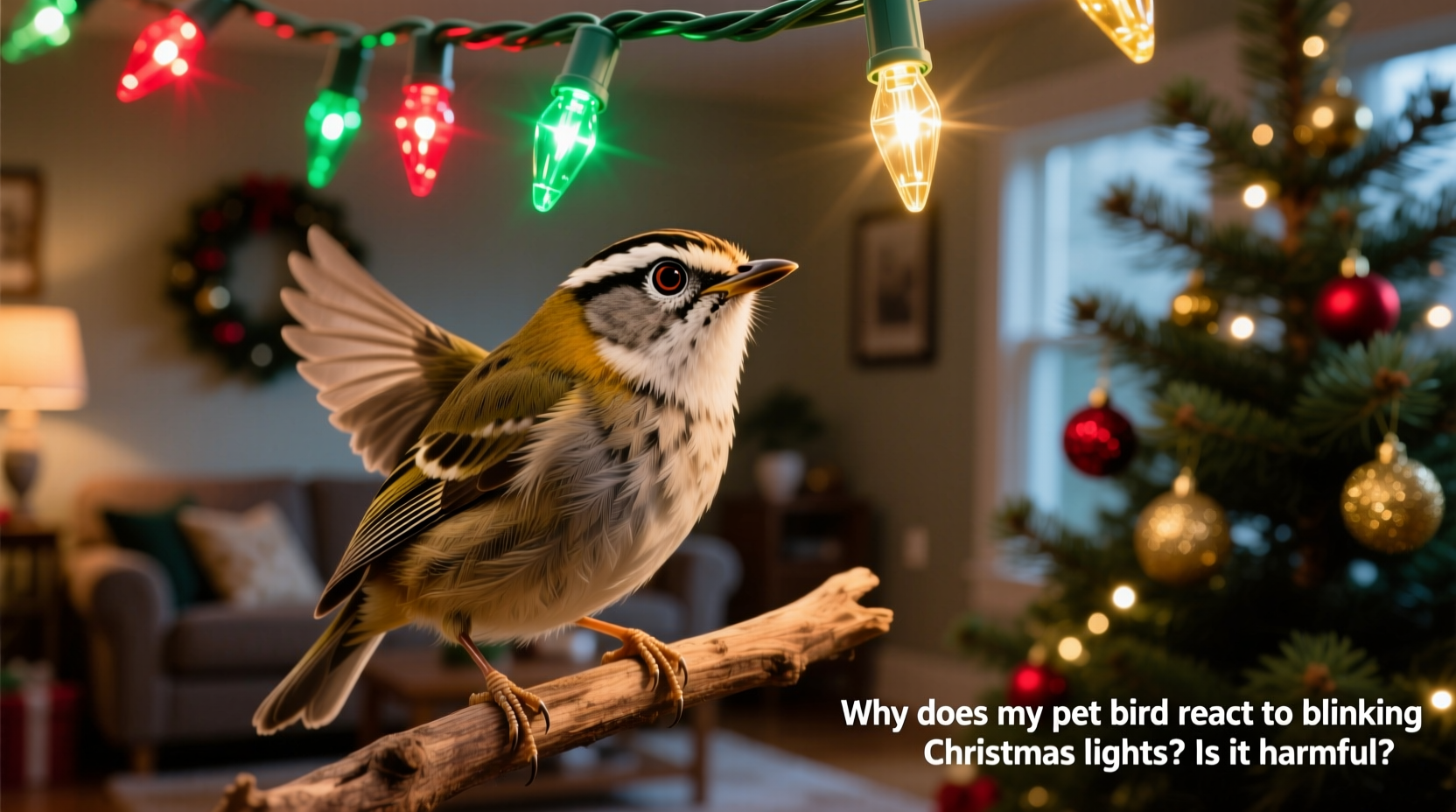
Birds possess visual systems far more advanced than those of humans. Most species have tetrachromatic vision, meaning they see four primary colors—including ultraviolet (UV) light—compared to our three (red, green, blue). This expanded spectrum allows birds to detect subtle changes in light that are invisible to us. Additionally, birds process visual information at a much faster rate. While humans typically perceive flickering above 50–60 Hz as continuous light, many birds can detect flicker up to 100 Hz or higher.
This heightened sensitivity means that even LED lights marketed as “steady” may appear to strobe or pulse to a bird. Blinking Christmas lights, which often cycle between 2–6 flashes per second, fall directly into a range that can trigger neurological discomfort or alarm. To a parakeet or cockatiel, a string of twinkling lights might resemble an erratic predator, sudden lightning, or an unstable environment—none of which promote a sense of safety.
“Birds live in a world dominated by visual cues. What we see as festive decoration, they may interpret as chaos or danger.” — Dr. Laura Finch, Avian Behavioral Specialist, University of Avian Sciences
Furthermore, birds’ eyes are positioned laterally, giving them nearly 300-degree peripheral vision. This wide field of view increases their exposure to ambient stimuli, making it difficult to ignore flashing lights even when they try to look away. In the wild, such persistent visual disturbances could signal environmental threats like fire, storms, or predators. In captivity, where escape isn’t an option, this can lead to chronic stress.
Common Behavioral Reactions to Blinking Lights
Pet birds exhibit a range of responses when exposed to blinking Christmas lights. These behaviors vary by species, temperament, and past experiences, but common signs include:
- Startle reflexes: Sudden wing flapping, hopping, or flying around the cage when lights flash.
- Vocal distress: Increased screeching, alarm calls, or repetitive chirping timed with light patterns.
- Hiding or cowering: Retreating to the back of the cage, covering head with wings, or refusing to come out.
- Feather plucking: Chronic exposure may contribute to self-mutilation in sensitive individuals.
- Loss of appetite: Stress can suppress feeding behavior, especially in smaller species like finches or canaries.
- Hyper-vigilance: Constant scanning of the room, inability to rest or sleep properly.
In some cases, birds may initially show curiosity—approaching the lights cautiously. But repeated exposure without predictability can shift this interest into anxiety. The unpredictability of blinking sequences prevents habituation, keeping the bird in a state of alertness.
Is It Harmful? Evaluating Physical and Psychological Risks
While blinking Christmas lights don’t emit toxins or physical hazards like sharp edges, their psychological impact can translate into real physiological consequences. Chronic stress in birds has been linked to weakened immune function, hormonal imbalances, and increased susceptibility to illness.
A 2021 study published in the Journal of Avian Medicine and Behavior found that budgerigars exposed to intermittent artificial lighting for more than two hours daily over a three-week period showed elevated corticosterone levels—a key stress hormone—compared to control groups. These birds also displayed reduced sleep duration and disrupted circadian rhythms, both of which are critical for long-term health.
Moreover, erratic lighting can interfere with a bird’s internal clock. Birds rely on consistent light-dark cycles to regulate sleep, digestion, and molting. Disrupting this rhythm with nighttime blinking lights—even for short durations—can lead to insomnia, irritability, and hormonal disorders such as chronic egg-laying in females.
There is also anecdotal evidence from avian veterinarians linking prolonged exposure to flashing lights with seizure-like episodes in birds predisposed to neurological sensitivity. Though not epilepsy in the human sense, some birds experience what’s known as “light-induced paroxysmal events,” where intense visual stimulation triggers involuntary muscle contractions or disorientation.
When Occasional Stress Becomes Chronic
Short-term stress is normal and even adaptive. But when blinking lights remain on for hours each evening during the holiday season, the cumulative effect can impair your bird’s quality of life. Consider the following risks of ongoing exposure:
| Risk Factor | Description | Potential Outcome |
|---|---|---|
| Sleep disruption | Flashing lights delay onset of restful sleep | Fatigue, weakened immunity |
| Chronic anxiety | Constant vigilance due to unpredictable stimuli | Aggression, feather plucking |
| Circadian misalignment | Artificial light interferes with melatonin production | Molting issues, reproductive dysfunction |
| Neurological overstimulation | High-frequency flicker overwhelms visual processing | Seizure-like episodes in sensitive birds |
The severity of these outcomes depends on individual factors such as age, species, prior trauma, and overall health. Younger birds and those with a history of abandonment or rehoming may be more reactive due to pre-existing anxiety.
How to Safely Enjoy Holiday Lights Around Your Bird
You don’t need to eliminate all holiday lighting to protect your bird—but you do need to make informed choices. With careful planning, you can balance festive cheer with avian well-being.
Step-by-Step Guide: Bird-Safe Holiday Lighting
- Assess your bird’s reaction – Turn on the lights briefly while observing your bird from a distance. Look for signs of distress such as freezing, vocalizing, or fleeing.
- Relocate the bird’s cage – Move it to a quieter room without blinking lights, especially during sleep hours.
- Use steady, warm-white LEDs – Avoid multicolor or strobing effects. Opt for constant-on, low-lumen options if lights must be near the bird.
- Leverage timers – Limit light exposure to 1–2 hours in the early evening, turning them off before bedtime.
- Create visual barriers – Use furniture, plants, or opaque dividers to block direct line of sight between the bird and lights.
- Maintain routine – Keep feeding, interaction, and quiet time consistent to counterbalance any environmental disruptions.
Checklist: Bird-Friendly Holiday Prep
- ✅ Observe your bird’s initial response to lights
- ✅ Relocate cage away from high-light areas
- ✅ Choose non-blinking, warm-toned bulbs
- ✅ Install timers to limit exposure
- ✅ Provide hiding spots or covered enclosures
- ✅ Monitor sleep patterns and appetite
- ✅ Consult an avian vet if behavioral changes persist
Real-Life Example: Luna the Cockatiel and the Twinkling Tree
Luna, a five-year-old female cockatiel, lived in a sunroom adjacent to her family’s living area where a large Christmas tree was traditionally displayed. In previous years, the family used standard blinking multicolor lights, and Luna had always remained calm. But in 2023, they upgraded to a new set with synchronized pulsing and color transitions.
Within minutes of turning on the display, Luna began shrieking every time the lights cycled to red. She stopped singing, refused to eat her favorite millet spray, and spent nights perched rigidly at the front of her cage, facing the wall. Her owner, Sarah, initially thought it was temporary excitement—but after three days of worsening behavior, she contacted her avian veterinarian.
The vet suggested removing visual access to the lights. Sarah moved Luna’s cage to a spare bedroom and used a timer to allow only 30 minutes of light viewing per evening—with the TV on nearby to provide predictable auditory distraction. Within 48 hours, Luna resumed normal vocalizations and feeding. By the end of the week, she was preening and sleeping soundly again.
This case illustrates how even subtle changes in lighting technology can have outsized impacts on sensitive birds—and how simple adjustments can restore balance.
Frequently Asked Questions
Can blinking lights cause seizures in birds?
While true epilepsy is rare in birds, some individuals—particularly those with neurological sensitivities—can experience light-induced paroxysmal events. These are not full seizures but may include momentary disorientation, wing twitching, or loss of balance. If your bird shows these symptoms, discontinue use of blinking lights immediately and consult an avian veterinarian.
Are all birds equally affected by blinking lights?
No. Species vary widely in sensitivity. Smaller birds like budgies, canaries, and finches tend to be more reactive due to higher metabolic rates and faster neural processing. Larger parrots may be more habituated to household stimuli but can still develop stress-related behaviors with prolonged exposure. Individual temperament also plays a major role—some birds are naturally bold, others cautious.
Can I train my bird to tolerate blinking lights?
Desensitization is possible but should be approached cautiously. Start with very brief exposures (10–15 seconds) using dim, slow-blinking lights, paired with positive reinforcement like treats or praise. Never force exposure. However, if your bird consistently shows fear, it’s kinder to avoid the stimulus altogether rather than attempt conditioning.
Conclusion: Celebrate Thoughtfully, Care for Fully
The holiday season should be joyful—for everyone in the household, including your feathered family members. Blinking Christmas lights may symbolize celebration to us, but to a bird, they can represent instability, threat, or sensory overload. Recognizing this difference is the first step toward compassionate coexistence.
By understanding avian vision, monitoring behavioral cues, and making small but meaningful adjustments, you can preserve both the spirit of the season and the serenity of your bird’s environment. Whether it’s choosing steady lighting, relocating cages, or simply limiting exposure, every action counts toward a healthier, calmer home.




 浙公网安备
33010002000092号
浙公网安备
33010002000092号 浙B2-20120091-4
Comments
No comments yet. Why don't you start the discussion?