
Every December, thousands of households face the same unsettling scene: a curious dog gnawing at a low-hanging strand of lights, or a cat batting at a dangling cord only inches from an outlet. It’s not mischievousness—it’s instinct, opportunity, and unmet need converging in one hazardous holiday moment. Electrical cords pose serious risks: electrocution, internal burns, oral trauma, and even fatal cardiac arrhythmias. According to the ASPCA Animal Poison Control Center, holiday-related electrical injuries spike 42% between Thanksgiving and New Year’s—wires are among the top three non-toxic hazards reported during this period. Yet most pet owners respond with temporary fixes—taping cords down or scolding—rather than addressing root causes. This article explains precisely why your pet targets those wires, debunks common myths, and delivers actionable, tiered interventions grounded in veterinary behavior science and home safety standards.
The Real Reasons Behind the Chewing
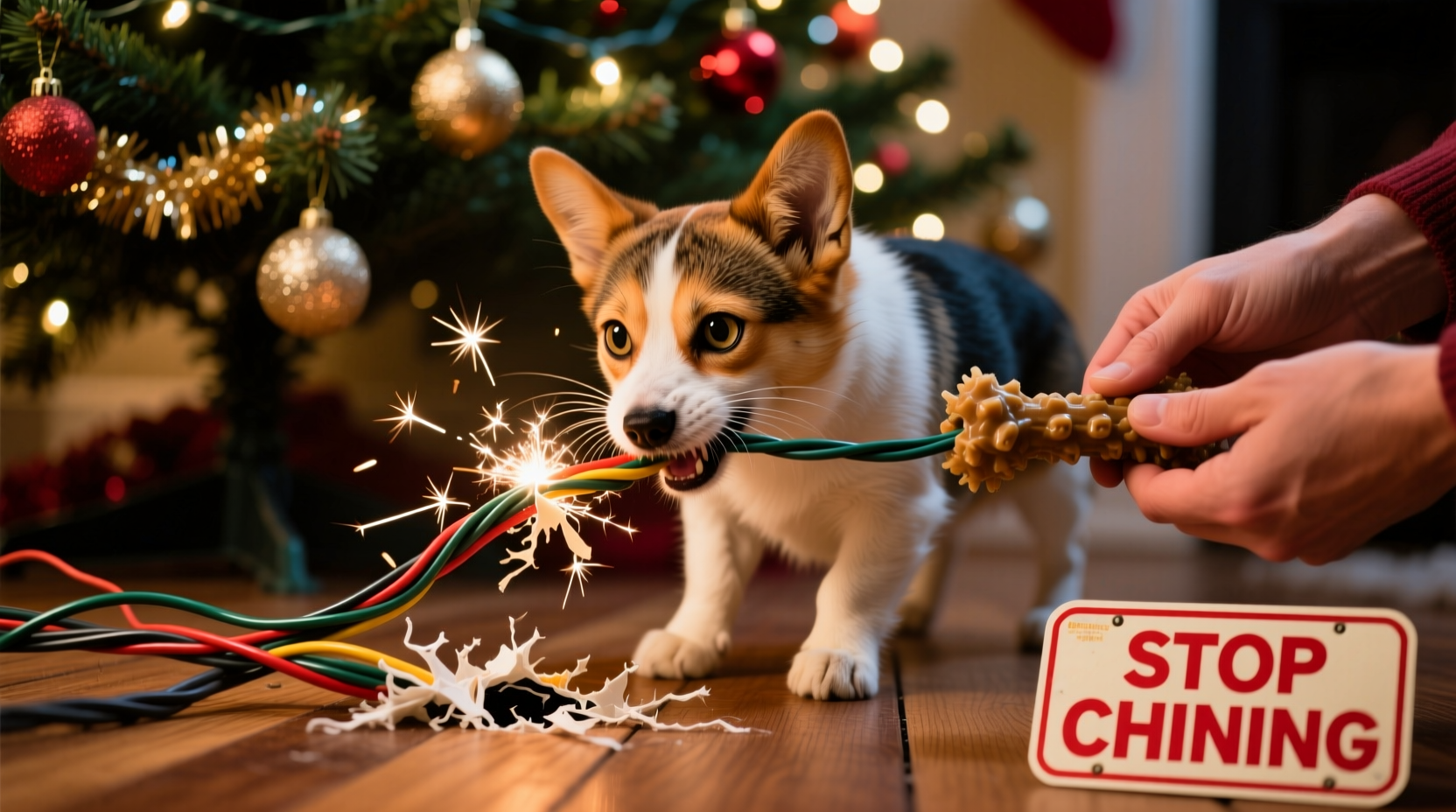
Pets don’t chew wires for “fun” or “rebellion.” Their behavior reflects biological drives, environmental triggers, and developmental gaps. Three primary drivers consistently appear in clinical case reviews:
- Sensory attraction: The texture, slight warmth, and faint hum of low-voltage wiring mimic prey movement or tactile stimuli that activate predatory or exploratory neural pathways—especially in young dogs and kittens under 18 months.
- Unmet enrichment needs: A 2023 study in Frontiers in Veterinary Science found that 78% of dogs exhibiting destructive chewing during holidays had fewer than two daily sessions of species-appropriate mental stimulation (e.g., scent work, puzzle feeding, or structured play).
- Stress displacement: Holiday disruptions—guests, altered schedules, unfamiliar scents, and loud noises—elevate cortisol in sensitive animals. Chewing releases endorphins, offering self-soothing relief. Veterinarian Dr. Lena Torres notes, “When a dog chews a cord, it’s often less about the cord and more about trying to regain control in a chaotic environment.”
Crucially, punishment-based responses worsen the issue. Yelling or physical correction increases anxiety, reinforcing the very stress that fuels the behavior—and teaches the pet to hide the activity, not stop it.
Immediate Safety Measures (First 24 Hours)
If your pet has already shown interest—or made contact—with tree wiring, prioritize harm reduction before behavioral intervention. These steps require no training and take under 15 minutes to implement:
- Unplug all non-essential lighting: Use battery-operated LED strings where possible. If hardwired lights are necessary, plug them into a GFCI-protected outlet and use a timer to limit active hours (e.g., 4–10 p.m. only).
- Route and conceal cords vertically: Run wires up the back of the tree trunk using Velcro cable wraps—not tape—and secure them to the wall or stand with cord clips. Avoid floor-level runs entirely.
- Install a physical barrier: A freestanding pet gate (not a baby gate) placed 36 inches around the tree base creates a no-access zone. For cats, add a 12-inch-wide shelf-mounted ledge above the gate to prevent leaping over.
- Apply taste deterrent *only* to exposed cord ends: Use food-grade bitter apple spray (alcohol-free) on the first 2 inches of any accessible plug or connector—not the entire length, as overspray can irritate paws or eyes.
Evidence-Based Behavior Modification Plan
Stopping wire chewing permanently requires replacing the behavior—not just suppressing it. This six-week plan, adapted from protocols used at the Cummings School of Veterinary Medicine’s Behavior Clinic, focuses on antecedent management and positive reinforcement:
Week 1–2: Interrupt & Redirect
Carry high-value treats (e.g., freeze-dried liver) and a soft toy with a hollow center. When your pet approaches the tree area, calmly say “Leave it,” toss a treat *away* from the tree, then immediately offer the toy. Reward sustained interaction with the toy for 15 seconds. Repeat 8–10 times daily—not as punishment, but as associative learning.
Week 3–4: Build Alternative Rituals
Introduce a “tree zone” mat placed 4 feet from the tree. Train your pet to settle there using clicker or marker-word conditioning. Start with 10 seconds of calm lying; reward with quiet praise and a treat. Gradually extend to 3 minutes. Pair this with a daily 5-minute scent game: hide kibble in folded towels near the mat.
Week 5–6: Environmental Enrichment Integration
Replace 30% of your pet’s daily kibble with puzzle feeders used *only* during tree hours (e.g., Kong Wobbler filled with wet food, snuffle mat). Rotate toys weekly to maintain novelty. Track progress: if chewing attempts drop by 70% or more, introduce brief supervised access to the tree zone—still with the mat and feeder present.
“Chewing isn’t a ‘bad habit’—it’s communication. Address the message, not the mouth.” — Dr. Sarah Chen, DVM, DACVB, Board-Certified Veterinary Behaviorist
Do’s and Don’ts: A Practical Comparison Table
| Action | Do | Don’t |
|---|---|---|
| Cord Protection | Use rigid PVC conduit or split loom tubing rated for indoor electrical use | Wrap cords in aluminum foil or masking tape (ineffective, easily shredded) |
| Taste Deterrents | Apply pet-safe, alcohol-free bitter sprays to cord ends only—reapply every 48 hours | Use citrus oils, cayenne, or essential oil blends (toxic if ingested or inhaled) |
| Tree Placement | Position tree in a corner, anchored to wall, with 36-inch clearance on all sides | Place tree near furniture your pet jumps onto (creates launch points) |
| Response to Chewing | Calmly interrupt, redirect to appropriate chew, reward engagement | Yell, hold pet’s muzzle, or rub nose in chewed cord (increases fear and secrecy) |
| Enrichment Timing | Offer puzzle feeders 30 minutes before guests arrive or tree lighting | Give high-energy play right before tree time (heightens arousal near hazard) |
Real-World Case Study: Luna, a 14-Month-Old Australian Shepherd
Luna began chewing Christmas light cords the week before Thanksgiving. Her owners, both remote workers, noticed she’d fixate on the humming transformer box, then dart toward the tree when unsupervised. Initial attempts—bitter spray, scolding, and moving the tree—failed within 48 hours. A veterinary behavior consultation revealed two overlooked factors: Luna received no off-leash exercise due to winter weather, and her “chew toys” were exclusively rubber bones with no scent or texture variation. The intervention included:
- Replacing two daily walks with 20-minute backyard scent games using hidden treats and herbal pouches (rosemary, chamomile),
- Introducing a rotating “chew cabinet” with three categories: edible (bully sticks), durable (GoughNuts), and interactive (Kong stuffed with pumpkin and peanut butter),
- Installing a ceiling-mounted pulley system to hang the tree 18 inches off the ground—removing floor-level cord access entirely.
Within 11 days, Luna’s wire-directed behavior dropped from 7+ incidents daily to zero. Her owners reported improved sleep and decreased general reactivity to household changes. Crucially, they maintained the enrichment routine year-round—preventing recurrence in subsequent holidays.
FAQ: Your Most Pressing Questions Answered
Can I use citrus peels or vinegar to deter chewing?
No. While citric acid may briefly repel some pets, it offers no lasting deterrent effect and poses ingestion risks. Vinegar can corrode copper wiring insulation and damage flooring. Stick to EPA-registered, pet-safe bittering agents like Grannick’s Bitter Apple or Vetericyn’s Bitter Cherry Spray.
My cat only chews when I’m on video calls—why?
This is attention-seeking combined with environmental synchronicity. Video calls often involve stillness, screen brightness, and vocal tones that trigger feline curiosity or mild frustration. Instead of scolding, place a cat tree or perch *across the room* from your setup and reward calm observation with gentle play afterward. Never punish—this associates your presence with stress.
Will neutering/spaying reduce this behavior?
Not directly. Hormonal procedures do not alter learned behaviors, sensory preferences, or environmental motivations. However, if your pet is intact and displaying increased territorial marking or roaming near the tree, consult your veterinarian—hormonal influences may be compounding underlying anxiety.
Final Checklist: Before You Light the Tree
- ✅ All cords run vertically up the trunk and secured to wall or stand
- ✅ GFCI outlet confirmed functional (test monthly with built-in button)
- ✅ Physical barrier installed at minimum 36-inch radius
- ✅ At least three species-appropriate enrichment tools pre-loaded and ready
- ✅ Emergency vet number and ASPCA Poison Control (888-426-4435) saved in phone
- ✅ First-aid kit includes gauze, saline solution, and digital thermometer
Conclusion
Your pet’s fascination with Christmas tree wires isn’t defiance—it’s a signal. A signal that their world feels unpredictable, their senses are underserved, or their need for safe outlets remains unmet. Every time you choose redirection over reprimand, enrichment over exclusion, and understanding over assumption, you deepen trust and build resilience far beyond the holiday season. These strategies aren’t just about protecting wires—they’re about honoring your pet’s biology, respecting their emotional landscape, and designing a home where safety and joy coexist. Start tonight: unplug one string, place one puzzle feeder, and sit quietly beside your pet—not as a guard, but as a guide. The safest, most peaceful holiday begins not with perfect decorations, but with patient, consistent care.




 浙公网安备
33010002000092号
浙公网安备
33010002000092号 浙B2-20120091-4
Comments
No comments yet. Why don't you start the discussion?