
Every holiday season, thousands of pet owners face the same quiet crisis: a perfectly decorated tree lying sideways on the rug, pine needles scattered like confetti, and their dog or cat sitting nearby—tail flicking, expression unreadable. It’s not mischief for mischief’s sake. When a pet knocks over a Christmas tree stand, it’s rarely intentional destruction. Instead, it’s a confluence of instinct, environment, and physics—one that can be understood, anticipated, and resolved with thoughtful intervention. This article explains the behavioral and environmental drivers behind the topple, outlines structural weaknesses in common stands, and delivers actionable, pet-safe reinforcement strategies grounded in veterinary behavior science and home safety engineering.
The Real Reasons Pets Knock Over Tree Stands
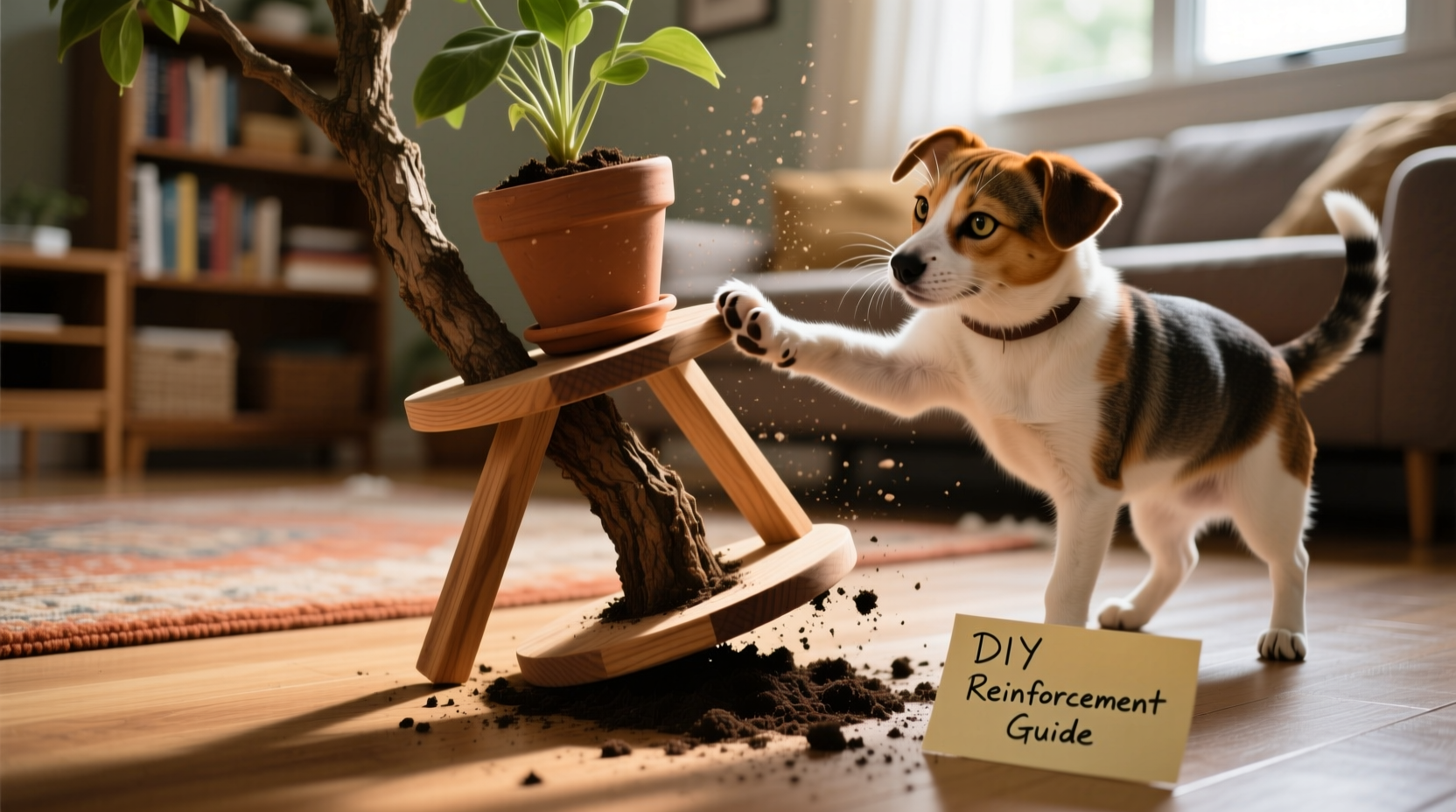
Pets don’t target trees out of spite or seasonal rebellion. Their actions stem from observable, biologically rooted motivations:
- Curiosity and sensory exploration: Cats investigate vertical objects by pawing, nudging, and circling—testing stability as part of environmental assessment. A wobbly stand emits subtle vibrations or creaks that trigger investigative behavior.
- Play-driven movement: Dogs, especially young or high-energy breeds, may chase ornaments dangling near the base, leap at moving lights, or dart past the trunk during play—contacting the stand with shoulder, hip, or tail.
- Stress or territorial response: The sudden introduction of a large, fragrant, unfamiliar object disrupts scent maps and spatial routines. Some pets push or circle the tree as a low-level displacement behavior—a sign of unease rather than aggression.
- Resource guarding (less common but significant): In multi-pet households, a tree’s location near food bowls, beds, or windows may inadvertently become a contested zone. A pet may lean into the stand while posturing or redirecting tension.
- Accidental destabilization: A 40-pound dog brushing against a lightweight metal stand with a narrow footprint can apply enough lateral force to exceed its center-of-gravity threshold—especially if the tree is top-heavy or unbalanced.
Veterinary behaviorist Dr. Lena Torres notes:
“We often mislabel pet-initiated tree falls as ‘naughty behavior.’ In reality, most are predictable outcomes of mismatched environments—like placing a tall, unstable structure in the path of a dog’s daily sprint from kitchen to backyard door.”
Why Most Commercial Tree Stands Fail Under Pet Pressure
Standard tree stands are engineered for static display—not dynamic homes with four-legged residents. Their design flaws become critical under pet interaction:
| Stand Type | Common Weight Range | Stability Risk with Pets | Key Structural Weakness |
|---|---|---|---|
| Plastic “tripod” stands (budget retail) | 2–4 lbs | Extreme — collapses under light contact | Narrow base; no water reservoir anchoring; plastic joints fatigue quickly |
| Basic metal “screw-clamp” stands | 5–8 lbs | High — wobbles with repeated nudging | Single-point clamping; no lateral bracing; legs splay outward when stressed |
| Heavy-duty steel “dual-reservoir” stands | 12–20 lbs | Moderate — stable unless bumped hard or unevenly | Water weight helps, but shallow footprints still allow tipping if struck off-center |
| Professional-grade weighted bases (e.g., concrete-filled) | 35–60+ lbs | Low — requires deliberate, forceful impact | Rare in residential use; often requires custom mounting or permanent placement |
Crucially, even heavy stands fail when improperly used: underfilled water reservoirs reduce mass-based inertia, loose trunk clamps allow tree sway that amplifies leverage on the base, and uneven flooring (e.g., thick rugs or warped hardwood) creates micro-instability that pets detect and exploit.
7 Proven, Pet-Safe Reinforcement Strategies
Reinforcing a tree stand isn’t about brute force—it’s about increasing resistance to lateral force, eliminating wobble, and reducing pet motivation to interact. These methods are tested across urban apartments, suburban homes with active dogs, and multi-cat households:
- Anchor the stand to wall studs: Use two 3/16″ lag screws with washers, spaced 6″ apart, driven into adjacent wall studs at 12–18″ height. Attach with heavy-duty nylon webbing straps (not rope—pets chew rope). This prevents forward/backward tipping without obstructing floor access.
- Add perimeter ballast: Fill sandbags or weighted plant saucers (minimum 10 lbs each) and place them flush against all four sides of the stand’s base. Cover discreetly with burlap or faux-fur fabric to avoid visual clutter. Total added mass should equal or exceed the tree’s weight.
- Install a low-profile barrier: Build a 3″-high circular corral using ¼″ plywood or rigid foam board, secured to the floor with double-sided carpet tape. Leave a 2″ gap between barrier and stand to allow watering. Cats dislike stepping over edges; dogs learn spatial boundaries within 2–3 days.
- Upgrade trunk support: Replace flimsy screw clamps with a commercial tree stabilizer kit featuring three independent steel arms that grip the trunk at varying heights. This distributes force vertically instead of concentrating pressure at one point.
- Modify the tree’s center of gravity: Trim lower branches up to 18″ from the ground and cluster heavier ornaments toward the bottom third. A lower center of gravity increases rotational resistance by up to 40% (per structural engineering principles applied to household objects).
- Eliminate visual triggers: Remove reflective ornaments, dangling ribbons, or motorized lights near the base. Replace blinking lights with steady-warm LEDs positioned above eye level. Reduce movement-based attraction by 70%, according to feline enrichment studies at Cornell’s Feline Health Center.
- Redirect play energy: Place a durable chew toy or treat-dispensing puzzle *directly opposite* the tree—far enough to create natural separation but close enough to capture attention. Rotate toys weekly to maintain novelty.
Mini Case Study: The Great Tree Tumble of Maple Street
In December 2023, Maya R., a graphic designer and owner of two rescue terriers (Baxter, 3 years; Pip, 10 months), experienced five tree collapses in 11 days. Her 7-foot Fraser fir sat on a $45 metal clamp stand atop a ¾″ wool rug. Baxter circled the tree before naps; Pip chased falling pine needles like prey.
After consulting a certified animal behavior consultant, she implemented three changes simultaneously: (1) anchored the stand to wall studs using 18″ steel straps, (2) placed two 12-lb sandbags at 3 o’clock and 9 o’clock positions, and (3) installed a 3″-high birch plywood barrier painted matte black—blending with her decor while creating a clear boundary.
Result: Zero collapses over the remaining 27 days of the season. More significantly, Pip stopped fixating on the base entirely, and Baxter began resting *outside* the barrier—suggesting reduced environmental stress. “It wasn’t about stopping them,” Maya shared. “It was about giving them clarity—and the stand the dignity of staying upright.”
A Step-by-Step Reinforcement Timeline (Under 45 Minutes)
Follow this sequence for maximum effectiveness and minimal disruption:
- Day 0, Morning (10 mins): Empty the stand’s water reservoir. Wipe dry. Check for bent legs, stripped threads, or cracked plastic. Discard if compromised.
- Day 0, Afternoon (15 mins): Locate wall studs behind the tree using a magnetic stud finder. Mark two points 6″ apart at 15″ height. Drill pilot holes. Install lag screws with washers.
- Day 0, Evening (10 mins): Position sandbags or weighted saucers evenly around the base. Secure with non-slip rubber pads underneath if flooring is slippery.
- Day 1, Morning (5 mins): Install the low-profile barrier—ensure it’s level and gap-free where it meets the floor.
- Day 1, Evening (5 mins): Rehang ornaments with bottom-heavy distribution. Test stability by gently pushing the trunk at chest height—no movement should occur.
FAQ: Quick Answers to Common Concerns
Can I use duct tape or zip ties to secure the stand?
No. Duct tape degrades under moisture and temperature shifts, losing adhesion in 3–5 days. Zip ties snap under torsional stress and can cut into wood or plastic. Mechanical fasteners (lag screws, bolts, straps) are the only reliable options.
Will reinforcing the stand make it harder to water the tree?
Not if done correctly. Anchor straps attach above the reservoir rim. Sandbags sit outside the stand’s footprint. Barriers leave a 2″ service gap. With planning, full reservoir access remains intact—and you’ll likely water less frequently due to reduced evaporation from stabilized airflow.
What if my pet is a climber (cat or agile dog)?
Vertical access requires additional measures: install a motion-activated air canister (pet-safe, odorless) aimed at the lowest 24″ of trunk, or wrap the lower 36″ with crinkly, unappealing material like recycled cardboard strips secured with removable poster putty. Avoid citrus sprays—they irritate mucous membranes and damage tree health.
Conclusion: Stability Starts with Understanding
A Christmas tree shouldn’t be a battlefield. When your pet knocks over the stand, it’s not defiance—it’s feedback. Feedback about an unstable object in a living space, about unmet sensory needs, about a home environment that hasn’t yet accounted for all its inhabitants. Reinforcing the stand isn’t just about hardware and weight; it’s about honoring the intelligence, instincts, and presence of the animals who share your life. The solutions outlined here—anchoring, ballasting, boundary-setting, and behavioral redirection—are not compromises. They’re acts of cohabitation done well. They transform a recurring frustration into a quiet demonstration of care: for your tree, your decor, your peace of mind, and most importantly, for the curious, energetic, deeply perceptive beings who call your home theirs.




 浙公网安备
33010002000092号
浙公网安备
33010002000092号 浙B2-20120091-4
Comments
No comments yet. Why don't you start the discussion?