
There’s a special kind of digital irritation that comes when your phone turns “Let’s meet for coffee” into “Let’s meat for cocoa.” Autocorrect, designed to make communication faster and more accurate, often does the exact opposite—changing simple words into embarrassing or nonsensical ones. You’re not alone if you’ve ever sent a message only to realize too late that your device has rewritten your intent. The good news: most autocorrect frustrations are fixable. Understanding why it fails and how to recalibrate it can restore sanity to your texting life.
The Hidden Logic Behind Autocorrect Gone Wrong
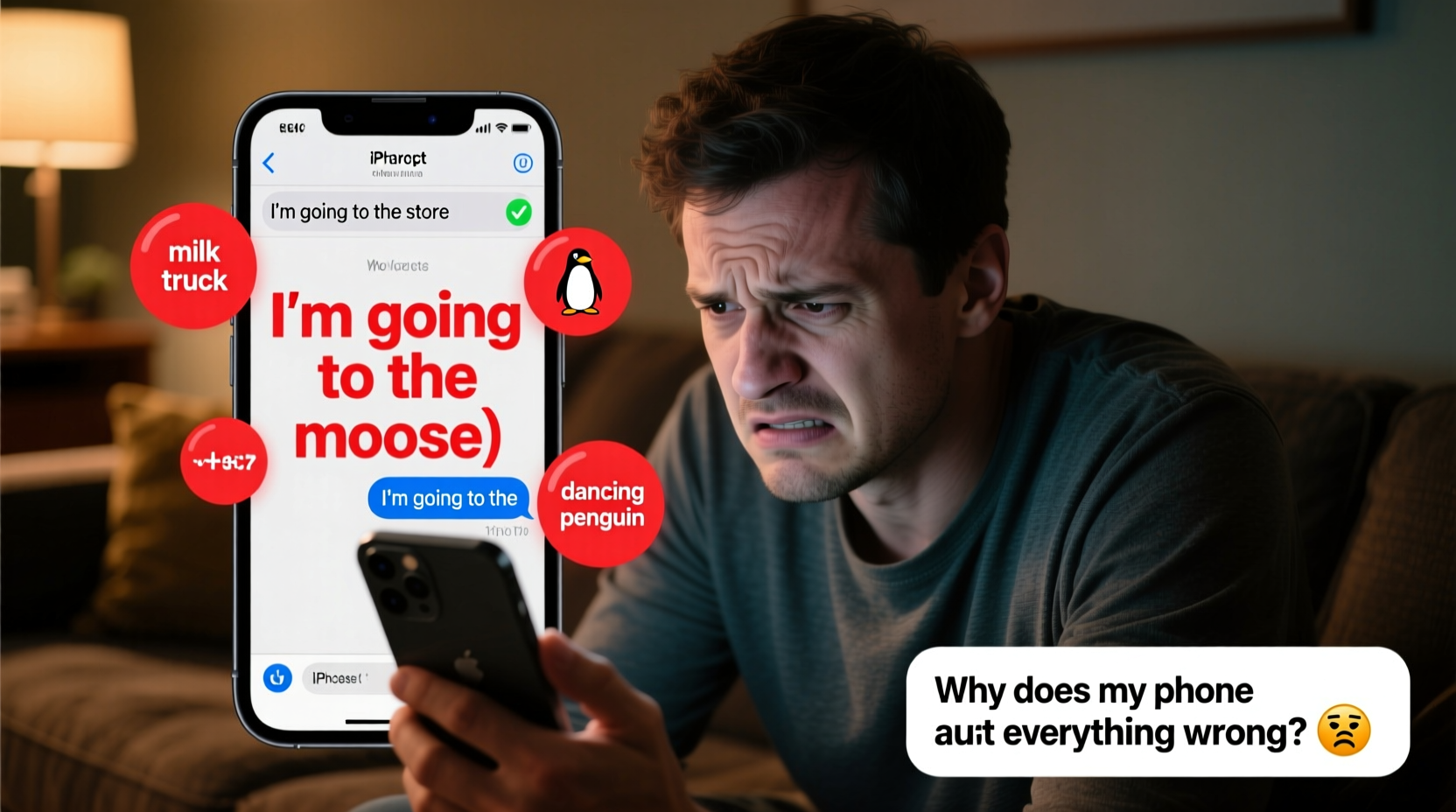
Autocorrect isn’t magic—it’s a predictive engine trained on language patterns, user behavior, and contextual algorithms. Modern smartphones use machine learning models that adapt over time, learning from the words you type, the apps you use, and even your sentence structure. But these systems aren’t perfect. They rely heavily on probability, meaning they often choose what they think is the *most likely* word rather than the one you actually intended.
For example, if you frequently type “duck” as slang (you know the one), your phone might start replacing “ducking” with a certain four-letter expletive—even in professional emails. This happens because the algorithm associates phonetic similarity and frequency of use, not tone or context. Over time, incorrect corrections compound, teaching your phone bad habits.
“Autocorrect learns like a child—it imitates what it sees. If you don’t correct its mistakes, it assumes they’re intentional.” — Dr. Lena Torres, NLP Researcher at Mobile UX Labs
This feedback loop is the root of many long-term issues. The system doesn’t understand sarcasm, abbreviations, or niche vocabulary unless explicitly trained. That’s why technical terms, names, or regional slang often get mangled.
Common Causes of Persistent Autocorrect Errors
Before diving into fixes, it helps to diagnose the underlying cause. Not all autocorrect problems stem from the same source. Here are the most frequent culprits:
- Overtrained prediction model: Your keyboard has learned incorrect patterns from uncorrected typos or accepted suggestions.
- Poor dictionary management: Custom words (like names or jargon) aren’t added to the personal dictionary, so they’re always flagged.
- Aggressive auto-replacement: Some keyboards replace text instantly without confirmation, leaving no chance to stop a mistake.
- Language pack conflicts: Multiple languages enabled can confuse the spell-checker, especially if they share similar letter combinations.
- Outdated software: Older versions of operating systems may have buggy or inefficient prediction engines.
These issues are especially common on devices used across multiple contexts—work, personal chats, social media—where tone and vocabulary vary widely. A keyboard optimized for casual texting may struggle with formal writing, and vice versa.
Step-by-Step Guide to Fixing Autocorrect Behavior
Regaining control starts with deliberate retraining. Follow this sequence to reset and refine your phone’s typing intelligence.
- Clear the learned dictionary: On iOS, go to Settings > General > iPhone Storage > Keyboard > Clear History. On Android, navigate to Settings > System > Languages & input > Virtual keyboard > [Your Keyboard] > Clear personal data. This wipes accumulated typing habits.
- Re-enable predictive text carefully: Turn off predictive suggestions temporarily. Type normally for a few days without corrections to rebuild clean input patterns before re-enabling predictions.
- Add key words to your personal dictionary: Manually enter names, technical terms, and commonly misspelled words. On both platforms, this is found under Keyboard settings > Personal Dictionary.
- Adjust correction sensitivity: Disable “Auto-correction” or set it to “Suggestions only.” This prevents automatic changes while still offering alternatives via the suggestion bar.
- Train the system actively: When autocorrect makes a mistake, tap the undo arrow or manually revert the change. Do this consistently—the system logs reversions as negative feedback.
This process takes discipline but yields noticeable improvement within a week. Think of it as behavioral conditioning: every time you override a bad correction, you're reinforcing accuracy.
Do’s and Don’ts of Managing Phone Autocorrect
| Do | Don’t |
|---|---|
| Add frequently used names and terms to your personal dictionary | Assume autocorrect will learn names automatically |
| Use the undo function immediately after a bad correction | Leave incorrect substitutions uncorrected |
| Disable automatic capitalization if it interferes with coding or usernames | Keep multiple languages active if you rarely use them |
| Test changes in Notes or Messages before relying on them in critical communications | Enable third-party keyboards without reviewing their privacy policies |
Real Example: How Sarah Fixed Her Autocorrect Nightmare
Sarah, a project manager in Toronto, spent weeks apologizing for messages that read “I’ll duck the report by Friday” instead of “I’ll draft the report by Friday.” Her team grew concerned—was she angry? Was there an inside joke they didn’t get? The issue stemmed from her habit of using voice-to-text while commuting. When she said “draft,” the speech recognizer often heard “duck,” and since she never corrected it, the keyboard began assuming “duck” was the intended word.
After researching the issue, Sarah followed the reset process: she cleared her keyboard history, disabled auto-replace, and spent three days manually typing “draft” each time. She also added “draft” to her personal dictionary as a precaution. Within a week, the errors stopped. More importantly, she started paying attention to corrections in real time, creating a habit of vigilance that prevented future issues.
Her experience highlights a broader truth: autocorrect doesn’t fail because it’s broken—it fails when we disengage from the feedback loop.
Alternative Keyboards and Advanced Fixes
If built-in solutions don’t resolve persistent issues, consider switching to a third-party keyboard known for better customization and learning controls.
- Gboard (Android/iOS): Offers granular control over suggestions, syncs across devices, and allows deep personal dictionary management.
- SwiftKey (Microsoft): Uses cloud-based AI to learn typing style more accurately and supports multi-language prediction without interference.
- Fleksy (iOS/Android): Designed for speed and minimal distraction, with customizable themes and gesture support.
These apps often provide clearer dashboards for managing learned words, toggling prediction strength, and reviewing correction history. However, be mindful of permissions—some require access to internet activity or clipboard data.
For power users, enabling developer options can offer additional insights. On Android, turning on “Show touches” or “Pointer location” in Developer Options helps verify whether your taps are being registered correctly—a rare but possible hardware-level cause of input errors.
FAQ: Common Autocorrect Questions Answered
Why does my phone keep changing words I spelled correctly?
Your keyboard’s prediction engine may be overly aggressive or misaligned due to past corrections. It could also be influenced by homonyms or phonetically similar words in its training data. Disabling auto-replace and retraining the system usually resolves this.
Can I turn off autocorrect for just one app?
Not natively on most phones. However, some third-party keyboards allow per-app settings. Alternatively, use a different keyboard profile or disable suggestions manually within certain apps if supported.
Will resetting my phone fix autocorrect issues?
A full reset can help if software corruption is suspected, but it’s overkill for most cases. Start with clearing the keyboard dictionary and adjusting settings. Reserve factory resets for situations where multiple input methods fail.
Final Checklist: Regain Control of Your Typing Experience
- Checklist: Fix Autocorrect in 7 Steps
- ☐ Clear keyboard dictionary and learned history
- ☐ Add essential words (names, job titles, jargon) to personal dictionary
- ☐ Disable auto-correction temporarily; use suggestions only
- ☐ Review and remove outdated or incorrect shortcuts
- ☐ Limit active languages to only those you regularly use
- ☐ Update your OS and keyboard app to the latest version
- ☐ Test corrections in low-stakes environments before high-priority messaging
Conclusion: Take Back Control One Word at a Time
Autocorrect shouldn’t feel like a battle. With thoughtful adjustments, it can become a seamless ally in fast, accurate communication. The key is active participation—correcting mistakes, curating your dictionary, and understanding the logic behind the suggestions. Technology adapts best when we guide it intentionally.




 浙公网安备
33010002000092号
浙公网安备
33010002000092号 浙B2-20120091-4
Comments
No comments yet. Why don't you start the discussion?