
It’s a common scenario: you’re deep into an important video call, perhaps catching up with family or presenting in a virtual meeting, when suddenly your phone starts feeling uncomfortably warm—maybe even too hot to hold. This isn’t just a minor inconvenience; sustained overheating can degrade battery life, slow performance, and in extreme cases, trigger automatic shutdowns. Understanding why phones heat up during video calls—and how to stop it—is essential for maintaining both device longevity and call quality.
The truth is, modern smartphones are powerful mini-computers, but their compact size means limited space for heat dissipation. Video calling pushes multiple systems at once: the processor, camera, microphone, speaker, display, and network radios. When these components run simultaneously under load, heat builds up quickly. But not all heat is inevitable. With the right habits and settings, you can significantly reduce thermal stress on your phone.
What Causes Your Phone to Overheat During Video Calls?
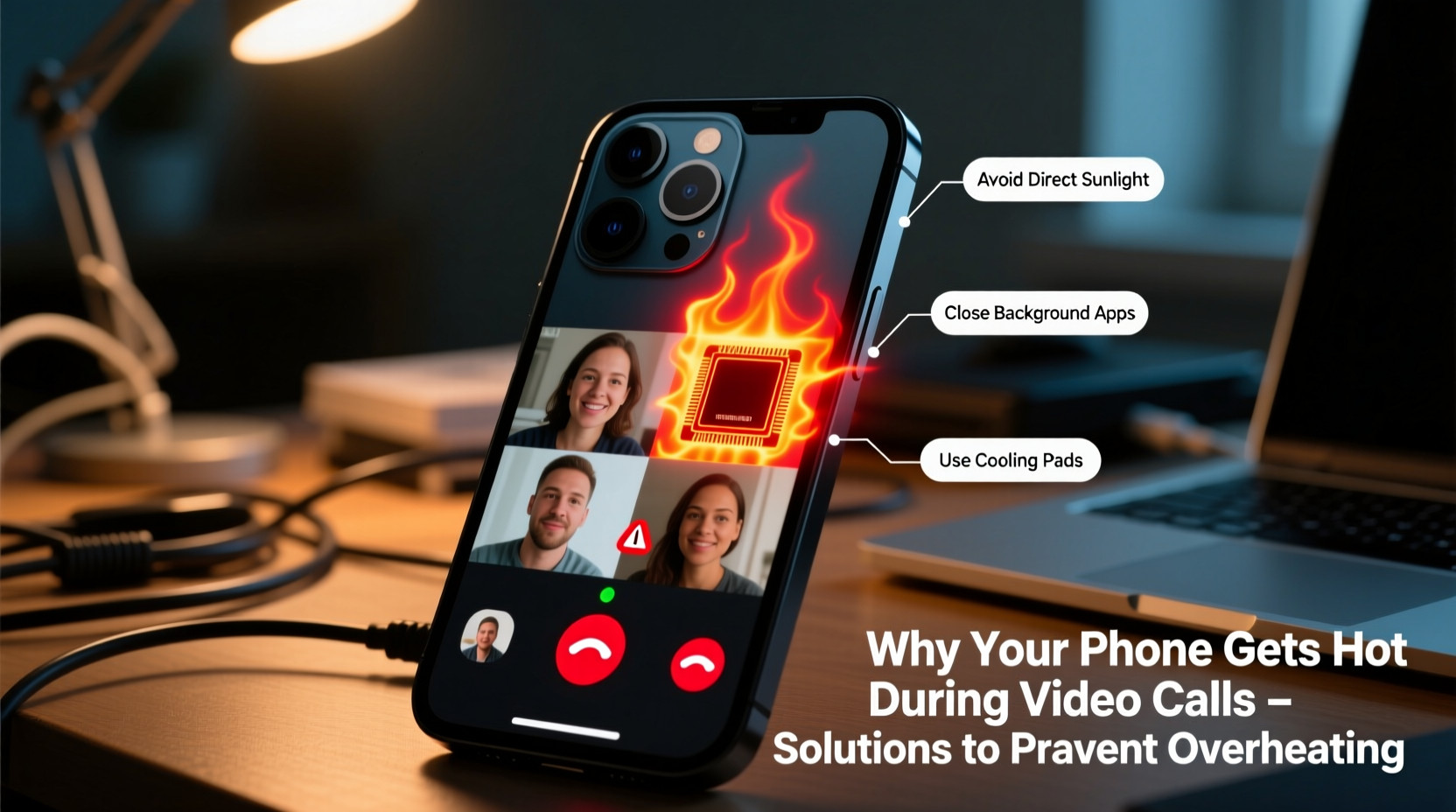
Overheating during video calls results from a combination of hardware demands and environmental factors. Unlike simple tasks like texting or browsing, video calling requires continuous processing of high-resolution video and audio streams, real-time data transmission, and screen illumination—all while managing background apps.
- Processor strain: Encoding and decoding video (especially HD or 1080p) consumes significant CPU and GPU resources.
- Prolonged screen use: Bright screens generate heat, particularly OLED displays used in most flagship phones.
- Network activity: Constant Wi-Fi or cellular data transmission increases power draw and heats up internal radios.
- Camera module operation: Front-facing cameras remain active throughout the call, adding to thermal load.
- Background processes: Other running apps may compete for memory and processing power, increasing overall system workload.
- Environmental conditions: Using your phone in direct sunlight, near heat sources, or while charging accelerates temperature rise.
According to Dr. Lena Park, a mobile systems engineer at the Institute of Electrical and Electronics Engineers (IEEE), “Thermal throttling is a built-in safety feature, but frequent overheating can lead to long-term degradation of lithium-ion batteries and reduced peak performance.”
“Repeated exposure to high temperatures—even below shutdown thresholds—can permanently reduce battery capacity by up to 20% over six months.” — Dr. Lena Park, Mobile Systems Engineer, IEEE
Solutions to Prevent Phone Overheating During Video Calls
While some heat generation is unavoidable, there are effective strategies to minimize excessive warming and maintain optimal operating temperatures.
Optimize Device Settings Before Calling
Adjusting key settings reduces the workload on your phone’s hardware:
- Reduce screen brightness to 50% or lower.
- Turn off auto-brightness to prevent sudden spikes.
- Disable unnecessary notifications to limit background app refresh.
- Switch to airplane mode and re-enable only Wi-Fi if using a stable connection.
- Close unused apps running in the background.
Use Wired Accessories to Reduce Load
Bluetooth headsets and earbuds require constant wireless communication, which adds to the phone’s energy consumption. Instead:
- Use wired headphones with a built-in microphone.
- Connect external speakers via AUX or USB-C for better audio output without Bluetooth drain.
- Place the phone upright using a stand so you don’t need to hold it, improving airflow around the device.
Avoid Charging During Long Calls
Charging generates additional heat, especially fast charging. Combining this with the thermal output of a video call creates a dangerous heat accumulation cycle.
Step-by-Step Guide to Keeping Your Phone Cool
Follow this practical sequence before and during every video call to manage heat effectively:
- Charge fully beforehand: Ensure your phone has sufficient battery so you won’t need to plug in mid-call.
- Close all non-essential apps: Swipe away background apps in the recent apps menu.
- Enable Do Not Disturb: Prevent interruptions that trigger screen wake-ups and background syncs.
- Lower resolution settings: In apps like Zoom or Google Meet, disable HD video under video settings.
- Use Wi-Fi instead of cellular data: Wi-Fi is generally more stable and less power-intensive than 4G/5G.
- Position the phone in a shaded area: Avoid direct sunlight or proximity to heaters.
- Take breaks during long calls: Every 30–45 minutes, switch to audio-only for 2–3 minutes to allow cooling.
- Monitor temperature: If the phone feels hot, end the call temporarily and let it rest on a cool surface.
Do’s and Don’ts: Heat Management Table
| Action | Do | Don't |
|---|---|---|
| Battery Level | Start call with 50–80% charge | Begin call while fast-charging |
| Screen Use | Dim brightness manually | Keep auto-brightness enabled |
| Accessories | Use wired headphones | Rely on Bluetooth devices |
| Environment | Call in a cool, shaded room | Use phone in direct sun or car dashboard |
| Call Settings | Choose 720p over 1080p video | Enable “HD” or “Ultra HD” mode unnecessarily |
Real-World Example: How One Professional Reduced Overheating Issues
Sarah Lin, a remote project manager based in Phoenix, Arizona, frequently hosts two-hour team meetings via Microsoft Teams. Last summer, she noticed her iPhone would often overheat and shut down during afternoon calls—especially when parked near a window. After researching the issue, she implemented several changes:
- Moved her workspace to a cooler interior room.
- Started using wired earbuds instead of AirPods.
- Lowered her video resolution in Teams settings.
- Placed the phone on a marble coaster to help dissipate heat.
Within a week, her phone no longer exceeded safe temperatures. “I went from worrying about crashes to completing full-day meetings without a single interruption,” she said. “The biggest change was stopping the fast charging habit—I now top up before calls, not during.”
“It’s not about doing one big thing—it’s the small, consistent adjustments that keep your phone stable under pressure.” — Sarah Lin, Remote Project Manager
When Hardware and Software Interact: The Hidden Factors
Not all phones handle heat equally. Design choices such as material (metal vs. plastic back), thickness, presence of internal heat sinks, and software optimization play crucial roles.
For example, iPhones tend to throttle performance earlier than Android counterparts to preserve component lifespan, while some budget Android phones lack adequate thermal management firmware. Additionally, older devices with degraded batteries generate more resistance and thus more heat during use.
If you're using a phone older than three years, consider whether upgrading might solve recurring overheating issues. Newer models often include advanced thermal regulation, better codec efficiency (like H.265/HEVC), and improved antenna design that reduces signal-related strain.
Checklist: Prevent Overheating in 6 Quick Steps
Before your next video call, run through this checklist:
- ✅ Charge the phone to at least 50%—then unplug.
- ✅ Close all unused apps.
- ✅ Turn off Bluetooth and location services if not needed.
- ✅ Dim the screen and disable auto-brightness.
- ✅ Use wired headphones or external speakers.
- ✅ Position the phone in a well-ventilated, shaded area.
Frequently Asked Questions
Is it harmful if my phone gets warm during a video call?
Some warmth is normal, especially after 20+ minutes of use. However, if the phone becomes too hot to touch, shuts down unexpectedly, or displays a temperature warning, it’s entering unsafe territory. Repeated exposure to high heat can shorten battery life and damage internal components over time.
Can I use a fan or air conditioner to cool my phone during a call?
Yes, placing your phone near gentle airflow (like a desk fan or AC vent) helps dissipate heat. Avoid direct blasts of cold air or rapid temperature changes, which could cause condensation inside the device. Never put your phone in the fridge or freezer—that risks moisture damage and thermal shock.
Does using dark mode reduce overheating?
On OLED or AMOLED screens, dark mode can slightly reduce heat because black pixels are turned off. While the effect is modest, combining dark mode with lower brightness offers incremental benefits. On LCD screens, the difference is negligible.
Conclusion: Take Control of Your Phone’s Temperature
Your phone doesn’t have to overheat every time you join a video call. By understanding the sources of heat and applying smart usage habits, you can maintain stable performance, extend battery health, and avoid disruptive shutdowns. Simple actions—like lowering screen brightness, avoiding charging during calls, and using wired accessories—add up to meaningful improvements.
Technology should serve you, not frustrate you with preventable issues. Whether you're working remotely, staying connected with loved ones, or attending virtual events, keeping your device cool ensures reliability when you need it most.




 浙公网安备
33010002000092号
浙公网安备
33010002000092号 浙B2-20120091-4
Comments
No comments yet. Why don't you start the discussion?