
Brown leaf tips are one of the most common complaints among indoor plant owners. They’re unsightly, often persistent, and can be frustrating to diagnose. While many assume it’s simply a watering issue, the truth is more nuanced. Brown tips can stem from both overwatering and underwatering—but they can also result from environmental stress, poor water quality, or nutrient imbalances. Understanding the root cause is essential for effective treatment and long-term plant health.
This guide breaks down the key differences between overwatering and underwatering as causes of brown tips, provides actionable diagnosis steps, and outlines proven recovery strategies. Whether you're caring for a fiddle-leaf fig, snake plant, or peace lily, these insights will help you restore your plant’s vitality.
Understanding Brown Tips: What They Mean
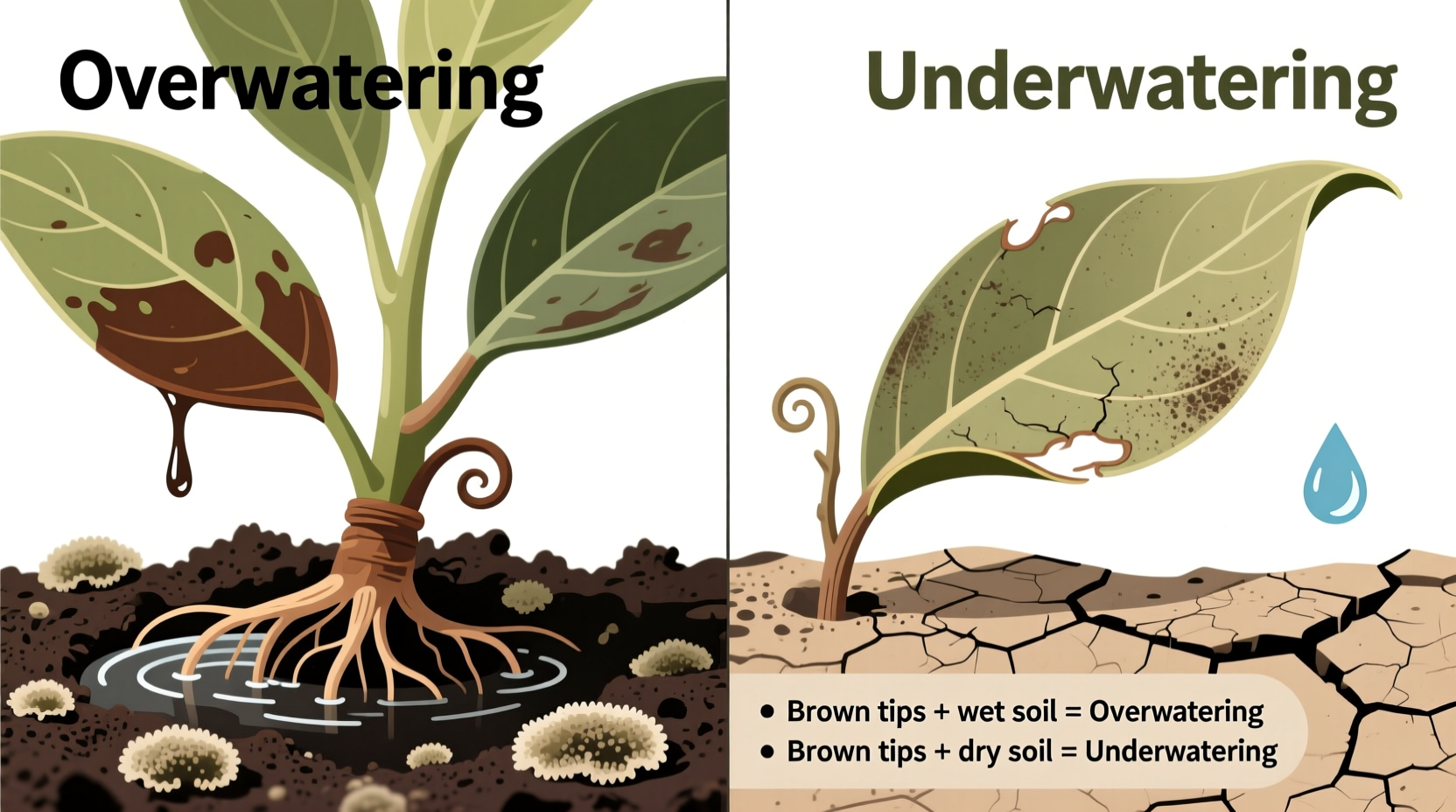
Brown tips occur when plant cells at the edges of leaves die. This necrosis (cell death) is usually a response to stress. Unlike whole-leaf browning or yellowing, which may point to broader systemic issues, brown tips are typically localized damage that starts at the extremities—areas farthest from the plant’s vascular system.
The reason this happens at the tips lies in plant physiology. Water and nutrients travel through the xylem from roots to leaves. When supply is inconsistent or blocked, the last parts to receive moisture—the leaf margins—dry out first. Similarly, when salts or minerals build up, they accumulate at the tips during transpiration, leading to chemical burn.
Overwatering: The Silent Killer Behind Brown Tips
Overwatering is the leading cause of houseplant death. It doesn’t just lead to root rot—it disrupts the entire hydration process. When soil remains saturated, roots suffocate due to lack of oxygen. Damaged roots can’t absorb water efficiently, even if the soil is wet. As a result, the plant experiences drought-like symptoms despite being overwatered.
In such cases, brown tips appear because the compromised root system fails to deliver consistent moisture to the leaves. You might also notice:
- Yellowing leaves alongside brown tips
- Mushy or darkened stems
- A foul odor from the soil
- Leaves dropping prematurely
Over time, fungal pathogens like Pythium or Fusarium thrive in soggy conditions, accelerating root decay. Once roots are damaged, the plant enters a downward spiral: poor absorption → dehydration signs → more watering → further root damage.
“Many gardeners drown their plants trying to save them from drought. The real problem is often drowned roots.” — Dr. Linda Chen, Urban Horticulturist, Brooklyn Botanic Garden
How to Diagnose Overwatering
- Check the soil: Insert your finger 2 inches deep. If it feels wet, slimy, or sticks to your skin, the plant is overwatered.
- Inspect the roots: Gently remove the plant. Healthy roots are firm and white; rotted ones are brown, black, and mushy.
- Smell the pot: A sour or musty odor indicates anaerobic conditions and root decay.
- Review watering habits: Are you watering on a schedule instead of based on need?
Underwatering: When Thirst Leads to Burn
Underwatering is more straightforward but equally damaging. When a plant doesn’t receive enough water, its cells lose turgor pressure, causing leaves to wilt and dry out. Brown tips emerge as the plant sacrifices outer tissue to preserve core functions.
Unlike overwatering, underwatering usually presents with uniformly dry, crispy foliage. The browning spreads inward from the tips and may affect lower leaves first. Other signs include:
- Pot feels extremely light
- Soil pulling away from the pot edges
- Leaves curling or drooping significantly
- Slow growth or no new shoots
Plants like spider plants, dracaenas, and calatheas are especially prone to tip burn when under-watered due to their high transpiration rates and sensitivity to moisture fluctuations.
Differentiating Underwatering from Overwatering
Because both conditions can produce brown tips, it’s critical to look beyond the leaves. Here’s a comparison table to help distinguish the two:
| Symptom | Overwatering | Underwatering |
|---|---|---|
| Soil Moisture | Wet, soggy, or smells bad | Dry, cracked, pulls from pot sides |
| Leaf Texture | Soft, yellowing, may feel limp | Crispy, papery, brittle |
| Root Condition | Mushy, dark, foul-smelling | Dry, shriveled, few fine roots |
| Progression of Damage | Begins with lower leaves turning yellow, then brown | Begins at leaf tips, spreads inward |
| Plant Weight | Heavy due to waterlogged soil | Very light when lifted |
Other Causes of Brown Tips Beyond Watering
While watering issues are primary culprits, several other factors contribute to brown tips:
Water Quality Issues
Tap water often contains chlorine, fluoride, and dissolved salts. These chemicals accumulate in the soil over time and are drawn to leaf edges during transpiration, causing chemical burn. Sensitive plants like spider plants and prayer plants show this quickly.
Low Humidity
Indoor heating in winter reduces humidity dramatically. Plants native to tropical environments suffer when air humidity drops below 40%. Their leaf tips dry out as transpiration exceeds moisture uptake.
Poor Drainage or Potting Mix
Soil that compacts easily or lacks aeration retains too much water, mimicking overwatering. Similarly, pots without drainage holes trap excess moisture, increasing root rot risk.
Fertilizer Buildup
Excess fertilizer leads to salt accumulation in the soil. These salts draw moisture from roots (reverse osmosis), dehydrating the plant and burning leaf tips.
Temperature Stress
Exposure to cold drafts, heating vents, or sudden temperature shifts stresses plants, disrupting water balance and leading to tip dieback.
“Brown tips are rarely about one single mistake. It’s usually a combination of watering, environment, and care habits.” — Carlos Mendez, Master Gardener & Plant Shop Owner
Step-by-Step Guide to Fixing Brown Tips
Follow this systematic approach to identify and resolve the underlying issue:
- Stop Guessing, Start Testing
Use your finger or a moisture meter to assess soil dampness. Wait 24 hours before making changes. - Flush the Soil (if over-fertilized or salty)
Place the pot in a sink and slowly pour 4–5 times the pot volume in filtered or distilled water through the soil. Let it drain completely. - Trim Damaged Leaves
Cut brown tips with clean scissors following the natural leaf shape. Avoid cutting into healthy tissue unless the damage is extensive. - Repot if Necessary
If roots are rotting or soil is compacted, repot in fresh, well-draining mix (e.g., perlite + peat + orchid bark). Trim dead roots with sterilized shears. - Adjust Watering Routine
Water only when the top 1–2 inches of soil are dry. Ensure water flows freely from drainage holes and never let the pot sit in standing water. - Improve Humidity
Group plants together, use a pebble tray, or run a humidifier. Aim for 40–60% humidity for tropical species. - Switch Water Sources
Use rainwater, distilled water, or let tap water sit out overnight to allow chlorine to evaporate (though fluoride remains). - Monitor Recovery
Give the plant 2–4 weeks to respond. New growth without brown tips is a positive sign.
Mini Case Study: Reviving a Spider Plant with Brown Tips
Sarah, an apartment dweller in Chicago, noticed her once-lush spider plant developing severe brown tips within weeks of moving it near a radiator. She initially assumed it was thirsty and watered it twice weekly. The tips worsened.
After reading about humidity stress, she tested the air with a hygrometer and found levels at 28%. The soil was moist, but the leaves were crispy. She moved the plant to a bathroom with natural light, placed it on a pebble tray, and flushed the soil to remove mineral buildup.
Within three weeks, new shoots emerged without browning. She now waters only when the top inch dries and mist-sprays weekly during winter. Her plant has fully recovered and produces healthy offsets.
Prevention Checklist
To avoid future brown tips, follow this actionable checklist:
- ✅ Water based on soil moisture, not a fixed schedule
- ✅ Use pots with drainage holes
- ✅ Choose the right potting mix for your plant type (e.g., cactus mix for succulents)
- ✅ Flush soil every 3–6 months to prevent salt buildup
- ✅ Maintain humidity above 40% for tropical plants
- ✅ Use filtered or rainwater if tap water causes recurring issues
- ✅ Fertilize only during growing season and at half-strength
- ✅ Keep plants away from drafts, heaters, and AC vents
FAQ
Can I cut off brown tips without harming my plant?
Yes. Trimming brown tips with clean, sharp scissors won’t harm the plant. Cut along the natural taper of the leaf to maintain aesthetics. Avoid removing more than 30% of a leaf at once.
Why do brown tips come back after fixing watering?
Recurring brown tips often indicate residual salt buildup, low humidity, or poor water quality. Even with correct watering, these factors can continue to stress the plant. Flushing the soil and adjusting environment usually resolves the issue.
Is misting enough to fix dry leaf tips?
No. Misting provides temporary humidity but doesn’t address root-level moisture needs. It can also promote fungal diseases if done excessively. For lasting results, increase ambient humidity using a humidifier or group plants together.
Conclusion: Healthy Plants Start with Smart Observation
Brown tips are a signal—not a sentence. They reveal that something in your plant’s environment is out of balance. Whether it’s too much water, too little humidity, or mineral-laden tap water, the solution lies in careful observation and adjustment.
Don’t react impulsively by watering more or less. Instead, assess the full picture: soil, roots, environment, and care routine. With the right diagnosis and consistent care, most plants recover and go on to thrive.




 浙公网安备
33010002000092号
浙公网安备
33010002000092号 浙B2-20120091-4
Comments
No comments yet. Why don't you start the discussion?