
Popcorn is one of the most beloved snacks worldwide—light, crunchy, and perfect for movie nights or quick cravings. But nothing ruins the experience faster than opening the microwave to find a charred, smoky mess instead of fluffy kernels. If you’ve ever asked, “Why does my popcorn burn in the microwave?” you're not alone. The issue isn't just bad luck—it's often rooted in incorrect timing, inconsistent microwave power, or overlooked packaging details. Understanding the science behind microwave popping and adjusting your technique can turn burnt batches into perfectly popped success.
The Science Behind Microwave Popcorn Popping
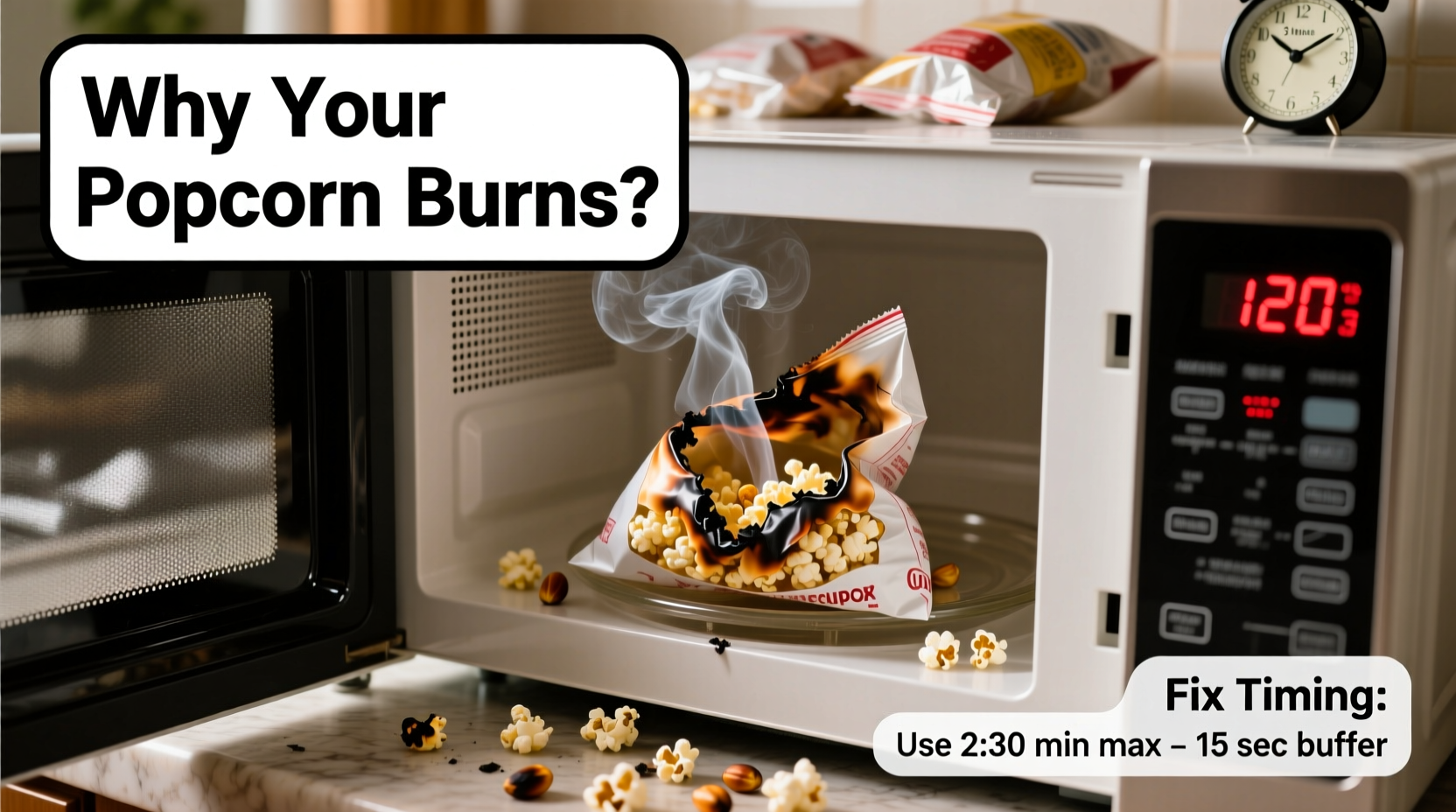
Popcorn kernels contain a small amount of moisture sealed inside a hard shell. When heated, that moisture turns to steam, building pressure until the kernel explodes and flips inside out. This transformation happens rapidly, usually between 180°C and 190°C (355°F–375°F). In a microwave, electromagnetic waves excite water molecules in the kernels, generating internal heat.
However, microwaves don’t heat evenly. Hot spots develop depending on the oven’s wattage, turntable movement, and food placement. Once popping begins, it accelerates quickly. If heating continues after most kernels have popped, the now-empty hulls and stray unpopped kernels absorb excess energy and begin to scorch.
Manufacturers design microwave popcorn bags with susceptor films—thin layers that absorb microwaves and generate intense localized heat to ensure even popping. But these materials are sensitive to overexposure. Too much time in the microwave overwhelms the system, leading to combustion of oils, seasoning, or paper lining.
Common Causes of Burnt Microwave Popcorn
Burning isn’t random; it follows predictable patterns tied to user behavior and appliance variability. Here are the top reasons your popcorn keeps burning:
- Inaccurate timing: Following package instructions blindly without adjusting for your microwave’s wattage.
- High-wattage microwaves: Units above 1000 watts can overheat bags before standard timers end.
- Older or uneven microwaves: Lack of consistent power distribution leads to overheating certain areas.
- Ignoring audio cues: Relying solely on timer beeps rather than listening for pop frequency.
- Double-layered or oversized bags: Some store-brand bags may not vent properly or exceed safe heating capacity.
- Residual heat buildup: Continuing to cook after stopping—even residual heat can finish burning contents.
“Microwave popcorn is engineered for precision. A difference of five seconds at high power can shift results from golden to black.” — Dr. Linda Ruiz, Food Scientist & Thermal Processing Specialist
How to Fix Timing Issues: A Step-by-Step Guide
Perfect popcorn isn’t about guesswork—it’s about control. Follow this proven method to eliminate burning and achieve consistently fluffy results.
- Check your microwave’s wattage. Look inside the door frame or in the manual. Most range from 600 to 1200 watts. Standard popcorn instructions assume ~1000W. If yours is higher, reduce time by 10–15%.
- Start with fresh popcorn. Expired or poorly stored bags lose moisture balance, increasing risk of scorching.
- Place the bag flat in the center. Ensure it lies smoothly so heat distributes evenly. Avoid tilting or folding.
- Use the recommended setting. Many microwaves have a “Popcorn” button calibrated for average bags. Test it first—but verify results.
- Listen actively after 2 minutes. Once rapid popping starts (~90 seconds in), open the door slightly and listen. When gaps between pops reach 2–3 seconds, stop immediately.
- Let it rest for 30 seconds. Residual heat will finish any late-popping kernels without burning the rest.
- Open carefully away from your face. Steam escapes rapidly and can carry hot oil particles.
Adjustments by Wattage
| Microvave Wattage | Recommended Time (vs. Standard 2:30) | Listening Cues to Stop |
|---|---|---|
| 600–700W | 2:45–3:15 | Pause every 3–4 seconds |
| 800–900W | 2:20–2:40 | Pause every 2.5–3 seconds |
| 1000W (Standard) | 2:00–2:30 | Pause every 2–3 seconds |
| 1100W+ | 1:45–2:10 | Pause every 2 seconds |
Do’s and Don’ts of Microwave Popcorn Use
Avoid common pitfalls with this practical checklist designed to prevent burning and improve outcomes.
| Microwave Popcorn Best Practices | |
|---|---|
| ✅ Do | ❌ Don’t |
| Read the cooking instructions specific to your brand | Assume all brands cook the same way |
| Stand nearby and listen during final minute | Walk away and rely only on the timer |
| Use the center of the turntable for even rotation | Place bag near edge where heating may be uneven |
| Ventilate the area if smoke appears | Keep cooking after smelling burning |
| Test new microwaves with a lower time first | Use default times when switching appliances |
Real-Life Example: Sarah’s Kitchen Turnaround
Sarah, a busy teacher from Portland, loved microwave popcorn but hated the constant trial-and-error. Her 1100-watt microwave burned nearly every bag she tried, despite following package directions. Frustrated, she switched to stovetop popping but missed the convenience.
After reading about wattage differences, she decided to test her method. She started with a 1:50 timer instead of the recommended 2:30. At 1:35, popping accelerated. By 1:48, the rhythm slowed. She stopped the microwave. After a 30-second rest, she opened the bag to find fully popped, lightly seasoned popcorn—no burn marks, no acrid smell.
Now, she programs her microwave’s custom button to 1:55 and uses audio cues to fine-tune. “I finally cracked it,” she said. “It’s not the brand—it’s knowing my machine.”
Alternative Methods to Avoid Burning
If microwave inconsistency persists, consider safer or more controllable alternatives:
- Stovetop popping: Offers full control over heat. Use a heavy-bottomed pot with oil and cover. Shake frequently. Kernel-to-kernel contact ensures even heating.
- Air poppers: No oil needed, and they stop automatically when popping slows. Ideal for low-calorie, clean snacking.
- Pre-popped bags: Brands like SkinnyPop offer ready-to-eat options with no risk of burning.
- Reusable microwave bowls: Silicone or glass containers with vented lids allow you to use loose kernels and adjust timing precisely.
For those committed to microwave convenience, upgrading to an inverter microwave can help. Unlike traditional models that cycle power on/off, inverter microwaves deliver continuous low-level energy, reducing hotspots and improving control during delicate tasks like popping corn.
Frequently Asked Questions
Can I reuse a popcorn bag if it didn’t burn?
No. Microwave popcorn bags are single-use due to their susceptor lining and potential oil residue. Reheating risks fire or chemical off-gassing. Always dispose of used bags properly.
Why does my popcorn taste burnt even when it looks okay?
This usually indicates overheating of seasoning or oil. Artificial butter flavoring contains diacetyl and other compounds that degrade quickly under high heat. Try natural seasonings or add them after popping to preserve flavor.
Is burnt popcorn dangerous to eat?
Occasional consumption of slightly scorched popcorn isn’t harmful, but heavily charred pieces contain acrylamide—a compound formed in starchy foods at high temperatures linked to long-term health risks. It’s best to discard severely burned batches.
Expert-Backed Checklist for Perfect Popcorn
Follow this concise checklist every time you make microwave popcorn to avoid burning and maximize enjoyment.
- ☑ Know your microwave’s wattage (check label or manual)
- ☑ Adjust cooking time accordingly (shorter for >1000W)
- ☑ Place bag flat in center of turntable
- ☑ Start listening at 1:45 mark
- ☑ Stop when pops are 2–3 seconds apart
- ☑ Let sit for 30 seconds before opening
- ☑ Smell and inspect before eating—if smoky, discard
- ☑ Clean interior regularly to prevent odor buildup
“The key to great popcorn isn’t speed—it’s attentiveness. The last ten seconds matter more than the first two minutes.” — Chef Marcus Tran, Culinary Educator
Final Thoughts: Take Control of Your Snack Game
Burnt popcorn doesn’t mean you’re doing anything wrong—it means you’re using a tool designed for averages, while your kitchen setup is unique. By understanding how microwaves interact with popcorn chemistry and adjusting based on real-time feedback, you reclaim control. Small changes in timing, attention, and awareness yield dramatic improvements in taste, texture, and safety.
Don’t let another batch go up in smoke. Apply these insights today: check your wattage, recalibrate your expectations, and trust your ears over the clock. Whether you stick with microwave bags or explore alternative methods, the goal remains the same—delicious, fluffy popcorn without the bitterness of burnt kernels.




 浙公网安备
33010002000092号
浙公网安备
33010002000092号 浙B2-20120091-4
Comments
No comments yet. Why don't you start the discussion?