
There’s nothing more frustrating during the holidays than a pre-lit Christmas tree that won’t stay consistently lit. Just as you’ve arranged the ornaments and turned on the lights for a cozy evening, the tree starts flickering—some bulbs dimming, others blinking erratically, or entire sections cutting out. While it may seem like the tree is haunted by holiday spirits, the real cause is usually electrical. Fortunately, most flickering issues in pre-lit trees have straightforward explanations and even simpler fixes.
Pre-lit trees offer convenience and elegance, but their built-in light strings are prone to wear, manufacturing flaws, and seasonal storage damage. Understanding the root causes of flickering—and how to address them—can save you time, money, and the hassle of replacing an entire tree prematurely.
Understanding How Pre-Lit Tree Lights Work
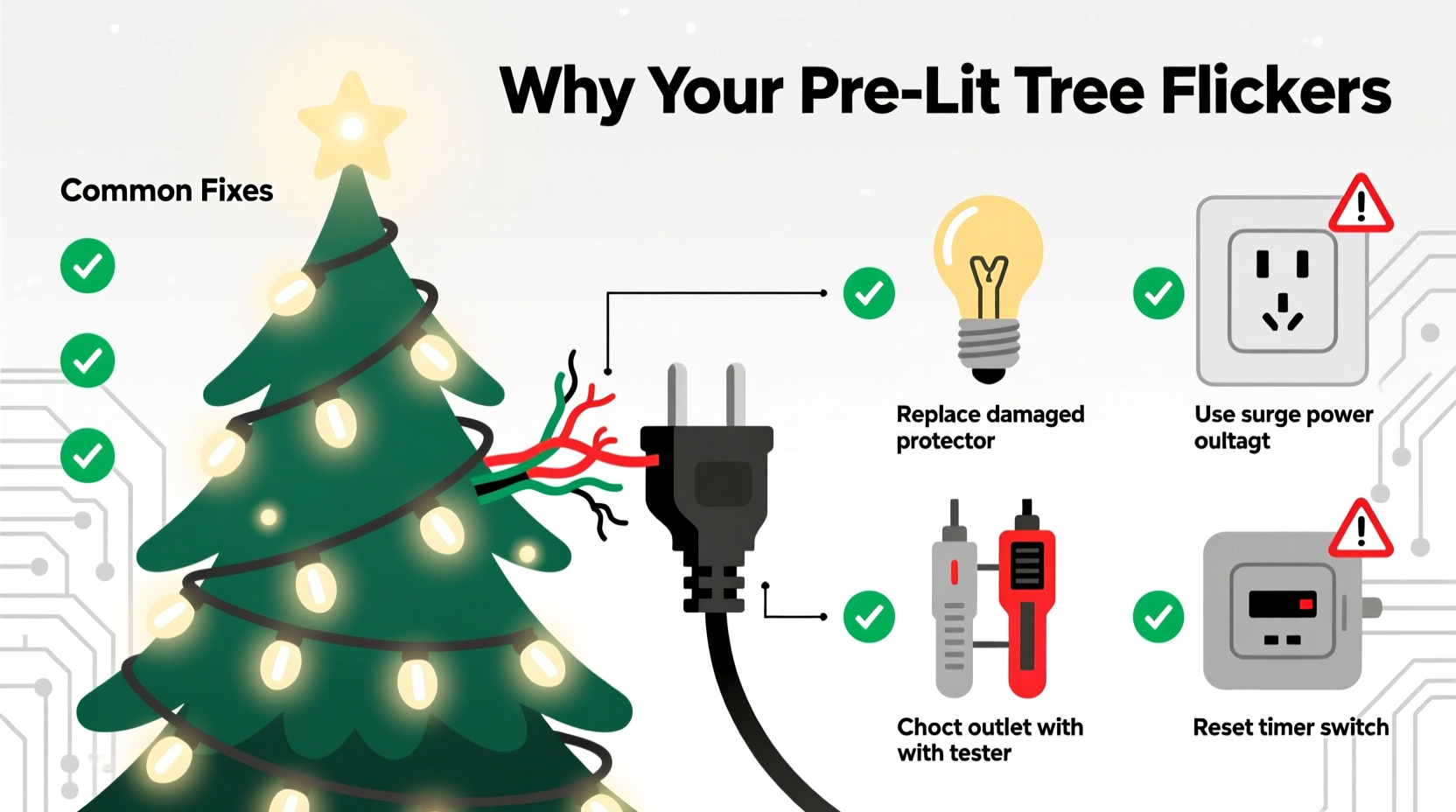
Most pre-lit Christmas trees use either mini incandescent or LED light strings wired in series or parallel circuits. The wiring design significantly affects performance and failure patterns.
In a **series circuit**, each bulb shares the same current path. If one bulb burns out or becomes loose, the entire string—or section—can go dark or flicker. This is especially common in older incandescent models. Modern LED pre-lit trees often use **parallel-wired circuits** or “shunted” sockets, which allow other bulbs to remain lit even if one fails. However, flickering can still occur due to voltage fluctuations, poor connections, or incompatible controllers.
The lights are typically grouped into sections (e.g., top, middle, bottom), each with its own plug or connection point to the main power source. This modular setup helps isolate problems but also means a fault in one segment doesn’t necessarily affect the whole tree.
Common Causes of Flickering in Pre-Lit Trees
Flickering isn’t random—it’s a symptom of an underlying issue. Identifying the cause is the first step toward a lasting fix.
- Loose or improperly seated bulbs: Even a slightly loose bulb can break the circuit, causing intermittent flickering. This is especially true in series-wired strings.
- Corroded or dirty socket contacts: Over time, oxidation builds up on metal contacts inside the sockets, reducing conductivity.
- Damaged or frayed wires: Wires inside the trunk or branches can get pinched during assembly or storage, leading to short circuits or inconsistent power flow.
- Overloaded circuits: Plugging the tree into an outlet shared with high-draw appliances (like space heaters) can cause voltage drops.
- Faulty or incompatible light controller: Some trees come with dimmers, timers, or multi-mode controllers. A failing controller can send erratic signals, making lights flicker.
- Moisture exposure: If the tree was stored in a damp basement or garage, moisture may have seeped into connectors or sockets.
- End-of-string bulb failure: In many designs, the last bulb in a section acts as a shunt. If it fails, the whole section may flicker or go out.
“Flickering in pre-lit trees is rarely a mystery—it's almost always a connection issue. Ninety percent of cases I see involve a single loose bulb or corroded contact.” — Mark Reynolds, Residential Electrical Technician with 18 years of experience
Step-by-Step Guide to Diagnose and Fix Flickering Lights
Follow this systematic approach to identify and resolve the issue without tearing the whole tree apart.
- Unplug the tree completely. Safety first. Never work on live electrical components.
- Inspect all visible connections. Check where sections plug into each other and into the base. Look for bent pins, debris, or signs of melting.
- Examine each bulb in the flickering section. Gently press each bulb down to ensure it’s fully seated. Rotate it slightly to clean the contact points.
- Test individual bulbs with a tester. Use a non-contact voltage tester or a dedicated light tester (available at hardware stores) to verify if power reaches each socket.
- Clean corroded sockets. Dip a cotton swab in rubbing alcohol and clean the metal tab inside each socket. Let dry completely before reinserting the bulb.
- Check for wire damage. Run your hands along the trunk and major branches, feeling for cuts, kinks, or exposed wires. Pay attention near hinge points where wires bend frequently.
- Plug the tree into a different outlet. Rule out household circuit issues by using a known-working outlet on a separate circuit.
- Bypass the controller temporarily. Plug the tree directly into the wall (if safe to do so) to see if the flickering stops. If it does, the controller is likely faulty.
- Replace suspect bulbs. Swap out any discolored, blackened, or cloudy bulbs—even if they appear to light up.
- Reassemble and test section by section. Reconnect one branch at a time, turning on the tree after each to isolate the problem area.
Do’s and Don’ts When Repairing Your Tree Lights
| Do’s | Don’ts |
|---|---|
| Use only manufacturer-recommended replacement bulbs. | Never mix bulb types (e.g., incandescent with LED). |
| Clean sockets with isopropyl alcohol and a dry swab. | Don’t use water or household cleaners on electrical parts. |
| Store the tree in a climate-controlled environment. | Don’t compress branches tightly during storage—this damages internal wires. |
| Label sections when disassembling for easier reassembly. | Don’t force connectors together if they don’t align easily. |
| Use a surge protector for consistent power delivery. | Don’t daisy-chain multiple light sets beyond manufacturer limits. |
Real Example: Sarah’s Flickering Fraser Fir
Sarah bought a 7.5-foot pre-lit Fraser fir three years ago. Last holiday season, the middle section began flickering intermittently. She tried wiggling the branches and switching outlets, but the issue persisted. Frustrated, she nearly ordered a new tree—until her brother, an electrician, offered to help.
He unplugged the tree and methodically tested each bulb in the affected section. He found one bulb that appeared intact but wasn’t making proper contact. After cleaning the socket and reseating the bulb, the flickering stopped. Later, he noticed the tree had been stored in a plastic bag in a damp garage. He advised Sarah to store it in a breathable fabric bag in a dry closet going forward.
Sarah saved over $200 by avoiding a replacement and learned how to maintain her tree properly. Her tree now lights up perfectly every year—with no flickering in sight.
When to Replace vs. Repair
Not every flickering tree can be saved. Knowing when to let go is part of smart holiday maintenance.
If the tree is under warranty, contact the manufacturer—many offer free replacements for defective lighting systems within the first few years. If it’s out of warranty, consider the cost-benefit of repair versus replacement.
Repair makes sense when:
- The flickering is isolated to one or two sections.
- You can access and replace bulbs or connectors easily.
- The tree structure and branches are still in good condition.
Replacement is better when:
- Multiple sections flicker or fail repeatedly.
- Internal wiring is visibly damaged or melted.
- The tree is over 5–7 years old and showing signs of wear.
FAQ
Can I replace the entire light string on a pre-lit tree?
Yes, but it’s labor-intensive. You’ll need to carefully remove branches, unwind old wires, and weave in new ones. Some companies sell retrofit LED kits designed for specific tree models. For most users, partial repair or full replacement is more practical.
Why do only some branches flicker while others stay bright?
This usually indicates a localized issue—such as a loose bulb, damaged socket, or broken wire—in that specific section. Since pre-lit trees are wired in segments, problems are often contained rather than systemic.
Is it safe to leave a flickering tree plugged in?
No. Persistent flickering can indicate arcing, overheating, or short circuits, which pose fire risks. Unplug the tree immediately and inspect it before using again.
Expert Tips for Long-Term Light Stability
Prevention is the best fix. With proper care, your pre-lit tree can provide reliable lighting for many seasons.
- Handle with care during setup and takedown. Avoid yanking on branches or forcing connections.
- Use a dedicated outlet. Power-hungry devices on the same circuit can cause voltage fluctuations.
- Invest in a tree stand with cord management. This reduces strain on the main power cord.
- Run the tree for several hours before decorating. This helps identify flickering issues early, when you’re not pressed for time.
- Upgrade to LED if possible. LED strings generate less heat, consume less power, and are less prone to flickering from minor contact issues.
“LED technology has dramatically improved reliability in pre-lit trees. But poor handling and storage still cause most failures we see.” — National Fire Protection Association (NFPA) Home Safety Bulletin, 2023
Final Checklist: Stop the Flicker for Good
- Unplug the tree and inspect all connections.
- Reseat every bulb in the flickering section.
- Clean dirty or corroded sockets with alcohol.
- Test bulbs and replace any that are dark or discolored.
- Check for wire damage along the trunk and branches.
- Plug into a different, dedicated outlet.
- Bypass the controller to test for stability.
- Reassemble and test one section at a time.
- Store properly after the season ends.
Conclusion
A flickering pre-lit Christmas tree doesn’t mean the end of holiday cheer—it’s often a solvable electrical issue rooted in simple connections. By understanding how the lights are wired, systematically troubleshooting the problem, and applying careful maintenance, you can restore steady, warm illumination to your centerpiece.
With a little patience and the right approach, most flickering problems can be fixed in under an hour. And once resolved, implementing smart storage and usage habits will help prevent future issues. Don’t let unreliable lights dim your December spirit. Take action today, and enjoy a beautifully lit tree that stands strong through the season—and for many to come.




 浙公网安备
33010002000092号
浙公网安备
33010002000092号 浙B2-20120091-4
Comments
No comments yet. Why don't you start the discussion?