
Pre-lit Christmas trees promise convenience — but nothing dampens holiday cheer like discovering a third of your tree is dark while the rest glows brightly. Dead sections — clusters of unlit bulbs, entire branches without illumination, or intermittent flickering — are among the most common frustrations for modern tree owners. Unlike traditional string lights, where a single bulb failure rarely kills a whole strand, pre-lit trees integrate wiring directly into the trunk and branch structure. That integration creates both elegance and vulnerability: a single break, loose connection, or voltage drop can silence dozens of bulbs at once. This isn’t just about aesthetics; it’s about understanding the electrical architecture of your tree and responding with targeted, safe, and lasting solutions.
How Pre-Lit Trees Are Wired (and Why That Matters)
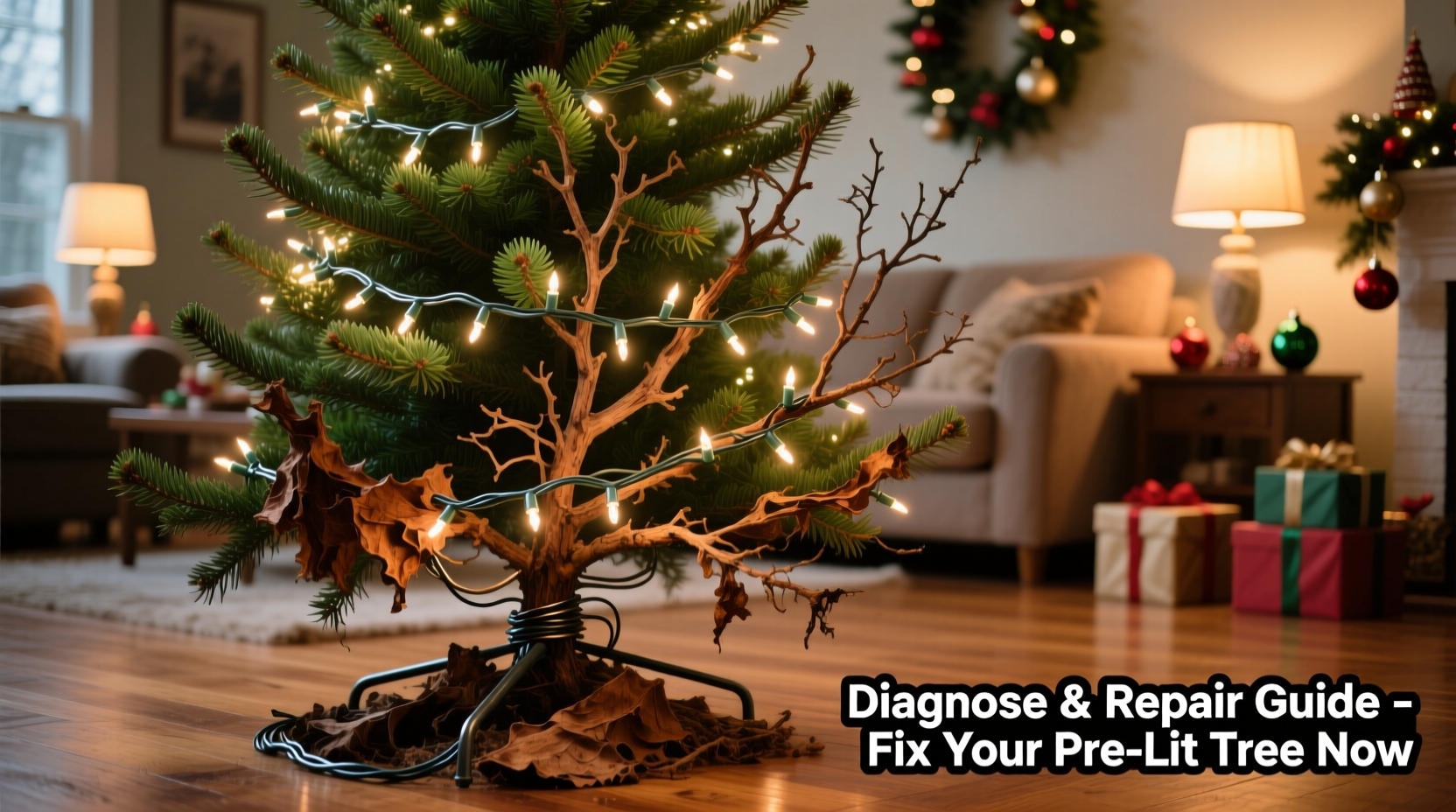
Most pre-lit trees use a “series-parallel” hybrid circuit. Branches are typically wired in series — meaning current flows from one bulb socket to the next along a single wire path — but multiple branches connect in parallel to the main trunk harness. This design balances brightness consistency with fault tolerance: if one bulb burns out, many models use shunt wires inside the base of each bulb to bypass the open filament and keep the rest of that branch lit. However, this system fails when the shunt doesn’t activate (common with older or low-quality bulbs), when a wire breaks *between* sockets, or when the main feed wire to a branch group is compromised.
Manufacturers also vary widely in build quality. Budget trees often use thinner-gauge copper-clad aluminum (CCA) wire instead of pure copper, increasing resistance and heat buildup. They may skimp on insulation thickness, making wires prone to abrasion during assembly or storage. And crucially, many skip individual fusing per branch circuit — so a short in one section can overload and trip the entire tree’s built-in 3-amp fuse (usually located in the plug or base box), cutting power to everything downstream.
“Over 68% of ‘dead section’ reports we see in service labs trace back to physical damage sustained during storage or setup — not manufacturing defects. A bent socket pin or pinched wire at the hinge point is far more likely than a failed controller.” — Derek Lin, Senior Technician, HolidayLight Diagnostics Lab
5 Most Common Causes — and How to Identify Each
Before reaching for tools or replacement parts, diagnose methodically. Start at the power source and work outward — never assume the problem is “in the tree” when it could be upstream.
- Fused or tripped circuit breaker in the plug: Many pre-lit trees include a small resettable thermal fuse or replaceable glass fuse inside the male plug or control box. If the entire lower half is dark but upper branches glow, check whether power reaches the base connector.
- Loose or misaligned branch-to-trunk connectors: Each branch plugs into a receptacle on the trunk via a keyed plastic connector with brass pins. If forced in crooked or partially seated, one or more pins fail to make contact — killing all downstream bulbs on that branch line.
- Broken or corroded internal wiring at hinge points: Repeated folding stresses wires where branches meet the trunk. Look for discoloration, stiffness, or fine cracks in the wire sheathing near these joints. A multimeter continuity test will confirm breaks.
- Failed or non-shunting bulbs: Not all LED bulbs contain functional shunts. If one bulb in a series string fails open-circuit (no shunt activation), every bulb after it in that segment goes dark. These are usually the first or last bulb in a dead section.
- Voltage drop due to excessive length or daisy-chained extension: Running the tree through a long, undersized, or overloaded extension cord (especially coiled) causes significant voltage loss. Lower-voltage sections — typically the top or outermost branches — dim or go dark first.
Step-by-Step Fix Guide: From Diagnosis to Restoration
Follow this sequence carefully. Skipping steps risks misdiagnosis or introducing new faults.
- Unplug the tree completely and let it cool for 5 minutes. Safety first — capacitors in controllers can hold residual charge.
- Check the plug fuse: Slide open the fuse cover on the male end. Use needle-nose pliers to remove the 3A glass fuse. Hold it up to light — if the thin wire inside is separated or blackened, replace it with an identical slow-blow fuse. Do not substitute with a higher-amp rating.
- Test outlet voltage: Plug a lamp or phone charger into the same outlet. If it works, proceed. If not, reset your home’s circuit breaker or try a different outlet.
- Inspect all branch connections: Starting at the bottom, gently unplug and reseat each branch connector. Listen for a firm “click.” Wiggle lightly while plugged in — if lights flicker, the connection is intermittent.
- Locate the first dark bulb in each dead section: On series-wired branches, the dead zone begins *after* a faulty bulb. Find the last working bulb before the darkness — that bulb or the one immediately following is suspect.
- Replace suspect bulbs: Use only manufacturer-recommended replacements (check manual or tag on trunk). Insert firmly until you hear/feel a soft snap. Avoid touching LED bases with bare fingers — oils accelerate corrosion.
- Verify wiring integrity: With tree unplugged, run hands slowly along trunk and branch wires near hinges. Feel for lumps, stiffness, or exposed copper. If found, cut power permanently to that section and consult a qualified electrician — do not tape or splice.
Do’s and Don’ts When Troubleshooting Pre-Lit Tree Wiring
| Action | Do | Don’t |
|---|---|---|
| Bulb replacement | Use exact-voltage, shunt-equipped replacements from the same brand batch | Substitute incandescent bulbs or generic LEDs — mismatched voltage or no shunt guarantees cascading failure |
| Extension cords | Use a heavy-duty 12-gauge outdoor-rated cord, fully uncoiled, under 25 ft long | Plug into power strips, daisy-chain multiple cords, or use coiled 16-gauge indoor cords |
| Cleaning | Wipe bulbs and wires with dry microfiber cloth; use compressed air for dust in sockets | Spray water, glass cleaner, or alcohol-based solutions near wiring or controllers |
| Storage | Disassemble branches, wrap each in its original sleeve or acid-free tissue, store vertically in climate-controlled space | Leave assembled in garage attic, compress under boxes, or wrap tightly in plastic (traps moisture) |
| Testing tools | Use a non-contact voltage tester to verify live wires *before* handling; multimeter for continuity | Probe live circuits with metal tools or test bulbs by biting contacts |
Mini Case Study: The “Half-Tree Blackout” of 2023
Sarah K., a schoolteacher in Portland, OR, purchased a 7.5-ft Balsam Hill pre-lit tree in October 2023. By December 5, the entire left side — three full branch tiers — was dark, while the right side glowed perfectly. She’d stored it upright in her basement using the original cardboard tube, and assembled it without issue. Initial troubleshooting revealed the plug fuse was intact and the outlet delivered full voltage. Using a process of elimination, she unplugged each left-side branch and tested continuity between the trunk connector and first socket: all passed. Frustrated, she contacted Balsam Hill support, who asked her to inspect the “main trunk harness junction box” — a small gray module near the base she hadn’t noticed. Inside, two push-in wire terminals were visibly loose. One had backed out 2 mm, breaking contact to the left branch bus. Tightening both with a jeweler’s screwdriver restored full function in under 90 seconds. Her takeaway? “The manual buried that junction box in page 42. Now I check it every year before plugging in.”
FAQ: Quick Answers to Persistent Questions
Can I cut and rewire a dead section myself?
No — unless you’re a licensed electrician familiar with UL 588 standards for seasonal lighting. Pre-lit trees operate on low-voltage DC or rectified AC, but their controllers, fusing, and insulation ratings are certified as complete systems. Cutting factory wiring voids safety certification and creates fire risk. Replacement branch kits are available from most major brands and install in minutes.
Why do some bulbs glow faintly when the tree is “off”?
This is usually induced voltage — nearby live household wiring creating a small electromagnetic field that energizes the tree’s long parallel conductors. It’s harmless but indicates the tree isn’t fully isolated. Ensure the plug is disconnected (not just switched off) when storing or servicing.
My tree worked fine last year but has dead sections now — what changed?
Moisture intrusion during storage is the leading culprit. Even brief exposure to humidity corrodes brass pins and socket contacts. Temperature swings cause condensation inside sealed packaging, accelerating oxidation. Always store in climate-controlled, dry space — never in sheds, garages, or basements with concrete floors unless elevated on pallets.
Long-Term Prevention: Extending Your Tree’s Illuminated Lifespan
A well-maintained pre-lit tree should last 8–12 seasons. The key isn’t just fixing today’s dead section — it’s eliminating tomorrow’s root causes. Begin with storage: disassemble completely, wipe all connectors with isopropyl alcohol on a lint-free cloth, then apply a micro-thin coat of dielectric grease (available at auto parts stores) to brass pins before reassembly. This prevents oxidation without interfering with conductivity. Store branches separately in breathable fabric sleeves — never plastic — and avoid stacking heavy items on top. Annually, before Thanksgiving, perform a “power-up audit”: plug in for 10 minutes, walk around checking for warm spots on wires (indicates resistance), flickering patterns (early shunt failure), or buzzing from the controller (capacitor degradation). Keep a log: note which branches consistently underperform — they’re candidates for early replacement.




 浙公网安备
33010002000092号
浙公网安备
33010002000092号 浙B2-20120091-4
Comments
No comments yet. Why don't you start the discussion?