
Every holiday season, families gather around their prelit Christmas trees, drawn in by the warm glow of thousands of tiny lights. But nothing disrupts the magic faster than discovering a large section of the tree is completely dark. While it may seem like the entire string of lights has failed, the issue is often more specific—typically rooted in wiring faults, bulb failure, or circuit design flaws unique to prelit trees. Understanding why these dark zones appear and how to methodically troubleshoot them can save time, money, and holiday spirit.
Prelit trees use interconnected light strings wired in series or parallel configurations. When one component fails, it doesn’t always take out the whole tree—but it can disable an entire branch or tier. The challenge lies in diagnosing whether the problem is with a single bulb, a shunt, a fuse, a plug, or internal wire damage hidden within the trunk or branches. This guide walks through the technical realities behind dark sections, offers a step-by-step diagnostic process, and provides actionable solutions to restore full illumination.
Understanding How Prelit Trees Are Wired
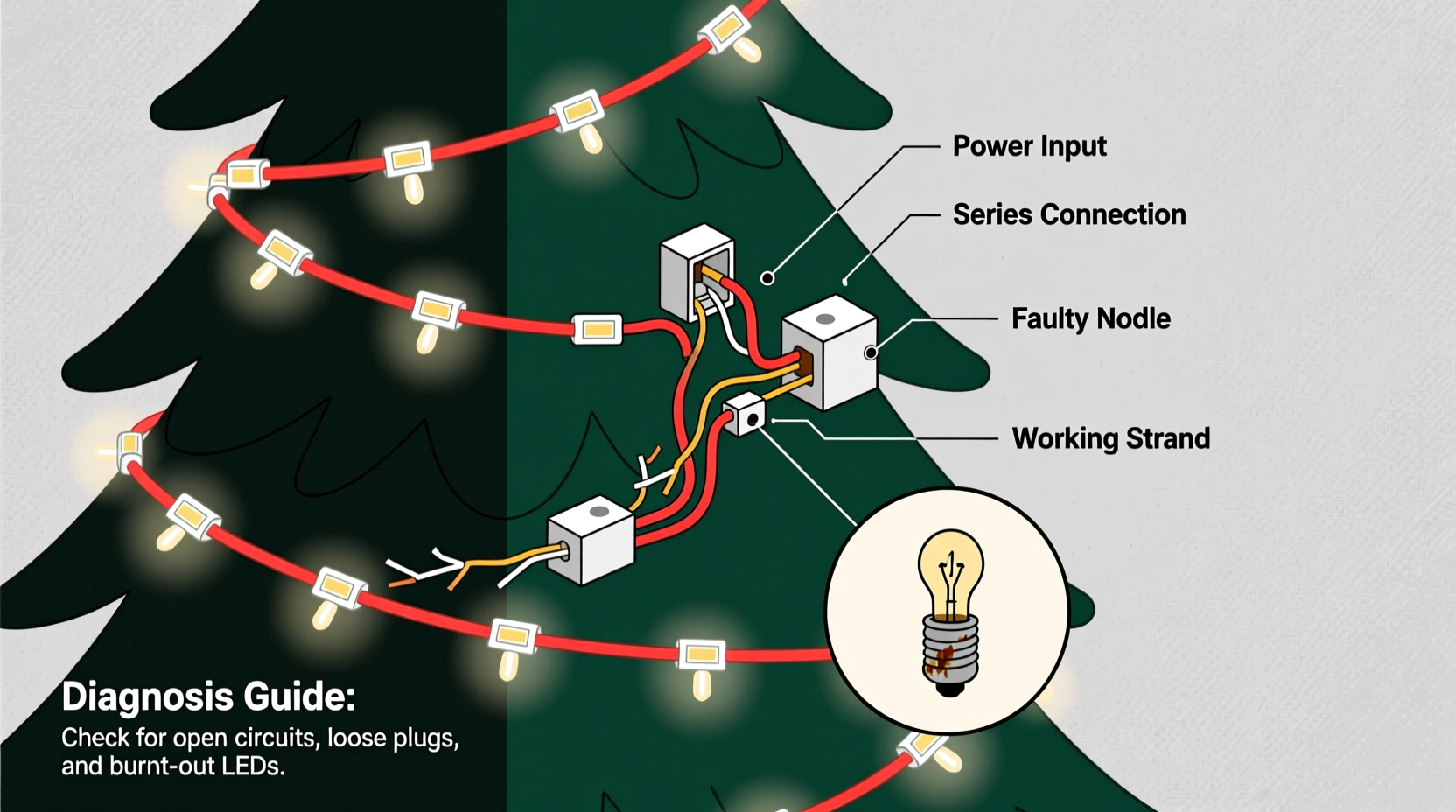
Prelit artificial trees are not simply decorated with standard string lights. Instead, they come with factory-installed lighting systems that follow specific electrical designs. Most models use either series-wired or combination series-parallel circuits. In a series setup, bulbs are connected end-to-end along a single path. If one bulb burns out or becomes loose, it breaks the circuit, causing all subsequent bulbs in that segment to go dark. Some modern trees incorporate shunted sockets, which allow current to bypass a dead bulb—unless the shunt itself fails.
Many trees divide lighting into multiple circuits or “zones,” such as top, middle, and bottom sections, each powered independently. This design limits total failure but means a fault in one zone won't affect others. However, if your tree has a dark upper half while the lower remains lit, the issue is likely isolated to the affected circuit’s wiring, connector, or power feed.
The wires themselves run internally through hollow metal or plastic branches and down the central pole. These concealed pathways protect the wiring but make visual inspection difficult. Damage from improper storage, bending during assembly, or rodent activity (in storage areas) can lead to broken conductors or short circuits.
“Most dark sections on prelit trees stem from simple connection issues or localized wire breaks—not wholesale light failure.” — James Ralston, Electrical Technician & Holiday Lighting Specialist
Common Causes of Dark Sections
Before diving into repairs, identify the most frequent culprits behind unlit portions of a prelit tree:
- Bulb failure: A single burned-out bulb in a non-shunted series circuit can interrupt the flow of electricity to downstream lights.
- Loose or improperly seated bulbs: Even slight misalignment prevents proper contact, breaking the circuit.
- Blown fuses: Many prelit strings include small replaceable fuses in the male plug. Power surges or moisture exposure can blow them.
- Internal wire damage: Wires inside trunks or branches can be pinched, frayed, or severed during storage or setup.
- Corroded or dirty connectors: Oxidation at junction points between sections increases resistance and blocks current.
- Failed shunts: In shunted bulbs, the internal bypass mechanism may fail to activate when the filament breaks.
- Manufacturing defects: Rarely, faulty solder joints or poor insulation lead to early failure.
Step-by-Step Diagnosis and Repair Process
Follow this systematic approach to locate and resolve the cause of dark sections:
- Unplug the tree and separate sections. Begin at the base and disconnect each tier carefully. Note which sections remain dark after disconnection.
- Inspect visible bulbs. Look for blackened, cracked, or missing bulbs in the dark zone. Gently press each bulb to ensure it’s fully seated.
- Check the plug fuses. Remove the sliding cover on the male plug. Use a multimeter or visual inspection to confirm both fuses are intact. Replace with identical-rated fuses (usually 3–5A).
- Test continuity between sections. Plug in only the darkest section directly. If it lights, the issue lies in the interconnecting cable or the section above it. If not, proceed to internal checks.
- Use a light tester or multimeter. Set to continuity or voltage mode. Test input at the base of the dark section. No signal? The wire feeding that section is broken.
- Trace internal wiring paths. Follow the wire route from the last live bulb to the first dark one. Flex the branch gently; flickering indicates a break.
- Replace suspect bulbs. Swap in known-working bulbs from spare sets, even if they look fine. LED trees often fail due to driver issues in individual units.
- Examine connectors and junction boxes. Clean metal contacts with isopropyl alcohol and a cotton swab. Reconnect firmly.
If none of these steps restore power, the fault is likely a severed internal conductor. This requires either professional repair or strategic rewiring.
Troubleshooting Table: Symptoms vs. Likely Cause
| Symptom | Likely Cause | Recommended Action |
|---|---|---|
| One entire section dark, others lit | Faulty inter-section connector or internal wire break | Test continuity; clean or replace connector |
| Half a branch dark | Bulb failure in series circuit or broken wire mid-branch | Check and replace bulbs; flex branch to test for breaks |
| Flickering in dark zone | Loose connection or intermittent wire contact | Secure bulbs; inspect wiring path for kinks |
| No power to any section | Main plug fuse blown or defective controller (for LED) | Replace fuses; test outlet and controller |
| Tree worked last year, now partially dark | Storage damage or corrosion over time | Inspect for bent pins, frayed wires, or moisture residue |
Mini Case Study: Rescuing a Three-Tiered Tree
Sarah purchased a 7.5-foot prelit tree five years ago. Last holiday season, the top two tiers lit up, but the bottom third remained dark. She followed standard troubleshooting: checked fuses (fine), ensured all bulbs were in place (they were), and tested the outlet (working). Frustrated, she nearly discarded the tree.
Instead, she borrowed a multimeter. Testing the input at the base of the dark section revealed no voltage. She then disconnected the middle section and tested its output port—also dead. Further inspection showed a slightly bent metal pin in the female connector. After straightening it with needle-nose pliers and cleaning the contacts, the entire tree lit up.
The root cause? A minor deformation from improper stacking during storage had disrupted the electrical connection. A five-minute fix saved a $180 tree.
Repair or Replace? A Practical Checklist
Before investing hours into diagnosis, ask yourself the following:
- Is the tree under warranty? Contact the manufacturer—some offer free replacements for lighting issues.
- Are replacement bulbs and fuses available? Check model number and supplier support.
- Do you have basic tools? A multimeter, spare bulbs, and wire strippers improve success odds.
- Is the damage extensive? Multiple broken wires or corroded trunks may not be cost-effective to fix.
- How old is the tree? Lights degrade over time. Consider upgrading to a newer, more reliable model.
If you answer “no” to three or more, replacement may be wiser. But for sentimental or high-end trees, repair is often worth the effort.
Frequently Asked Questions
Can I rewire just one section of my prelit tree?
Yes, though it's labor-intensive. You can run new wire externally along the branch, conceal it with floral tape, and splice into the existing circuit. Match voltage and bulb type exactly. For safety, consider adding an inline fuse.
Why do only some LEDs go out while others stay on?
LED prelit trees often group bulbs into parallel sub-circuits. If one group fails, others remain lit. Failure usually stems from a bad driver module, broken trace on a circuit board, or a single open connection feeding that cluster.
Is it safe to cut and repair internal wires?
Only if done correctly. Strip minimal insulation, use wire nuts or solder with heat shrink tubing, and avoid sharp bends. Never leave exposed conductors. If unsure, consult an electrician or use a plug-in extension string as a workaround.
Final Thoughts and Proactive Care Tips
Dark sections on a prelit tree are rarely random—they’re symptoms of identifiable electrical faults. With patience and the right tools, most issues can be diagnosed and corrected without replacing the entire tree. The key is approaching the problem systematically: isolate the zone, test inputs, inspect connections, and verify continuity.
Going forward, extend your tree’s lifespan with proactive care. Store it in a climate-controlled space using sectional tree bags. Handle connectors gently. Before storing, inspect and replace any questionable bulbs. Perform a quick power test every October to catch issues early.
“The best way to avoid dark sections next year is to address weak points this January.” — National Christmas Tree Association Maintenance Guidelines
Take Action Today
Don’t wait until next December to deal with a dark tree. Retrieve your prelit tree now, perform a diagnostic check, and document any issues. Replace fuses, clean connectors, and label parts for easier setup. Share your findings with family members who assemble the tree—you’ll save precious holiday time and preserve seasonal joy.




 浙公网安备
33010002000092号
浙公网安备
33010002000092号 浙B2-20120091-4
Comments
No comments yet. Why don't you start the discussion?