
Rabbits are creatures of subtle communication. Unlike dogs or cats, they rarely vocalize when distressed. Instead, they rely on body language—and one of the most distinctive behaviors is foot thumping. If you’ve ever been startled awake by a rhythmic thud in the dark, you’re not alone. Many rabbit owners report their pets thumping at night, often without an obvious cause. While it can seem mysterious—or even alarming—this behavior is deeply rooted in survival instincts. Understanding why rabbits thump, especially after dark, is key to ensuring their well-being and peace of mind—for both you and your pet.
The Biology Behind Rabbit Thumping
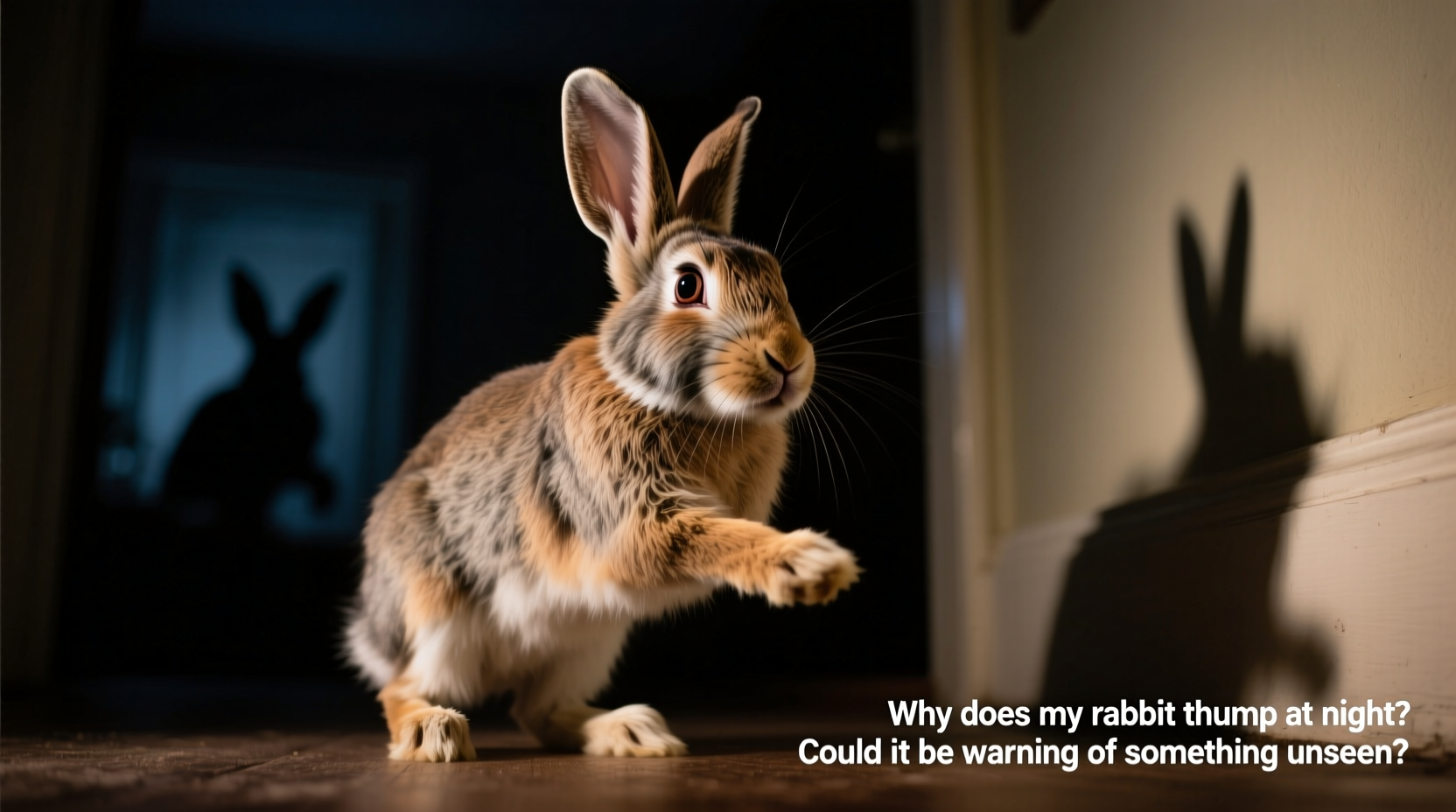
Thumping is a natural, hardwired response in rabbits. It involves forcefully striking the ground with one or both hind legs, creating a loud, resonant sound. In the wild, cottontails and other lagomorphs use this signal to alert nearby rabbits of potential danger. The vibration travels through the soil, acting as an early-warning system across warrens and feeding grounds.
This behavior isn’t just noise—it’s sophisticated communication. A single thump might indicate mild concern, while rapid, repeated thumps suggest high stress or imminent threat. Because rabbits have nearly 360-degree vision and ultra-sensitive hearing, they often detect disturbances long before humans do. This makes nighttime thumping particularly common; in the quiet hours, subtle sounds like creaking floors, distant animal movements, or even HVAC systems become amplified.
“Rabbits evolved to survive in open habitats where predators strike quickly. Thumping is part of a complex alarm system that gives them and their colony critical seconds to escape.” — Dr. Lena Torres, Veterinary Ethologist, University of Edinburgh
Common Triggers for Nighttime Thumping
While some causes of thumping are dramatic—like the presence of a predator—most nighttime triggers are far more mundane. However, from a rabbit’s perspective, even small changes can feel threatening. Below are the most frequent reasons your rabbit may be thumping after dark:
- Noises outside the home: Raccoons, owls, stray cats, or passing vehicles can trigger alertness.
- Indoor environmental shifts: Sudden temperature drops, flickering lights, or appliances turning on (e.g., refrigerators, heaters).
- Changes in routine: Rabbits thrive on consistency. Late-night activity, guests, or altered feeding times can increase anxiety.
- Visual stimuli: Shadows moving across walls, curtains blowing in a breeze, or reflections from moonlight.
- Pain or discomfort: Arthritis, dental issues, or gastrointestinal stasis can make a rabbit hyper-vigilant and prone to startle responses.
Could Your Rabbit Be Warning of Something Unseen?
The idea that rabbits might sense things beyond human perception isn’t mere folklore. Their sensory capabilities far surpass ours. For instance:
- Rabbits hear frequencies up to 49 kHz, compared to humans’ 20 kHz limit—meaning they detect ultrasonic sounds from rodents or bats nearby.
- Their whiskers are highly sensitive to air currents, allowing them to “feel” movement in adjacent rooms.
- They can perceive infrared radiation to some degree, making them responsive to heat signatures from animals or malfunctioning electronics.
In rare cases, persistent nighttime thumping has coincided with events such as gas leaks, electrical faults, or structural settling that went unnoticed until investigated. While there’s no scientific evidence that rabbits predict disasters like earthquakes, their acute senses mean they may react to environmental anomalies long before humans do.
A Real-Life Example: The Case of the Midnight Thumper
Sarah, a rabbit owner in rural Vermont, reported her Holland Lop, Clover, began thumping every night around 2:17 a.m. There were no visible threats, and the room was secure. After weeks of disrupted sleep, Sarah installed a motion-activated audio recorder. The recordings revealed faint scratching beneath the floorboards—later confirmed to be a family of mice nesting in the crawlspace. Once removed, Clover stopped thumping entirely. Though the mice posed no direct danger, their movements and sounds were enough to unsettle her sensitive companion.
This case illustrates how rabbits respond to stimuli we may overlook. What seems like paranoia is often accurate perception.
How to Respond When Your Rabbit Thumps at Night
Reacting appropriately to thumping helps reduce your rabbit’s stress and strengthens trust. Here’s a step-by-step guide to follow when it happens:
- Stay calm. Your reaction influences your rabbit’s sense of safety. Avoid rushing or loud noises.
- Observe silently. Note the frequency, duration, and context of the thumping. Is it isolated or repeated? Does it stop after a few seconds?
- Scan the environment. Check for open windows, unusual odors, or unfamiliar objects in the room.
- Approach gently. Speak softly and offer a familiar treat if your rabbit seems approachable.
- Document patterns. Keep a log for a week: time, location, household activity, and weather conditions.
- Rule out medical causes. Schedule a vet visit if thumping becomes chronic or is accompanied by lethargy, appetite loss, or aggression.
Do’s and Don’ts of Handling Nighttime Thumping
| Do | Don't |
|---|---|
| Create a quiet, enclosed sleeping area with soft bedding and visual barriers. | Ignore repeated thumping—especially if it’s new or worsening. |
| Use white noise machines or calming music to mask disruptive outdoor sounds. | Yell at or punish your rabbit for thumping—it’s an instinctive behavior, not defiance. |
| Ensure your rabbit has a clear line of sight to detect movement safely. | Place their enclosure in a high-traffic or echo-prone area like a hallway or basement. |
| Provide hiding boxes so they can retreat when feeling vulnerable. | Assume silence means safety—some rabbits freeze instead of thumping when terrified. |
When Thumping Signals a Health Issue
While most thumping is behavioral, it can sometimes point to underlying medical concerns. Painful conditions such as spinal arthritis, ear infections, or bladder stones may heighten a rabbit’s sensitivity to stimuli. A rabbit in discomfort may interpret normal sounds as threats due to lowered stress thresholds.
Signs that thumping may be linked to health problems include:
- Thumping while sitting still or lying down
- Grinding teeth (a sign of pain)
- Limited mobility or reluctance to hop
- Changes in litter box habits
- Loss of appetite or selective eating
If any of these accompany nighttime thumping, consult an exotic veterinarian promptly. Diagnostic tools like X-rays or blood panels can identify hidden ailments.
Creating a Calm Nocturnal Environment
Since rabbits are crepuscular—most active at dawn and dusk—they remain alert during nighttime hours. You can’t eliminate all stimuli, but you can design a space that minimizes unnecessary alarms.
Environmental Checklist for Peaceful Nights
- ✅ Position the enclosure away from exterior walls where outdoor sounds penetrate.
- ✅ Use blackout curtains to reduce light fluctuations from passing cars or streetlights.
- ✅ Maintain a consistent room temperature between 60–70°F (15–21°C).
- ✅ Introduce a low-decibel fan or nature sound machine to buffer sudden noises.
- ✅ Provide a cardboard hideout or tunnel for secure retreat.
- ✅ Offer a bedtime snack of hay to encourage calm chewing before rest.
- ✅ Rotate toys weekly to prevent boredom-induced hypervigilance.
One study conducted by the House Rabbit Society found that rabbits exposed to ambient forest sounds at night showed a 40% reduction in thumping incidents compared to those in silent or urban-noise environments. This suggests that not silence, but predictable, non-threatening soundscapes, promote relaxation.
Frequently Asked Questions
Is it normal for rabbits to thump every night?
Occasional thumping is normal, especially in response to unfamiliar sounds. However, daily or multiple nightly episodes may indicate chronic stress, poor housing conditions, or health issues. Monitor for patterns and consider environmental adjustments.
Can rabbits thump in their sleep?
True sleep thumping is rare. More commonly, rabbits enter light dozes and react to stimuli while semi-conscious. If your rabbit appears to spasm or twitch rhythmically during deep rest, consult a vet to rule out neurological conditions.
Should I let my rabbit sleep in my bedroom?
Many owners find success keeping rabbits in quiet bedrooms. The presence of a trusted human can be reassuring. Just ensure the room isn’t too noisy or brightly lit at night, and protect flooring from accidental urine marks.
Conclusion: Listening Beyond the Thump
Your rabbit’s nighttime thump isn’t just noise—it’s a message. Whether signaling a rustling squirrel in the yard or expressing discomfort from an aching joint, each thump deserves attention. By learning to interpret this behavior within its biological and emotional context, you deepen your bond and create a safer, calmer environment for your pet.
Rabbits don’t thump to annoy or manipulate. They thump because they trust their instincts—and sometimes, those instincts are trying to tell you something important. The next time you hear that midnight beat, pause. Listen. Look around. You might discover a hidden draft, a faulty appliance, or simply a bunny doing what rabbits have done for millennia: watching over their world.




 浙公网安备
33010002000092号
浙公网安备
33010002000092号 浙B2-20120091-4
Comments
No comments yet. Why don't you start the discussion?