
A quiet kitchen is often a sign of peace—until the deep, persistent hum of your refrigerator cuts through the stillness of the night. If your fridge suddenly seems louder after dark, you're not imagining things. Many homeowners report increased refrigerator noise during nighttime hours, and while some level of humming is normal, excessive or sudden loud operation can signal underlying issues. The good news? Most causes are fixable with basic troubleshooting and routine maintenance. Understanding why your refrigerator hums loudly at night—and how to address it—can restore tranquility to your home and potentially extend the life of your appliance.
Understanding Normal vs. Abnormal Refrigerator Noise
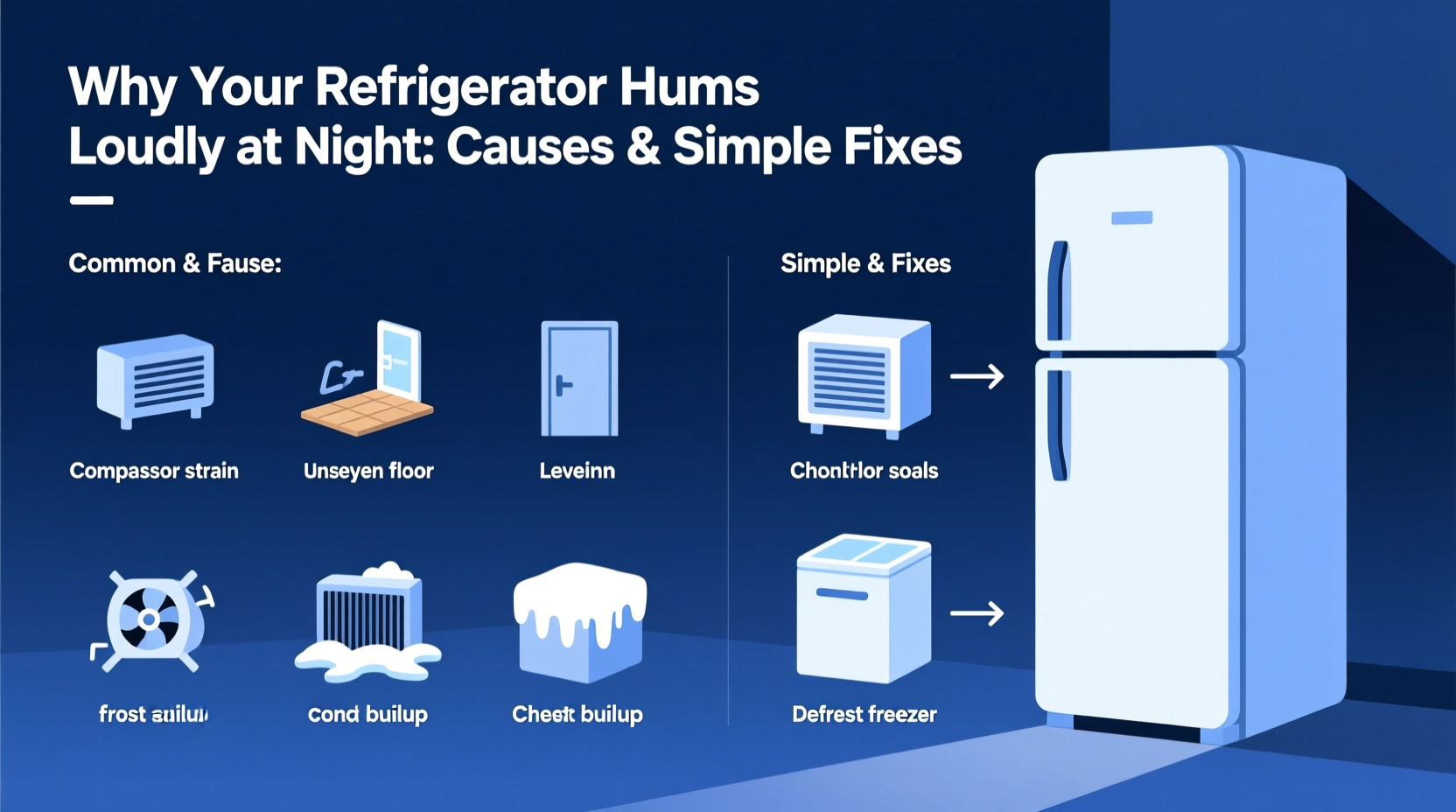
All refrigerators produce sound during operation. The compressor cycling on, the fan spinning, and refrigerant flowing through coils generate a low, consistent hum. This background noise typically ranges between 35 and 45 decibels—comparable to a quiet library or soft conversation. However, when the hum becomes a disruptive drone, buzz, or rattle that’s clearly audible from another room, especially at night, it may indicate a problem.
Nighttime amplifies perception of sound for several reasons: ambient noise drops significantly, human hearing becomes more sensitive in quiet environments, and structural vibrations travel more efficiently through cooler, denser air. What might go unnoticed during the day becomes impossible to ignore at 2 a.m.
“Refrigerators don’t get louder at night—but our ability to hear them does. Still, if the change in volume feels dramatic, it’s worth investigating.” — James Lin, Appliance Engineer & HVAC Specialist
Before assuming the worst, distinguish between normal operational sounds and warning signs:
- Normal: Steady hum, occasional clicking (thermostat cycling), brief gurgling (refrigerant movement).
- Concerning: Loud buzzing, grinding, rattling, pulsating noises, or sudden increases in volume.
Common Causes of Excessive Refrigerator Humming at Night
Loud nighttime humming usually stems from mechanical strain, airflow restriction, or environmental factors. Below are the most frequent culprits:
1. Dirty or Clogged Condenser Coils
The condenser coils, located at the back or beneath the unit, release heat extracted from the fridge. When coated in dust, pet hair, or debris, they overwork to dissipate heat, forcing the compressor to run longer and louder. This inefficiency often peaks at night when cooling demand rises due to residual daytime heat in walls and cabinets.
2. Faulty or Worn-Out Compressor
The compressor is the heart of your refrigerator. Over time, internal components like bearings or motor mounts degrade, leading to louder operation. A failing compressor may emit a deep, rhythmic hum that intensifies as it struggles to maintain temperature. While not always an immediate failure, persistent loud noise suggests reduced lifespan.
3. Evaporator or Condenser Fan Issues
Fans circulate air across cooling coils. If blades are unbalanced, obstructed by ice, or the motor is failing, they create buzzing or whirring sounds. The evaporator fan (inside the freezer) runs constantly when cooling, so any defect becomes more noticeable in quiet conditions.
4. Loose Components or Mounting Screws
Vibrations from daily use can loosen internal brackets, panels, or external leveling feet. These parts then resonate with the compressor’s frequency, amplifying noise. Tightening hardware often resolves rattling or vibrating hums.
5. Improper Leveling or Uneven Flooring
If your refrigerator isn’t level, the compressor may tilt, increasing mechanical stress and vibration. This misalignment transfers energy into the floor, creating a low-frequency hum felt throughout the house—especially at night when other sounds aren’t masking it.
6. Refrigerant Flow or Expansion Valve Noise
Some models produce a gurgling or hissing sound as refrigerant moves through narrow passages. While generally harmless, a malfunctioning expansion valve can cause pulsating or knocking sounds mistaken for loud humming.
Step-by-Step Guide to Diagnose and Fix the Hum
Follow this systematic approach to identify and resolve the source of nighttime noise without calling a technician—unless absolutely necessary.
- Unplug the refrigerator for safety before any inspection.
- Check the level using a bubble level on the top shelf. Adjust the front leveling legs until the fridge is balanced side-to-side and slightly tilted backward (so doors self-close).
- Inspect the rear and underside for dust buildup on condenser coils. Use a flashlight to look for debris or obstructions.
- Clean the coils with a refrigerator coil brush or vacuum. Avoid damaging fins with sharp tools.
- Open the freezer compartment and listen near the back wall for uneven fan noise. Look for frost buildup around the evaporator fan cover.
- Examine all external surfaces for loose screws, panels, or water lines touching the cabinet. Gently shake the fridge to detect rattles.
- Plug the unit back in and monitor startup sounds. Note whether the hum has decreased or changed in character.
- Wait 24 hours to assess temperature stability and long-term noise behavior.
If the hum persists after these steps, suspect internal components like the compressor or sealed system parts, which require professional diagnosis.
Tips and Preventive Maintenance Checklist
Regular care prevents most noise-related issues. Use this checklist to keep your refrigerator running quietly and efficiently.
Refrigerator Quietness Maintenance Checklist
- ✅ Clean condenser coils every 6 months
- ✅ Vacuum around base grille and floor vents monthly
- ✅ Ensure 2–3 inches of clearance on all sides, especially the back
- ✅ Check door seals for cracks or gaps (perform the dollar bill test)
- ✅ Verify the unit is level using a carpenter’s level
- ✅ Listen for new or changing sounds weekly during routine checks
- ✅ Replace worn gaskets or damaged panels promptly
- ✅ Keep interior organized to allow proper air circulation
Do’s and Don’ts: Managing Refrigerator Noise
| Do’s | Don’ts |
|---|---|
| Place rubber anti-vibration pads under leveling feet | Ignore persistent buzzing or grinding noises |
| Allow space behind fridge for airflow and heat dissipation | Store heavy items on top that increase vibration |
| Use a dedicated outlet to avoid electrical interference | Block ventilation grilles with curtains or cabinetry |
| Monitor temperature settings (recommended: 37°F fridge, 0°F freezer) | Overload the fridge, restricting internal airflow |
| Keep the surrounding area cool and well-ventilated | Place near ovens, dishwashers, or direct sunlight |
Real-Life Example: Sarah’s Nocturnal Fridge Fix
Sarah, a homeowner in Portland, began noticing her kitchen’s quiet was broken nightly by a deep, throbbing hum from her five-year-old refrigerator. During the day, it was barely noticeable, but at night, the sound vibrated through her bedroom wall. She initially assumed the compressor was failing and braced for replacement costs.
Instead, she followed a methodical approach: first checking for loose bottles inside, then ensuring the fridge wasn’t touching the wall. She discovered the rear coils were caked in pet hair and dust. After unplugging the unit and cleaning the coils thoroughly with a brush attachment, she re-leveled the front legs, which had settled unevenly on her hardwood floor.
The result? The nighttime hum dropped by nearly 60%. The fridge still makes its usual operational sounds, but no longer disrupts sleep. Sarah now cleans the coils every spring and fall and keeps a small fan nearby during summer to aid airflow.
When to Call a Professional
While many issues are DIY-friendly, certain symptoms warrant expert attention:
- The hum is accompanied by burning smells or smoke.
- Temperature fluctuates despite correct settings.
- Compressor clicks on and off rapidly (short cycling).
- Oil leaks appear near the bottom of the unit.
- Noise returns quickly after cleaning and leveling.
A licensed technician can test compressor amperage, check refrigerant pressure, and inspect sealed system integrity. Repairs involving refrigerant or electrical components should never be attempted without certification.
Frequently Asked Questions
Is a loud refrigerator dangerous?
Not always. Increased noise alone isn’t hazardous, but if paired with poor cooling, strange odors, or electrical issues, it could indicate a serious fault. Address persistent loud operation promptly to avoid breakdowns or fire risks from overheating components.
Why does my fridge only get loud at night?
Nighttime silence makes normal sounds more noticeable. Additionally, indoor temperatures drop, causing the thermostat to cycle more frequently. Dust buildup and lack of airflow exacerbate strain during peak cooling periods, making the compressor work harder and sound louder.
Can I soundproof my refrigerator?
Partial sound dampening is possible. Use anti-vibration pads, ensure proper spacing, and install acoustic panels on adjacent walls. Never enclose the fridge in a cabinet or cover vents—this creates overheating risks. Focus on fixing the root cause rather than masking noise.
Conclusion: Silence Starts with Smart Care
A refrigerator that hums loudly at night doesn’t have to disrupt your peace. Most causes are preventable or easily corrected with basic maintenance and attentive observation. From cleaning neglected coils to ensuring proper leveling, small actions yield significant improvements in both noise levels and appliance longevity. By staying proactive, you protect not just your sleep, but also your investment in a major household appliance.
Take a few minutes tonight to listen closely to your fridge. Identify the type of sound, check for simple fixes, and schedule regular upkeep. With consistent care, your refrigerator can return to being the silent, reliable helper it was designed to be.




 浙公网安备
33010002000092号
浙公网安备
33010002000092号 浙B2-20120091-4
Comments
No comments yet. Why don't you start the discussion?