
There’s nothing more frustrating than carefully measuring rice, setting a timer, and still ending up with a pot of soft, glue-like grains that stick to the spoon. You followed a recipe—or so you thought—yet the result is far from the fluffy, separate grains you were hoping for. The culprit? More often than not, it's an error in the absorption ratio: the balance between rice, water, and heat. This imbalance disrupts the delicate process of gelatinizing starches and evaporating excess moisture, leading directly to mushy rice. Understanding and correcting this ratio isn’t just about measurement—it’s about mastering the science behind one of the world’s most essential staples.
The Science Behind Rice Texture
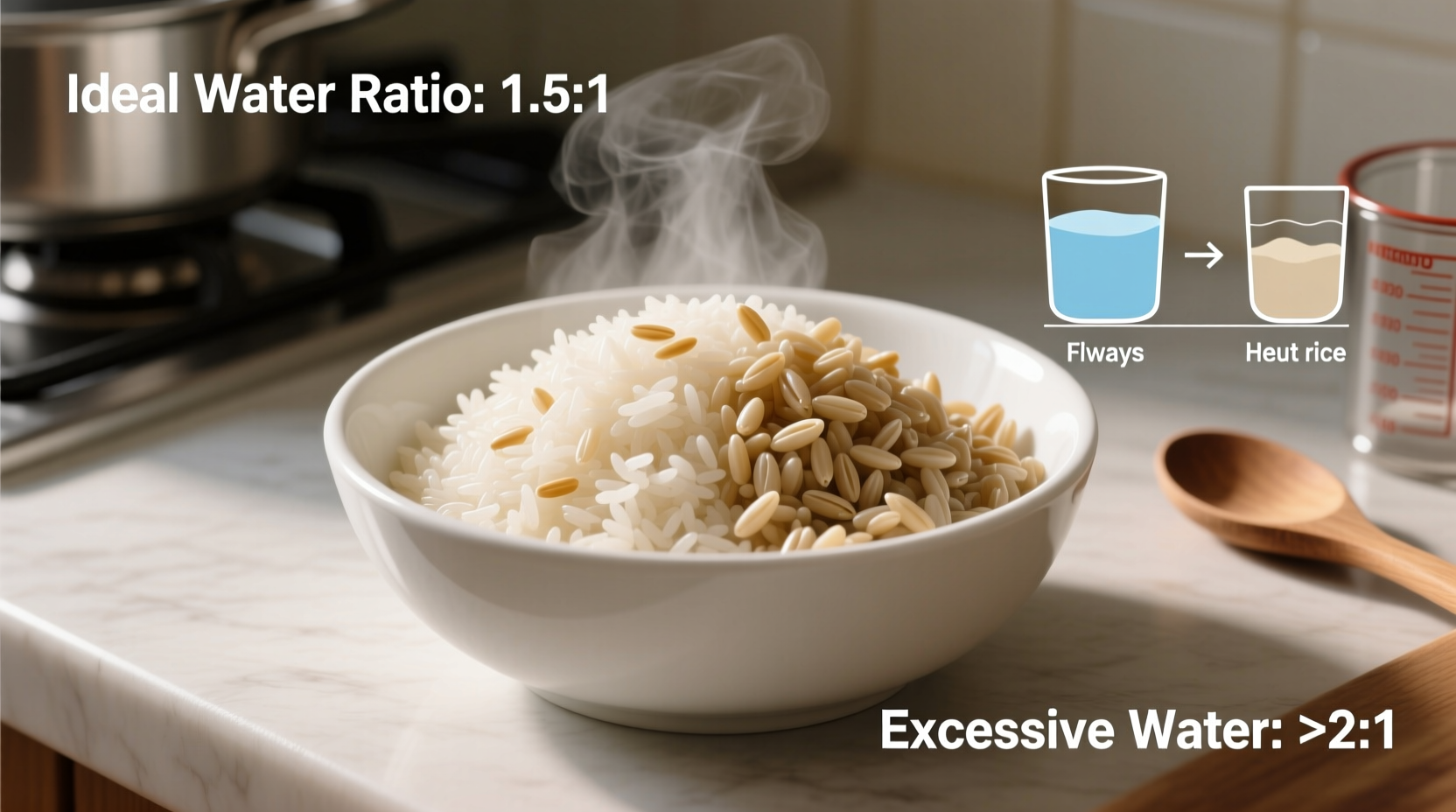
Rice transforms during cooking through a process called starch gelatinization. When heated in water, the starch granules inside each grain absorb moisture, swell, and eventually burst slightly, giving cooked rice its soft texture. However, too much water or prolonged exposure to heat causes excessive swelling and breakdown of the grain structure, resulting in mushiness. The key is to provide enough water for full hydration without oversaturating the grains.
Different types of rice have varying starch compositions. For example:
- Long-grain white rice (like Basmati or Jasmine) has high amylose content, which helps grains stay firm and separate after cooking.
- Short-grain rice (such as sushi or Arborio) is higher in amylopectin, making it naturally stickier—even when cooked correctly.
- Brown rice contains a bran layer that slows water absorption, requiring more liquid and longer cooking times.
Mistakes in the absorption ratio affect all varieties, but the margin for error is narrower with delicate long-grain types where fluffiness is expected.
“Getting the water-to-rice ratio right is 90% of the battle. Too many home cooks treat it like a suggestion rather than a critical variable.” — Chef Rafael Mendez, Culinary Instructor at San Francisco Cooking Academy
Common Absorption Ratio Mistakes and Their Effects
Even experienced cooks make subtle errors that throw off the entire cooking process. These are the most frequent missteps:
1. Using the Same Water Ratio for All Rice Types
One-size-fits-all measurements lead to inconsistent results. A standard 2:1 water-to-rice ratio works well for white long-grain rice, but applying it to short-grain or brown rice will produce overcooked, soggy outcomes.
2. Not Rinsing Rice Properly (or At All)
Unrinsed rice retains surface starch, which dissolves into the cooking water and increases stickiness. While this may be desirable for risotto, it contributes heavily to mushiness in dishes meant to be light and fluffy.
3. Adding Extra Water “Just in Case”
Fear of undercooking leads some to add extra water, thinking it ensures doneness. In reality, surplus water continues to penetrate grains even after they’re fully cooked, causing them to break down.
4. Lifting the Lid During Cooking
Every time the lid is lifted, steam escapes, disrupting temperature and moisture equilibrium. To compensate, people often extend cooking time or add more water—both of which increase the risk of mushiness.
5. Ignoring Pot Size and Heat Distribution
A wide, shallow pot allows faster evaporation and uneven heat, while a narrow, deep pot traps steam. If your pot doesn’t match the volume of rice, you alter effective absorption dynamics regardless of initial ratios.
Precise Water-to-Rice Ratios by Type
To avoid mushy results, tailor your absorption ratio to the specific rice variety. Below is a reference table based on tested culinary standards and lab-controlled absorption studies.
| Rice Type | Water-to-Rice Ratio | Cooking Time (Simmer) | Notes |
|---|---|---|---|
| White Long-Grain (e.g., Basmati) | 1.75 : 1 | 15–18 minutes | Rinse first; let rest covered 10 min after cooking |
| Jasmine Rice | 1.5 : 1 | 14–16 minutes | Naturally fragrant; minimal rinse needed |
| Short-Grain White (Sushi Rice) | 1.25 : 1 | 18–20 minutes | Sticky by design; use vinegar mix post-cook |
| Brown Long-Grain | 2.25 : 1 | 35–40 minutes | Soak 30 min before cooking for better texture |
| Parboiled/Converted Rice | 2 : 1 | 20–22 minutes | Less sticky; holds shape well |
Note: These ratios assume standard stovetop cooking in a heavy-bottomed pot with tight-fitting lid. Adjustments may be necessary at high altitudes or with older rice, which absorbs more water.
Step-by-Step Guide to Perfectly Cooked Rice
Follow this method to eliminate guesswork and achieve consistent, non-mushy rice using proper absorption principles.
- Measure Accurately: Use a measuring cup for both rice and water. Don’t eyeball it. One cup of uncooked rice typically yields about three cups cooked.
- Rinse Thoroughly: Place rice in a fine-mesh strainer. Rinse under cold running water, agitating gently, until water runs clear (2–3 rinses).
- Use Correct Ratio: Refer to the table above. For most long-grain white rice, start with 1¾ cups water per cup of rice.
- Bring to Boil: Combine rice and water in a medium saucepan. Add a pinch of salt. Bring to a rolling boil over medium-high heat—do not stir.
- Reduce and Cover: Once boiling, immediately reduce heat to the lowest possible simmer. Cover tightly with a lid.
- Cook Undisturbed: Set timer for 16 minutes (for white rice). Do not lift the lid or stir.
- Rest Off Heat: After timer ends, turn off heat and let rice sit, covered, for 10 minutes. This allows residual steam to finish cooking and equalize moisture.
- Fluff Gently: Open lid, use a fork to fluff rice from edges inward. Avoid mashing or pressing down.
Real Example: From Mushy to Masterful
Sarah, a home cook in Portland, had struggled for years with her weekly rice side dish turning into a gummy mess. She used a 2:1 ratio for everything, including jasmine rice, and added an extra splash “to be safe.” After switching to a 1.5:1 ratio, rinsing her rice, and following the no-lid rule, her results transformed. On her third attempt, she served perfectly separated grains at a dinner party. Her husband remarked, “This tastes like restaurant rice.” The only changes? Precision in water and patience during resting.
Checklist: Prevent Mushy Rice in 6 Steps
Print or bookmark this checklist for your next rice cook:
- ✅ Identify the rice type and look up its ideal water ratio
- ✅ Measure rice and water precisely with the same cup
- ✅ Rinse rice until water runs clear (except for risotto-style dishes)
- ✅ Use a heavy pot with a tight-fitting lid
- ✅ Simmer covered—no peeking—for the full cook time
- ✅ Rest off heat for 10 minutes before fluffing
FAQ: Your Rice Questions Answered
Why does my rice get mushy even if I use the right ratio?
Even with correct water, lifting the lid releases steam and alters internal temperature. This can cause uneven cooking, prompting extended heat exposure. Also, older burners may not maintain a true low simmer, leading to overcooking. Try reducing heat further or using a flame tamer.
Can I fix mushy rice once it’s overcooked?
If caught early, spread the rice thinly on a baking sheet and let it air-dry for 10–15 minutes to remove surface moisture. For severely mushy batches, repurpose into rice pudding, fried rice, or fritters where texture is less critical.
Does the quality of rice affect mushiness?
Yes. Older rice dries out and absorbs more water, increasing the chance of sogginess if ratios aren’t adjusted. Freshly milled rice, especially aromatic varieties like Basmati, holds its structure better. Store rice in an airtight container away from humidity to preserve quality.
Expert Insight: What Professional Kitchens Know
In commercial kitchens, consistency is non-negotiable. Many chefs use digital scales instead of cups for absolute precision. A gram-level difference can impact large batches significantly.
“In our kitchen, we weigh rice and water. 100g of Basmati gets exactly 175g of water. No variation. That’s how you serve 200 plates of perfect rice nightly.” — Chef Lin Zhao, Executive Chef at Mala Sichuan Bistro
While home cooks don’t need scales for everyday meals, understanding that volume measurements can vary (a heaping cup vs. leveled) explains why seemingly identical recipes yield different results.
Conclusion: Take Control of Your Rice Game
Mushy rice isn’t a culinary fate—it’s a fixable mistake rooted in incorrect absorption ratios and flawed technique. By identifying your rice type, measuring accurately, and respecting the physics of steam and heat, you can consistently produce light, fluffy, and distinct grains. It takes attention to detail, not special equipment or secret ingredients. The transformation from frustration to confidence starts with one perfectly cooked pot.




 浙公网安备
33010002000092号
浙公网安备
33010002000092号 浙B2-20120091-4
Comments
No comments yet. Why don't you start the discussion?