
There’s nothing more disappointing than lifting the lid of your rice pot only to find a sticky, clumped mass instead of light, separate grains. Mushy rice isn’t just unappetizing—it wastes time, ingredients, and ruins meals that depend on properly cooked rice, from stir-fries to sushi. The good news? This common kitchen frustration is almost always preventable. The root causes usually come down to incorrect water-to-rice ratios, overcooking, or misunderstanding how different rice types behave. With precise adjustments and better technique, you can consistently achieve fluffy, tender, and distinct grains.
The Science Behind Mushy Rice: What Goes Wrong
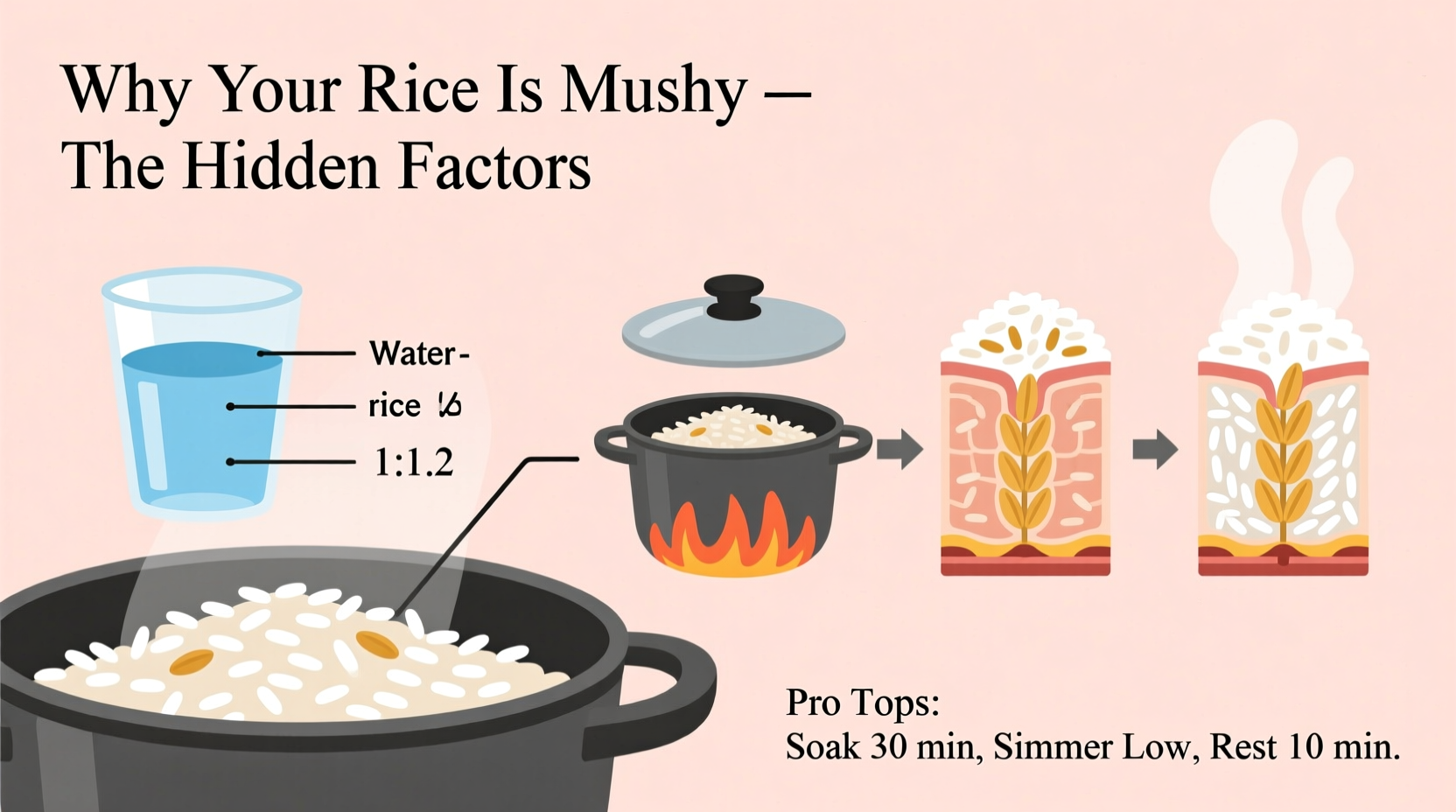
Rice becomes mushy when it absorbs too much water or is exposed to heat for too long. During cooking, starch granules in the grain swell as they absorb moisture. When this process goes too far—either from excess water or prolonged heat—the granules burst, releasing starch into the surrounding liquid. This creates a gummy, gluey texture that coats each grain and sticks everything together.
Different rice varieties have varying starch compositions. For example, short-grain rice like sushi rice naturally contains more amylopectin, a highly branched starch that contributes to stickiness. That’s desirable in sushi but problematic if you're aiming for pilaf-style rice. Meanwhile, long-grain rices such as basmati or jasmine are higher in amylose, which helps grains stay separate when cooked properly. Misidentifying the rice type or using a one-size-fits-all method leads directly to inconsistent results.
Another overlooked factor is residual heat. Even after turning off the stove, rice continues to cook inside a covered pot. Skipping the resting phase traps steam and forces continued hydration, pushing already-cooked rice into mush territory.
Mastering Water Ratios: The Foundation of Perfect Rice
The most common cause of mushy rice is an incorrect water-to-rice ratio. Many home cooks rely on default settings on electric rice cookers or vague instructions like “add two cups of water per cup of rice,” without considering rice variety, age, or preparation method.
Here’s a detailed breakdown of ideal water ratios by rice type:
| Rice Type | Water Ratio (Cups Water : Cups Rice) | Notes |
|---|---|---|
| White Long-Grain (e.g., Basmati) | 1.5 : 1 | Produces dry, fluffy grains; rinse first to remove surface starch. |
| Jasmine Rice | 1.25 : 1 | Aromatic; slightly softer than basmati but should not be soggy. |
| Short-Grain White (e.g., Sushi Rice) | 1.1 : 1 | Naturally sticky; use less water to avoid over-softening. |
| Brown Rice | 2 : 1 | Denser and fibrous; requires more water and longer cooking. |
| Parboiled/Converted Rice | 2 : 1 | Pre-treated to retain nutrients; behaves differently than regular white rice. |
Note that these ratios assume rinsed rice. Unrinsed rice retains surface starch and may require slightly less water. Also, older rice tends to absorb more water than freshly milled batches, so minor adjustments may be needed based on storage duration.
“Getting the water ratio right isn’t about memorizing numbers—it’s about understanding how each rice variety responds to hydration. A tenth of a cup too much can turn success into mush.” — Chef Daniel Park, Culinary Instructor at Pacific Kitchen Institute
Timing and Technique: How Cooking Method Impacts Texture
Even with perfect water ratios, poor timing and technique can ruin rice. Most people follow a simple boil-and-simmer approach, but subtle differences in execution make all the difference.
Consider the standard stovetop method:
- Rinse rice under cold water until runoff is clear.
- Add rice and measured water to a heavy-bottomed pot.
- Bring to a boil over high heat.
- Reduce to the lowest possible simmer, cover tightly, and cook undisturbed.
- Turn off heat and let rest, covered, for 10–15 minutes.
- Fluff gently with a fork before serving.
The critical stages are steps 4 and 5. Simmering too vigorously causes uneven water absorption and physical agitation, breaking grains and releasing starch. And skipping the resting phase means trapped steam continues cooking the rice, leading to softness that borders on mush.
In contrast, electric rice cookers automate much of this process. However, many users fail to adjust settings based on rice type. Using the “white rice” setting for short-grain sushi rice often results in overcooked outcomes because the cooker applies a generic heating curve. High-end models offer specific modes for different rice varieties—use them.
Mini Case Study: From Sticky Disaster to Flawless Results
Sarah, a home cook in Portland, struggled for years with mushy jasmine rice. She used a standard 2:1 water ratio because “that’s what the package said.” But her rice came out wet and clumped together. After researching, she discovered that pre-rinsing jasmine rice was essential—and that 1.25:1 was the recommended ratio. She began rinsing her rice three times, measuring water precisely with a graduated cup, and allowing a 12-minute rest after cooking. Within a week, her rice transformed: fragrant, tender, and with distinct grains. The change wasn’t due to new equipment—just corrected fundamentals.
Step-by-Step Guide to Fluffy, Non-Mushy Rice
Follow this universal protocol for reliably great rice, adaptable to any variety:
- Identify your rice type. Check packaging or recall origin. Is it long-grain, short-grain, brown, or aromatic?
- Rinse thoroughly. Place rice in a bowl, cover with cold water, swirl, drain, and repeat 3–4 times until water runs mostly clear. This removes excess surface starch.
- Soak when appropriate. For basmati or aged rice, soak for 20–30 minutes before cooking to promote even hydration. Drain completely afterward.
- Use exact water ratios. Refer to the table above and measure both rice and water with the same cup for consistency.
- Cook with control. Use a heavy pot with a tight-fitting lid. Bring to a boil, then immediately reduce to the lowest possible simmer. Do not lift the lid during cooking.
- Respect the rest. After cooking time ends (typically 15 minutes for white rice), turn off heat and let sit, covered, for 10–15 minutes. This allows steam to redistribute and finish cooking gently.
- Fluff gently. Use a fork—not a spoon—to separate grains. Aggressive stirring breaks delicate rice and releases more starch.
Common Mistakes That Lead to Mushy Rice
- Using too much water: The top culprit. Even ¼ cup extra per cup of rice can overwhelm the grains.
- Not rinsing rice: Especially critical for non-parboiled white rice. Surface starch accelerates mushiness.
- Lifting the lid during cooking: Releases steam and disrupts temperature stability, forcing longer cook times and uneven results.
- Overcooking: Extending cook time beyond recommendations, even by 3–5 minutes, can degrade texture.
- Skipping the rest: Prevents proper moisture equalization and leads to wet bottoms and dry tops.
- Using low-quality or old rice: Old rice may absorb water unpredictably; stale grains break down easily.
Additionally, some people try to “rescue” undercooked rice by adding more water and continuing to cook. This almost always results in a mushy exterior with a hard center. Instead, if rice is underdone, sprinkle 1–2 tablespoons of water evenly over the top, cover, and return to very low heat for 5 minutes—no stirring.
Frequently Asked Questions
Can I fix mushy rice once it’s overcooked?
Unfortunately, you can't reverse over-absorption of water or broken starch granules. However, you can repurpose mushy rice into rice pudding, fritters, or fried rice. For future batches, focus on prevention through accurate ratios and timing.
Should I always rinse rice?
For most white rice varieties—yes. Rinsing removes excess surface starch and any talc or powdered glucose sometimes used in processing. Exceptions include parboiled (converted) rice and dishes like risotto or rice pudding, where starch contributes to creaminess.
Why does my rice cooker make mushy rice sometimes?
Most rice cookers switch to “warm” mode automatically, but if left on too long, condensation can drip back and soften the rice. Also, older machines may have inaccurate thermostats. Clean the vent and inner pot regularly, and consider upgrading if inconsistencies persist. Use the correct setting for your rice type if available.
Essential Checklist for Perfect Rice Every Time
- Identified rice type correctly
- Rinsed rice until water runs clear
- Used exact water-to-rice ratio
- Soaked (if required for variety)
- Used heavy pot with tight lid
- Simmered gently without lifting lid
- Allowed 10–15 minute rest after cooking
- Fluffed gently with fork before serving
Conclusion: Take Control of Your Rice Game
Mushy rice isn’t a culinary inevitability—it’s a solvable problem rooted in measurable variables. By understanding water ratios, respecting cooking times, and refining your technique, you gain control over one of the world’s most fundamental staples. Whether you’re preparing a quick weekday side or an elaborate biryani, precision pays off in texture, flavor, and confidence. Stop guessing and start measuring. Adjust one variable at a time, document what works, and soon, perfectly cooked rice will become second nature.




 浙公网安备
33010002000092号
浙公网安备
33010002000092号 浙B2-20120091-4
Comments
No comments yet. Why don't you start the discussion?