
Rice cookers are among the most reliable kitchen appliances, designed to simplify meal prep with minimal supervision. Yet even the most trusted models can occasionally erupt like a stovetop volcano, leaving behind a sticky, starchy mess on countertops and walls. Overflow isn’t just inconvenient—it can damage your appliance, create safety hazards, and waste food. Understanding why this happens is the first step toward preventing it. The causes range from simple user errors to overlooked maintenance issues. More importantly, many of these problems are entirely avoidable with the right knowledge and habits.
The Science Behind Rice Cooker Overflow
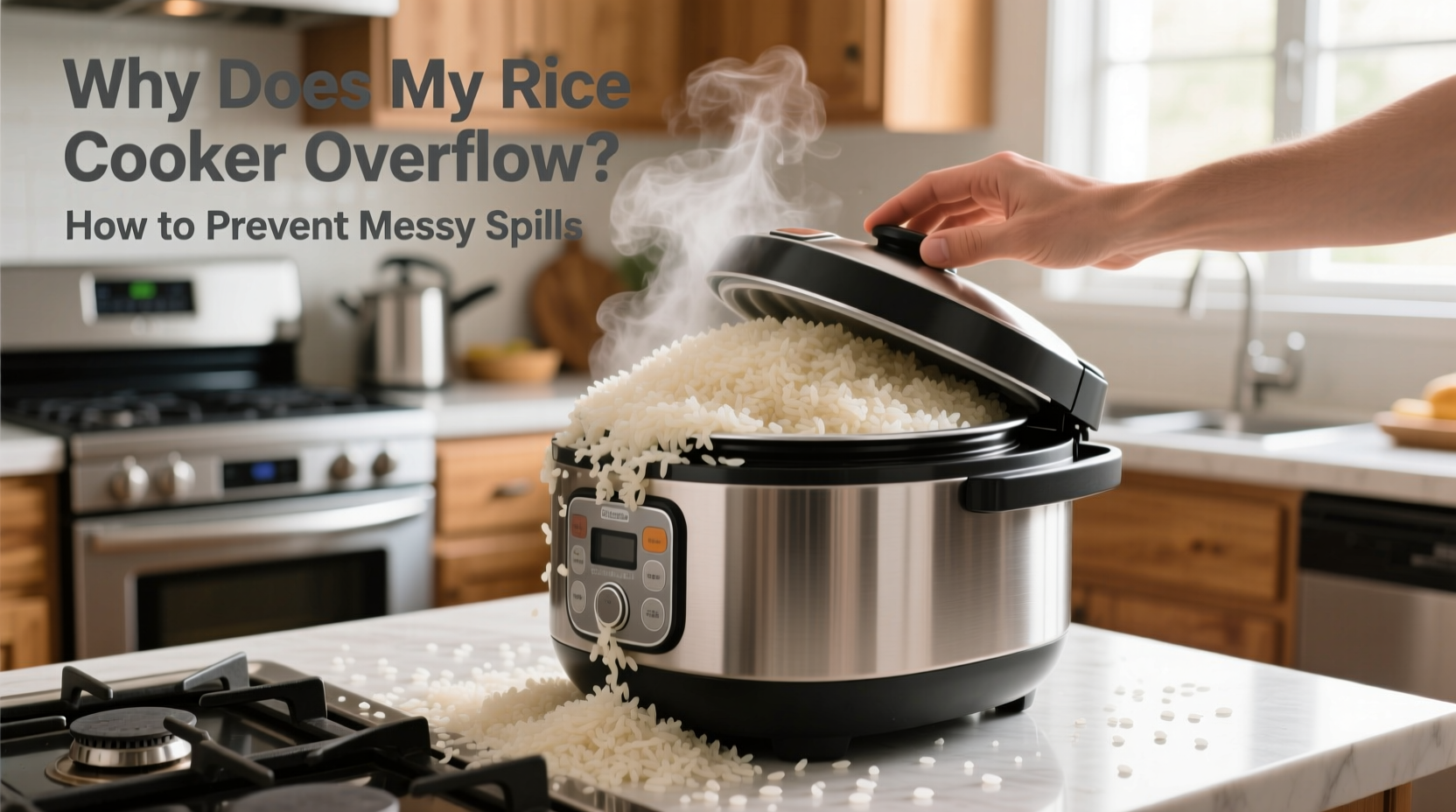
When rice cooks, two key processes occur: water absorption and starch release. As the rice heats up, it absorbs water and expands. Simultaneously, the outer layers of the grains begin to break down, releasing amylose—a type of starch that dissolves into the cooking water. This creates a viscous, foamy liquid that traps steam bubbles. As pressure builds inside the pot, these bubbles rise and expand. If the foam layer becomes too thick, it doesn’t collapse easily and instead pushes upward, eventually escaping through the vent or lid.
This phenomenon is especially common with certain types of rice—like short-grain, sushi, or glutinous varieties—that contain higher levels of amylose. The more starch released, the greater the foaming effect. Additionally, modern rice cookers often use sealed inner pots with limited venting, which increases internal pressure and amplifies the risk of overflow when foam accumulates rapidly.
“Starch-induced foaming is the primary culprit in rice cooker overflow. It’s not a flaw in the appliance—it’s a natural chemical reaction that can be managed.” — Dr. Lin Mei, Food Scientist at the Institute of Culinary Technology
Common Causes of Overflow and How to Address Them
Overflow rarely stems from a single cause. Instead, it’s usually the result of multiple factors combining under the right (or wrong) conditions. Identifying these triggers helps you take targeted preventive action.
1. Excessive Starch from Unrinsed Rice
One of the most frequent reasons for overflow is skipping the rinsing step. Dry rice is coated with surface starch dust left over from milling. When added directly to water without rinsing, this starch dissolves immediately and contributes heavily to foam formation.
2. Incorrect Water-to-Rice Ratio
Using too much water increases the volume of liquid available for foaming. While rice needs hydration, exceeding recommended ratios dilutes the cooking environment and allows more room for bubbles to grow unchecked. Some users add extra water “just in case,” but this often backfires.
3. Overfilling the Inner Pot
Every rice cooker has a maximum fill line marked inside the pot. Exceeding this limit leaves insufficient headspace for foam expansion. Even if the rice itself doesn’t reach the limit, the foam generated during boiling can double or triple the effective volume.
4. Residue Buildup on Lid or Vent
Foam and starch residue can accumulate on the sealing ring, steam vent, or inner lid over time. This restricts proper airflow, causing pressure to build abnormally. A partially blocked vent prevents steam from escaping smoothly, forcing foam out through alternative paths—often onto your countertop.
5. Using the Wrong Rice Setting
Many modern rice cookers come with preset programs for different rice types: white, brown, sushi, porridge, etc. Selecting “porridge” mode for regular white rice, for example, extends cooking time and increases agitation, promoting more foam. Similarly, using rapid-cook settings may heat the water too quickly, accelerating bubble formation before the foam can stabilize.
Prevention Checklist: Stop Spills Before They Start
Consistent results depend on disciplined habits. Follow this checklist every time you use your rice cooker to minimize the risk of overflow:
- ✅ Rinse rice thoroughly until water runs clear
- ✅ Measure rice and water precisely using the cup provided with your cooker
- ✅ Never exceed the MAX fill line indicated in the pot
- ✅ Clean the steam vent, lid gasket, and inner lid after every 3–5 uses
- ✅ Use the correct cooking setting for your rice variety
- ✅ Wipe down the exterior vent area weekly to prevent crusty buildup
- ✅ Avoid opening the lid during cooking—this disrupts pressure balance
Step-by-Step Guide to Safe, Spill-Free Rice Cooking
Follow this detailed process to ensure clean, predictable results every time:
- Measure accurately: Use the measuring cup that came with your rice cooker. Standard cups vary between brands; household cups may differ by 10–15%.
- Rinse the rice: Place rice in a fine-mesh strainer and rinse under cold water for 30–60 seconds, gently agitating with your fingers. Stop when the runoff is mostly clear.
- Drain well: Allow excess water to drip off for 10–15 seconds. Do not squeeze or press the rice.
- Add measured water: Refer to your rice cooker’s water level markings or manufacturer guidelines. For most white rice, use a 1:1.2 to 1:1.5 rice-to-water ratio after rinsing.
- Inspect the appliance: Check that the steam vent is unobstructed and the sealing ring is seated properly. Remove any visible starch deposits with a damp cloth.
- Select the correct setting: Choose “White Rice” for jasmine, basmati, or short-grain unless otherwise specified. Use “Soak” or “Brown Rice” only when needed.
- Start cooking: Close the lid securely and press start. Do not lift the lid during the cycle.
- Cool and clean: After cooking, let the rice sit for 10 minutes before fluffing. Then unplug the unit, remove the inner pot, and wipe the lid and vent area while still warm (but not hot).
Do’s and Don’ts: Best Practices Compared
| Do’s | Don’ts |
|---|---|
| Rinse rice before cooking to reduce surface starch | Never skip rinsing, especially with sticky or short-grain rice |
| Use the measuring cup provided with your rice cooker | Avoid using standard kitchen cups—they’re often larger |
| Clean the steam vent monthly with a pipe cleaner or soft brush | Don’t ignore crusty buildup around the vent or lid seal |
| Allow rice to rest 10 minutes after cooking before opening | Don’t open the lid mid-cycle—this disrupts temperature and pressure |
| Replace worn or cracked sealing rings every 1–2 years | Don’t continue using damaged gaskets—they compromise sealing |
Real-World Example: Fixing a Chronic Overflow Issue
Sarah, a home cook in Portland, had been struggling with her high-end rice cooker for months. Despite following the manual, her machine frequently overflowed, coating the counter in starchy residue. She assumed it was defective and considered returning it. However, after consulting a kitchen technician, she discovered three key oversights: she wasn’t rinsing her sushi rice, she used a larger measuring cup than the one supplied, and she had never cleaned the steam vent.
After switching to the correct cup, rinsing rice thoroughly, and cleaning the vent with a cotton swab, the overflow stopped completely. Sarah now prepares rice twice a week without incident. Her experience highlights how minor, often overlooked details can have an outsized impact on performance.
Maintenance Tips to Extend Appliance Longevity
Preventing overflow isn’t just about cooking technique—it also involves regular upkeep. A well-maintained rice cooker performs more efficiently and resists malfunctions.
The steam vent is particularly vulnerable. Over time, dried starch can form a plug that restricts airflow. To clean it, unplug the unit and use a narrow brush or toothpick to gently dislodge debris. Wipe the inner lid with a damp microfiber cloth, paying attention to crevices where moisture collects. If your model has a removable sealing ring, wash it separately with mild soap and allow it to dry fully before reattaching.
For deep cleaning, mix equal parts water and white vinegar, pour into the inner pot up to the 2-cup mark, and run a short cook cycle. This helps dissolve mineral deposits and lingering starch. Afterward, rinse the pot with fresh water and repeat once every few months.
“Most service calls for rice cooker overflow are resolved with basic cleaning and user education. The machines are robust—the problem is usually upstream.” — Carlos Mendez, Appliance Repair Technician with 15 years of experience
FAQ: Common Questions About Rice Cooker Overflow
Why does my rice cooker overflow only sometimes?
Intermittent overflow often depends on rice type, water amount, or residue buildup. For instance, cooking sticky rice one day and basmati the next changes starch output. Likewise, a gradually clogging vent may only cause issues after several uses. Consistency in preparation and cleaning reduces variability.
Can I prevent overflow by adding oil to the water?
Yes, adding a half-teaspoon of neutral oil (like canola or sunflower) can suppress foaming by disrupting surface tension. However, this may slightly alter texture and isn’t necessary if you rinse rice properly. It’s best used as a secondary safeguard, not a replacement for good practice.
Is overflow dangerous?
While not inherently hazardous, persistent overflow can lead to electrical issues if liquid seeps into the heating element or control panel. It also promotes mold growth in hard-to-reach areas like the vent chamber. Regular cleaning minimizes health and safety risks.
Conclusion: Take Control of Your Kitchen Experience
An overflowing rice cooker doesn’t mean you need a new appliance—it means you need better insight. With a clear understanding of starch behavior, precise measurements, and routine maintenance, you can eliminate messy spills for good. These practices not only protect your countertop but also improve the quality of your cooked rice, yielding fluffier, more evenly textured results. The convenience of a rice cooker should enhance your kitchen routine, not complicate it. By applying these strategies consistently, you reclaim that promise of effortless, reliable cooking.




 浙公网安备
33010002000092号
浙公网安备
33010002000092号 浙B2-20120091-4
Comments
No comments yet. Why don't you start the discussion?