
Many people notice a clicking, popping, or snapping sound when they lift their arm, rotate their shoulder, or reach overhead. While the noise can be startling—especially if it’s new—it isn’t always a cause for concern. Shoulder crepitus, as this phenomenon is medically termed, occurs in a significant portion of the population. However, understanding the difference between benign joint noise and a symptom of underlying damage is essential for long-term joint health.
The shoulder is one of the most mobile joints in the human body, capable of complex movements across multiple planes. This flexibility comes at a cost: stability. The trade-off makes the shoulder prone to mechanical irregularities that can produce audible sounds. But not every click means something is wrong. In fact, many clicks are painless, consistent, and have been present for years without leading to dysfunction.
Understanding the Anatomy Behind Shoulder Clicking
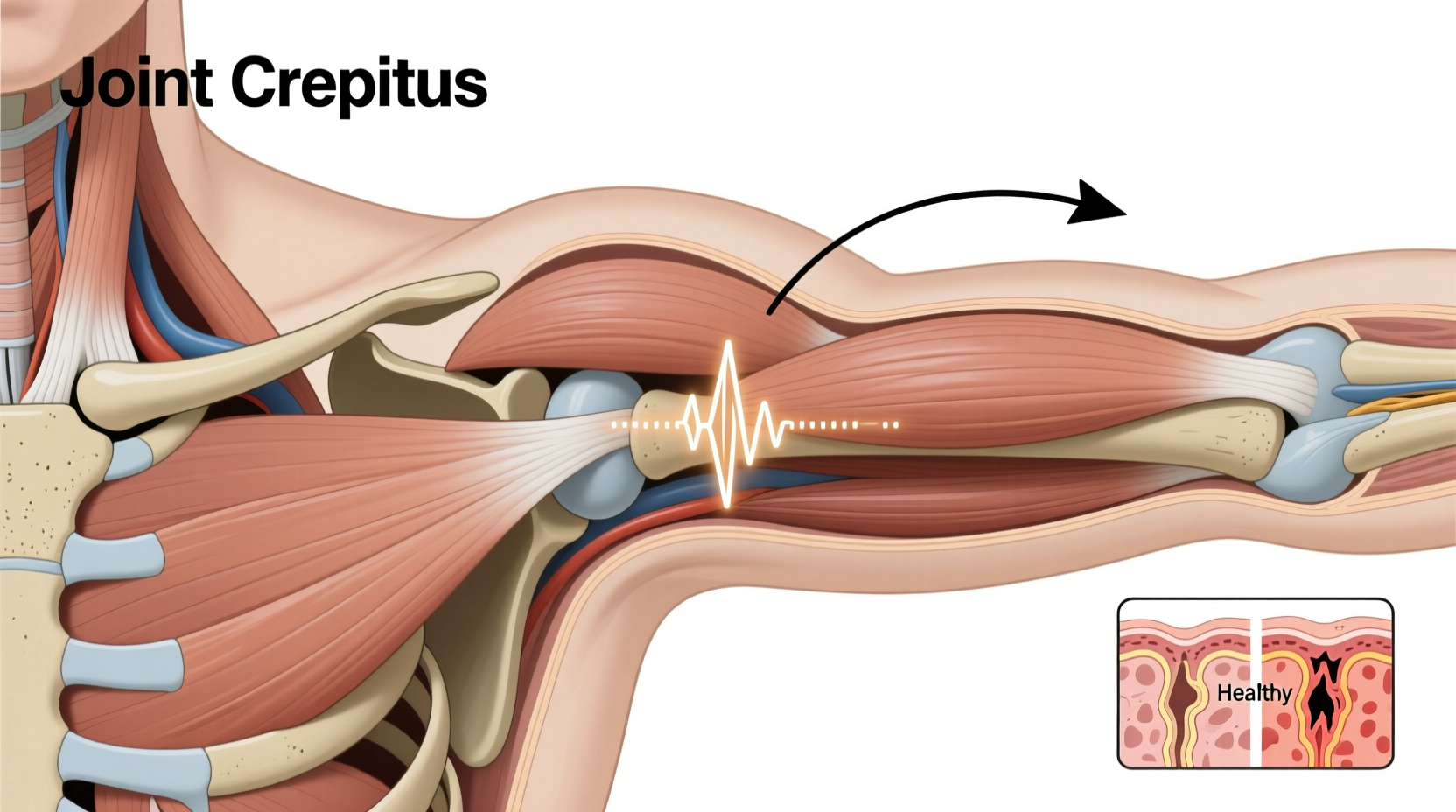
To determine whether shoulder clicking is harmless or problematic, it helps to understand the structure of the joint. The shoulder is a ball-and-socket joint formed by the humerus (upper arm bone), scapula (shoulder blade), and clavicle (collarbone). It’s supported by muscles, tendons (especially the rotator cuff), ligaments, and a lining of synovial fluid that lubricates movement.
When you move your shoulder, several things can create noise:
- Gas bubbles in synovial fluid: Like cracking your knuckles, tiny gas bubbles can form and collapse within the joint capsule, producing a pop.
- Tendon snapping: Tendons may glide over bony prominences, especially if there’s slight misalignment or tightness, creating a repetitive snap.
- Labral tears: The labrum is a ring of cartilage that deepens the socket. If torn, it can catch during motion, causing clicking accompanied by pain or instability.
- Cartilage wear: Osteoarthritis or degenerative changes can lead to roughened surfaces that grind or click during movement.
- Scapular dyskinesis: Abnormal movement of the shoulder blade can result in rhythmic thumping or scraping as it moves against the ribcage.
Not all of these mechanisms are equal in severity. Some are normal physiological events; others signal tissue damage requiring attention.
When Is Shoulder Clicking Harmless?
Benign shoulder clicking typically meets the following criteria:
- No associated pain or discomfort
- Consistent timing—occurs in the same position every time
- No history of trauma or overuse
- No loss of strength or range of motion
- No progression in frequency or intensity
This kind of clicking often results from cavitation—the formation and collapse of gas bubbles in the synovial fluid. It’s similar to knuckle cracking and poses no known harm to the joint. Studies have shown that habitual knuckle crackers do not develop arthritis at higher rates than non-crackers, suggesting that isolated joint noise without symptoms is generally safe.
In some cases, particularly among athletes or individuals with hypermobile joints, tendon snapping over bony landmarks is common. For example, the long head of the biceps tendon may flick over the humeral head during overhead motions. If this motion is smooth and pain-free, it usually doesn’t require intervention.
“Joint noise alone is not diagnostic. We see patients with loud clicks who have perfectly healthy shoulders, and silent joints with severe pathology.” — Dr. Lena Torres, Sports Medicine Physician
Warning Signs That Clicking May Indicate Injury
While many shoulder clicks are harmless, certain features suggest an underlying problem. These warning signs should prompt evaluation by a healthcare provider:
| Symptom | Possible Cause |
|---|---|
| Pain with clicking | Rotator cuff tear, labral injury, impingement |
| Recent onset after injury | Dislocation, fracture, soft tissue damage |
| Weakness in arm or shoulder | Nerve compression, muscle tear |
| Swelling or warmth | Inflammation, bursitis, infection |
| Locking or catching sensation | Labral tear, loose body in joint |
| Reduced range of motion | Frozen shoulder, adhesive capsulitis, severe tendinopathy |
If clicking develops suddenly after lifting something heavy, falling on the arm, or engaging in intense activity, it may indicate structural damage. A labral tear, for instance, commonly causes a deep, internal pop accompanied by a feeling of instability—often described as the shoulder “slipping” or “catching.”
Similarly, rotator cuff injuries can lead to painful clicking due to altered mechanics. When tendons are inflamed or partially torn, the humeral head may ride higher in the socket, causing impingement against the acromion (a bony projection of the scapula). This condition, known as shoulder impingement syndrome, often worsens with overhead activities.
Mini Case Study: A Climber’s Shoulder
Mark, a 34-year-old rock climber, began noticing a sharp click in his right shoulder during overhand movements. Initially painless, the sound became more frequent over six months. Then, one session, he felt a sudden twinge followed by persistent ache and weakness.
An MRI revealed a SLAP tear (Superior Labrum Anterior to Posterior)—a common injury in athletes who perform repetitive overhead motions. The torn labrum was causing mechanical catching during flexion and abduction. After physical therapy failed to resolve the symptoms, Mark underwent arthroscopic repair. Post-surgery, his clicking resolved, and strength returned within four months.
His case illustrates how a seemingly minor noise can evolve into a diagnosable injury when biomechanical stress accumulates over time.
Step-by-Step: What to Do If Your Shoulder Clicks
If you're concerned about shoulder clicking, follow this practical timeline to assess and respond appropriately:
- Observe the pattern (Days 1–7): Note when the click occurs, whether it's painful, and if any movements trigger it. Keep a simple log.
- Test function (Day 7): Assess your range of motion. Can you raise your arm fully? Reach behind your back? Compare both sides.
- Check for red flags (Ongoing): Watch for pain, swelling, weakness, or instability. Any of these warrant medical consultation.
- Modify activity (As needed): Avoid movements that aggravate the sound or cause discomfort. Give the joint time to settle.
- Try targeted mobility work (Weeks 2–4): Incorporate scapular stabilization and rotator cuff strengthening exercises (see checklist below).
- Seek evaluation (If symptoms persist beyond 4 weeks): See a physical therapist or orthopedic specialist for imaging or functional assessment.
Actionable Checklist: Shoulder Health Maintenance
Whether your shoulder clicks or not, maintaining joint integrity is crucial. Use this checklist to support long-term shoulder function:
- ✅ Perform daily shoulder rolls and pendulum stretches to maintain circulation
- ✅ Strengthen rotator cuff muscles twice weekly (e.g., external rotations with resistance band)
- ✅ Improve thoracic spine mobility to reduce strain on the shoulder girdle
- ✅ Avoid prolonged overhead positioning (e.g., painting ceilings, sustained typing with elevated arms)
- ✅ Practice proper posture—especially if working at a desk—to prevent scapular winging
- ✅ Warm up before athletic activities involving the upper body
- ✅ Listen to pain signals—don’t push through sharp or recurring discomfort
FAQ: Common Questions About Shoulder Clicking
Can shoulder clicking lead to arthritis?
No direct evidence shows that painless clicking causes arthritis. However, if clicking is due to cartilage damage or instability, untreated joint dysfunction may accelerate wear over decades. The sound itself isn’t harmful, but the underlying issue might be.
Should I stop exercising if my shoulder clicks?
Not necessarily. If the click is pain-free and doesn’t affect performance, you can continue exercising with awareness. Modify techniques if certain lifts provoke the sound. Focus on form, control, and balanced strength development.
Is surgery ever needed for a clicking shoulder?
Surgery is considered only when conservative treatments fail and imaging confirms a correctable structural problem—such as a large rotator cuff tear, labral detachment, or loose cartilage fragment. Most clicking cases improve with physical therapy and lifestyle adjustments.
Expert Insight: The Role of Physical Therapy
Physical therapists play a critical role in differentiating harmless noise from pathological conditions. Through manual assessment and movement analysis, they identify muscle imbalances, poor scapular control, or joint instability that may contribute to clicking.
“A lot of noisy shoulders are just under-conditioned. With targeted strengthening and neuromuscular re-education, we can often eliminate painful clicks in 6–8 weeks.” — James Reed, DPT, Orthopedic Rehab Specialist
Therapy often includes:
- Scapular stabilization drills (e.g., wall slides, prone T/Y/W raises)
- Eccentric loading of rotator cuff muscles
- Mobility work for the thoracic spine and posterior shoulder capsule
- Postural correction strategies for desk workers
Patients are also taught self-monitoring techniques to distinguish between safe and concerning symptoms.
Conclusion: Know Your Shoulder, Protect Your Mobility
A clicking shoulder isn’t automatically a problem—but it shouldn’t be ignored if accompanied by pain, weakness, or functional decline. The human body produces countless noises daily, many of which are simply part of normal physiology. Yet the shoulder’s complexity demands respect. Ignoring early signs of dysfunction can lead to chronic issues that limit activity and reduce quality of life.
By paying attention to how your shoulder feels—not just sounds—you empower yourself to act early. Simple habits like daily mobility work, strength training, and ergonomic awareness go a long way in preserving joint health. If uncertainty arises, consult a professional rather than waiting for symptoms to worsen.




 浙公网安备
33010002000092号
浙公网安备
33010002000092号 浙B2-20120091-4
Comments
No comments yet. Why don't you start the discussion?