
Shoulder popping during rotation is a surprisingly common experience—many people notice a clicking, cracking, or popping sensation when lifting their arms overhead, rotating the joint, or performing daily movements. While often harmless, this phenomenon can sometimes signal an underlying issue that warrants attention. Understanding the mechanics behind shoulder crepitus—the medical term for joint noises—and recognizing warning signs can help prevent long-term damage.
The shoulder is one of the most mobile joints in the body, capable of complex motion across multiple planes. This flexibility comes at a cost: stability. The trade-off between range of motion and structural support makes the shoulder prone to mechanical irregularities that produce audible or palpable pops. Not all pops are problematic, but knowing when to act can make the difference between minor discomfort and chronic pain.
Understanding Joint Popping: What’s Normal?
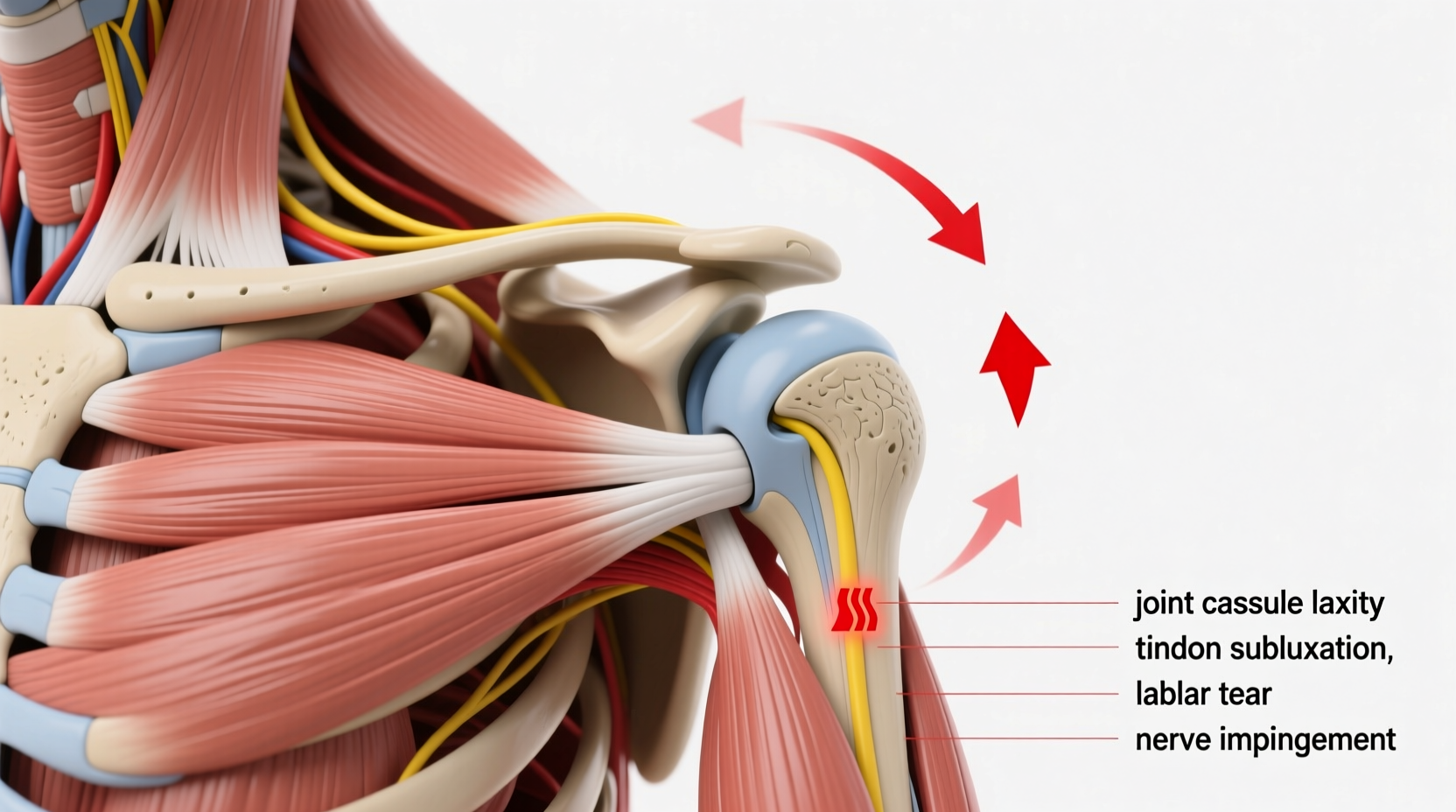
Joint noise without pain or loss of function is typically benign. In the shoulder, several physiological processes can explain popping:
- Cavitation: When gas (primarily nitrogen) rapidly escapes from synovial fluid during joint movement, it creates a small bubble that collapses with a popping sound—similar to knuckle cracking.
- Tendon snapping: Tendons may shift slightly over bony prominences during motion, producing a click as they return to position.
- Soft tissue gliding: Ligaments or cartilage moving across uneven surfaces within the joint can generate subtle noise, especially after periods of inactivity.
These mechanisms are usually painless and do not impair strength or mobility. They often occur intermittently and may disappear with warm-up or regular movement.
Common Causes of Painful or Frequent Shoulder Popping
When popping becomes persistent, painful, or associated with weakness, it may indicate an underlying condition. Below are some frequent culprits:
1. Labral Tears (SLAP or Bankart Lesions)
The labrum is a ring of cartilage that deepens the shoulder socket and stabilizes the joint. Repetitive overhead motions—common in sports like baseball, swimming, or weightlifting—can cause fraying or tearing. A torn labrum often produces a deep, catching sensation accompanied by a pop.
2. Rotator Cuff Dysfunction
The rotator cuff comprises four muscles that control shoulder stability and rotation. Impingement, tendinitis, or partial tears can lead to altered mechanics, causing tendons to rub abnormally against bone structures, resulting in snapping or grinding.
3. Shoulder Instability
In individuals with naturally loose ligaments or prior dislocations, the humeral head may slide partially out of place (subluxation), creating a pop upon relocation. This is more common in younger, hypermobile populations.
4. Osteoarthritis or Cartilage Wear
Over time, degenerative changes can erode smooth joint surfaces. As bone contacts bone or roughened areas grind together, crepitus becomes louder and more consistent, often worsening with activity.
5. Biceps Tendon Pathology
The long head of the biceps tendon runs through a groove in the upper arm bone. Inflammation (tendinitis) or instability (subluxation) in this area can produce a distinct pop near the front of the shoulder.
“Not every shoulder pop needs treatment, but recurrent pain with movement should never be ignored. Early evaluation prevents progression to more serious injury.” — Dr. Lena Patel, Sports Medicine Physician
Red Flags: When Shoulder Popping Requires Medical Attention
While occasional noise is normal, certain symptoms suggest pathology requiring professional assessment. Be alert for the following warning signs:
| Red Flag | Potential Condition | Action Required |
|---|---|---|
| Pain with popping | Labral tear, impingement, arthritis | See physician; imaging may be needed |
| Feeling of instability or “giving way” | Shoulder subluxation or dislocation | Orthopedic evaluation recommended |
| Weakness or inability to lift arm | Rotator cuff tear | Urgent assessment advised |
| Swelling or warmth around joint | Inflammatory arthritis or infection | Seek immediate care |
| Clicking after trauma or fall | Acute structural damage | Emergency evaluation if severe |
Ignoring these signals can lead to progressive joint deterioration, muscle atrophy, or permanent functional limitations. Delayed diagnosis of conditions like full-thickness rotator cuff tears reduces the likelihood of non-surgical recovery.
Step-by-Step Guide to Assessing and Managing Shoulder Pops
If you're experiencing shoulder popping, follow this structured approach to determine whether self-care is sufficient or professional help is necessary.
- Monitor Symptoms for 7–10 Days
Track frequency, triggers (e.g., overhead reaching), and associated sensations. Use a journal or notes app to record observations. - Perform a Basic Mobility Test
Stand in front of a mirror. Slowly raise both arms overhead, then rotate them backward and forward. Note any asymmetry, hesitation, or pain location. - Check for Strength Deficits
Press hands against a wall in a push-up position. Compare effort between sides. Also test external rotation by holding elbows at 90 degrees and pushing outward against resistance. - Apply Conservative Measures
If no red flags: apply ice after activity, avoid aggravating motions, and begin gentle stretching (e.g., cross-body arm stretch, doorway pec stretch). - Begin Scapular and Rotator Cuff Strengthening
Use light resistance bands for exercises like:- External rotations (3 sets of 12 reps)
- Scapular retractions (“Y,” “T,” “W” positions)
- Internal rotation with band anchored at elbow height
- Reassess After Two Weeks
If improvement occurs, continue strengthening. If symptoms persist or worsen, consult a physical therapist or orthopedist. - Seek Imaging if Indicated
An MRI or ultrasound may be ordered to evaluate soft tissue integrity, particularly if clinical suspicion of labral or tendon injury exists.
Real-Life Example: A Climber’s Shoulder Recovery
Mark, a 34-year-old rock climber, began noticing a sharp pop in his right shoulder during overhead reaches on vertical walls. Initially dismissed as normal wear, the sensation evolved into persistent anterior pain and a feeling of \"something slipping\" during dynamic moves.
After two months of continued climbing and inadequate rest, he developed night pain and difficulty sleeping on the affected side. He visited a sports medicine clinic where a physical exam revealed positive tests for SLAP lesion and mild rotator cuff strain. An MRI confirmed superior labral fraying.
With six weeks of targeted rehab—focusing on scapular stabilization, eccentric loading, and activity modification—his symptoms resolved significantly. He returned to climbing with modified technique and preventive exercises, avoiding surgery.
His case underscores the importance of early intervention. Had he addressed the initial popping sooner, progression might have been prevented.
Do’s and Don’ts of Shoulder Health
| Do | Don’t |
|---|---|
| Warm up before strenuous activity | Ignore persistent pain |
| Strengthen rotator cuff and scapular muscles | Lift heavy weights with poor form |
| Stretch chest and shoulder capsules regularly | Push through painful movements |
| Take breaks during repetitive tasks | Sleep on the affected shoulder if painful |
| Use ergonomic setups at work | Assume all joint noise is harmless |
FAQ: Common Questions About Shoulder Popping
Is it bad to crack your shoulder intentionally?
Occasional intentional cracking isn't harmful if done gently and without pain. However, habitual manipulation—especially using forceful twisting or jerking—can stress ligaments over time and contribute to instability. It's safer to improve joint health through controlled movement and strengthening.
Can posture affect shoulder popping?
Yes. Poor posture—particularly forward head and rounded shoulders—alters scapular positioning, increasing pressure on the rotator cuff and reducing space within the subacromial region. This can lead to impingement and abnormal joint mechanics. Correcting posture through awareness and exercise often reduces or eliminates popping.
Will shoulder popping go away on its own?
If caused by temporary inflammation or minor misalignment, yes—especially with rest, proper movement, and time. Chronic or mechanically driven pops related to structural issues (like labral tears) rarely resolve completely without intervention. Some adapt well with conservative management, while others require surgical repair for full resolution.
Essential Checklist: When to See a Specialist
Use this checklist to determine if professional evaluation is warranted:
- ☑ Pain accompanies the popping sensation
- ☑ You feel your shoulder \"slips\" or \"catches\" during motion
- ☑ Weakness interferes with daily activities (e.g., brushing hair, reaching shelves)
- ☑ Popping started after an injury or fall
- ☑ Symptoms last longer than three weeks despite rest
- ☑ Night pain disrupts sleep
- ☑ Previous history of shoulder dislocation or surgery
If two or more apply, schedule an appointment with a physical therapist or orthopedic specialist.
Conclusion: Listen to Your Body, Act with Purpose
Your shoulder’s popping may be nothing—or it could be the first whisper of a problem growing beneath the surface. The key lies in observation, informed response, and timely action. Don’t normalize pain simply because joint noise is common. Modern diagnostics and rehabilitative therapies offer excellent outcomes when intervention begins early.
Whether you're an athlete, desk worker, or weekend gardener, shoulder health impacts nearly every aspect of life. Take responsibility now: assess your symptoms honestly, apply evidence-based strategies, and seek expert guidance when needed. Your future self will thank you for preserving mobility, strength, and freedom from chronic pain.




 浙公网安备
33010002000092号
浙公网安备
33010002000092号 浙B2-20120091-4
Comments
No comments yet. Why don't you start the discussion?