
Shoulder popping during rotation is a sensation many people experience—sometimes harmlessly, sometimes with discomfort or pain. While occasional noise in the joint may be normal, persistent or painful popping can signal underlying issues that shouldn’t be ignored. Understanding the mechanics behind this phenomenon, identifying potential causes, and knowing when to seek help are essential steps toward maintaining shoulder health and preventing long-term damage.
The shoulder is one of the most mobile joints in the body, capable of a wide range of motion. This flexibility comes at a cost: stability. The complex interplay of bones, tendons, ligaments, and muscles makes the shoulder prone to mechanical irregularities. When you rotate your arm and hear or feel a pop, snap, or click, it could stem from natural processes—or indicate conditions requiring medical attention.
Understanding Joint Cavitation: The Science Behind the Pop
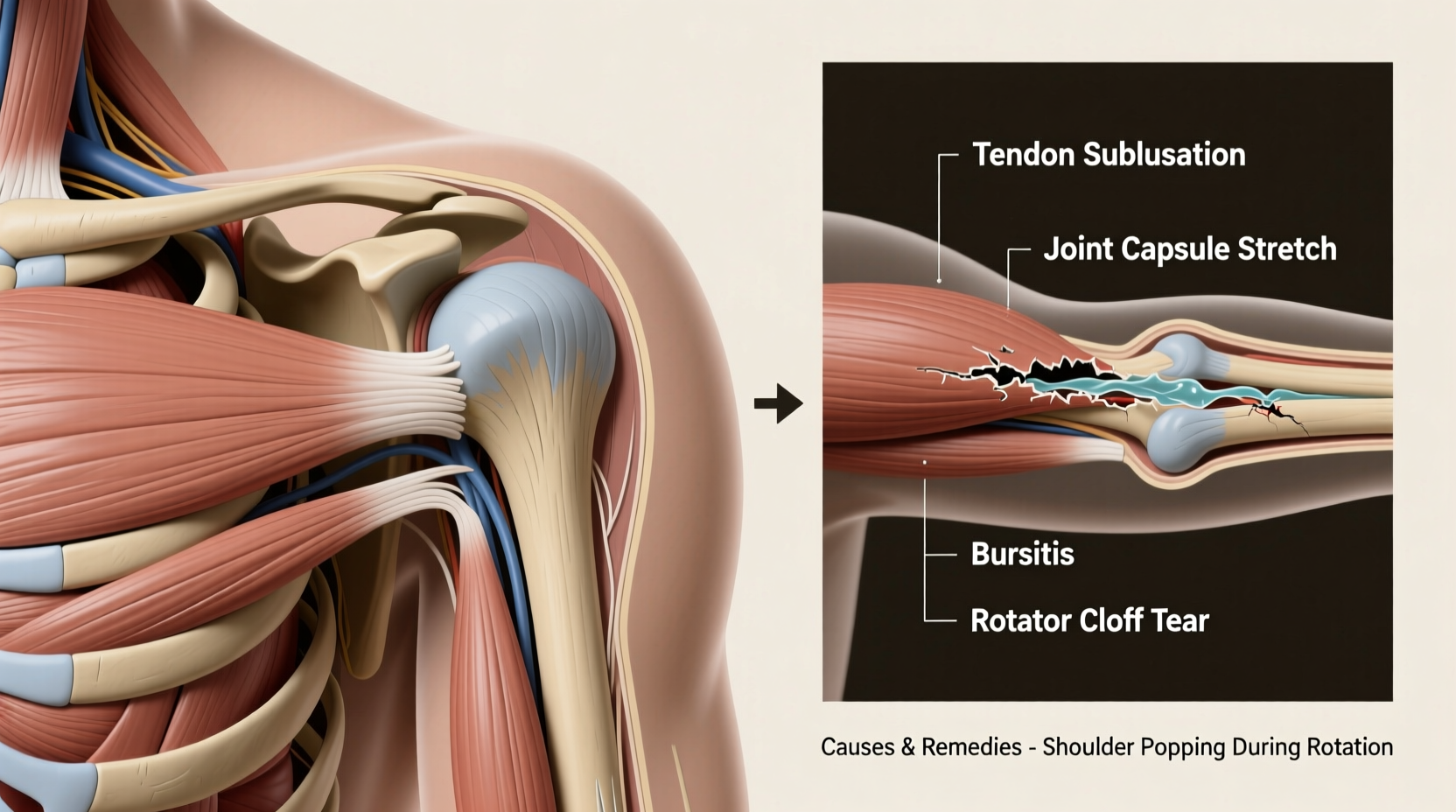
One of the most common and harmless reasons for shoulder popping is **joint cavitation**—the same mechanism responsible for cracking knuckles. Inside your shoulder joint, synovial fluid lubricates the space between bones. This fluid contains dissolved gases like nitrogen, oxygen, and carbon dioxide. When you stretch or rotate the joint rapidly, pressure within the capsule drops suddenly, causing these gases to form a bubble that then collapses with an audible \"pop.\"
This process is typically painless and doesn't cause harm. In fact, research has shown no link between habitual joint cracking and arthritis. However, if the sound is accompanied by pain, swelling, or reduced mobility, the cause likely extends beyond simple cavitation.
Common Causes of Painful or Frequent Shoulder Popping
When shoulder popping becomes frequent, painful, or limits function, it often points to structural or soft tissue problems. Below are some of the most prevalent causes:
- Labral Tears (SLAP Tears): The labrum is a ring of cartilage that stabilizes the shoulder socket. Overhead motions—common in sports like baseball or swimming—can tear this tissue, leading to catching, popping, and deep pain.
- Rotator Cuff Tendinopathy or Tears: Repetitive strain or acute injury can inflame or tear the rotator cuff tendons. These tears may cause snapping sensations as tendons catch on bone during movement.
- Shoulder Impingement Syndrome: When the space between the humerus and acromion (a bony projection) narrows, tendons get pinched during arm elevation, resulting in inflammation, pain, and sometimes audible clicking.
- Loose Bodies or Cartilage Flaps: Small fragments of bone or cartilage can break off inside the joint due to trauma or degeneration, floating freely and causing mechanical symptoms like locking or popping.
- Snapping Scapula Syndrome: Abnormal contact between the scapula (shoulder blade) and rib cage produces a grinding or popping sound, especially when moving the arm overhead.
- Instability or Hyperlaxity: Individuals with naturally loose ligaments or those who’ve experienced dislocations may notice recurrent popping due to excessive joint movement.
“Repetitive overhead activity places significant stress on the shoulder complex. Athletes and laborers must monitor any new onset of popping or pain—it could be the first sign of microtrauma.” — Dr. Alan Reyes, Sports Medicine Orthopedist
When to Be Concerned: Red Flags to Watch For
Not all shoulder noises require intervention. But certain signs suggest the need for professional evaluation:
| Symptom | Benign (Likely Harmless) | Concerning (Needs Evaluation) |
|---|---|---|
| Sound Type | Single, infrequent pop | Repeated snapping, grinding, grating |
| Pain | Absent or mild, momentary | Sharp, persistent, or worsening |
| Mobility | Full range of motion | Stiffness, weakness, locking |
| Swelling/Redness | None | Present, warmth in joint |
| History | No prior injury | Previous dislocation, trauma, surgery |
If you experience any combination of pain, decreased strength, instability, or restricted motion along with popping, consult a healthcare provider. Early diagnosis improves outcomes, particularly for conditions like labral tears or partial rotator cuff injuries that respond best to conservative treatment when caught early.
Effective Remedies and Treatment Approaches
Treatment depends on the root cause. Many cases resolve with non-invasive strategies, while others may require medical or surgical intervention.
Step-by-Step Guide to Managing Non-Painful Popping
- Monitor Frequency and Triggers: Keep a log of when the popping occurs—during specific movements, after exercise, or randomly.
- Improve Posture: Rounded shoulders narrow the subacromial space, increasing impingement risk. Practice sitting and standing tall.
- Strengthen Rotator Cuff Muscles: Use resistance bands for external rotation, internal rotation, and scaption exercises 3x weekly.
- Incorporate Mobility Work: Perform daily shoulder circles, wall slides, and doorway stretches to maintain joint glide.
- Avoid Overhead Strain: Limit repetitive lifting above shoulder level until symptoms stabilize.
- Apply Ice After Activity: If mild inflammation follows use, ice for 15 minutes post-exercise.
Medical and Rehabilitative Treatments
For diagnosed conditions, treatment may include:
- Physical Therapy: A therapist can correct muscle imbalances, improve scapular control, and guide safe strengthening.
- Corticosteroid Injections: Used sparingly to reduce inflammation in cases of bursitis or severe tendinopathy.
- Ultrasound or MRI Imaging: To confirm soft tissue injuries such as labral tears or full-thickness rotator cuff damage.
- Surgical Repair: Arthroscopic surgery may be necessary for large tears, chronic instability, or removal of loose bodies.
Real-Life Example: A Case of Overuse in a Weekend Athlete
Mark, a 38-year-old recreational tennis player, began noticing a consistent pop in his right shoulder during serves. Initially painless, the sound grew more frequent over two months. Soon, he developed a dull ache that lingered after matches and made sleeping on that side uncomfortable.
After visiting a sports medicine specialist, Mark was diagnosed with a superior labral anterior-posterior (SLAP) tear caused by repetitive overhead motion. His treatment plan included four weeks of rest from serving, followed by targeted physical therapy focusing on scapular stabilization and eccentric rotator cuff training. By week eight, his popping had diminished significantly, and pain resolved completely by week twelve. He returned to tennis with modified technique and a maintenance exercise routine.
This case highlights how seemingly minor symptoms can escalate without proper management—and how timely care leads to full recovery.
Prevention Checklist: Protect Your Shoulders Long-Term
Whether you're rehabbing an injury or aiming to prevent one, follow this checklist to maintain shoulder integrity:
- ✅ Perform dynamic warm-ups before upper-body workouts
- ✅ Strengthen rotator cuff and scapular stabilizers twice weekly
- ✅ Maintain thoracic spine mobility with foam rolling and stretching
- ✅ Avoid sudden increases in training volume or intensity
- ✅ Use proper lifting mechanics—keep loads close to the body
- ✅ Address postural imbalances (e.g., forward head, rounded shoulders)
- ✅ Listen to early warning signs—don’t “push through” shoulder pain
Frequently Asked Questions
Is shoulder popping always a sign of injury?
No. Occasional, painless popping is usually due to joint cavitation and is considered normal. However, if popping is accompanied by pain, weakness, or instability, it may indicate an underlying issue that needs evaluation.
Can poor posture cause shoulder popping?
Yes. Slouched or forward-head posture alters the alignment of the shoulder girdle, reducing space for tendons and increasing friction during movement. This can lead to impingement and mechanical popping.
How long does it take for shoulder popping to resolve with treatment?
With conservative care like physical therapy, improvement is typically seen within 4–8 weeks. Full resolution may take 3–6 months depending on the condition’s severity and adherence to rehabilitation.
Take Control of Your Shoulder Health
Your shoulders play a vital role in daily function, athletic performance, and overall quality of life. While occasional popping may be nothing to worry about, persistent or painful symptoms deserve attention. Ignoring them can lead to progressive wear, compensatory movement patterns, and longer recovery times.
Start today by assessing your shoulder movement, improving posture, and incorporating preventive exercises. If symptoms persist, don’t hesitate to seek professional guidance. With the right knowledge and proactive care, you can maintain strong, stable, and silent shoulders for years to come.




 浙公网安备
33010002000092号
浙公网安备
33010002000092号 浙B2-20120091-4
Comments
No comments yet. Why don't you start the discussion?