
It’s a familiar morning ritual: you step into the shower, turn on the water, and within seconds, the flimsy plastic curtain begins creeping toward you, clinging to your legs like an unwanted guest. You push it away, only for it to return moments later. This isn’t just bad design—it’s physics in action. Understanding why your shower curtain sticks to you can transform a frustrating daily annoyance into a solvable problem. From Bernoulli’s principle to thermal convection, the forces at play are both fascinating and fixable.
The Science Behind the Suction: What Makes Your Shower Curtain Move?
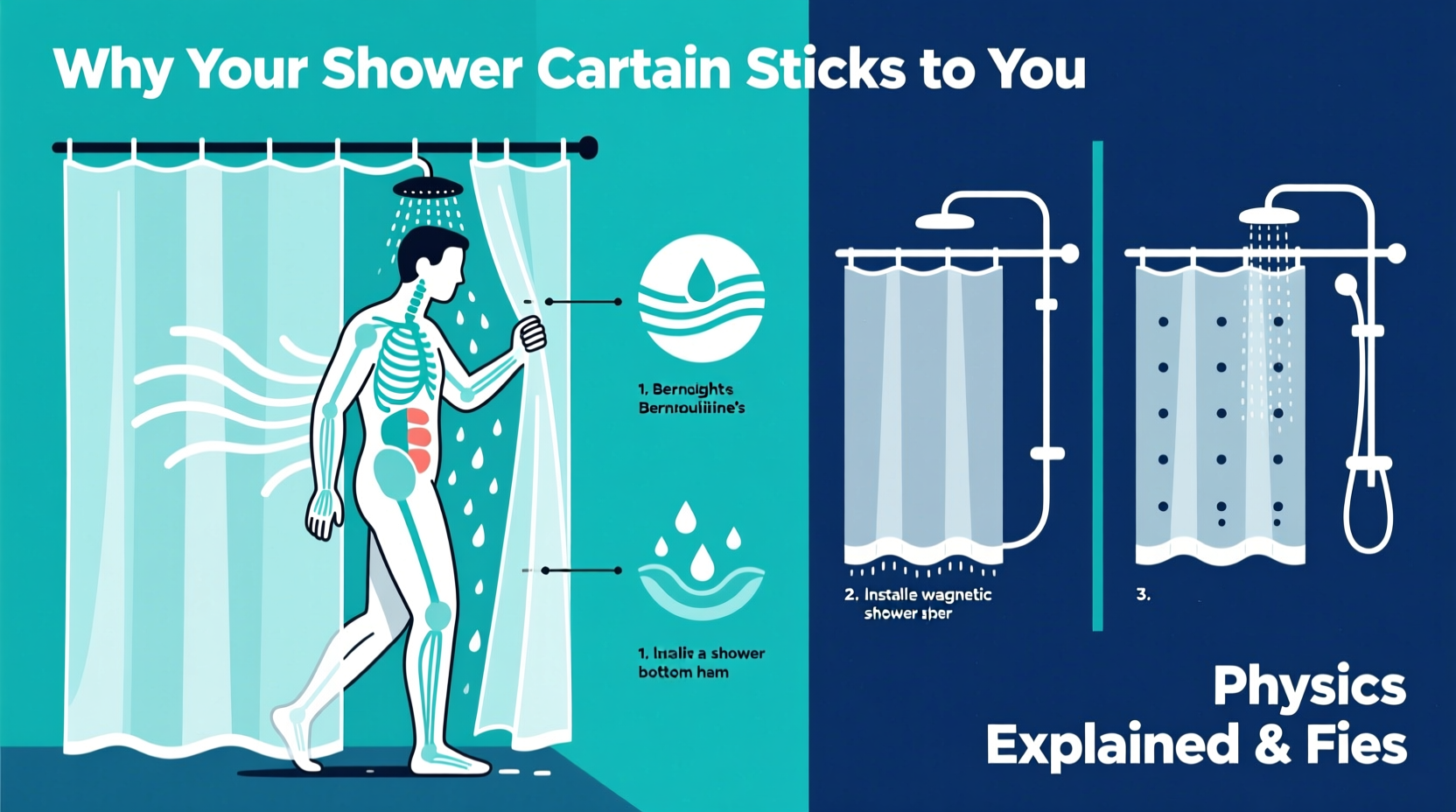
The inward billowing of a shower curtain isn’t random—it follows predictable physical laws. When hot water runs in an enclosed space like a shower stall, several interrelated phenomena occur simultaneously, creating a low-pressure zone that pulls the curtain inward.
The primary explanation lies in **airflow dynamics**. As hot water flows from the showerhead, it heats the surrounding air. Warm air rises due to lower density, creating an upward current inside the shower enclosure. This rising air draws cooler air from below to replace it, forming a convection loop. The movement of this air creates regions of differing pressure—specifically, lower pressure inside the shower compared to the outside.
This pressure differential is what causes the curtain to bulge inward. The higher atmospheric pressure outside pushes the lightweight curtain toward the lower-pressure zone inside the shower stall. Think of it like a balloon being squeezed from one side—the curtain has no structural rigidity to resist the force.
Bernoulli’s Principle: The Hidden Force at Play
Another key factor is Bernoulli’s principle, which states that as the speed of a fluid (including air) increases, its pressure decreases. When water sprays from the showerhead, it accelerates the surrounding air, creating fast-moving currents along the interior of the shower.
These moving air streams have lower pressure than the still air outside the shower. Since nature seeks equilibrium, the higher-pressure air outside pushes the flexible curtain inward—especially near the bottom, where the effect is most pronounced due to proximity to the floor and reduced airflow resistance.
“Shower curtain cling is a classic example of fluid dynamics in everyday life. It combines convection, pressure gradients, and boundary layer effects—all in your bathroom.” — Dr. Alan Reyes, Fluid Dynamics Researcher, MIT
Thermal Effects and Steam: How Heat Amplifies the Problem
Hot showers intensify the curtain-sticking phenomenon because heat directly influences air density and movement. Steam production adds moisture-laden vapor to the air, which not only contributes to buoyancy but also increases humidity levels, making the internal environment more dynamic.
As steam rises, it carries energy and momentum, reinforcing the upward draft. This enhances the convection cycle and deepens the low-pressure zone. Additionally, condensation on the curtain itself can increase its mass slightly, but more importantly, it reduces stiffness, making the material even more susceptible to air pressure changes.
Cold showers, by contrast, produce minimal temperature differences between inside and outside the shower. Without significant heating of air, convection currents weaken or disappear entirely, reducing—or eliminating—the curtain’s tendency to stick.
Common Misconceptions About the Cause
Many people assume the curtain sticks due to suction from the drain or fan exhaust. While bathroom ventilation systems can influence airflow, they are rarely the primary cause. Similarly, static electricity is sometimes blamed, especially with synthetic curtains, but studies show it plays a negligible role compared to aerodynamic forces.
The real culprit is consistent: rapid air movement combined with temperature-driven pressure imbalances. Recognizing this allows for targeted, effective solutions rather than guesswork.
Practical Fixes That Work: Stop the Curtain from Sticking
Knowing the science is half the battle. The other half is applying smart, accessible fixes that disrupt the conditions causing the cling. Below are proven strategies grounded in physics and user experience.
1. Upgrade to a Weighted or Magnetic Liner
One of the simplest and most effective solutions is switching to a shower curtain liner with built-in weights or magnets. These features anchor the bottom edge of the liner, preventing it from lifting and bending inward.
- Weighted hems: Small metal or plastic beads sewn into the bottom hem add downward force.
- Magnetic bottoms: Embedded magnets attract to your bathtub’s steel rim, holding the curtain firmly in place.
2. Install a Tension Rod or Curved Shower Rod
A standard straight rod positions the curtain flush against the tub, offering little resistance to inward motion. A curved shower rod, however, extends outward at the center, creating more interior space and allowing the curtain to drape away from the bather.
Alternatively, using a tension rod to angle the top outward can achieve a similar effect. Both methods reduce contact probability and give the curtain room to move without touching your body.
3. Improve Airflow Balance
Equalizing pressure prevents the curtain from being pushed inward. Consider these ventilation tactics:
- Leave the bathroom door open during showers to allow balanced air exchange.
- Run an exhaust fan before and during your shower to stabilize indoor air pressure.
- Crack a window if possible, especially in small bathrooms where pressure buildup is faster.
These steps minimize pressure differentials and reduce convective drafts.
4. Choose the Right Curtain Material
Heavier materials resist airflow better than ultra-thin plastics. Options include:
- Reinforced vinyl: Denser and less prone to fluttering.
- Fabric liners with waterproof backing: Offer structure and weight.
- Double-layer curtains: Combine aesthetic appeal with functional stability.
Avoid overly flimsy models marketed solely for short-term use—they exacerbate the problem.
Step-by-Step Guide: How to Eliminate Curtain Cling Permanently
Follow this sequence to diagnose and resolve the issue in your bathroom:
- Observe the behavior: Note when and how aggressively the curtain moves. Does it happen only with hot water? Is it worse in winter?
- Inspect your current setup: Check if the curtain touches the tub or hangs too loosely. Measure clearance between the liner and your body.
- Replace or modify the liner: Invest in a magnetic or weighted version. Ensure it’s long enough to rest on the tub floor without pooling.
- Install a curved rod: This single upgrade often eliminates 80% of cling issues.
- Optimize ventilation: Test running the exhaust fan earlier and keeping the door ajar.
- Monitor results: After two weeks, assess whether adjustments reduced or stopped the sticking.
Most users report dramatic improvement after implementing just two of these steps.
Do’s and Don’ts: Quick Reference Table
| Do’s | Don’ts |
|---|---|
| Use a curved shower rod | Use a flimsy, non-weighted liner |
| Choose a heavy-duty or fabric-reinforced curtain | Allow the curtain to float freely above the tub |
| Keep bathroom door slightly open during showers | Seal the room completely with closed doors and windows |
| Pre-run the exhaust fan for 5 minutes | Blame the drain or plumbing for the movement |
| Add weights to existing curtains (DIY option) | Ignore signs of mold caused by constant moisture trapping |
Real-Life Example: One Homeowner’s Fix
Sarah M., a homeowner in Portland, Oregon, struggled with her shower curtain constantly wrapping around her legs every morning. She tried doubling up curtains, taping the edges, and even placing shampoo bottles along the bottom to weigh it down—with limited success.
After reading about the physics involved, she replaced her standard liner with a magnetic-bottom model and installed a curved aluminum rod. Within days, the problem vanished. “I didn’t realize such a small change could make such a big difference,” she said. “Now I actually enjoy my showers instead of fighting with the curtain.”
Her solution cost under $50 and took less than 30 minutes to install—proof that understanding the root cause leads to efficient, lasting fixes.
FAQ: Common Questions About Shower Curtain Cling
Does the shape of the shower affect curtain movement?
Yes. Enclosed showers with glass doors rarely experience this issue because the barrier blocks airflow. Open stalls with only a curtain are most vulnerable. Corner showers may intensify convection due to restricted space.
Can I fix an existing curtain without buying a new one?
Yes. You can DIY-add weights by sewing small fishing sinkers or metal washers into the hem. Alternatively, attach adhesive magnetic strips to the bottom edge if your tub is metal. Just ensure added materials won’t rust or damage the liner.
Why does the curtain only stick during hot showers?
Hot water creates warm, rising air that drives convection currents and lowers internal pressure. Cold water doesn’t generate sufficient thermal contrast to trigger strong airflow, so the pressure remains balanced and the curtain stays put.
Conclusion: Take Control of Your Morning Routine
The shower curtain that sticks to you isn’t a minor inconvenience—it’s a daily disruption rooted in fundamental physics. But armed with knowledge of airflow, pressure, and material behavior, you’re no longer at the mercy of flapping plastic. Simple upgrades like magnetic liners, curved rods, and better ventilation can restore peace to your bathing routine.
Stop accepting discomfort as normal. Apply these evidence-based fixes, observe the results, and reclaim control over your personal space. Your future self will step into a calm, curtain-free shower every single time.




 浙公网安备
33010002000092号
浙公网安备
33010002000092号 浙B2-20120091-4
Comments
No comments yet. Why don't you start the discussion?