
Many people love music and want to sing, but are discouraged when they hear their own voice on a recording or during practice. The disconnect between how you think you sound and how you actually sound can be jarring. Singing is a skill — not just a talent — and what feels natural isn’t always effective. Understanding the root causes behind a weak or unpleasant singing voice is the first step toward meaningful improvement.
Vocal quality depends on a combination of breath control, resonance, pitch accuracy, muscle coordination, and emotional expression. When any of these elements are underdeveloped, your voice may sound strained, flat, thin, or uncontrolled. The good news? Nearly every vocal issue can be addressed with targeted exercises and mindful practice.
Common Reasons Your Singing Voice Sounds Bad
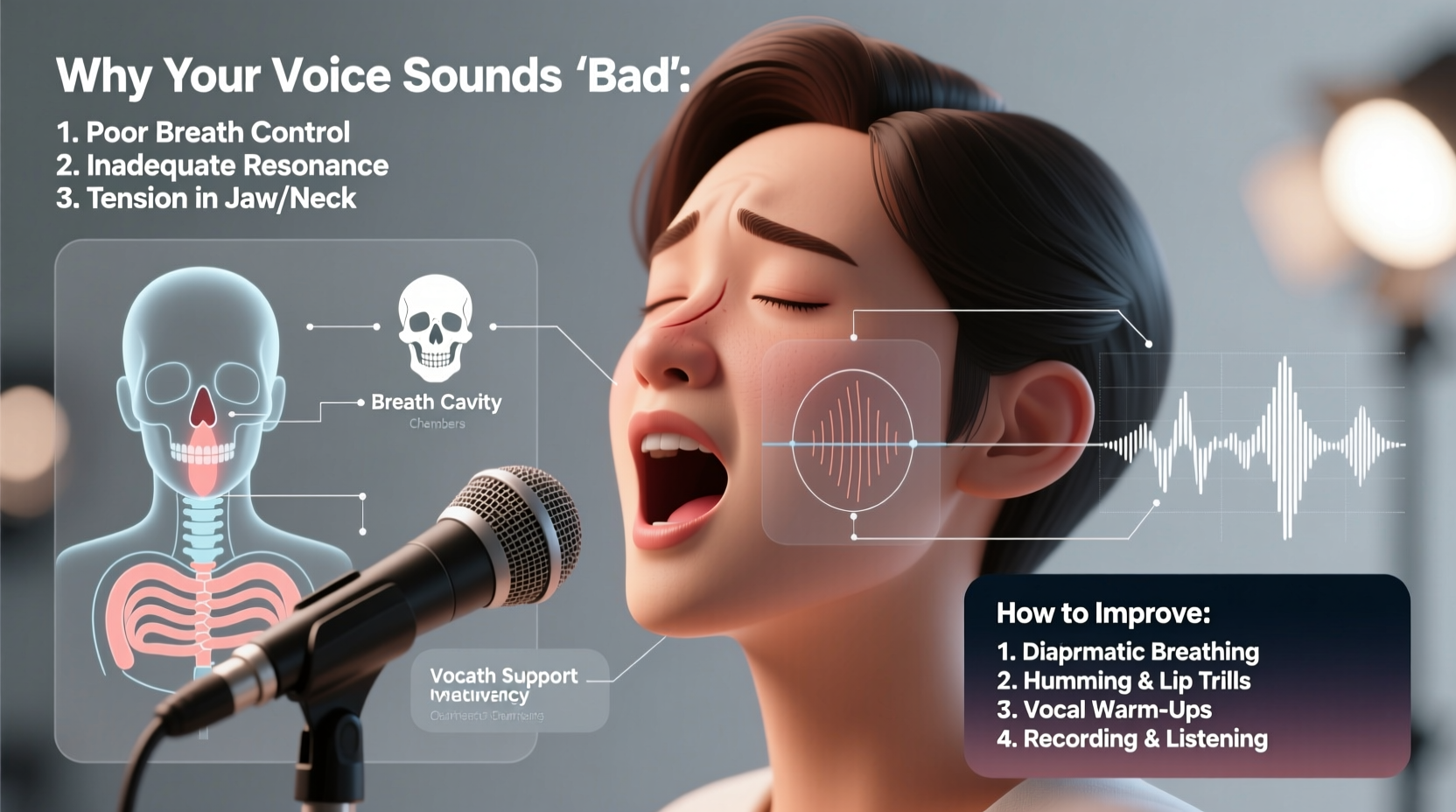
Singing poorly isn’t a permanent condition — it’s usually the result of technical missteps or lack of training. Below are the most frequent culprits behind an unsatisfactory vocal performance.
- Poor breath support: Singing without proper diaphragmatic breathing leads to shaky tone, limited range, and fatigue.
- Inaccurate pitch (being off-key): This often stems from weak ear-vocal coordination, not a “bad ear.”
- Tension in the throat or jaw: Constriction kills tone quality and makes high notes painful.
- Weak vocal placement: Singing too far back in the throat or nasal cavity distorts resonance.
- Lack of warm-up: Cold vocal cords are less flexible and more prone to strain.
- Unrealistic expectations: Comparing yourself to professionals who’ve trained for years sets up frustration.
How to Improve Your Singing Voice: A Step-by-Step Guide
Improvement doesn’t happen overnight, but with structured effort, anyone can develop a stronger, clearer, and more expressive voice. Follow this timeline to build solid vocal habits over 8 weeks.
- Week 1–2: Master Breath Control
Practice diaphragmatic breathing daily. Lie on your back, place a book on your stomach, and breathe so the book rises and falls. Then stand and repeat. Inhale for 4 counts, hold for 4, exhale on a sustained \"sss\" for 8–12 counts. - Week 3–4: Develop Pitch Accuracy
Use a piano or app like Tenuto or Vocal Pitch Monitor. Play a note, listen, then match it with a simple vowel like \"ah.\" Start within your comfortable range and gradually expand. - Week 5–6: Reduce Tension and Open the Resonance Space
Do yawn-sigh exercises: inhale as if yawning deeply, then release a gentle sigh on \"haaa.\" Feel the throat open naturally. Repeat before scales. - Week 7–8: Integrate Technique into Songs
Choose a simple song (e.g., “Lean on Me” or “Hallelujah”). Apply breath support, clear vowels, and relaxed posture. Sing slowly, focusing on consistency over speed.
Do’s and Don’ts of Vocal Training
| Do’s | Don’ts |
|---|---|
| Warm up for 10–15 minutes before singing | Jump straight into high or loud notes |
| Practice in short, focused sessions (15–20 mins) | Sing for hours trying to “push” improvement |
| Stay hydrated—drink water throughout the day | Consume excessive caffeine or alcohol before singing |
| Use a mirror to check posture and jaw tension | Crane your neck or hunch shoulders while singing |
| Seek feedback from a teacher or trusted listener | Rely only on self-perception without external input |
Real Example: From Frustration to Confidence
Mark, a 28-year-old office worker, avoided karaoke because friends joked that he was “tone-deaf.” Discouraged, he recorded himself singing “Let It Be” and was shocked by how thin and off-pitch his voice sounded. He started working with a vocal coach twice a month and practiced daily using the steps above. Within three months, he could match pitches reliably and sustain notes without strain. By month six, he sang at a friend’s wedding — confidently and in tune. His breakthrough wasn’t due to sudden talent, but consistent attention to breath, listening, and relaxation.
“Most people don’t sound great at first — that’s normal. What separates good singers from others is not genetics, but persistence and precision in practice.” — Dr. Lena Torres, Voice Therapist and Vocal Coach
Essential Tips for Faster Progress
Vocal Improvement Checklist
Use this checklist weekly to stay on track:
- ✅ Warm up before singing (lip trills, sirens, gentle humming)
- ✅ Practice breath control for 5 minutes daily
- ✅ Sing along with a tuner app to check pitch accuracy
- ✅ Record at least one vocal exercise or song per week
- ✅ Review recordings objectively — note 1 thing to improve
- ✅ Stay hydrated and avoid vocal strain (yelling, whispering)
- ✅ Sing with good posture: spine aligned, shoulders relaxed, chin level
Frequently Asked Questions
Can anyone learn to sing well, even if they sound bad now?
Yes. While natural aptitude varies, nearly everyone can learn to sing in tune with proper training. The brain and vocal muscles adapt with repetition. Even those diagnosed with “amusia” (difficulty perceiving pitch) can improve significantly with guided ear training.
Why does my voice crack when I sing higher notes?
Cracking occurs when your vocal registers (chest and head voice) don’t blend smoothly. It’s common among beginners. Exercises like sliding up and down on “ng” (as in “sing”) help bridge the gap between registers. With time, transitions become seamless.
Is it bad to sing every day?
Not if done correctly. Daily practice is ideal, but it must be balanced. Limit intense singing to 20–30 minutes per session, and always include warm-ups and cool-downs. Overuse without recovery leads to fatigue or injury.
Final Thoughts: Your Voice Can Grow
The belief that great singers are “born, not made” is a myth that holds many back. Every professional vocalist once struggled with pitch, power, or confidence. The difference is that they kept going — refining technique, embracing feedback, and respecting the process.
Your singing voice isn’t fixed. It responds to how you use it, train it, and treat it. Small, consistent actions compound into dramatic improvements. Whether you dream of performing on stage or simply want to enjoy singing at home, the journey begins with understanding your current voice — not judging it, but learning from it.




 浙公网安备
33010002000092号
浙公网安备
33010002000092号 浙B2-20120091-4
Comments
No comments yet. Why don't you start the discussion?