
Air travel is a modern necessity, but few anticipate the toll it takes on the skin. You board with a clear complexion and land with unexpected breakouts—red bumps, clogged pores, and irritation where none existed before. This isn’t coincidence; it’s a predictable reaction to the unique conditions of air travel. The cabin environment, combined with pre-flight stress and post-flight dehydration, creates the perfect storm for acne flare-ups. Understanding the root causes—and how to intervene—is essential for anyone who wants to maintain healthy skin despite frequent flights.
The issue isn't just cosmetic. Skin breakouts after flying can signal deeper imbalances in your skin’s microbiome, barrier function, and hydration levels. But with targeted preparation and smart in-flight habits, you can significantly reduce or even prevent these flare-ups. This guide dives into the science behind flight-related acne, outlines actionable steps to prepare your skin, and provides real-world strategies used by dermatologists and frequent flyers alike.
The Science Behind Post-Flight Breakouts
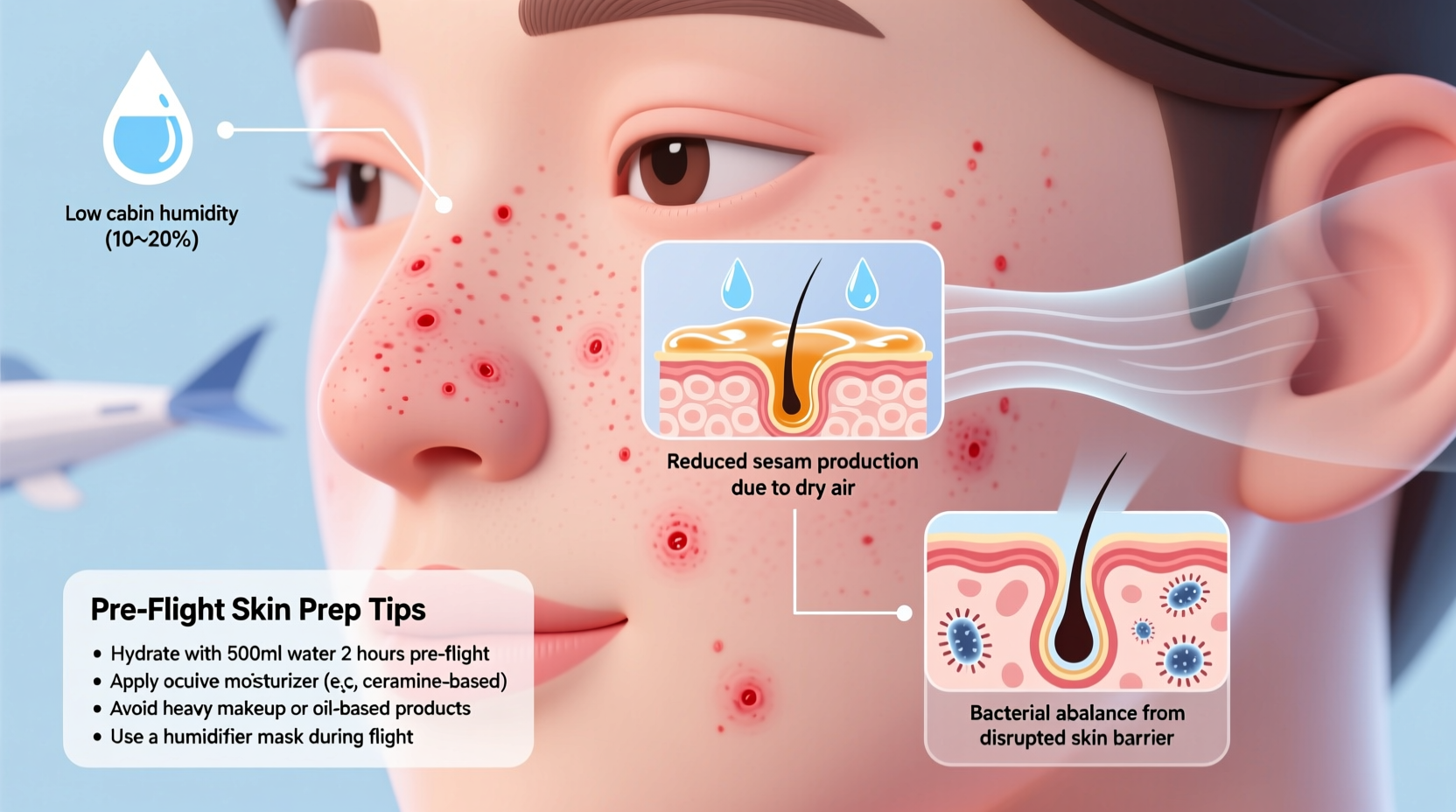
Commercial airplanes maintain cabin pressure equivalent to an altitude of 6,000–8,000 feet. At this elevation, oxygen levels are lower, and humidity drops to as little as 4–10%—drier than most deserts. Your skin, which thrives at 40–60% humidity, reacts immediately. Transepidermal water loss (TEWL) increases, meaning moisture escapes from the skin faster than it can be replenished. As the outer layer dehydrates, it becomes compromised, weakening the skin barrier.
When the skin barrier weakens, it triggers inflammation and prompts sebaceous glands to overproduce oil in compensation. This excess sebum mixes with dead skin cells and bacteria, clogging pores and leading to breakouts—especially around the jawline, chin, and cheeks, areas already prone to hormonal acne.
Additionally, recycled cabin air circulates pollutants, allergens, and microbes. Touching tray tables, armrests, or seatbelt buckles then touching your face transfers bacteria like Propionibacterium acnes, further increasing breakout risk. Add in disrupted sleep cycles, dietary changes, and elevated cortisol from travel stress, and it’s no wonder skin pays the price.
“Flying creates a triple threat: dehydration, inflammation, and microbial exposure. Even patients with normally stable skin can experience flare-ups under these conditions.” — Dr. Lena Torres, Board-Certified Dermatologist
How to Prep Your Skin Before Takeoff
Preparation begins 24–48 hours before departure. Skincare isn’t about last-minute fixes; it’s about creating resilience. A well-prepped skin barrier can withstand environmental stressors far better than one that’s neglected.
1. Hydrate Internally and Externally
Start drinking more water two days before your flight. Aim for at least 2–3 liters daily, especially if you consume caffeine or alcohol regularly. Pair internal hydration with topical humectants like hyaluronic acid, which attract moisture to the skin. Apply a serum containing hyaluronic acid every morning and night leading up to your trip.
2. Avoid Active Ingredients That Sensitize
While exfoliants like glycolic acid, salicylic acid, and retinoids are effective for acne control, they increase skin sensitivity. Using them right before a flight can compromise your barrier when it needs protection most. Stop using strong actives 3–4 days pre-flight. Save treatments like chemical peels or laser sessions for after travel recovery.
3. Strengthen Your Skin Barrier
Incorporate ceramides, fatty acids, and cholesterol-rich moisturizers into your routine. These ingredients mimic the skin’s natural lipid matrix, reinforcing the protective layer. Look for creams labeled “barrier repair” or those formulated for sensitive or eczema-prone skin—they’re ideal for pre-flight defense.
4. Cleanse Gently
Switch to a non-foaming, pH-balanced cleanser. Harsh soaps strip natural oils, accelerating dehydration. Double cleansing is fine if needed, but avoid scrubbing. Instead, use lukewarm water and pat dry—never rub.
5. Protect Against UV Exposure
Even during short flights, UVA rays penetrate airplane windows. If you're seated near one, apply broad-spectrum SPF 30+ before boarding. Opt for mineral-based formulas (zinc oxide or titanium dioxide), which are less likely to irritate stressed skin.
What to Pack: Your In-Flight Skincare Kit
What you bring matters as much as what you do. TSA regulations limit liquids, but strategic packing ensures you have essentials without hassle.
| Product | Purpose | Travel-Friendly Format |
|---|---|---|
| Hyaluronic Acid Serum | Boosts hydration in dry environments | 5ml dropper bottle (TSA-compliant) |
| Cream-Based Moisturizer | Seals in moisture, strengthens barrier | Solid balm or 30ml jar |
| Facial Mist with Glycerin | Refreshes skin mid-flight | Mini spray bottle (under 100ml) |
| Nasal Spray & Lip Balm | Supports overall mucosal hydration | Single-use vials / twist-up stick |
| Oil-Free Cleansing Wipes | Removes buildup without water | Individually wrapped packs |
Avoid heavy fragrances, alcohol-based toners, or comedogenic oils (like coconut oil) in your kit. These may feel soothing initially but can clog pores over time, especially when combined with sweat and friction from headrests.
Real Example: How a Frequent Flyer Transformed Her Skin Routine
Jasmine, a 34-year-old marketing executive, traveled an average of 12 round-trips per year between New York and London. She noticed a consistent pattern: within 24 hours of landing, she developed painful cystic acne along her jawline. Despite using prescription topicals, the breakouts persisted.
After consulting a dermatologist, she adjusted her pre-flight regimen. She stopped using retinol three days before departure, switched to a ceramide-rich moisturizer, and began applying hyaluronic acid serum twice daily. On flights, she rehydrated her skin every two hours with a facial mist and applied a thick layer of occlusive balm before landing.
Within two months, her post-flight breakouts decreased by 80%. “I realized I was treating my skin like it was on solid ground,” she said. “But at 35,000 feet, it needs different care—more support, less aggression.”
Step-by-Step Guide: 24 Hours Before Takeoff
- 48 Hours Before: Begin increasing water intake. Eliminate alcohol and high-sodium foods that promote dehydration.
- 24 Hours Before: Perform a gentle double cleanse. Apply a hydrating serum followed by a rich moisturizer. Avoid exfoliation.
- 12 Hours Before: Pack your TSA-approved skincare kit. Include a hydrating mist, lip balm, and non-comedogenic wipes.
- 2 Hours Before Departure: Apply a thin layer of moisturizer and SPF. Drink 500ml of water.
- During Flight: Reapply hydrating mist every 1–2 hours. After meals, gently wipe face with a cleansing cloth. Re-moisturize.
- After Landing: Wash face with lukewarm water and mild cleanser. Apply a restorative serum and overnight mask to repair damage.
This timeline emphasizes consistency and prevention. Waiting until symptoms appear is too late—the damage has already begun.
Common Mistakes That Worsen Breakouts
- Over-cleansing on the plane: Washing your face multiple times removes natural oils and accelerates dryness.
- Using hand lotion on your face: Body lotions often contain heavier oils and fragrances that clog facial pores.
- Sleeping in makeup: Even minimal mascara or foundation traps bacteria against the skin during long flights.
- Touching your face frequently: Hands transfer bacteria from surfaces like tray tables, which harbor more germs than toilet seats.
- Skipping water for coffee or alcohol: Both are diuretics that worsen dehydration and trigger inflammatory responses.
Frequently Asked Questions
Can drinking water really prevent breakouts?
Yes—indirectly. While drinking water won’t directly “flush out” acne, it supports overall skin hydration and circulation. Dehydrated skin produces more oil to compensate, increasing clogged pores. Staying hydrated helps maintain balance.
Is it safe to use sheet masks on a plane?
Yes, but with caution. Sheet masks provide intense hydration, but wearing one for more than 15–20 minutes in dry air can cause reverse osmosis—where the mask pulls moisture from your skin. Apply, remove, then seal in residue with a moisturizer.
Why do I only break out on long-haul flights?
Duration matters. The longer you’re exposed to low humidity and recycled air, the more your skin barrier deteriorates. Flights over four hours significantly increase transepidermal water loss, making extended trips higher risk.
Expert Tips for Long-Term Travel Skincare
“The key is not to fight the environment, but to adapt to it. Think of your skin like a traveler—it needs extra support in unfamiliar climates.” — Dr. Rajiv Mehta, Cosmetic Dermatologist and Aviation Medicine Consultant
Dermatologists recommend building a “travel-specific” skincare protocol separate from your daily routine. This includes:
- Using antioxidant serums (like vitamin C) in the days leading up to travel to combat oxidative stress.
- Applying a facial oil with squalane—a lightweight, non-comedogenic oil that mimics sebum and prevents moisture loss.
- Bringing a silk or satin eye mask to reduce friction and absorb less moisture than cotton.
- Wearing a neck pillow covered in antimicrobial fabric to minimize contact with bacteria-laden surfaces.
Checklist: Pre-Flight Skin Preparation
- ✅ Increase water intake 48 hours before flight
- ✅ Discontinue retinoids and strong acids 3–4 days prior
- ✅ Switch to a gentle, non-stripping cleanser
- ✅ Add hyaluronic acid and ceramide products to routine
- ✅ Pack TSA-compliant hydrating mist and moisturizer
- ✅ Apply SPF before boarding, even for short flights
- ✅ Avoid alcohol and salty snacks during travel
- ✅ Cleanse and rehydrate skin upon arrival
Print this checklist or save it to your phone. Following it consistently turns reactive skincare into proactive self-care.
Conclusion: Take Control of Your Skin Health Mid-Air
Your skin doesn’t have to suffer every time you fly. Breakouts after air travel aren’t inevitable—they’re preventable. By understanding the environmental challenges and adjusting your routine accordingly, you can arrive at your destination looking refreshed instead of ravaged. The strategies outlined here go beyond quick fixes; they build resilience, protect your skin barrier, and align your care with the realities of modern travel.




 浙公网安备
33010002000092号
浙公网安备
33010002000092号 浙B2-20120091-4
Comments
No comments yet. Why don't you start the discussion?