
It’s a frustrating pattern many people notice: acne consistently flares up on just one side of the face. While hormonal fluctuations or stress can affect both sides evenly, unilateral breakouts suggest an external or behavioral trigger. If you’ve been puzzled by this asymmetry, you’re not alone—and more importantly, it’s often fixable. The root cause usually lies in daily habits, environmental exposure, or physical contact with irritants. Understanding these triggers is the first step toward clearer, balanced skin.
Common Causes of One-Sided Facial Breakouts
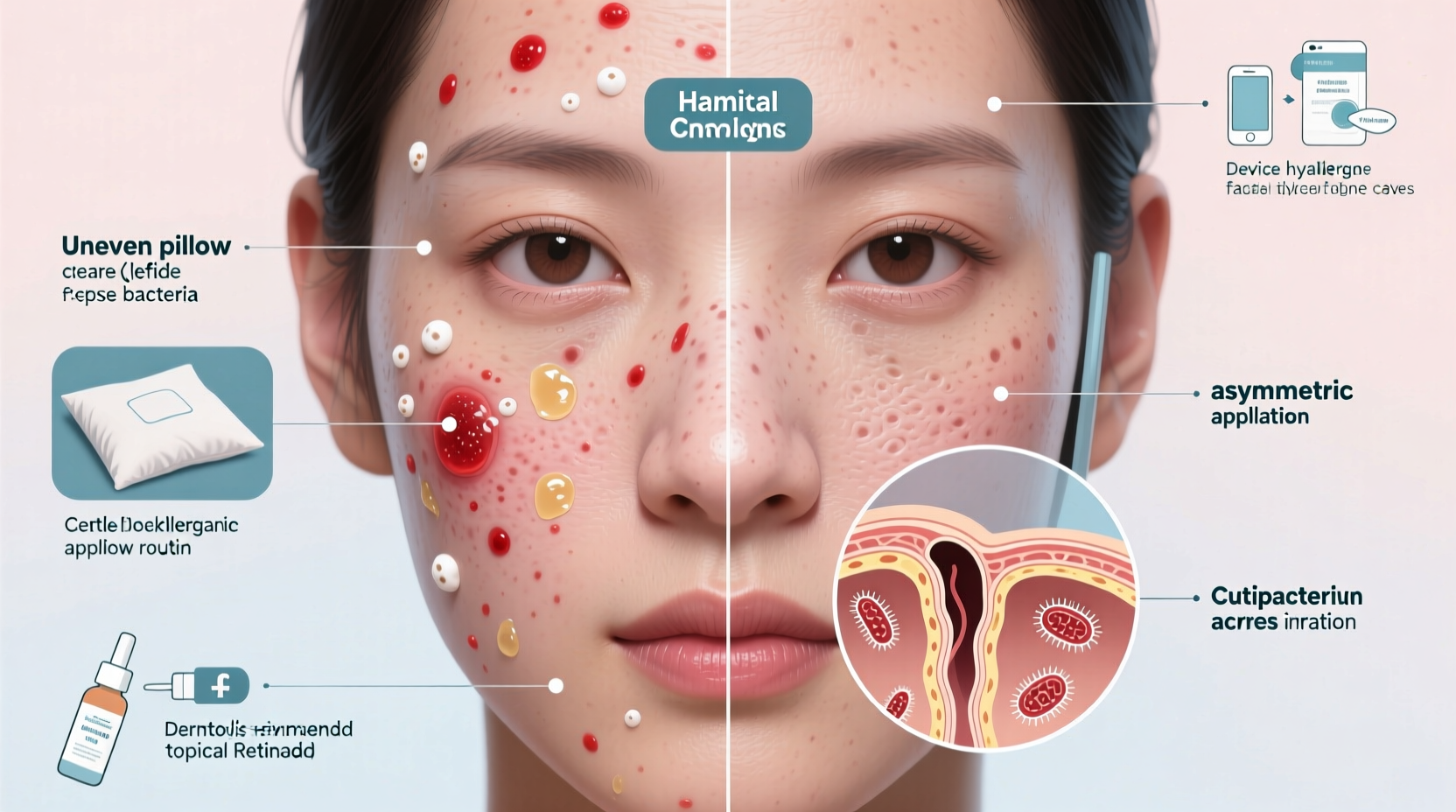
Acne doesn’t always appear randomly. When breakouts favor one side—typically the left or right cheek, jawline, or temple—it often reflects repeated exposure to a specific irritant. Dermatologists frequently observe patterns linking unilateral acne to lifestyle behaviors. Below are the most prevalent culprits:
1. Phone Contact and Bacteria Buildup
Holding your phone against your face for extended periods transfers oil, bacteria, and dirt directly onto your skin. This is especially true if you’re using your phone without cleaning it regularly. The result? Clogged pores and inflammatory acne along the cheek and jawline where the device rests.
2. Sleeping Position and Pillowcase Hygiene
If you consistently sleep on one side, your skin absorbs oils, sweat, and residual skincare or hair products from your pillowcase. Over time, this buildup clogs pores and creates acne specifically on the favored side. Silk or satin pillowcases may reduce friction but won’t eliminate the issue if they aren’t washed frequently.
3. Hair Products and Scalp Residue
Conditioners, styling gels, and hairsprays can drip onto the face, particularly along the hairline and temples. Ingredients like silicones and sulfates are comedogenic for some skin types. If your hair naturally falls over one shoulder, that side may be more exposed to product transfer.
4. Hand-to-Face Habits
Resting your cheek or chin on your hand while working, reading, or driving introduces bacteria from your hands to one side of your face. This unconscious habit is surprisingly common and often overlooked as a trigger.
5. Sun Exposure Imbalance
Spending long hours near a window—like during commutes or at a desk—can expose one side of your face to more UV radiation. Chronic sun exposure damages the skin barrier, increases sebum production, and can worsen acne and pigmentation on the more-exposed side.
“Unilateral acne is rarely hormonal. It’s almost always mechanical or environmental. I ask patients: which side do you sleep on? Which ear do you use the phone on? The answers usually reveal the cause.” — Dr. Lena Torres, Board-Certified Dermatologist
Diagnostic Checklist: Identify Your Trigger
Before adjusting your skincare routine, pinpoint the likely cause. Use this checklist to assess your habits:
- Do you hold your phone to the same ear for long calls?
- Do you sleep on one side more than the other?
- Is one side of your face closer to the car window when driving?
- Do you apply hair products near your temples or hairline?
- Do you rest your hand on your face while sitting?
- Have you recently changed laundry detergent or fabric softener?
- Are you using comedogenic skincare or makeup on one side?
If multiple items apply, start eliminating them one at a time to see which change brings improvement.
Step-by-Step Guide to Clear One-Sided Acne
Clearing unilateral breakouts requires targeted action. Follow this timeline to address both immediate symptoms and long-term prevention:
- Week 1: Audit Your Daily Habits
Track how often you touch your face, use your phone, or sleep on one side. Keep a journal or set reminders to increase awareness. - Week 2: Deep Clean All Contact Surfaces
Wash pillowcases, hats, and phone screens with antibacterial wipes daily. Replace old makeup sponges and brushes. - Week 3: Adjust Physical Behaviors
Switch ears when using your phone, alternate sleeping sides, and avoid resting your hands on your face. - Week 4: Introduce Targeted Skincare
Apply a salicylic acid toner or benzoyl peroxide spot treatment only to the affected side to prevent over-drying healthy skin. - Week 5–6: Monitor and Refine
Evaluate changes in acne frequency. If no improvement, consider consulting a dermatologist to rule out fungal acne or demodex mites.
Skincare and Environmental Adjustments
Once behavioral triggers are addressed, refine your skincare regimen to support healing and prevent recurrence.
Choose Non-Comedogenic Products
Check ingredient labels for pore-clogging substances like coconut oil, lanolin, or isopropyl myristate. Opt for lightweight, water-based moisturizers and gel cleansers, especially on the breakout-prone side.
Spot-Treat Strategically
Instead of applying acne treatments to your entire face, focus on the affected area. Overuse of actives like retinoids or acids can compromise the skin barrier and worsen inflammation.
Protect Against UV Damage
Apply sunscreen every morning, even if you’re indoors. UVA rays penetrate glass, so drivers and desk workers should prioritize SPF on the left side of the face (in countries where drivers sit on the left).
| Cause | Solution | Prevention Timeline |
|---|---|---|
| Phone bacteria | Use speakerphone; clean screen daily | Improvement in 2–3 weeks |
| Pillowcase oil buildup | Wash weekly; switch to silk | Results in 3–4 weeks |
| Hair product transfer | Rinse hairline after styling; use non-comedogenic products | Reduction in 2 weeks |
| Hand-to-face contact | Awareness training; keep hands busy | Immediate impact |
| Uneven sun exposure | Daily broad-spectrum SPF 30+ | Ongoing protection needed |
Real-Life Example: Sarah’s Left-Side Breakout Pattern
Sarah, a 28-year-old project manager, struggled with recurring cystic acne along her left jawline for over a year. Despite trying prescription creams and dietary changes, the breakouts persisted. During a dermatology consultation, she mentioned spending 2–3 hours daily on work calls, always holding her phone to her left ear. Her job also required long commutes, sitting on the driver’s side.
The dermatologist suspected phone bacteria and UV exposure. Sarah was advised to switch to Bluetooth headphones, clean her phone daily, and apply sunscreen every morning. She also began washing her pillowcase every three days instead of weekly.
Within four weeks, her left-side breakouts decreased significantly. After two months, only occasional blackheads appeared—easily managed with a weekly charcoal mask. The key wasn’t a new skincare line, but changing invisible habits.
Frequently Asked Questions
Can hormones cause acne on only one side of the face?
No—hormonal acne typically appears symmetrically, especially around the jawline and chin on both sides. If breakouts are isolated to one side, look for external factors like contact irritants or friction.
Should I see a dermatologist for one-sided acne?
Yes, especially if the acne is persistent, painful, or includes cysts. A dermatologist can rule out conditions like folliculitis, rosacea, or fungal infections that mimic acne but require different treatments.
Can wearing masks cause one-sided breakouts?
While masks generally affect the lower face uniformly, an ill-fitting mask that presses harder on one side can create friction-induced acne (acne mechanica). Ensure your mask fits snugly but evenly across the face.
Expert-Recommended Prevention Routine
Maintaining clear skin on both sides requires consistency. Here’s a daily and weekly plan backed by dermatologists:
Daily Routine
- Wash face with gentle cleanser twice a day
- Apply non-comedogenic moisturizer and SPF 30+ every morning
- Disinfect phone screen and earbuds
- Wash hands frequently, especially before touching face
Weekly Routine
- Change pillowcases 2–3 times per week
- Exfoliate breakout-prone side once weekly with a chemical exfoliant (e.g., salicylic acid)
- Deep clean makeup tools and phone case
- Assess sleeping position and phone usage patterns
Conclusion: Take Control of Unilateral Breakouts
One-sided facial acne isn’t normal—and it’s rarely unavoidable. More often than not, it’s a signal from your body about repeated exposure to an irritant. By examining your routines, cleaning high-contact items, and adjusting small behaviors, you can resolve the imbalance and achieve clearer skin. Remember, skincare isn’t just about what you put on your face, but how you live in your environment. The solution might not be a new serum, but a new habit.




 浙公网安备
33010002000092号
浙公网安备
33010002000092号 浙B2-20120091-4
Comments
No comments yet. Why don't you start the discussion?