
Hyaluronic acid is widely celebrated as a gold-standard hydrator in skincare, capable of holding up to 1,000 times its weight in water. It’s a go-to ingredient for plumping, smoothing, and revitalizing the complexion. Yet, many people report an unexpected sensation: tightness or dryness after applying it—especially in arid environments. This paradox can be confusing, even discouraging, leading some to abandon a product that could otherwise benefit their skin. The truth is, hyaluronic acid isn’t inherently drying. But under certain conditions—particularly in low-humidity climates—it can behave differently than expected. Understanding this phenomenon is key to using the ingredient effectively and avoiding discomfort.
The Science Behind Hyaluronic Acid
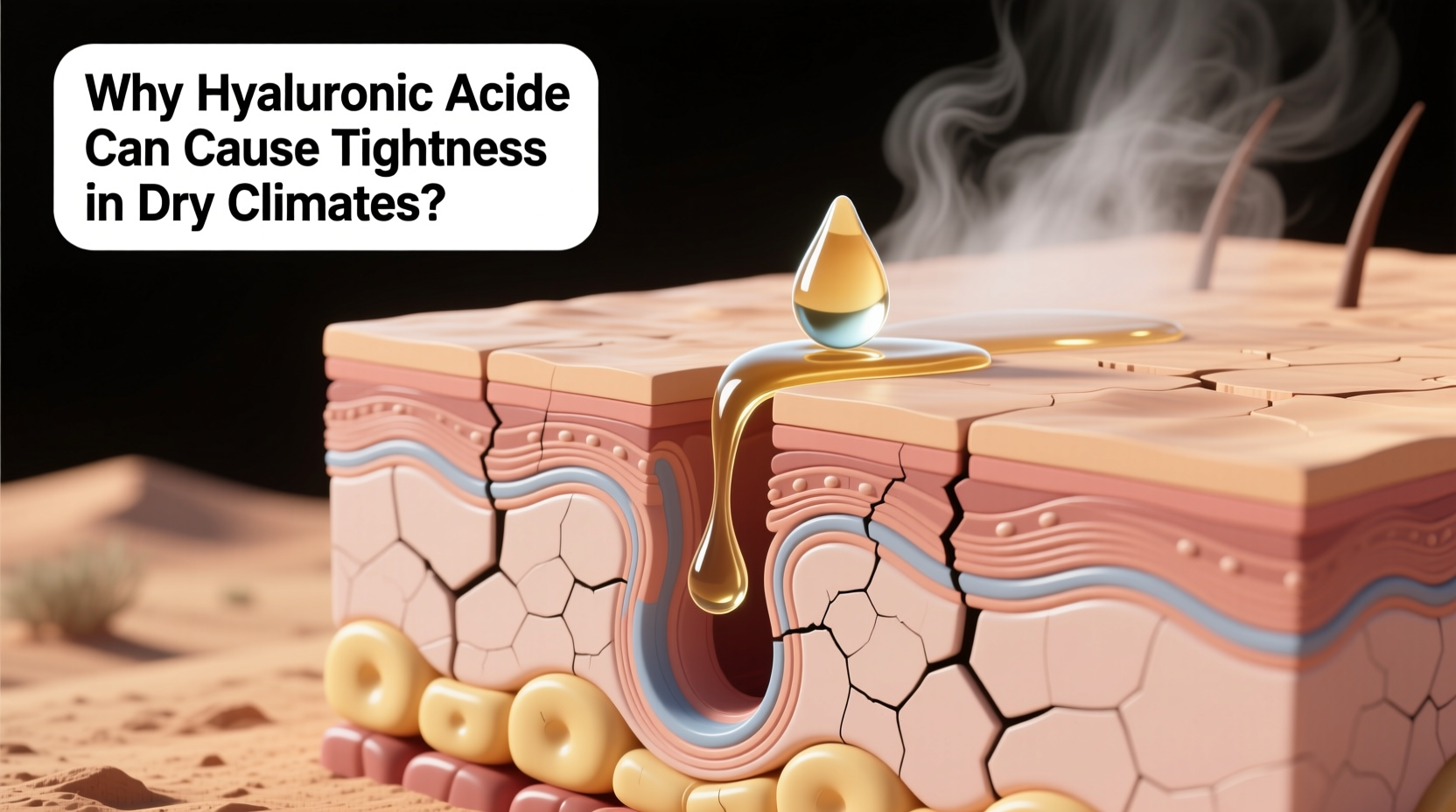
Hyaluronic acid (HA) is a glycosaminoglycan naturally present in the skin, eyes, and connective tissues. Its primary role is to retain water, keeping tissues lubricated and supple. In skincare, it functions as a humectant—a substance that draws moisture from its surroundings into the skin. When applied topically, HA sits on the surface and upper layers of the epidermis, where it attracts water molecules to enhance hydration and improve elasticity.
In ideal conditions—such as high humidity—hyaluronic acid pulls moisture from the air into the skin, creating a dewy, soft effect. However, its behavior changes dramatically in dry environments. When ambient humidity drops below 50%, especially in heated indoor spaces during winter or in desert climates, there is minimal moisture in the air for HA to draw upon. Instead of pulling water from the environment, it may begin drawing moisture from deeper layers of the skin itself—a process known as transepidermal water loss (TEWL).
“Hyaluronic acid is not a moisturizer; it’s a moisture magnet. If there’s no moisture to attract, it can pull from within the skin, which leads to dehydration and tightness.” — Dr. Lena Torres, Board-Certified Dermatologist
Why Dry Climates Exacerbate Skin Tightness
Dry climates are characterized by low atmospheric moisture. Whether you're in a desert region like Arizona or experiencing winter heating in cities like Denver or Chicago, indoor and outdoor air often has a relative humidity level below 30%. At these levels, hyaluronic acid struggles to find external water sources. Without proper formulation or application techniques, it can create a temporary tightening sensation as it absorbs residual moisture from the skin’s surface.
This effect is more pronounced when:
- The product contains only hyaluronic acid without occlusive or emollient ingredients.
- The skin is already dehydrated before application.
- The product is left to dry on the skin without sealing it with a moisturizer.
- High concentrations of HA are used without adequate hydration support.
The tightness isn’t damage—it’s a sign that your skin is losing moisture faster than it’s being replenished. Think of hyaluronic acid in a dry climate like a sponge placed in a dry room: it doesn’t absorb water; instead, it dries out further.
How to Use Hyaluronic Acid Correctly in Low Humidity
The issue isn’t hyaluronic acid itself—it’s how and when it’s used. With minor adjustments to your routine, you can harness its benefits without triggering tightness.
Step-by-Step Guide: Optimizing HA Use in Dry Conditions
- Cleanse with lukewarm water: Avoid hot water, which strips natural oils and increases dehydration.
- Pat skin dry, but leave it slightly damp: This provides the water HA needs to bind to immediately upon application.
- Apply hyaluronic acid serum: Dispense a few drops and press gently into the skin. Do not wait for it to dry completely.
- Layer with a moisturizer immediately: Use a cream containing ceramides, squalane, or shea butter to seal in hydration.
- Consider an occlusive at night: For very dry climates, add a thin layer of petroleum jelly or facial oil over your moisturizer to prevent water loss.
This sequence ensures that HA draws from the water already on your skin rather than from deeper layers. Sealing it in prevents evaporation and supports long-term hydration.
Choosing the Right Hyaluronic Acid Product
Not all hyaluronic acid formulas are created equal. Look for products that combine multiple molecular weights of HA:
- High molecular weight HA: Stays on the surface, providing immediate plumping and barrier support.
- Low molecular weight HA: Penetrates deeper to deliver hydration to lower layers.
Better yet, choose serums that include supporting ingredients like glycerin, panthenol, or sodium PCA—other humectants that work synergistically with HA. Avoid alcohol-heavy formulations, which can worsen dryness.
Do’s and Don’ts of Using Hyaluronic Acid in Dry Air
| Do’s | Don’ts |
|---|---|
| Apply to damp skin | Apply to completely dry skin |
| Follow with a moisturizer or face oil | Leave HA exposed to air without sealing |
| Use in humid environments or with a humidifier | Use heavy concentrations without hydration backup |
| Pair with barrier-repairing ingredients (ceramides, cholesterol) | Mix with drying actives like high-strength acids or retinoids without buffering |
| Store products properly to maintain stability | Leave bottles open or expose to heat and light |
Real-World Example: A Skincare Shift in Phoenix
Samantha, a 34-year-old graphic designer living in Phoenix, Arizona, loved her new hyaluronic acid serum. After two weeks of use, however, her skin felt increasingly tight and flaky by midday. She assumed the product was too strong and considered discontinuing it. After consulting a dermatology nurse at her local clinic, she learned that Phoenix’s average summer humidity—often below 20%—was turning her hydrating serum into a moisture thief.
She adjusted her routine: after cleansing, she spritzed her face with rosewater, applied the HA serum while skin was still wet, and followed with a rich ceramide moisturizer. Within three days, the tightness disappeared. Her skin felt bouncier and looked more radiant than before. The same product, used correctly, transformed from a source of irritation to a cornerstone of her routine.
“When patients complain that hyaluronic acid dries them out, I always ask about their climate and layering technique. It’s rarely the ingredient—it’s the method.” — Dr. Arjun Patel, Clinical Skincare Specialist
When Hyaluronic Acid Isn’t the Issue
Sometimes, tightness after using hyaluronic acid points to broader skin concerns. Dehydrated skin lacks water, while dry skin lacks oil—both can coexist. If your skin barrier is compromised due to over-exfoliation, harsh cleansers, or environmental stressors, even well-formulated HA products may cause discomfort.
Signs of a damaged barrier include:
- Stinging when applying products
- Redness or sensitivity
- Increased reactivity to previously tolerated ingredients
If this sounds familiar, pause active ingredients and focus on repair. Use gentle cleansers, avoid physical scrubs, and incorporate barrier-supporting products with niacinamide, peptides, and fatty acids. Once your skin regains resilience, reintroduce hyaluronic acid using the damp-skin method.
Frequently Asked Questions
Can hyaluronic acid dry out my skin?
Yes—but only under specific conditions. Hyaluronic acid itself doesn’t dry the skin. However, in low-humidity environments without proper sealing, it can draw moisture from deeper skin layers, increasing transepidermal water loss and causing a tight, dry feeling.
Should I stop using hyaluronic acid in winter or dry climates?
No, but you should adjust your routine. Continue using it, but apply it to damp skin and always follow with a moisturizer or occlusive. Consider using it less frequently if your skin feels consistently tight, or switch to a formula combined with emollients.
Is there a better alternative to hyaluronic acid for dry climates?
Hyaluronic acid remains one of the most effective humectants. Alternatives like glycerin, urea, or propanediol also attract moisture but don’t offer the same plumping effect. Instead of replacing HA, optimize its use. Pairing it with ingredients like squalane or ceramides often delivers better results than switching entirely.
Action Plan: Your 7-Day Adjustment Strategy
If your skin feels tight after using hyaluronic acid, try this structured approach to reset your hydration balance:
- Day 1–2: Simplify – Stop all actives. Use only a gentle cleanser, a hydrating toner, and a basic moisturizer. Let your skin stabilize.
- Day 3: Reintroduce HA on damp skin – After cleansing, mist your face with water or a hydrating toner, apply 2–3 drops of HA, and immediately layer with moisturizer.
- Day 4–5: Add a humidifier – Place a small humidifier near your bed or desk to increase ambient moisture.
- Day 6: Test occlusion – At night, apply your usual routine, then add a thin layer of facial oil or petrolatum-based balm over the moisturizer.
- Day 7: Assess – Note any changes in tightness, texture, and comfort. Most users report noticeable improvement by this point.
Final Thoughts: Work With Your Environment, Not Against It
Hyaluronic acid is not a one-size-fits-all solution. Its performance depends heavily on environmental conditions and application methods. In dry climates, the ingredient requires thoughtful layering and environmental support to fulfill its hydrating promise. The tightness you feel isn’t a flaw in the product—it’s feedback from your skin telling you that moisture is escaping.
By adjusting your routine to include damp-skin application, proper sealing, and supportive ingredients, you can transform hyaluronic acid from a potential irritant into a powerful ally for resilient, hydrated skin. Skincare isn’t just about what you use—it’s about how, when, and where you use it.




 浙公网安备
33010002000092号
浙公网安备
33010002000092号 浙B2-20120091-4
Comments
No comments yet. Why don't you start the discussion?