
It’s a frustrating paradox: you apply moisturizer to care for your skin, only to find it shinier, greasier, and more prone to breakouts hours later. If you’ve ever wondered why your skin seems to produce more oil after moisturizing, you’re not alone. This phenomenon affects countless people—especially those with combination or oily skin types. The good news is that this reaction isn’t inevitable. With the right understanding of your skin’s biology and a tailored approach to product selection and routine, you can maintain balanced hydration without triggering excess oil.
The root causes are often misunderstood. Many assume that oily skin doesn’t need moisture, leading to under-hydration, which ironically worsens oiliness. Others use heavy creams or formulations packed with pore-clogging ingredients, prompting their skin to overcompensate. To resolve this issue, we need to explore the science behind sebum production, the role of the skin barrier, and how moisturizers interact with both.
Understanding the Skin’s Natural Oil Production
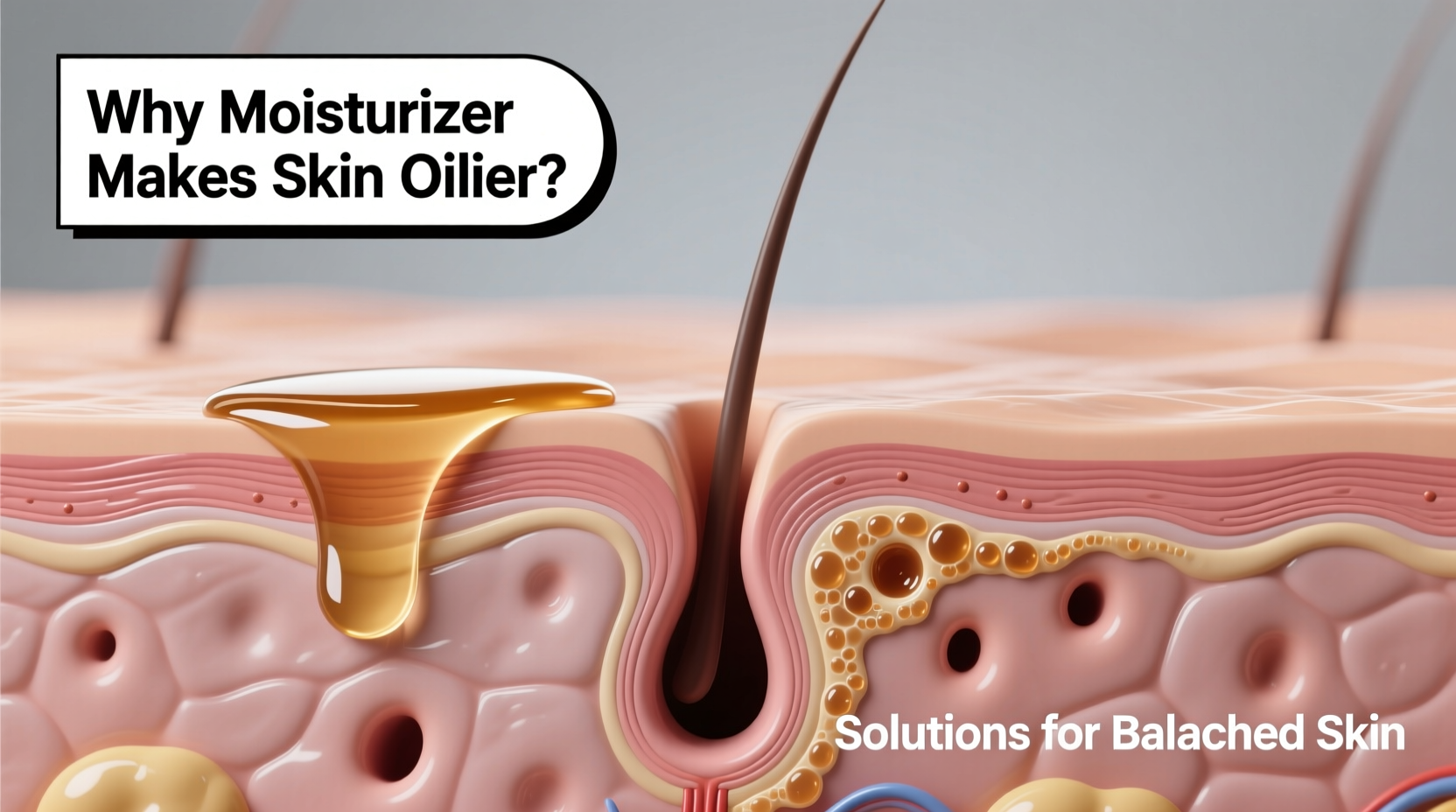
Sebum—the oily substance produced by sebaceous glands—is essential for protecting the skin. It helps retain moisture, shields against environmental aggressors, and maintains the integrity of the skin barrier. However, when sebum production becomes excessive, it can lead to clogged pores, acne, and an unwanted glossy appearance.
Several factors influence sebum levels:
- Hormonal fluctuations: Androgens stimulate sebaceous gland activity, especially during puberty, menstruation, or stress.
- Diet and lifestyle: High-glycemic foods and dairy may increase insulin-like growth factor (IGF-1), linked to higher sebum output.
- Climate and humidity: Hot, humid environments naturally boost oil production.
- Skincare habits: Over-washing, stripping products, or incorrect moisturizing can disrupt balance.
When your skin feels dry—even if it's oily—it may signal dehydration rather than lack of oil. Dehydrated skin lacks water, not oil. In response, the body may ramp up sebum production to compensate, creating a cycle where dryness leads to more oil, which in turn leads to heavier product use, further exacerbating the imbalance.
Why Moisturizers Can Trigger Oiliness
Moisturizers themselves aren’t inherently problematic. But certain ingredients, textures, and application habits can trigger or amplify oiliness. Here’s what might be happening on your skin:
1. Barrier Disruption from Cleansing
If you're using harsh cleansers before moisturizing, you may strip away natural lipids, compromising the skin barrier. The skin then perceives this as a threat and signals sebaceous glands to produce more oil to restore protection. Applying moisturizer afterward doesn't always repair this damage quickly enough, so oil ramps up anyway.
2. Occlusive Ingredients That Trap Excess
Heavy occlusives like petroleum jelly, lanolin, or mineral oil form a seal on the skin. While beneficial for dry types, they can feel suffocating for oily skin, trapping sweat, bacteria, and dead cells. This buildup can prompt increased sebum secretion and contribute to congestion.
3. Incorrect Product Matching
Using a rich cream designed for dry, mature skin when you have oily or combination skin can overwhelm your natural balance. These formulas often contain emollients and oils that sit on the surface, making skin appear greasy even if internally hydrated.
4. Over-Moisturizing
Applying too much product or layering multiple hydrating serums and creams can overload the skin. When the stratum corneum (outermost layer) is saturated, additional moisture has nowhere to go—leading to a slick, shiny finish.
“Many patients come to me complaining of post-moisturizer oiliness, only to discover they’re using formulations meant for desert climates on already oily skin.” — Dr. Lena Torres, Board-Certified Dermatologist
How to Choose the Right Moisturizer for Balanced Skin
Selecting the appropriate moisturizer is crucial. The goal isn’t to eliminate oil but to support a resilient skin barrier that regulates sebum production naturally. Look for these key characteristics:
| Feature | Recommended | Avoid |
|---|---|---|
| Texture | Gel, gel-cream, or fluid lotion | Thick creams, balms, ointments |
| Key Ingredients | Hyaluronic acid, glycerin, niacinamide, ceramides | Lanolin, coconut oil, cocoa butter, mineral oil |
| Label Claims | Oil-free, non-comedogenic, mattifying | Rich, nourishing, intensive repair |
| SPF Integration | Lightweight daily SPF 30+ moisturizer | Heavy chemical sunscreens with comedogenic bases |
Niacinamide (vitamin B3) deserves special mention. Studies show it reduces sebum production by up to 60% over four weeks while improving skin elasticity and reducing pore appearance. Hyaluronic acid attracts water into the skin without adding oil, making it ideal for oily types seeking hydration.
Real Example: Maria’s Routine Adjustment
Maria, 28, had struggled with midday shine and frequent breakouts despite a consistent skincare routine. She used a foaming cleanser followed by a “deep hydration” night cream she bought for winter. Even though her T-zone glistened within two hours of application, she believed she needed more moisture.
After consulting a dermatologist, she switched to a gentle sulfate-free cleanser, applied a hyaluronic acid serum on damp skin, and topped it with a lightweight, niacinamide-infused gel moisturizer. Within ten days, her morning oiliness decreased significantly. By week three, she no longer needed constant blotting and reported fewer clogged pores.
The change wasn’t about using less product—it was about aligning her routine with her skin’s actual needs.
Step-by-Step Guide to Balancing Oil After Moisturizing
Follow this five-step process to reset your skin’s equilibrium and prevent post-moisturizer oiliness:
- Assess Your Current Routine
List every product you use in the morning and evening. Note textures, active ingredients, and how your skin feels one and four hours after application. Identify anything overly rich, fragranced, or potentially irritating. - Switch to a Gentle Cleanser
Replace sulfates and alcohol-based washes with a low-pH, hydrating cleanser. Apply with lukewarm water and avoid scrubbing. Pat dry—don’t rub. - Hydrate Before Moisturizing
Apply water-based hydrators (like a hyaluronic acid serum) to damp skin. This locks in moisture and reduces the need for heavy creams. - Pick the Right Moisturizer
Choose a formula labeled “oil-free” and “non-comedogenic.” Start with a pea-sized amount and adjust based on climate. Use lighter versions in summer, slightly richer ones in winter—but never heavy balms unless treating extreme dryness. - Monitor and Adjust Weekly
Track changes in oil production, texture, and comfort. If shine returns within two hours, reduce moisturizer quantity or switch to a gel variant. If tightness occurs, add back hydration gradually.
Common Mistakes That Worsen Oiliness
Avoid these pitfalls that sabotage even well-intentioned routines:
- Skipping moisturizer altogether: Leads to dehydration and rebound oil production.
- Using toners with alcohol: Dries surface layers and triggers sebum overdrive.
- Over-exfoliating: Scrubbing or using strong acids too often damages the barrier.
- Layering incompatible products: Mixing silicones with heavy oils can create a film that traps sebum.
- Ignoring sunscreen choice: Some sunscreens leave a greasy residue; opt for matte, mineral-based, or hybrid formulas.
FAQ
Can oily skin be dehydrated?
Yes. Dehydration refers to a lack of water in the skin, not oil. Oily skin can still lack hydration due to environmental exposure, improper cleansing, or insufficient water-binding ingredients. This imbalance often leads to excess sebum as compensation.
Should I moisturize at night if my skin is oily?
Absolutely. Nighttime is when skin repairs itself, and skipping moisturizer can impair barrier recovery. Use a light, fast-absorbing formula with ingredients like ceramides or niacinamide to support renewal without greasiness.
Is it better to use no moisturizer than the wrong one?
No. Going bare may offer short-term relief from shine, but long-term consequences include impaired barrier function, increased sensitivity, and heightened oil production. Always use a suitable moisturizer—even if it’s just a few drops of a water-based gel.
Checklist: Achieve Balanced Skin Without Excess Oil
Use this checklist weekly to stay on track:
- ✅ Cleanse with a gentle, non-stripping formula
- ✅ Apply hydrating serum to damp skin
- ✅ Use a non-comedogenic, oil-free moisturizer
- ✅ Limit application to a pea-sized amount
- ✅ Reassess products seasonally
- ✅ Wear a lightweight, non-greasy sunscreen daily
- ✅ Avoid touching face throughout the day
- ✅ Blot excess oil with absorbent papers—not powder over makeup
“The skin doesn’t overproduce oil because it enjoys being greasy—it does so to survive. Our job is to provide what it actually needs, not what we think it should have.” — Dr. Rajiv Mehta, Clinical Skincare Researcher
Conclusion
Oily skin after moisturizing isn’t a flaw—it’s feedback. Your skin is communicating that something in your routine isn’t aligned with its biological needs. Whether it’s a mismatched product, a compromised barrier, or a habit of over-application, the solution lies in precision, not punishment. By choosing lightweight, intelligent formulations and supporting your skin’s natural balance, you can enjoy hydration without the shine.
Start today: take a close look at your current moisturizer, check the ingredient list, and consider whether it truly serves your skin type. Small adjustments can yield dramatic improvements in clarity, comfort, and confidence.




 浙公网安备
33010002000092号
浙公网安备
33010002000092号 浙B2-20120091-4
Comments
No comments yet. Why don't you start the discussion?