
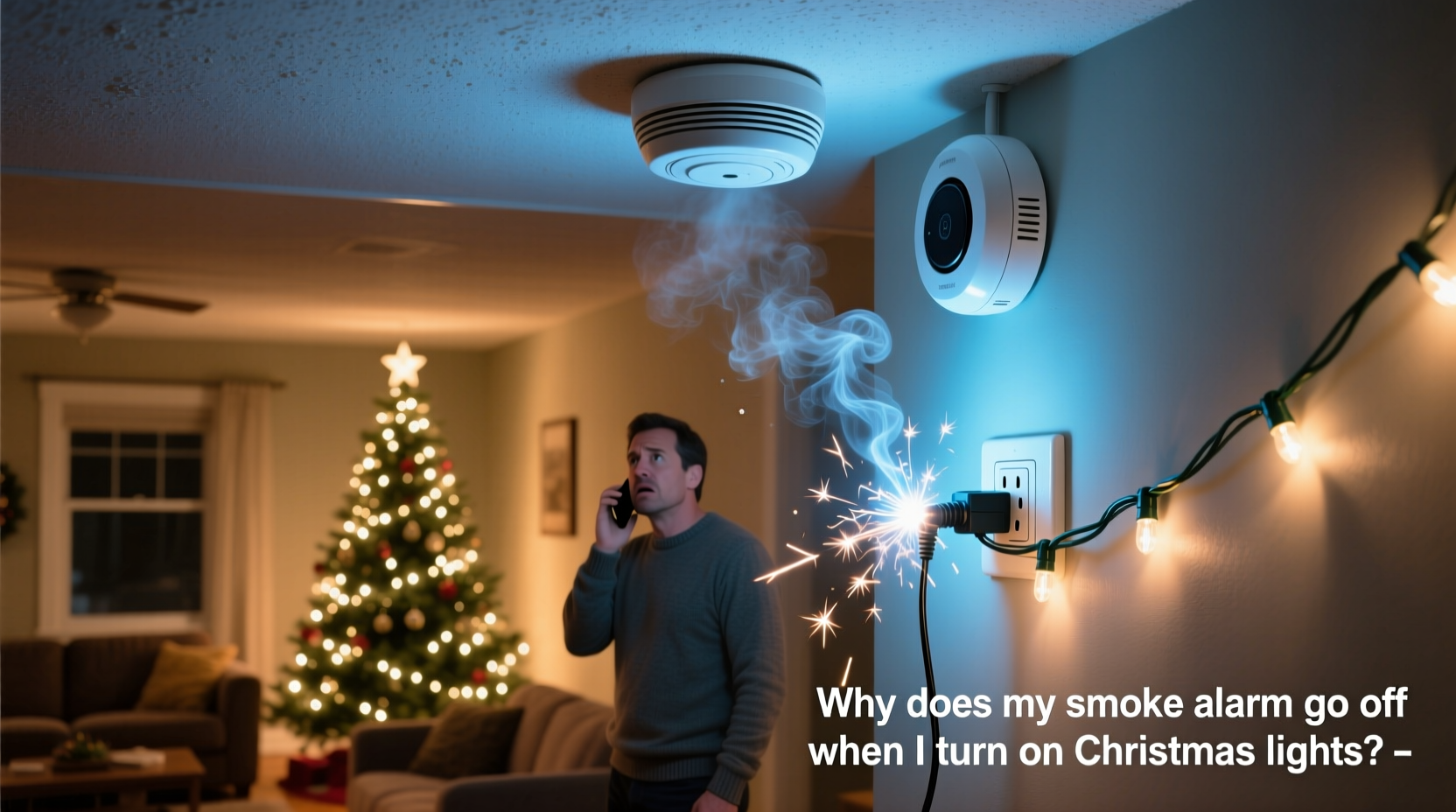
It’s a familiar holiday frustration: you plug in the Christmas lights, step back to admire the glow, and suddenly—your smoke alarm shrieks. The festive moment turns into a scramble for the reset button. While it might seem like a random glitch, there’s usually a logical explanation behind this unexpected reaction. Understanding why your smoke alarm activates when you power up seasonal decorations can help you avoid unnecessary panic, ensure safety, and enjoy a quieter holiday season.
This phenomenon is more common than many realize. It doesn’t necessarily mean your wiring is faulty or that your home is in danger—but it does signal that something in your environment has changed enough to trigger a sensitive detection system. Smoke alarms are designed to save lives, but their sensitivity can sometimes lead to false positives, especially during seasonal transitions involving heat, dust, and electrical loads.
How Smoke Alarms Work: The Science Behind the Beep
To understand why Christmas lights might set off an alarm, it helps to know how smoke detectors function. Most residential units fall into two categories: ionization and photoelectric. Each responds differently to environmental stimuli.
- Ionization alarms use a small amount of radioactive material to ionize air between two electrically charged plates. When smoke enters the chamber, it disrupts the ion flow, triggering the alarm. These are highly sensitive to fast-flaming fires but also prone to reacting to tiny airborne particles from steam, dust, or even sudden air currents.
- Photoelectric alarms use a light beam and sensor. When smoke scatters the light beam, the sensor detects the change and sounds the alarm. These are better at detecting slow, smoldering fires and are less likely to react to non-smoke particles—but not immune.
Some modern alarms combine both technologies (dual-sensor), increasing overall protection but also raising the chance of false triggers if conditions are just right—or wrong. Both types can be affected by changes in air quality, temperature, humidity, and electromagnetic interference, all of which may occur when you install or activate holiday lighting.
“Smoke alarms are calibrated to detect minute changes in their environment. Even minor disturbances like dust displacement or voltage fluctuations can mimic the presence of smoke.” — Dr. Alan Reeves, Fire Safety Engineer, National Fire Protection Research Institute
Common Reasons Your Alarm Activates with Christmas Lights
The connection between holiday lights and smoke alarms isn’t mystical—it’s mechanical and environmental. Several factors can explain the timing:
Dust Accumulation and Air Displacement
Christmas lights often spend months stored in attics, basements, or garages where dust accumulates. When you unwrap and hang them, especially near ceilings or in corners close to smoke alarms, you disturb settled particles. Turning on the lights generates slight heat, causing air to rise and carry fine dust into the detection chamber.
Heat Buildup Near Detectors
Incandescent Christmas bulbs generate noticeable heat. If strings are installed too close to a smoke alarm—within 10 feet or directly above it—the rising warm air can interfere with the internal sensors. Ionization models, in particular, are sensitive to thermal drafts that alter ion flow.
Electrical Surges and Power Draw
Plugging in multiple strands of lights, especially older or non-LED sets, can cause a brief power surge. While your home’s circuitry handles this normally, some interconnected or smart smoke alarms are sensitive to electrical noise on the line. This transient fluctuation may be misinterpreted as a fault condition, prompting a chirp or full alarm.
Old or Failing Alarms
If your smoke detector is over 10 years old, its sensors may degrade and become overly sensitive. The U.S. Fire Administration recommends replacing alarms every decade. An aging unit might interpret normal seasonal activity as a threat, especially when combined with other stressors like dust or heat.
Poor Placement of Lights or Detectors
Building codes recommend installing smoke alarms at least 10 feet away from cooking appliances and bathrooms to avoid false alarms from steam. The same logic applies to heat-generating decor. Lights draped over or near ceiling-mounted alarms increase the risk of triggering them.
Step-by-Step Guide to Prevent False Alarms During the Holidays
Follow this practical sequence to enjoy your lights without the ear-piercing interruptions:
- Inspect and clean your smoke alarms. Use a vacuum with a brush attachment to gently remove dust from vents. Do this monthly, especially before holiday decorating.
- Test each alarm. Press the test button to confirm functionality. Replace batteries if needed—even in hardwired units, backup batteries weaken over time.
- Clean stored lights. Before hanging, wipe down each strand with a dry cloth. For older sets, consider using compressed air to blow out debris.
- Check bulb type. Replace incandescent bulbs with LED alternatives. LEDs run cooler, draw less power, and reduce heat-related risks.
- Manage placement. Avoid installing lights within 10 feet of any smoke detector, particularly above or directly beside it. Keep cords and bulbs away from ceiling corners where alarms are typically mounted.
- Plug in gradually. Instead of powering everything at once, turn on light sections one at a time. This reduces electrical surges and helps identify problematic circuits.
- Monitor for patterns. If the alarm sounds only when a specific string is activated, inspect that set for frayed wires, overheating, or manufacturing defects.
Do’s and Don’ts: Holiday Lighting and Smoke Alarm Safety
| Action | Do | Don't |
|---|---|---|
| Light Type | Use LED lights—they’re energy-efficient and produce minimal heat. | Avoid old incandescent mini-lights, especially near detectors. |
| Installation | Keep lights at least 10 feet from smoke alarms. | Don’t drape lights over or around alarm housings. |
| Maintenance | Vacuum alarm vents and wipe down lights before use. | Don’t ignore frequent false alarms—they may indicate deeper issues. |
| Power Management | Use surge protectors and avoid overloading outlets. | Don’t connect more than three light strands unless labeled safe. |
| Alarm Age | Replace alarms older than 10 years. | Don’t rely on expired units, even if they still beep during testing. |
Mini Case Study: The Johnson Family’s Festive False Alarm
The Johnsons in suburban Denver experienced repeated smoke alarm activations every time they turned on their living room Christmas tree lights. The alarm, located in the hallway just outside the room, would sound within seconds of plugging in the display. Concerned about fire risk, they contacted an electrician.
Upon inspection, no wiring faults were found. The technician discovered that the 15-year-old ionization alarm was overdue for replacement. Additionally, the incandescent light strands—stored in a dusty garage—were releasing fine particles when heated. The combination of aging sensors and airborne dust created perfect conditions for false alarms.
Solution: The family replaced the alarm with a modern photoelectric model, switched to LED lights, and cleaned their decorations before reuse. Since then, their holidays have been bright—and quiet.
When to Be Concerned: Real Danger vs. Nuisance Alerts
Not all alarm activations are harmless. While most cases tied to Christmas lights are benign, some signs point to real hazards:
- Burning smell or visible smoke when lights are on—unplug immediately and inspect wiring.
- Discoloration or melting on plugs, sockets, or cords indicates overheating.
- Frequent tripping of circuit breakers suggests overloaded circuits, not just alarm sensitivity.
- Alarm continues to sound after lights are unplugged may indicate a persistent issue, such as hidden smoke or a failing unit.
If any of these occur, stop using the lights and consult a licensed electrician. Never assume every alert is a false positive—your alarm may be doing its job correctly.
FAQ: Common Questions About Smoke Alarms and Christmas Lights
Can Christmas lights really start a fire?
Yes, though rare. Faulty wiring, damaged insulation, or overloaded circuits in older light sets can overheat and ignite nearby materials. According to the National Fire Protection Association (NFPA), decorations were involved in an estimated 8% of U.S. home structure fires during the winter holidays. Using certified LED lights, checking for damage, and avoiding extended unattended operation reduces risk significantly.
Why does only one alarm go off, not all of them?
If your alarms are interconnected, all should sound when one is triggered. If only one activates, it may not be properly linked, or the others could have dead batteries or failed components. Test all units annually and ensure interconnectivity is functional. Wireless systems require regular battery checks and signal verification.
Is it safe to disable the alarm while decorating?
No. Disabling smoke alarms—even temporarily—compromises safety. If you must work near the unit, use the “hush” or “silence” button if available. This temporarily disables the alarm for 10–15 minutes, allowing dust to settle without removing protection. Always restore functionality immediately afterward.
Final Checklist: Holiday-Ready Home Safety
- ✅ Test all smoke alarms and replace batteries.
- ✅ Vacuum alarm vents and surrounding ceiling areas.
- ✅ Inspect Christmas lights for frays, cracks, or bent prongs.
- ✅ Switch to LED bulbs where possible.
- ✅ Position lights at least 10 feet from smoke detectors.
- ✅ Replace any smoke alarm older than 10 years.
- ✅ Plug in light strands gradually using surge protectors.
- ✅ Install new alarms with smart features or hush buttons.
Conclusion: Stay Safe and Celebrate Without the Sirens
Your smoke alarm going off when you turn on Christmas lights is usually a manageable issue rooted in dust, heat, or aging equipment—not an inevitable holiday curse. By understanding the technology, respecting placement guidelines, and maintaining both your alarms and decorations, you can prevent most false alerts. More importantly, you ensure that when your alarm does sound, it’s for a reason worth heeding.
The holidays should be filled with joy, not emergency drills. A few proactive steps today can safeguard your home, preserve your peace of mind, and keep the season merry and bright—without the blaring.




 浙公网安备
33010002000092号
浙公网安备
33010002000092号 浙B2-20120091-4
Comments
No comments yet. Why don't you start the discussion?